Материал: Bovine Viral Diarrhea Virus Diagnosis, Management, and Control

Clinical Features |
117 |
Carman S, Van Dreumel T, Ridpath J, et al.: 1998, Severe acute bovine viral diarrhea in Ontario 1993–1995. J Vet Diagn Invest 10:27–35.
Castrucci G, Frigeri F, Osburn BI, et al.: 1990, A study of some pathogenic aspects of bovine virus diarrhea virus infection. Comp Immunol Microbiol Infect Dis 13:41–49.
Chase CC, Elmowalid G, Yousif AA: 2004, The immune response to bovine viral diarrhea virus: A constantly changing picture. Vet Clin North Am Food Anim Pract 20:95–114.
Cherry BR, Reeves MJ, Smith G: 1998, Evaluation of bovine viral diarrhea virus control using a mathematical model of infection dynamics. Prev Vet Med 33:91–108.
Corapi WV, Elliot RD, French TW, et al.: 1990, Thrombocytopenia and hemorrhages in veal calves infected with bovine viral diarrhea virus. J Am Vet Med Assoc 196:590–596.
Deregt D, Loewen KG: 1995, Bovine viral diarrhea virus: Biotypes and disease. Can Vet J 36: 37–378.
Done JT, Terlecki S, Richardson C, et al.: 1980, Bovine viral diarrhoea-mucosal disease virus: Pathogenicity for the foetal calf following maternal infection. Vet Rec 106:473–479.
Dubovi EJ: 1994, Impact of bovine viral diarrhea virus on reproductive performance in cattle. Vet Clin North Am Food Anim Pract 10:503–514.
Duffell SJ, Harkness JW: 1985, Bovine virus diar- rhoea-mucosal disease infection in cattle. Vet Rec 117:240–245.
Ellis JA, Davis WC, Belden EL, et al.: 1988, Flow cytofluorimetric analysis of lymphocyte subset alteration in cattle infected with bovine viral diarrhea virus. Vet Pathol 25:231–236.
Evermann JF, Berry ES, Baszler TV, et al.: 1993, Diagnostic approaches for detection of bovine viral diarrhea (BVD) virus and related pestiviruses. J Vet Diagn Invest 5:265–269.
Evermann JF, Ridpath JF: 2002, Clinical and epidemiologic observations of bovine viral diarrhea virus in the northwestern United States. Vet Microbiol 89:129–139.
Fray MD, Paton DJ, Alenius S: 2000, The effects of bovine viral diarrhoea virus on cattle reproduction in relation to disease control. Anim Reprod Sci 60–61:615–627.
Givens MD, Heath AM, Brock KV, et al.: 2003, Detection of bovine viral diarrhea virus in semen obtained after innoculation of seronegative postpubertal bulls. Am J Vet Res 64:428–434.
Goyal SM, Bouljihad M, Haugerud S, et al.: 2002, Isolation of bovine viral diarrhea virus from an alpaca. J Vet Diagn Invest 14:523–525.
Grooms D, Baker JC, Ames TR: 2002, Diseases caused by bovine virus diarrhea virus. In: Large Animal Internal Medicine, 3rd Ed. Ed. Smith BP, pp: 707–714. Mosby, St. Louis, MO.
Grooms DL: 1999, Role of bovine viral diarrhea virus in the bovine respiratory disease complex. Bov Pract 32:7–12.
Grooms DL, Brock KV, Pate JL, et al.: 1998, Changes in ovarian follicles following acute infection with bovine viral diarrhea virus. Theriogenology 49:595–605.
Grooms DL, Ward LA, Brook KV: 1996, Morphologic changes and immunohistochemical detection of viral antigen in ovaries from cattle persistently infected with bovine viral diarrhea virus. Am J Vet Res 57:830–833.
Houe H: 1999, Epidemiologic features and economical importance of bovine virus diarrhoea virus infections. Vet Microbiol 64:89–107.
Innocent G, Morrison I, Brownlie J, et al.: 1997, The use of a mass-action model to validate the output from a stochastic simulation model of bovine viral diarrhoea virus spread in a closed dairy herd. Prev Vet Med 31:199–209.
Kafi M, McGowan MR, Kirkland PD. 2002, In vitro maturation and fertilization of bovine oocysts and in vitro culture of presumptive zygotes in the presence of bovine pestivirus. Anim Reprod Sci 71:169–179.
Kahrs RF: 2001, Bovine viral diarrhea. In: Viral Diseases of Cattle, 2nd Ed. Ed. Kahrs RF, pp. 113–126. Iowa State University Press, Ames, IA.
Kelling CL, Grotelueschen DM, Smith DR, et al.: 2000, Testing and management strategies for effective beef and dairy herd BVDV biosecurity programs. Bovine Pract 34:13–22.
Kirkland PD, Richards SG, Rothwell JT, et al.: 1991, Replication of bovine viral diarrhoea virus in the bovine reproductive tract and excretion of virus in semen during acute and chronic infections. Vet Rec 128:587–590.
Liebler-Tenorio EM, Ridpath JF, Neill JD: 2002, Distribution of viral antigen and development of lesions after experimental infection with highly virulent bovine viral diarrhea virus type 2 in calves. Am J Vet Res 63:1575–1584.
Liebler-Tenorio EM, Ridpath JF, Neill JD: 2003a, Distribution of viral antigen and development of lesions after experimental infection of calves with a BVDV 2 strain of low virulence. J Vet Diagn Invest 15:221–232.
Liebler-Tenorio EM, Ridpath JF, Neill JD: 2003b, Lesions and tissue distribution of viral antigen in severe acute versus subclinical acute infection with BVDV2. Biologicals 31:119–122.

118 |
BVDV: Diagnosis, Management, and Control |
Loken T: 1995, Ruminant pestivirus infections in animals other than cattle and sheep. Vet Clin North Am Food Anim Pract 11:597–614.
Markham RJF, Ramnaraine ML: 1985, Release of immunosuppressive substances from tissue culture cells infected with bovine viral diarrhea virus. Am J Vet Res 46:879–881.
McClurkin AW, Littledike ET, Cutlip RC: 1984, Production of cattle immunotolerant to bovine viral diarrhea virus. Can J Comp Med 48:156–161.
Meehan JT, Lehmkuhl HD, Cutlip RC, et al.: 1998, Acute pulmonary lesions in sheep experimentally infected with bovine viral diarrhoea virus. J Comp Pathol 119:277–292.
Mickelsen WD, Evermann JF: 1994, In utero infections responsible for abortion, stillbirth, and birth of weak calves in beef cows. Vet Clin North Am Food Anim Pract 10:1–14.
Mills JHL, Luginbuhl RE: 1968, Distribution and persistence of mucosal disease virus in experimentally exposed calves. Am J Vet Res 29:1367–1375.
Moerman A, Straver PJ, de Jong MCM, et al.: 1994, Clinical consequences of a bovine virus diarrhoea in a dairy herd. Vet Q 16:115–119.
Muñoz-Zanzi CA, Hietala SK, Thurmond MC, et al.: 2003, Quantification, risk factors, and health impact of natural congenital infection with bovine viral diarrhea virus in dairy calves. Am J Vet Res 64:358–365.
Nettleton PF, Entrican G: 1995, Ruminant pestiviruses. Brit Vet J 151:615–642.
Niskanen R, Lindberg A: 2003, Transmission of bovine viral diarrhoea virus by unhygienic vaccination procedures, ambient air, and from contaminated pens. Vet Jour 165:125–130.
Ohmann HB: 1983, Distribution and significance of BVD antigen in diseased calves. Res Vet Sci 34:5–10.
Pellerin C, Van Den Hurk J, Lecomte J, et al.: 1994, Identification of a new group of bovine viral diarrhea virus strains associated with severe outbreaks and high mortalities. Virology 203:260–268.
Pollreisz JP, Kelling CL, Perino LJ, et al.: 1997, The potentiation of bovine respiratory syncytial virus infection in calves by bovine viral diarrhea virus.
Bovine Pract 31:32–38.
Potgieter LN, McCracken MD, Hopkins FM, et al.: 1984a, Experimental production of bovine respiratory tract disease with bovine viral diarrhea virus. Am J Vet Res 45:1582–1585.
Potgieter LN, McCracken MD, Hopkins FM, et al.: 1984b, Effect of bovine viral diarrhea virus infection on the distribution of infectious bovine rhinotracheitis virus in calves. Am J Vet Res 45:686–689.
Potgieter LN, McCracken MD, Hopkins FM, et al.: 1985, Comparison of pneumopathogenicity of two strains of bovine viral diarrhea virus. Am J Vet Res 46:151–153.
Potgieter LND: 1995, Immunology of bovine viral diarrhea virus. Vet Clin North Am Food Anim Pract
11:501–520.
Revell SG, Chasey D, Drew TW, et al.: 1988, Some observations of the semen of bulls persistently infected with bovine viral diarrhoea virus. Vet Rec 123:122–125.
Ridpath JF, Bolin SR, Dubovi EJ: 1994, Segregation of bovine viral diarrhea virus into genotypes. Virology 205:66–74.
Ridpath JF, Neill JD, Frey M, et al.: 2000, Phylogenetic, antigenic and clinical characterization of type 2 BVDV from North America. Vet Microbiol 77:145–155.
Roth JA, Kaekerle ML, Griffith RW: 1981, Effects of bovine viral diarrhea virus infection on bovine polymorphonuclear leukocyte function. Am J Vet Res 42:244–250.
Sanderson MW, Gnad DP: 2002, Biosecurity for reproductive diseases. Vet Clin North Am Food Anim Pract 18:79–98.
Shahriar FM, Clark EG, Janzen E, et al.: 2002, Coinfection with bovine viral diarrhea virus and Mycoplasma bovis in feedlot cattle with chronic pneumonia. Can Vet J 43:863–868.
Smith DR, Grotelueschen DM: 2004, Biosecurity and biocontainment of bovine viral diarrhea virus. Vet Clin North Am Food Anim Pract 20:131–149.
Ssentongo YK, Johnson RH, Smith JR: 1980, Association of bovine viral diarrhea-mucosal disease virus with ovaritis in cattle. Aust Vet J 56:272–273.
Tremblay R: 1996, Transmission of bovine viral diarrhea virus. Vet Med 91:858–866.
van Campen H, Frolich K, Hofmann M: 2001, Pestivirus Infections. In: Infectious Diseases of Wildlife, 2nd Ed. Eds. Williams ES, Barker IK, pp. 232–237. Iowa State University Press, Ames, IA.
Vilcek S, Paton DJ, Durkovic B, et al.: 2001, Bovine viral diarrhea virus genotype 1 can be separated into at least eleven genetic groups. Arch Virol 146:99–115.
Voges H, Horner GW, Rowe S, et al.: 1998, Persistent bovine pestivirus infection localized in the testes of an immuno-competent non-viremic bull. Vet Microbiol 61:165–175.
Walz PH, Steficek BA, Baker JC: 1999, Effect of type II bovine viral diarrhea virus on platelet function in experimentally infected calves. Am J Vet Res 60:1396–1401.

Clinical Features |
119 |
Wilhelmsen CL, Bolin SR, Ridpath JF, et al.: 1990, Experimental primary postnatal bovine viral diarrhea viral infections in six-month-old calves. Vet Pathol 27:235–243.
Wittum TE, Grotelueschen DM, Brock KV, et al.: 2001, Persistent bovine viral diarrhoea virus infection in US beef herds. Prev Vet Med 49:83–94.
Yousif AA, Braun LJ, Saber MS, et al.: 2004, Cytopathic type 2 bovine viral diarrhea virus in dromedary camels. Arab J Biotechnol 7:123–140.

7 Pathogenesis
E. M. Liebler-Tenorio
INTRODUCTION
Pathogenesis is defined as “development of disease.” After infection with BVDV, clinical signs of disease are highly variable (Baker, 1995; Nettleton and Entrican, 1995) because of complex interactions between the etiologic agent and the infected host. Genotype (BVDV 1, BVDV 2—also now recognized as two distinct species of virus), biotype (noncytopathic [ncp], cytopathic [cp]), and virulence of individual BVDV strains are determinants for the outcome of infection on the virus side. Immune competence, immune status, and possibly other factors determine the outcome on the host’s side. Both host and viral factors vary widely causing the broad range of clinical signs and lesions.
For discussion on pathogenesis of BVDV infections, the following syndromes are distinguished: acute BVDV infection, transplacental/intrauterine infection, persistent infection, and mucosal disease (Figures 7.1 and 7.2). Susceptible cattle of all ages may contract a primary, transient BVDV infection termed acute BVDV infection irrespective of the clinical course (subclinical, severe acute, or protracted). The transient acute infection causes severe complications if the infected animal is pregnant. BVDV will cross the placenta and infect the fetus causing transplacental/interuterine infection. There are several outcomes of fetal infections; the most important is infection of the fetus leading to the birth of persistently infected (PI) calves. Persistent infection is the prerequisite for the development of fatal mucosal disease later in life. Finally, to close the circle of infection, animals with persistent infection and mucosal disease are the main sources of virus in outbreaks of acute BVDV infections (refer to Figure 7.2).
ACUTE INFECTION
Acute infections of cattle with BVDV develop when susceptible (seronegative), immune-competent cattle become infected with BVDV. Seropositive cattle, dependent on the levels of antibody titers, are usually not susceptible. The virus sources are often PI animals, while horizontal infection from acutely infected cattle is less likely (Traven et al., 1991; Niskanen et al., 2000). Iatrogenic transmission by contaminated instruments, vaccines, or semen has also been described (Coria and McClurkin, 1978; Barkema et al., 2001; Niskanen and Lindberg, 2003).
ROLE OF VIRAL AND HOST FACTORS IN
PATHOGENESIS
The most important determinant for the outcome of acute BVDV infection in susceptible animals is the virulence of the individual BVDV strain. Historically, acute BVDV infections have received little attention, because they were predominantly subclinical (Moennig and Plagemann, 1992; Hamers et al., 2001), and the unspecific signs of transient fever and listlessness did not incite high awareness. Until the early 1990s, there were only a few reports about acute BVDV infections causing severe clinical signs or with special affinity for the respiratory tract (Potgieter et al., 1984). Over the last 15 years, however, there has been an increasing interest in acute BVDV infections because of an increase in incidence of field cases of acute BVDV infection associated with severe clinical signs and mortality in all age groups (Perdrizet et al., 1987; Pritchard et al., 1989; Hibberd et al., 1993; David et al., 1994; Carman et al., 1998).
Highly virulent BVDV strains isolated from the outbreaks that had severe economic impact in North
121
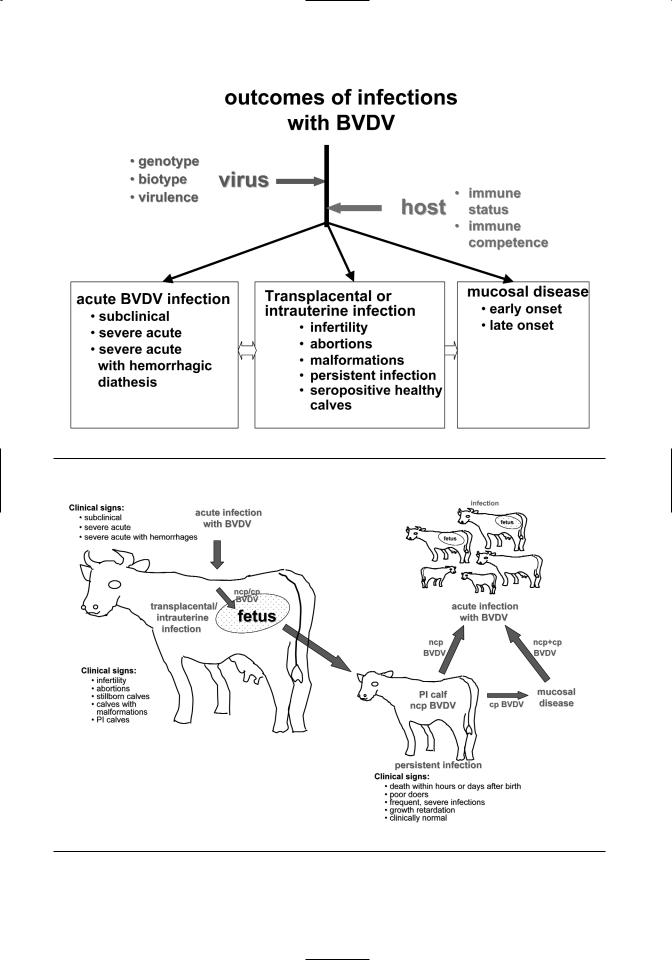
Figure 7.1. Outcomes and factors influencing the outcome of BVDV infections.
Figure 7.2. Circulation of BVDV in cattle populations.
122