Материал: Атлас Ханц фениш
 16
16
|
388 |
Sense organs |
|
|
|
|
||
|
|
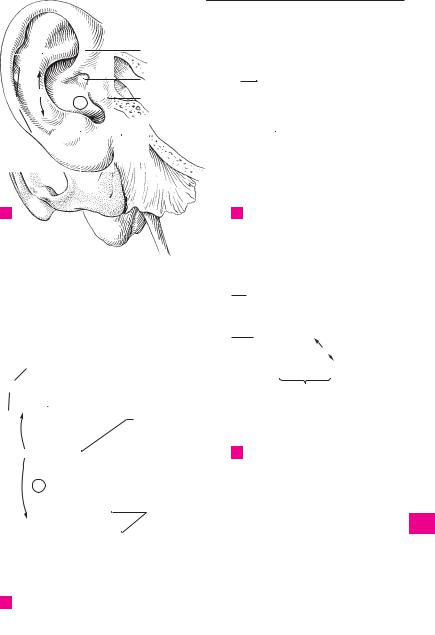
1 Isthmus of auricular cartilage. Isthmus car- |
19 M. antitragicus. Muscle fibers |
on the anti- |
||||
1 |
|
|||||||
|
|
tilaginis auricularis. Narrow bridge of cartilage |
|
tragus. They extend partly to the tail of the |
||||
|
|
|
connecting the cartilage of the external acoustic |
|
helix. B |
|
|
|
2 |
|
|
meatus and tragic lamina with the auricular |
20 M. transversus auricularis. Muscle located on |
||||
|
|
|
cartilage. A |
|
the posterior surface of the auricular cartilage. |
|||
|
|
2 Terminal notch. Incisura terminalis auricularis. |
|
|||||
3 |
|
|
It extends between the eminences of the sca- |
|||||
|
|
Deep notch separating the lamina tragi from the |
|
phoid fossa and concha. C |
|
|||
|
|
|
|
|
||||
|
|
|
auricular cartilage. A |
21 M. obliquus auricularis. It lies between the |
||||
4 |
|
|
||||||
3 |
Fissura antitragohelicina. Deep fissure sepa- |
|||||||
|
eminences of the concha and triangular fossa. C |
|||||||
|
|
|
rating the antitragus and helix inferiorly as well |
22 [M. incisurae helicis]. Muscle fibers occasion- |
||||
5 |
|
|
as the anthelix and helix further superiorly. A |
|||||
|
|
|
ally present in the caudal continuation of trans- |
|||||
|
|
4 Transverse sulcus of anthelix. [[Sulcus antheli- |
|
versus auricularis muscle. C |
|
|||
|
|
|
|
|||||
6 |
|
|
cis transversus]]. Posteromedial depression vis- |
23 |
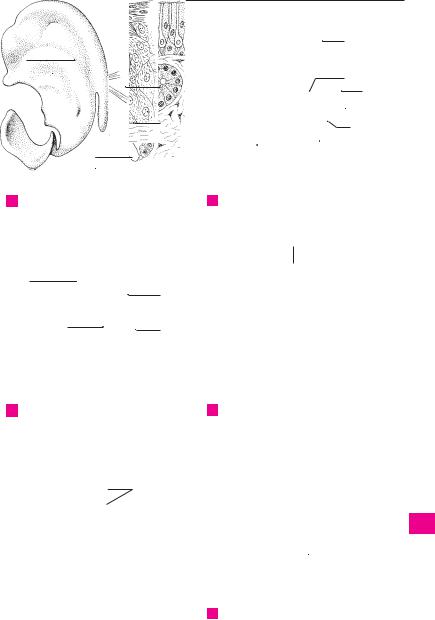
OLFACTORY ORGAN. Organum olfactorium (ol- |
|||
|
|
ible between the eminences of the triangular |
||||||
|
|
|
|
factus). Organ of smell. |
|
|||
|
|
|
fossa and concha. A |
|
|
|||
7 |
|
|
24 Nasal mucosa of the olfactory region. Regio |
|||||
5 |
Groove of crus of helix. Sulcus cruris helicis. |
|||||||
|
|
|
Shallow furrow on the posterior surface of the |
|
olfactoria tunicae mucosae nasi. This region, |
|||
|
|
|
|
which is covered by olfactory epithelium, is |
||||
8 |
|
|
auricular cartilage. It corresponds to the crus of |
|
||||
|
|
|
about the size of a |
nickel and |
occupies the |
|||
|
|
|
the helix on the anterior surface. A |
|
lateral and medial walls and roof (below the cri- |
|||
|
|
6 Fossa of anthelix. Fossa anthelicis. Furrow on |
|
|||||
9 |
|
|
briform plate) of the nasal cavity at the level of |
|||||
|
|
posterior surface of auricular cartilage corre- |
|
the superior nasal concha. E F |
|
|||
|
|
|
|
|
||||
|
|
|
sponding to the anthelix on the anterior sur- |
25 Olfactory glands (of Bowman). Glandulae ol- |
||||
10 |
|
|
||||||
|
|
face. A |
||||||
|
|
|
factoriae. Serous glands found below the ol- |
|||||
|
7 |
Eminence of concha. Eminentia conchae. |
|
|||||
|
|
factory epithelium. Their predominantly serous |
||||||
11 |
|
|
Elevation on the posterior surface of the auricu- |
|
secretions can enhance or wash away odorous |
|||
|
|
|
lar cartilage corresponding to the cavity of the |
|
substances. F |
|
|
|
|
|
|
concha. A |
26 |
GUSTATORY ORGAN. |
Organum |
gustatorium |
|
12 |
|
|
||||||
|
8 Eminence of scaphoid fossa. Eminentia |
|||||||
|
|
|
(Gustus). Organ of taste, comprised of all the |
|||||
|
|
|
scaphae. Curved elevation on the posterior sur- |
|
taste buds. |
|
|
|
13 |
|
|
|
|
|
|||
|
|
face of the auricular cartilage corresponding to |
27 Taste bud. Caliculus gustatorius (gemma gusta- |
|||||
|
|
|
the scaphoid fossa on the anterior surface. A |
|||||
|
|
|
|
toria). Occupying the full thickness of the |
||||
|
9 |
Eminence of triangular fossa. Eminentia fossae |
|
|||||
14 |
|
epithelium, it consists of supporting cells and |
||||||
|
|
|
triangularis. Elevation on the posterior surface |
|
taste cells. Each of the taste cells has microvilli |
|||
|
|
|
of the auricular cartilage corresponding to the |
|
on its surface which serve as chemoreceptors. |
|||
15 |
|
|
|
|||||
|
|
triangular fossa. A |
|
Distribution of taste buds: aggregated in the |
||||
|
10 |
Auricular ligaments. Ligg. auricularia. Liga- |
|
epithelium of vallate (circumvallate) and foliate |
||||
16 |
|
|
ments of the pinna. They attach the auricular |
|
papillae; solitary on the outside of the tongue. D |
|||
|
|
|
cartilage to the temporal bone. |
28 Taste pore. Porus gustatorius. Space left by the |
||||
|
|
|
||||||
17 |
11 |
Anterior auricular ligament. Lig. auriculare an- |
|
epithelium above the apex of the taste bud. Mi- |
||||
|
crovilli project into it. D |
|
||||||
|
|
|
terius. It extends from the root of the zygomatic |
|
|
|||
|
|
|
arch to the spine of the helix. B |
|
|
|
|
|
1812 Superior auricular ligament. Lig. auriculare superius. It passes from the upper margin of the
19osseous external auditory meatus to the spine of the helix. B
2013 Posterior auricular ligament. Lig. auriculare posterius. It extends from the eminence of the concha to the mastoid process. C
2114 Mm. auriculares. Muscles of the pinna.
15 M. helicis major. It passes upward from the
22spine of the helix to the helix. B
16 M. helicis minor. It lies on the crus of the helix.
23 B
17 M. tragicus. It lies vertically on the lamina tragi.
24 B
18 M. pyramidalis auricularis. Muscle fibers that
25occasionally split off from the tragicus muscle and pass to the spine of the helix. B
 1
1
390 Skin and its appendages
1 |
|
1 |
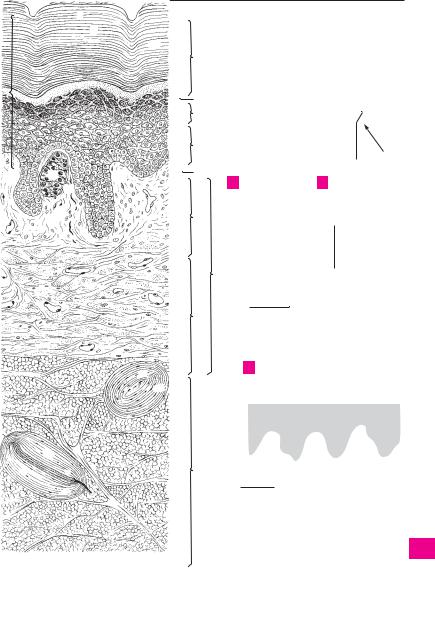
SKIN (INTEGUMENT). Integumentum com- |
16 |
Papillary layer. Stratum papillare. The delicate |
|||||||||||
|
|
|
mune. Common integument (skin). The outer |
|
upper layer of the dermis with numerous con- |
|||||||||||
|
|
|
|
covering of the body consisting of three layers, |
|
nective tissue papillae connecting it to the |
||||||||||
2 |
|
|
|
the epidermis, dermis (corium) and subcutis. In |
|
epidermis. A |
|
|
||||||||
|
|
|
|
the adult it covers an area of about 1.8 square |
17 |
Papillae. Conical extensions of connective tissue |
||||||||||
3 |
|
|
|
meters. |
|
|
|
|
|
|
|
projecting into the epidermis. They may form |
||||
|
2 |
Cutis. Collective term for epidermis and der- |
|
rows (dermal ridges) or branches and vary |
||||||||||||
4 |
|
|
|
mis. |
|
|
|
|
|
|
|
18 |
markedly in form and organization. A E |
|
||
|
3 |
Sulci of skin. Sulci cutis. Variably sized depres- |
Reticular layer. Stratum reticulare. Part of der- |
|||||||||||||
|
|
|
|
sions or furrows on the surface of the skin, e. g., |
|
mis adjoining the papillary layer. It consists of |
||||||||||
5 |
|
|
|
the nasolabial sulcus, |
the deep sulci of |
the |
|
more compact, densely interwoven connective |
||||||||
|
|
|
joints, the fine depressions on the smooth areas |
|
tissue. A |
|
|
|||||||||
|
|
|
|
|
|
|
||||||||||
|
|
|
|
of the skin, and the dermal ridges on the palms |
19 |
Subcutaneous tissue. Tela subcutanea. Layer of |
||||||||||
6 |
|
|
|
and soles. A |
|
|
|
|
|
|
subcutaneous fatty tissue compartmentalized |
|||||
|
|
|
4 Dermal ridges. Cristae cutis. Ridges produced |
|
by fibrous tracts and firmly connected with the |
|||||||||||
7 |
|
|
|
by the underlying papillae of the corium on the |
|
corium with mobile connections to the fascia. A |
||||||||||
|
|
|
thick skin of the palms of the hands and soles of |
20 |
Panniculus adiposus. The thicker layer of fat in |
|||||||||||
|
|
|
|
|||||||||||||
8 |
|
|
|
the feet. A |
|
|
|
|
|
|
|
the subcutaneous tissue. A |
|
|||
|
5 |
Retinacula cutis. Bands of connective tissue |
21 |
Terminal nerve corpuscles. Corpuscula nervosa |
||||||||||||
|
|
|
|
which attach the skin to the underlying tissue. |
|
terminalia. Collective term for encapsulated |
||||||||||
9 |
|
|
|
A |
|
|
|
|
|
|
|
|
nerve endings. |
|
|
|
|
|
6 |
Tactile elevations. Toruli tactiles. Skin regions |
22 |
End bulbs of Krause (bulboid corpuscles). |
|||||||||||
10 |
|
|
|
with more abundant fat deposits, e. g., near the |
|
Corpuscula bulboidea. Oval convolutions of |
||||||||||
|
|
|
phalanges, thenar and hypothenar eminences. |
|
nerve fibers found especially in the lamina pro- |
|||||||||||
|
|
|
|
B |
|
|
|
|
|
|
|
|
pria of the mucosa. They are considered to be |
|||
11 |
|
7 |
Coccygeal foveola. [Foveola coccygea]. Pit |
|
cold receptors. E |
|
|
|||||||||
|
|
|
|
above the coccyx caused by the caudal reti- |
23 |
Lamellated [[Vater-Pacini, pacinian]] cor- |
||||||||||
12 |
|
|
|
naculum. C |
|
|
|
|
|
|
puscles. Corpuscula lamellosa. Oval bodies, 2− |
|||||
|
8 |
Caudal |
retinaculum. |
Retinaculum |
caudale. |
|
3 mm long, with concentric layers of connective |
|||||||||
|
|
|
||||||||||||||
|
|
|
|
Connective tissue remains of the embryonic |
|
tissue surrounding an inner core (axon and |
||||||||||
13 |
|
|
|
notochord lying between the coccygeal foveola |
|
Schwann cells). They are pressure receptors |
||||||||||
|
|
|
|
and the coccyx. C |
|
|
|
|
|
|
found in the subcutaneous fat muscles and |
|||||
14 |
|
9 |
Epidermis. |
Stratified, |
keratinized |
squamous |
|
viscera. A |
|
|
||||||
|
24 |
Tactile |
[[Meissner’s]] corpuscles. Corpuscula |
|||||||||||||
|
|
|
|
epithelium covering the body. Its thickness var- |
||||||||||||
15 |
|
|
|
ies from 30 µm to 4 mm or more. A |
|
|
|
tactus. These encapsulated sensory organs in the |
||||||||
|
10 |
Stratum corneum. Most superficial, cornified |
|
connective papilla of the dermis measure about |
||||||||||||
|
|
|
|
(keratinized) layer of the epidermis which un- |
|
0.1 mm in length and consist of transversely |
||||||||||
|
|
|
|
|
oriented tactile cells within a ramified nerve |
|||||||||||
16 |
|
|
|
dergoes continual desquamation. A |
|
|
|
|||||||||
|
|
|
|
|
|
network. A |
|
|
||||||||
|
11 |
Stratum |
lucidum. |
Located |
between |
the |
|
|
|
|||||||
|
|
25 |
Genital corpuscles. [[Corpuscula genitalia]]. El- |
|||||||||||||
17 |
|
|
|
stratum granulosum and stratum corneum. It is |
||||||||||||
|
|
|
|
liptical, encapsulated nerve endings similar to |
||||||||||||
|
|
|
a homogeneous, strongly refractile layer rich in |
|
||||||||||||
|
|
|
|
|
the end bulbs of Krause and found abundantly in |
|||||||||||
|
|
|
|
eleidin fibers. A |
|
|
|
|
|
|
||||||
18 |
|
|
|
|
|
|
|
|
|
the clitoris, glans and nipple. E |
|
|||||
|
12 |
Stratum granulosum. It consists of 1−5 |
cell |
|
|
|||||||||||
|
26 |
Tactile |
menisci |
[[Merkel’s discs or cor- |
||||||||||||
|
|
|
|
layers |
with degenerative nuclear changes. It |
|||||||||||
|
|
|
|
|
puscles]]. Menisci tractus. Flat group of light |
|||||||||||
19 |
|
|
|
contains |
stongly |
refractory |
keratohyaline |
|
||||||||
|
|
|
|
cells with intracellular neurofibrils. They occupy |
||||||||||||
|
|
|
granules. A |
|
|
|
|
|
|
|||||||
|
|
|
|
|
|
|
|
|
|
the epithelium. D |
|
|
||||
|
|
|
13 Stratum spinosum. Prickle cell layer. It consists |
|
|
|
||||||||||
20 |
|
|
27 |
Articular corpuscles. [[Corpuscula |
articu- |
|||||||||||
|
|
|
of polygonal cells |
with spinous |
processes |
|||||||||||
|
|
|
|
laria]]. Modified |
pacinian corpuscles |
within |
||||||||||
|
|
|
|
which project from their surfaces and contact |
|
|||||||||||
|
|
|
|
|
joint capsules. |
|
|
|||||||||
21 |
|
|
|
each other by means of a desmosome. They ap- |
|
|
|
|||||||||
|
|
|
|
|
|
|
|
|||||||||
|
|
|
pear to bridge over relatively large intercellular |
|
|
|
|
|
||||||||
|
|
|
|
|
|
|
|
|
||||||||
|
|
|
|
spaces (shrinkage artifact). A |
|
|
|
|
|
|
|
|
||||
|
|
|
|
|
|
|
|
|
|
|
|
|||||
22 |
|
|
|
|
|
|
|
|
|
|
|
|||||
14 |
Stratum basale [cylindricum]. Deepest, cylin- |
|
|
|
|
|
||||||||||
|
|
|
|
drical cell layer of the epidermis. Cell prolifera- |
|
|
|
|
|
|||||||
|
|
|
|
|
|
|
|
|
||||||||
23 |
|
|
|
tion occurs here and in the stratum spinosum, |
|
|
|
|
|
|||||||
|
|
|
|
thus ensuring the continual renewal of the |
|
|
|
|
|
|||||||
24 |
|
|
|
epidermis. A |
|
|
|
|
|
|
|
|
|
|
||
|
15 |
Dermis (corium). The layer of skin consisting of |
|
|
|
|
|
|||||||||
|
|
|
|
an intimate network of collagenous and elastic |
|
|
|
|
|
|||||||
25 |
|
|
|
fibers rich in nerves and blood vessels and |
|
|
|
|
|
|||||||
|
|
|
|
devoid of fat. A |
|
|
|
|
|
|
|
|
|
|
||