Материал: Атлас Ханц фениш

|
372 |
Sense organs |
|
|
|
|
|
|
|
|
|
|
|||
|
|
1 |
Ductus reuniens. Fine tube connecting the sac- |
19 |
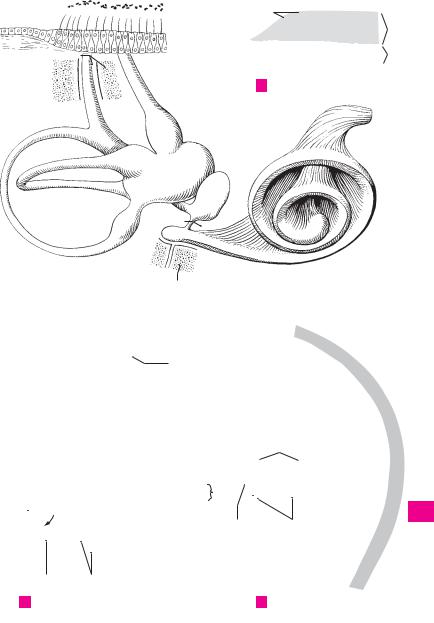
Spiral organ (of Corti). Organum spirale |
||||||||||
1 |
|||||||||||||||
|
|
cule with the cochlear duct. B |
|
|
|
[[Corti]]. Sensory field on the basilar membrane |
|||||||||
|
2 |
Saccule. Sacculus. Round vesicle, 2−3 mm in |
|
that transforms sound waves into nerve im- |
|||||||||||
2 |
|
|
size, equipped with a sensory field. B |
|
|
pulses. D |
|
|
|
|
|
||||
|
3 |
Maculae [[staticae]]. Sensory fields for the per- |
20 |
Basilar membrane. Lamina basilaris. Plate of |
|||||||||||
|
|||||||||||||||
3 |
|
|
ception of the position of the head in space. A B |
|
connective tissue between the cochlear duct |
||||||||||
4 |
Utricular |
macula. Macula utriculi. Horizon- |
|
and scala tympani. It extends between the tym- |
|||||||||||
|
|
|
tally oriented sensory field, 2.3−3 mm in size, |
|
panic lip of the osseous spiral lamina and the |
||||||||||
4 |
|
|
|
spiral crest. E |
|
|
|
|
|||||||
|
|
occupying the floor of the utricle. B |
|
|
|
|
|
|
|
||||||
|
5 |
Saccular |
macula. Macula sacculi. Vertically |
21 Spiral crest (ligament). Crista spiralis (lig. spi- |
|||||||||||
|
|||||||||||||||
5 |
|
|
oriented, arched sensory field, about 1.5 mm |
|
rale). Spirally arranged system of fibers arising |
||||||||||
|
|
|
from the periosteum of the cochlear canal and |
||||||||||||
|
|
wide; in the medial wall of the saccule. B |
|
|
|||||||||||
|
6 |
Statoconia. Calcium concretions, up to 15 µm |
|
radiating into the basilar lamina. E |
|
||||||||||
6 |
|
|
|||||||||||||
22 |
Nerve foramina. Foramina nervosa. Holes in the |
||||||||||||||
|
|
in size, embedded in a gelatinous substance to- |
|||||||||||||
|
|
|
|
basilar lamina |
for transmission of |
cochlear |
|||||||||
|
|
|
gether with the sensory hairs. A |
|
|
|
|||||||||
7 |
|
|
|
|
|
nerve fibers from the hair cells to the spiral gan- |
|||||||||
7 |
Statoconial membrane. Membrana stato- |
|
|||||||||||||
|
glion. D |
|
|
|
|
|
|||||||||
|
|
|
coniorum. Membrane covering the maculae and |
23 |
Limbus |
of osseous spiral |
lamina. Limbus |
||||||||
|
|
|
|||||||||||||
8 |
|
|
consisting |
of a gelatinous ground |
substance |
||||||||||
|
|
|
laminae spiralis osseae. Thickening and trans- |
||||||||||||
|
|
with statoconia on its surface. It is penetrated by |
|
||||||||||||
|
|
|
|
formation of the endosteum on the upper layer |
|||||||||||
|
|
|
bristle-like processes from underlying macular |
|
|||||||||||
|
|
|
|
of the osseous spiral lamina indented externally |
|||||||||||
9 |
|
|
sensory cells. A |
|
|
|
|
||||||||
|
|
|
|
|
|
by the internal spiral sulcus. E |
|
|
|||||||
|
8 |
[[Neuroepithelium]]. |
Pseudostratified, |
pris- |
24 Vestibular lip of limb of osseous spiral lamina. |
||||||||||
10 |
|
|
matic, sensory epithelium of the macula con- |
||||||||||||
|
|
|
Labium |
limbi |
vestibulare. |
Upper, |
shorter |
||||||||
|
|
sisting of |
supporting |
and sensory |
cells. The |
|
|||||||||
|
|
|
|
process of the limbus. Site of attachment of the |
|||||||||||
|
|
|
sensory cells bear 20−25 µm long bristle-like |
|
|||||||||||
|
|
|
|
tectorial membrane. E |
|
|
|
||||||||
11 |
|
|
processes which project into the |
statoconial |
|
|
|
|
|||||||
|
|
25 |
Typmpanic lip |
of limb of |
osseous spiral |
||||||||||
|
|
|
membrane. A |
|
|
|
|||||||||
|
9 |
Labyrinthus |
cochlearis. |
|
lamina. |
Labium limbi |
tympanicum. Lower, |
||||||||
|
Cochlear |
labyrinth. |
|
||||||||||||
|
|
||||||||||||||
12 |
|
longer process of the limbus lying on the basilar |
|||||||||||||
|
|
Complex contents of the osseous cochlea. C |
|
||||||||||||
|
|
|
|
membrane. D E |
|
|
|
|
|||||||
|
10 Perilymphatic space. Spatium perilymphati- |
26 |
|
Membrana |
tectoria. |
||||||||||
13 |
Tectorial |
membrane. |
|||||||||||||
|
|
cum. Space occupied by perilymph and partially |
|||||||||||||
|
|
|
Fibrous membrane resting on the organ of Corti. |
||||||||||||
|
|
|
permeated by connective tissue fibers. It in- |
|
|||||||||||
|
|
|
|
It is narrow at the site where it attaches to the |
|||||||||||
14 |
|
|
cludes the scala vestibuli and tympani. A B |
|
|||||||||||
|
|
|
vestibular lip and ends freely beyond the row of |
||||||||||||
11 |
Scala vestibuli. Perilymphatic canal located |
|
|||||||||||||
|
|
outer hair cells. D E |
|
|
|
||||||||||
|
|
|
|
|
|||||||||||
|
|
|
above the osseous spiral lamina and cochlear |
27 Auditory teeth. Dentes acustici. The ridge-like |
|||||||||||
15 |
|
|
|||||||||||||
|
|
duct. It ascends as far as the apex of the cochlea |
|||||||||||||
|
|
|
rows of cells on the surface of the vestibular lip. |
||||||||||||
|
|
|
(helicotrema). C |
|
|
|
|
||||||||
|
|
|
|
|
|
|
The tectorial membrane attaches near here. D |
||||||||
16 |
12 |
Scala tympani. Perilymphatic canal below the |
|
||||||||||||
28 |
Internal spiral sulcus. Sulcus spiralis internus. |
||||||||||||||
|
13 |
osseous spiral lamina and basilar membrane. C |
|
Groove between the vestibular and tympanic |
|||||||||||
|
|
||||||||||||||
17 |
Cochlear |
aqueduct |
(perilymphatic |
duct). |
|
lips. D E |
|
|
|
|
|
||||
|
|
Aquaeductus cochleae. Pathway connecting the |
|
|
|
|
|
|
|||||||
|
|
|
29 External spiral sulcus. Sulcus spiralis externus. |
||||||||||||
|
|
|
perilymphatic space |
with the subarachoid |
|||||||||||
|
|
|
|
Groove on the outer wall of the cochlear duct be- |
|||||||||||
18 |
|
|
space. B |
|
|
|
|
|
|||||||
|
|
|
|
|
|
|
tween the spiral prominence and the spiral |
||||||||
|
14 |
External aperture of perilymphatic duct. |
|
organ. E |
|
|
|
|
|
||||||
|
|
|
|
|
|
|
|||||||||
19 |
|
|
Apertura externa aquaeductus cochleae. Open- |
|
|
|
|
|
|
|
|||||
|
|
ing for the tympanic nerve in the vicinity of the |
|
|
|
|
|
|
|
||||||
|
|
|
|
|
|
|
|
|
|
||||||
|
|
|
canaliculus. See p. 14.22 |
|
|
|
|
|
|
|
|
|
|||
20 |
|
|
|
|
|
|
|
|
|
|
|
||||
15 |
Cochlear duct. Ductus cochlearis. A spiral en- |
|
|
|
|
|
|
|
|||||||
|
|
|
dolymphatic tube taking 21/2−23/4 turns around |
|
|
|
|
|
|
|
|||||
|
|
|
|
|
|
|
|
|
|
||||||
21 |
|
|
a bony axis (modiolus) before ending blindly at |
|
|
|
|
|
|
|
|||||
|
|
the apex of the cochlea. It houses the sensory |
|
|
|
|
|
|
|
||||||
|
|
|
|
|
|
|
|
|
|
||||||
|
|
|
epithelium for the perception of sound. B C E |
|
|
|
|
|
|
|
|||||
22 |
|
|
|
|
|
|
|
|
|
||||||
16 |
Cupular cecum. Caecum cupulare. Blind end of |
|
|
|
|
|
|
|
|||||||
|
|
|
cochlear duct located at the apex of the cochlea. |
|
|
|
|
|
|
|
|||||
|
|
|
|
|
|
|
|
|
|
||||||
23 |
|
|
B |
|
|
|
|
|
|
|
|
|
|
|
|
17 |
Vestibular cecum. Caecum vestibulare. Blind |
|
|
|
|
|
|
|
|||||||
|
|
|
end of the cochlear duct facing the vestibule. B |
|
|
|
|
|
|
|
|||||
2418 Tympanic wall of cochlear duct (spiral membrane). Paries tympanicus ductus cochlearis
25(membrana spiralis). Inferior wall of cochlear duct situated above the scala tympani. E

374 Sense organs
1 |
1 |
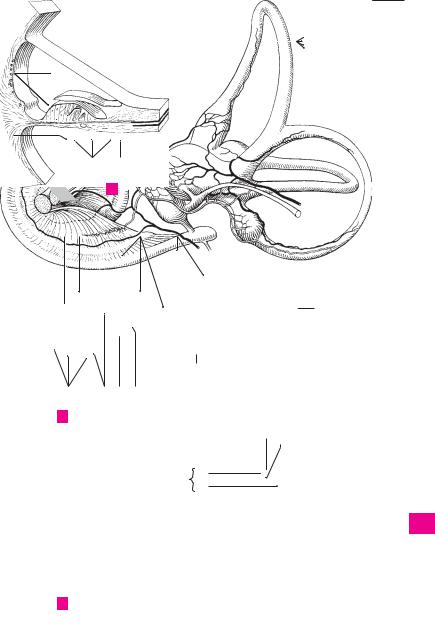
Reticular membrane. Membrana reticularis. |
17 |
Vestibular veins. Vv. vestibulares. They arise |
|
Membrane covering the organ of Corti, formed |
|
from the semicircular ducts in the region of |
|
|
|
by the heads of pillar/Deiters‘ cells. The micro- |
|
the utricle and saccule and drain partly into a |
2 |
|
villi of hair cells emerge through the gaps. B |
|
labyrinthine vein, partly into the vein of the |
|
2 |
Spiral vessel. Vas spirale. Small blood vessel |
|
vestibular aqueduct. C |
|
|
|||
3 |
|
below the tunnel, in the tympanic layer of the |
18 |
Vein of vestibular aqueduct. V. aqueductus |
|
basilar membrane. A |
|
vestibuli. Companion vein of endolymphatic |
|
|
3 |
Vestibular wall of cochlear duct (vestibular |
|
duct. It opens into the inferior petrosal sinus. C |
4[[Reissner’s]] membrane). Paries vestibularis 19 Vein of cochlear aqueduct. V. aqueductus
|
|
ductus cochlearis (membrana vestibularis) [[Re- |
|
cochleae. Companion vein of perilymphatic |
||||
5 |
|
issner]]. Upper wall of the cochlear duct. It is |
|
duct. It carries blood from the basal turn of the |
||||
|
about 3 µm thick. A |
|
|
|
cochlea through the cochlear canaliculus. C |
|||
|
|
|
|
|
||||
|
4 External wall of cochlear duct. Paries externus |
20 OSSEOUS LABYRINTH. Labyrinthus osseus. |
||||||
6 |
||||||||
|
ductus cochlearis. Lateral wall. A |
|
|
Bony capsule enclosing the membranous laby- |
||||
|
5 |
Basilar crest. Crista basilaris. Pointed edge of |
|
rinth. D |
||||
|
|
|||||||
7 |
|
the spiral crest that joins the basilar membrane. |
21 Vestibule. Vestibulum. Part of osseous laby- |
|||||
|
6 |
A |
|
Prominentia |
spiralis. |
|
rinth enclosing the utricle and saccule. D |
|
|
|
|
||||||
8 |
Spiral |
prominence. |
22 |
Spherical recess of vestibule. Recessus spheri- |
||||
|
Marginal ridge projecting above the external |
|
cus. Rounded recess in the medial wall of the |
|||||
|
|
|
||||||
|
|
spiral sulcus. It consists of connective tissue and |
|
vestibule. It is occupied by the saccule. D |
||||
9 |
|
contains a blood vessel. A |
|
23 |
Elliptical recess of vestibule. Recessus ellipti- |
|||
|
7 Vas prominens. The blood vessel in the spiral |
|
cus. Oval depression in the medial wall of the |
|||||
|
|
|||||||
10 |
|
prominence. A |
|
|
|
vestibule. It is occupied by the portion of the |
||
8 |
Stria vascularis. Broad, specialized band of |
|
||||||
|
|
utricle between the posterior ampulla and |
||||||
|
|
highly |
vascularized |
stratified squamous |
|
common crus. D |
||
11 |
|
|
||||||
|
epithelium above the spiral prominence. It is |
24 |
Crest of vestibule. Crista vestibuli. Ridge be- |
|||||
|
|
thought to secrete endolymph. A |
|
|||||
|
|
|
|
tween the spherical and elliptical recesses. D |
||||
12 |
9 |
Spiral ganglion of cochlea. Ganglion spirale |
|
|||||
25 Pyramid of vestibule. Pyramis vestibuli. Upper |
||||||||
|
|
cochlearis. Accumulation of bipolar |
ganglion |
|
broadened part of the crest of the vestibule. D |
|||
|
|
cells in the spiral canal of the modiolus. The |
|
|||||
|
|
|
|
|||||
13afferent, peripheral fibers of these cells arise from the hair cells; the central, efferent fibers
14form the cochlear branch of the vestibulocochlear nerve. C
10 Vessels of inner ear. Vasa auris internae. C
1511 Labyrinthine artery. A. labyrinthina. It arises from the basilar artery in front of the anterior
16inferior cerebellar artery, passes through the internal acoustic meatus with the vestibulocochlear nerve and enters the petrous part of
17the temporal bone, where it ramifies and supplies the inner ear. C
1812 Vestibular branches. Rami vestibulares. Branches supplying the ampullae, maculae semicircular ducts and the lower third of the
19basal turn of the cochlea. C
13 Cochlear branch. Ramus cochlearis. It passes
20into the modiolus where it supplies the spiral ganglion and the cochlear duct except for the lower third of the basal turn of the cochlea. C
2114 Arterial glomeruli of cochlea. Glomeruli arteriosi cochleae. Spirally oriented arterial
22network accompanying the spiral vein. C
15 Labyrinthine veins. Vv. labyrinthinae. Com-
23panion veins of the labyrinthine artery. They pass through the internal acoustic meatus and open either into the inferior petrosal sinus or
24directly into the internal jugular vein. C
16 Spiral vein of modiolus. V. spiralis modioli. It
25takes a spiral course in the modiolus and empties into the labyrinthine vein. C

376 |
Sense organs |
|
|||
|
|
1 |
Cochlear recess. Recessus cochlearis. Depres17 |
Ampullary osseous crura. Crura ossea ampul- |
|
1 |
|||||
|
|
sion lying below and in front of the spherical |
laria. Crura of the semicircular canals dilated for |
||
|
|
|
recess. It is occupied by the lower end of the |
accomodation of the ampullae of the mem- |
|
2 |
|
|
cochlear duct. C |
branous labyrinth. B |
|
2Maculae cribrosae. Perforated bony areas 18 Cochlea. It makes 21/2−23/4 turns, measures
3 |
|
transmitting fibers of |
the vestibulocochlear |
|
8−9 mm at its base and is altogether 4−5 mm |
||
|
nerve. |
|
|
|
high. B |
||
|
|
|
|
|
|||
|
3 |
Macula cribrosa superior. Perforated bony |
19 |
Apex of cochlea. Cupula cochlea. Anteroinferi- |
|||
4 |
|||||||
|
area transmitting fibers of the utriculoampul- |
|
orly and laterally directed structure within the |
||||
|
|
lar nerve. C |
|
|
|
cranium. B |
|
|
|
|
|
|
|||
5 |
4 |
Macula cribrosa media. Perforated bony area |
20 |
Base of cochlea. Basis cochlea. Structure with a |
|||
|
|
near the base of the cochlea for passage of |
|
surface pointing approx. in the direction of the |
|||
|
|
|
|||||
|
|
fibers of the saccular nerve. C |
|
|
internal acoustic meatus. A |
||
6 |
|
|
|
||||
5 |
Macula cribrosa inferior. Perforated bony |
21 |
Spiral canal of cochlea. Canalis spiralis |
||||
|
|||||||
|
|
area in the wall of the posterior osseous am- |
|
cochleae. It is partitioned into three canals by |
|||
7 |
|
|
|||||
|
pulla for passage of fibers of the posterior am- |
|
the osseous spiral lamina and the basilar mem- |
||||
|
|
pullar nerve. C |
|
|
|
brane on one side and the vestibular wall of the |
|
|
|
|
|
|
|||
8 |
6 |
Osseous semicircular canals. Canales semi- |
|
cochlear duct on the other. A |
|||
22 |
Modiolus. Conical axis of the cochlea. It is hol- |
||||||
|
|
circulares ossei. Bony canals containing per- |
|||||
|
|
ilymph and enclosing the membranous semi- |
|
lowed out for accomodation of the cochlear |
|||
9 |
|
|
|||||
|
circular ducts (filled with endolymph). C |
|
nerve and forms the medial wall of the spiral |
||||
|
7 |
Anterior (superior) |
semicircular |
canal. |
|
canal. A |
|
|
|
||||||
10 |
|
Canalis semicircularis anterior. Canal sharing a |
23 |
Base of modiolus. Basis modioli. Beginning of |
|||
|
|
commn crus with the posterior semicircular |
|
the cochlear axis. A |
|||
|
|
|
|||||
|
|
canal and oriented vertically, somewhat per- |
24 |
Lamina of modiolus. Lamina modioli. Bony |
|||
11 |
|
||||||
|
pendicular to the axis of the petrous part of |
||||||
|
|
plate extending upward as a continuation of the |
|||||
|
|
the temporal bone. B |
|
|
|
bony spiral lamina. A |
|
12 |
|
|
|
|
|||
8 |
Posterior semicircular canal. Canalis semicir- |
|
|||||
25 |
Spiral canal of modiolus. Canalis spiralis |
||||||
|
|
cularis posterior. Posterior and most |
inferior |
|
modioli. Fine channel in the axial wall near the |
||
|
|
|
|||||
13 |
|
semicircular canal. It lies somewhat parallel to |
|
base of the bony spiral lamina. It contains the |
|||
|
the axis of the petrous part of the temporal |
|
spiral ganglion. A |
||||
|
|
bone. B |
|
|
26 |
Longitudinal canals of modiolus. Canales |
|
14 |
|
|
|
||||
9 |
Lateral semicircular canal. Canalis semicircu- |
||||||
|
longitudinales modioli. Centrally located bony |
||||||
|
|
laris lateralis. Horizontally oriented canal that |
|
||||
|
|
|
channels containing fibers of the cochlear nerve |
||||
15 |
|
sometimes creates a bulge in the medial wall of |
|
leaving the spiral ganglion. A |
|||
|
the tympanic cavity. B |
|
|
|
|||
|
|
|
|
|
|
||
10 Osseous ampullae. Ampullae osseae. Dilata-
16tions close to the base of the semicircular crura. They lodge the membranous ampullae. C
1711 Anterior osseous ampulla. Ampulla ossea anterior. Ampulla of the anterior semicircular canal located proximal to the ampulla of the
18lateral semicircular canal. B
12 Posterior osseous ampulla. Ampulla ossea
19posterior. Ampulla of the posterior semicircular canal. It lies below the plane of the lateral semi-
20circular canal. B
13 |
Lateral osseous ampulla. Ampulla ossea |
|
|
|
lateralis. Ampulla of lateral semicircular canal. |
21 |
|
|
|
It lies near the anterior semicircular ampulla. B |
|
22 |
14 |
Crura ossea. Osseous crura of the semicircular |
|
canals. |
|
15 Common osseous crus. Crus osseum com-
23mune. Posteriorly situated common limb formed by the union of the crura of the superior and posterior semicircular canals. B
2416 Simple osseous crus. Crus osseum simplex. Posteriorly situated crus of the lateral semi-
25circular canal opening independently into the wall of the vestibule. B