Материал: Атлас Ханц фениш


|
324 |
Cranial nerves |
|
|
|
|
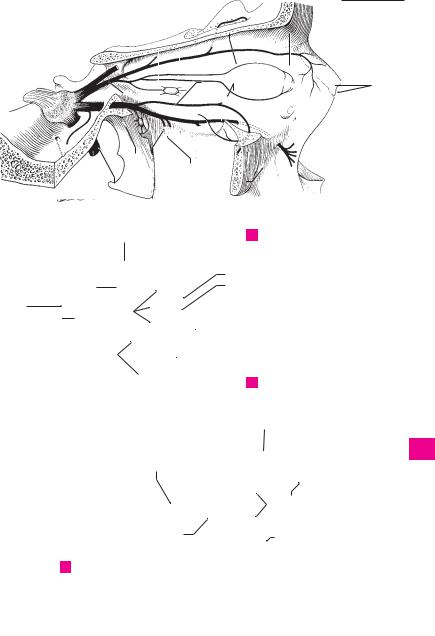
1 Infraorbital nerve. N. infraorbitalis. Terminal |
17 Nerve to lateral pterygoid. N. pterygoideus |
|
1 |
|
|||
|
|
branch of maxillary nerve. It passes through the |
lateralis. Motor nerve for the corresponding |
|
|
|
|
inferior orbital fissure and corresponding sul- |
muscle. It frequently arises together with the |
2 |
|
|
cus and foramen to the skin of the upper eyelid, |
buccal nerve. A |
|
|
|
nose, upper lip and cheek. C |
18 Nerve to medial pterygoid. N. pterygoideus |
|
|
|
||
3 |
|
2 Superior alveolar nerves. Nn. alveolares super- |
medialis. Motor nerve for the corresponding |
|
|
|
iores. Branches to the maxillary teeth. |
muscle. It also sends small twigs to the tensor |
|
|
|
|
||
|
|
3 Posterior superior alveolar branches. Rami |
veli palatini and tensor tympani muscles. A |
|
4 |
|
|||
|
19 Otic ganglion. Ganglion oticum. Parasympa- |
|||
|
|
alveolares superiores posteriores. Two to three |
||
|
|
|
branches passing through the alveolar |
thetic ganglion located medial to the mandibu- |
|
|
|
||
5 |
|
|
foramina to the inner surface of the maxilla. |
lar nerve below the foramen ovale. It receives |
|
|
They supply the maxillary sinus and the molars |
tributaries from the glossopharyngeal nerve via |
|
|
|
|
||
|
|
|
including their buccal gingiva. C |
the lesser petrosal nerve and sends secretory |
6 |
|
|
||
4 |
Middle superior alveolar branch. R. alve- |
fibers to the parotid gland. B |
||
|
|
|
olaris superior medius. It courses through the |
20 Ramus communicans [cum nervo ptery- |
7 |
|
|
infraorbital sulcus to the maxilla and passes |
goideo mediali]. Branch which communicates |
|
|
|
along the lateral wall of the maxillary sinus up |
with the nerve to the medial pterygoid muscle. |
|
|
|
to the superior dental plexus. C |
B |
85 Anterior superior alveolar branches. Rami 21 Nerve to tensor veli palatini muscle. N.
|
|
alveolares superiores anteriores. They run in |
|
musculi tensoris veli palatini. It sometimes |
|
9 |
|
their respective canals and via the superior |
|
arises from the nerve to the medial pterygoid |
|
|
|
dental plexus to the incisors, canines, pre- |
|
muscle. B |
|
|
|
molars and first molar tooth. C |
22 |
Nerve to tensor tympani muscle. N. musculi |
|
10 |
|
||||
6 |
Superior dental plexus. Plexus dentalis superior. |
|
tensoris tympani. It also sometimes arises from |
||
|
|
||||
|
|
Nerve plexus in the bone above the roots of the |
|
the nerve to the medial pterygoid muscle. B |
|
11 |
|
|
|||
|
teeth formed by the superior alveolar rami. C |
23 |
Buccal nerve. N. buccalis. Sensory nerve for the |
||
|
7 Superior dental branches. Rami dentales super- |
|
skin and mucosa of the cheek and the buccal |
||
12 |
|
iores. Branches to the individual roots of the |
|
gingiva in the region of the first molar. A |
|
|
teeth. C |
24 |
Auriculotemporal nerve. N. auriculotem- |
||
|
|
||||
|
|
||||
13 |
8 |
Superior gingival branches. Rami gingivales su- |
|
poralis. It usually encircles the middle mening- |
|
|
periores. Rami to the gingiva. C |
|
eal artery, sends a small branch to the temporo- |
||
|
9 |
Inferior palpebral branches. Rami palpe- |
|
mandibular joint and then passes upward be- |
|
14 |
|
tween the ear and superficial temporal artery |
|||
|
brales inferiores. Rami given off to the lower |
|
|||
|
|
eyelid outside of the infraorbital foramen. C |
|
to the skin of the temporal region. A |
|
|
|
25 |
Nerve to external acoustic meatus. N. mea- |
||
15 |
10 |
External nasal branches. Rami nasales ex- |
|||
|
tus acustici externi. Usually two small branches |
||||
|
|
terni. Branches to the outside of the nasal ala. C |
|
||
|
|
|
for the skin of the external acoustic meatus. A |
||
|
11 |
Internal nasal branches. Rami nasales interni. |
|
||
16 |
|
||||
26 |
Fine branches to the tympanic membrane. |
||||
|
|
Branches to the skin of the nasal vestibule. C |
|
Rami membranae tympani. A |
|
|
12 Superior labial branches. Rami labiales su- |
|
|||
17 |
27 |
Parotid branches. Rami parotidei. Small |
|||
|
periores. Rami to the skin and mucosa of the |
||||
|
|
upper lip. C |
|
branches supplying the parotid gland. A |
|
|
|
|
|||
18 |
|
28 |
Branches communicating with the facial |
||
13 |
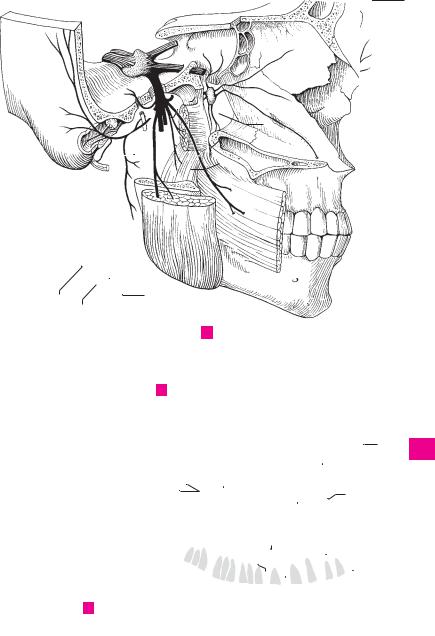
Mandibular nerve. N. mandibularis. Third divi- |
||||
|
nerve. Rami communicantes [cum n. faciali]. |
||||
|
|
sion (branch) of the trigeminal nerve. It passes |
|
||
|
|
|
They carry parasympathetic fibers from the otic |
||
19 |
|
through the foramen ovale and into the in- |
|
||
|
|
ganglion to the parotid gland via the facial |
|||
|
fratemporal fossa. Besides sensory fibers, it |
|
|||
|
|
|
nerve. A |
||
|
|
contains motor fibers for the masticatory |
|
||
20 |
|
muscles. A |
29 |
Anterior auricular nerves. Nn. auriculares |
|
|
14 Meningeal branch (nervus spinosus). Ramus |
|
anteriores. They supply the anterior surface of |
||
|
|
the pinna. A |
|||
21 |
|
meningeus (n. spinosus). It passes through the |
|
||
|
|
Superficial temporal rami. Rami temporales |
|||
|
foramen spinosum accompanied by both 30 |
||||
|
|
||||
|
|
branches of the middle meningeal artery and |
|
superficialis. Branches supplying the skin of the |
|
22 |
|
supplies the dura, a part of the sphenoidal sinus |
|
temporal region in front of and above the ear. A |
|
|
|
and the mastoid air cells. A |
|
|
|
|
|
|
|
||
2315 Masseteric nerve. N. massetericus. Motor nerve for the masseter muscle passing above the lateral pterygoid muscle and through the
24mandibular notch. A
16 Deep temporal nerves. Nn. temporales pro-
25fundi. Motor nerves passing to the temporalis muscle from below. A
 20
20 1
1
|
326 |
Cranial nerves |
|
|
|
||
|
|
1 |
Lingual nerve. N. lingualis. A branch of the 17 |
Otic ganglion. Ganglion oticum. Parasympa- |
|||
1 |
|||||||
|
|
mandibular nerve that arches anteriorly be- |
thetic ganglion located medial to the mandibu- |
||||
|
|
|
tween the lateral and medial pterygoid muscles |
lar nerve below the foramen ovale. It communi- |
|||
2 |
|
|
to the floor of the mouth where it lies near a |
cates with the glossopharyngeal nerve via the |
|||
|
|
|
wisdom tooth directly below the mucosa. A B C |
lesser petrosal nerve and sends secretory fibers |
|||
|
2 |
Branches to isthmus |
of |
the fauces. Rami |
into the parotid gland. C |
||
3 |
|||||||
|
|||||||
|
|
isthmi faucium (rami fauciales). It also 18 |
ABDUCENT NERVE (VI). N. abducens [VI]. Sixth |
||||
|
|
|
|||||
|
|
|
branches to the tonsils. A |
|
cranial nerve. It exits the brain in the angle be- |
||
4 |
|
|
|
||||
3 |
Communicating rami |
to |
the hypoglosal |
tween the pons and pyramid, penetrates the |
|||
|
dura at the level of the middle of the clivus, |
||||||
|
|
|
nerve. Rami communicantes [cum n. hypo- |
||||
5 |
|
|
glosso]. It lies on the hyoglossus muscle. A |
passes laterally into the cavernous sinus and |
|||
|
|
then through the inferior orbital fissure into |
|||||
|
4 |
Communicating ramus to the chorda tym- |
|||||
|
the orbit where it supplies the rectus lateralis |
||||||
6 |
|
|
pani nerve. Ramus communicans [cum chorda |
muscle. D |
|||
|
|
|
tympani]. A |
|
|
|
|
75 Sublingual nerve. N. sublingualis. It passes lateral to the sublingual gland into the mucosa of the floor of the mouth and into the gingiva of
8the anterior mandibular teeth. A
6Lingual branches. Rami linguales. Numerous
9rami containing sensory and taste fibers from the anterior two-thirds of the lingual mucosa. A
107 Ganglionic branches. Rami ganglionares. Rami communicating with the submandibular
11 |
|
ganglion. A |
|
8 Submandibular ganglion. Ganglion subman- |
|||
|
|||
|
|
dibulare. Parasympathetic ganglion above or in |
|
12 |
|
||
|
front of the submandibular gland. Synaptic sta- |
||
|
|
tion for preganglionic fibers of the chorda tym- |
|
|
|
||
13 |
|
pani with postganglionic fibers for the sublin- |
|
|
gual and submandibular glands. A |
||
|
|
||
|
9 Inferior alveolar nerve. N. alveolaris inferior. |
||
14 |
|||
|
Largest branch of mandibular nerve with |
||
|
|
||
|
|
sensory and motor components. It passes 1 cm |
|
15 |
|
behind the lingual nerve and through the man- |
|
|
|
dibular foramen into the mandibular canal. A B |
|
|
|
||
|
|
C |
|
16 |
|
||
10 |
Mylohyoid nerve. N. mylohyoideus. Coursing |
||
|
|
in the mylohyoid groove and then below the |
|
17 |
|
||
|
mylohyoid muscle, this motor nerve supplies |
||
|
|
the mylohyloid muscle and the anterior belly of |
|
|
|
||
18 |
|
the digastric. A B C |
|
11 Inferior dental plexus. Plexus dentalis infe- |
|||
|
|||
|
|||
19 |
|
rior. Plexus of nerves within the mandibular |
|
|
canal. B |
||
|
|
||
|
12 |
Inferior dental branches. Rami dentales inferi- |
|
20 |
|||
|
ores. Rami for the mandibular teeth. B |
||
|
|
|
|
13 Inferior gingival branches. Rami gingivales inferi-
21ores. Rami for the buccal gingiva of the mandibular teeth (except for the first molar). B
2214 Mental nerve. N. mentalis. Sensory nerve exiting from the mental foramen below the 2nd pre-
23molar tooth. B
15 Mental branches. Rami mentales. Branches
supplying the chin. B
24
16 Labial branches. Rami labiales. Branches sup-
25
plying the lower lip. B
16 a Gingival branches. Rami gingivales. B