Материал: Реакция доходности корпоративных облигаций на объявления о дивидендных выплатах
Согласно полученным
результатам, «хорошая» новость (об увеличении дивидендных выплат)
воспринималась облигационным рынком негативно. Доходность облигаций уменьшалась
практически на всем протяжении рассматриваемого периода, но на восьмой день
после объявления наблюдается разворот. Реакция на «плохую» новость менее ярко
выражена и практически неотличима от нуля в день объявления, но после него
намечается положительный тренд.
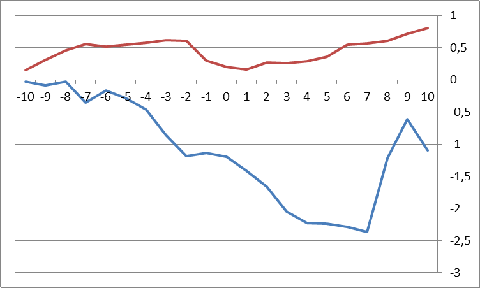
Реакция рынка на «хорошую» и «плохую» новость
|
Тип объявления |
tGRANK |
Табличное значение статистики Стьюдента при 10%ом уровне значимости |
|
"Хорошее" |
1,853611 |
1,676 |
|
"Плохое" |
1,864044 |
1,699 |
Таким образом, полученные нами результаты противоречат выдвинутым гипотезам. Реакция рынка в большей степени соответствует теории трансфера благосостояния от держателей облигаций к акционерам, кредиторы отрицательно воспринимают информацию об увеличении выплаты дивидендов, соответственно, «хорошая» новость оказывается «плохой». Объявление такого рода оказывало более заметное воздействие. Результаты можно соотнести с выводами, сформированными в предыдущих исследованиях (например, Parker, Li): рынки реагируют на неблагоприятные новости в большей степени, чем на положительные. Также воздействие «плохой» новости наблюдается еще до момента объявления.
Объяснение в соответствии с теорией трансфера благосостояния заключается в том, что российские кредиторы считают недостаточными ограничительные условия, защищающие их права в отношениях с собственниками и менеджерами, и, соответственно, воспринимают увеличение дивидендов как событие, увеличивающее риск дефолта компании и потерь кредиторов впоследствии. Тем не менее, согласно результатам отечественных научных работ, посвященных акциям, на российском рынке также наблюдается негативная реакция на увеличение дивидендных выплат, связанная с потенциальной потерей акционерами будущих прибылей в результате реализации компанией ее инвестиционных возможностей.
Тем не менее, стоит учесть, что
накопленная избыточная доходность не превышает по абсолютной величине 0,1%, что
представляется весьма незначительной величиной.
ЗАКЛЮЧЕНИЕ
Результаты проведенного исследования оказались прямо противоположными ожидаемым. В большей степени они соответствуют альтернативной гипотезе трансфера благосостояния от держателей облигаций к акционерам. В случае объявления об увеличении дивидендных выплат реакция рынка облигаций оказывалась негативной, в случае их уменьшения - прямо противоположной.
Однако не стоит забывать, что наблюдаемая связь выражена крайне слабо. Возможно, это связано с неправильной спецификацией модели или крайне малой выборкой, хотя для российского рынка весьма тяжело получить релевантные данные. Тем не менее, стоит ожидать, что методология событийного анализа окажется перспективной по отношению к рынку облигаций.
новость доходность
корпоративный облигация
СПИСОК ЛИТЕРАТУРЫ
1. Burton G. Malkiel,Eugene F. Fama. Efficient Capital Markets: A Review of Theory and Empirical Work // The Journal of Finance. - 1970 - Volume 25. - Pages 383-417
. Malkiel B. A. Efficient market hypothesis (in Newman)[M]. P., M. Milgate, and J. Eatwell (eds.), New Palgrave Dictionary of Money and Finance. - 1992.
. Fama E. F. et al. The adjustment of stock prices to new information //International economic review. - 1969. - Т. 10. - №. 1. - С. 1-21.
. Easton P. D., Monahan S. J., Vasvari F. P. Initial evidence on the role of accounting earnings in the bond market //Journal of Accounting Research. - 2009. - Т. 47. - №. 3. - С. 721-766.
. Dang T. V., Gorton G., Holmström B. Financial crises and the optimality of debt for liquidity provision //Unpublished working paper. Yale School of Management. - 2010.
. Hotchkiss E. S., Ronen T. The informational efficiency of the corporate bond market: An intraday analysis //Review of Financial Studies. - 2002. - Т. 15. - №. 5. - С. 1325-1354.
. Kwan S. H. Firm-specific information and the correlation between individual stocks and bonds //Journal of Financial Economics. - 1996. - Т. 40. - №. 1. - С. 63-80.
. Black F., Scholes M. The pricing of options and corporate liabilities //The journal of political economy. - 1973. - С. 637-654.
. Merton R. C. On the pricing of corporate debt: The risk structure of interest rates //The Journal of finance. - 1974. - Т. 29. - №. 2. - С. 449-470.
. Weinstein M. I. The effect of a rating change announcement on bond price //Journal of Financial Economics. - 1977. - Т. 5. - №. 3. - С. 329-350.
. Wakeman L. Bond rating agencies and the capital markets. - 1998.
. Wansley J. W., Clauretie T. M. The impact of creditwatch placement on equity returns and bond prices //Journal of Financial Research. - 1985. - Т. 8. - №. 1. - С. 31-42.
. Hand J. R. M., Holthausen R. W., Leftwich R. W. The effect of bond rating agency announcements on bond and stock prices //The journal of finance. - 1992. - Т. 47. - №. 2. - С. 733-752.
. Steiner M., Heinke V. G. Event study concerning international bond price effects of credit rating actions //International Journal of Finance & Economics. - 2001. - Т. 6. - №. 2. - С. 139-157.
. Billett M. T., King T. H. D., Mauer D. C. Bondholder wealth effects in mergers and acquisitions: New evidence from the 1980s and 1990s //The Journal of Finance. - 2004. - Т. 59. - №. 1. - С. 107-135.
. Maxwell W. F., Rao R. P. Do Spin‐offs Expropriate Wealth from Bondholders? //The Journal of Finance. - 2003. - Т. 58. - №. 5. - С. 2087-2108.
. Dann L. Y. Common stock repurchases: An analysis of returns to bondholders and stockholders //Journal of financial Economics. - 1981. - Т. 9. - №. 2. - С. 113-138.
. Maxwell W. F., Stephens C. P. The wealth effects of repurchases on bondholders //The Journal of Finance. - 2003. - Т. 58. - №. 2. - С. 895-920.
. Adams J. C., Mansi S. A. CEO turnover and bondholder wealth //Journal of Banking & Finance. - 2009. - Т. 33. - №. 3. - С. 522-533.
. Berger P. G., Ofek E., Yermack D. L. Managerial entrenchment and capital structure decisions //The journal of finance. - 1997. - Т. 52. - №. 4. - С. 1411-1438.
. Janner S., Schmidt D. Are economically significant bond returns explained by corporate news? An examination of the German corporate bond market //Financial Markets and Portfolio Management. - 2015. - Т. 29. - №. 3. - С. 271-298.
. Corrado C. J. A nonparametric test for abnormal security-price performance in event studies //Journal of financial economics. - 1989. - Т. 23. - №. 2. - С. 385-395.
. Miller M. H., Modigliani F. Dividend policy, growth, and the valuation of shares //the Journal of Business. - 1961. - Т. 34. - №. 4. - С. 411-433.
. Ross S. A. The determination of financial structure: the incentive-signalling approach //The bell journal of economics. - 1977. - С. 23-40.
. Bhattacharya S. et al. Imperfect information, dividend policy, and “the bird in the hand” fallacy //Bell journal of economics. - 1979. - Т. 10. - №. 1. - С. 259-270.
. Miller M. H., Rock K. Dividend policy under asymmetric information //The Journal of finance. - 1985. - Т. 40. - №. 4. - С. 1031-1051.
. Jensen M. C. Agency cost of free cash flow, corporate finance, and takeovers //Corporate Finance, and Takeovers. American Economic Review. - 1986. - Т. 76. - №. 2.
. Woolridge J. R., Ghosh C. Dividend cuts: Do they always signal bad news //Midland Corporate Finance Journal. - 1985. - Т. 3. - №. 2. - С. 20-32.
. Jensen M. C., Meckling W. H. Theory of the firm: Managerial behavior, agency costs and ownership structure //Journal of financial economics. - 1976. - Т. 3. - №. 4. - С. 305-360.
. Kalay A. Signaling, information content, and the reluctance to cut dividends //Journal of financial and Quantitative Analysis. - 1980. - Т. 15. - №. 04. - С. 855-869.
. Aharony J., Swary I. Quarterly dividend and earnings announcements and stockholders' returns: An empirical analysis //The Journal of Finance. - 1980. - Т. 35. - №. 1. - С. 1-12.
. Benesh G. A., Keown A. J., Pinkerton J. M. An examination of market reaction to substantial shifts in dividend policy //Journal of Financial Research. - 1984. - Т. 7. - №. 2. - С. 131-142.
. Eddy A., Seifert B. Stock price reactions to dividend and earnings announcements: Contemporaneous versus noncontemporaneous announcements //Journal of Financial Research. - 1992. - Т. 15. - №. 3. - С. 207-217.
. McCluskey T. et al. Evidence on the Irish stock market's reaction to dividend announcements //Applied Financial Economics. - 2006. - Т. 16. - №. 8. - С. 617-628.
. Woolridge J. R. Dividend changes and security prices //The Journal of Finance. - 1983. - Т. 38. - №. 5. - С. 1607-1615.
. Handjinicolaou G., Kalay A. Wealth redistributions or changes in firm value: An analysis of returns to bondholders and stockholders around dividend announcements //Journal of Financial Economics. - 1984. - Т. 13. - №. 1. - С. 35-63.
. Jayaraman N., Shastri K. The valuation impacts of specially designated dividends //Journal of Financial and Quantitative Analysis. - 1988. - Т. 23. - №. 03. - С. 301-312.
. Brickley J. A. Shareholder wealth, information signaling and the specially designated dividend: An empirical study //Journal of Financial Economics. - 1983. - Т. 12. - №. 2. - С. 187-209.
. Dhillon U. S., Johnson H. The effect of dividend changes on stock and bond prices //The Journal of finance. - 1994. - Т. 49. - №. 1. - С. 281-289.
. DeAngelo H., DeAngelo L. Dividend policy and financial distress: An empirical investigation of troubled NYSE firms //The Journal of Finance. - 1990. - Т. 45. - №. 5. - С. 1415-1431.
. DeAngelo H., DeAngelo L., Skinner D. J. Dividends and losses //The Journal of Finance. - 1992. - Т. 47. - №. 5. - С. 1837-1863.
. Tsai H. J., Wu Y. Bond and stock market response to unexpected dividend changes //Journal of Empirical Finance. - 2015. - Т. 30. - С. 1-15.
. Ronen T., Zhou X. Trade and information in the corporate bond market //Journal of Financial Markets. - 2013. - Т. 16. - №. 1. - С. 61-103.
. Nissim D., Ziv A. Dividend changes and future profitability //the Journal of Finance. - 2001. - Т. 56. - №. 6. - С. 2111-2133.
. Penman S. H. The predictive content of earnings forecasts and dividends //the Journal of Finance. - 1983. - Т. 38. - №. 4. - С. 1181-1199.
. DeAngelo H., DeAngelo L., Skinner D. J. Reversal of fortune dividend signaling and the disappearance of sustained earnings growth //Journal of financial Economics. - 1996. - Т. 40. - №. 3. - С. 341-371.
. Benartzi S., Michaely R., Thaler R. Do changes in dividends signal the future or the past? //The Journal of Finance. - 1997. - Т. 52. - №. 3. - С. 1007-1034.
. Grullon G. et al. Dividend changes do not signal changes in future profitability //Available at SSRN 431762. - 2003.
. Ball R., Brown P. An empirical evaluation of accounting income numbers //Journal of accounting research. - 1968. - С. 159-178.
. Beaver W. H. The information content of annual earnings announcements //Journal of accounting research. - 1968. - С. 67-92.
. Lev B. On the usefulness of earnings and earnings research: Lessons and directions from two decades of empirical research //Journal of accounting research. - 1989. - С. 153-192.
. Kothari S. P. Capital markets research in accounting //Journal of accounting and economics. - 2001. - Т. 31. - №. 1. - С. 105-231.
. Ball R., Kothari S. P. Security returns around earnings announcements //Accounting Review. - 1991. - С. 718-738.
. Conrad J., Cornell B., Landsman W. R. When is bad news really bad news? //The Journal of Finance. - 2002. - Т. 57. - №. 6. - С. 2507-2532.
. Yan Z., Zhao Y. A New Measure of Earnings Surprises and Post Earnings Announcement Drift. - 2006.
. Cready W. M., Gurun U. G. Aggregate market reaction to earnings announcements //Journal of Accounting Research. - 2010. - Т. 48. - №. 2. - С. 289-334.
. Datta S., Dhillon U. S. Bond and stock market response to unexpected earnings announcements //Journal of Financial and Quantitative Analysis. - 1993. - Т. 28. - №. 04. - С. 565-577.
. Kane A., Lee Y. K., Marcus A. Earnings and dividend announcements: is there a corroboration effect? //the Journal of Finance. - 1984. - Т. 39. - №. 4. - С. 1091-1099.
. Easton P. D., Monahan S. J., Vasvari F. P. Initial evidence on the role of accounting earnings in the bond market //Journal of Accounting Research. - 2009. - Т. 47. - №. 3. - С. 721-766.
. DeFond M., Zhang J. The Asymmetric Magnitude and Timeliness of the Bond Market Reaction to Earnings Surprises. - 2009.
. Fama E. F., French K. R. Common risk factors in the returns on stocks and bonds //Journal of financial economics. - 1993. - Т. 33. - №. 1. - С. 3-56.
. Defond M. L., Zhang J. The timeliness of the bond market reaction to bad earnings news //Contemporary Accounting Research. - 2014. - Т. 31. - №. 3. - С. 911-936.
. Dolley J. C. Characteristics and procedure of common stock split-ups //Harvard Business Review. - 1933. - Т. 11. - №. 3. - С. 316-326.
. Peterson P. P. Event studies: A review of issues and methodology //Quarterly journal of business and economics. - 1989. - С. 36-66.
. Brown S. J., Warner J. B. Measuring security price performance //Journal of financial economics. - 1980. - Т. 8. - №. 3. - С. 205-258.
. Brown S. J., Warner J. B. Using daily stock returns: The case of event studies //Journal of financial economics. - 1985. - Т. 14. - №. 1. - С. 3-31.
68. Теплова Т. В. Влияние дивидендных выплат на рыночную оценку российских компаний: эмпирическое исследование методом событийного анализа на российских и зарубежных торговых площадках //Аудит и финансовый анализ. - 2008. - Т. 2. - С. 1-15.
. Теплова Т. В. Реакция цен акций на объявления денежных дивидендов: сигнализирование на российском рынке до и после кризиса //Финансовый менеджмент. - 2011. - Т. 1. - С. 13-25.