Материал: 2096
On the technology front, the biggest developments of the era were the widespread use of independent suspensions, wider application of fuel injection, and an increasing focus on safety in the design of automobiles. The hottest technologies of the 1960s were NSU's «Wankel engine», the gas turbine, and the turbocharger. Of these, only the last, pioneered by General Motors but popularised by BMW and Saab, was to see widespread use. Mazda had much success with its «Rotary» engine which, however, acquired a reputation as a polluting gas–guzzler.
СOther Wankel licensees, including Mercedes–Benz and General Motors, never put their designs into production after the 1973 oil crisis. (Mazda's hydrogen–fuelled successor was later to demonstrate potential as an « ultimate eco–car»). Rover and Chrysler both produced experimental gas turbine cars to no effect.
и 1948–1971бMorris Minor — a popular, and typical post–war car exported around
Cuba is famous for retaining its pre–1959 cars, known as yank tanks or maquinas, which have been kept since the Cuban revolution when the influx of
new cars slowed because of a US trade embargo. Exemplary post–war cars:
the world.
1959–2000 Mini — this quintessential small car lasted for four decades, and is one of the most famous cars of all time.
1961–1975 Jaguar E–type — the E–type saved Jaguar on the track and in the showroom, and was aАstandard for design and innovation in the 1960s. 1964–present Ford Mustang — the pony car that became one of the best–selling and most–collected cars of the era.
1969 Datsun 240Z — one of the first Japanese sports cars to be a smash hit with the North American public, it paved the way for future decades of Japanese strength in the automotive industry.ДIt was affordable, well built, and had great success both on the track and in the showroom.
MODERN ERA 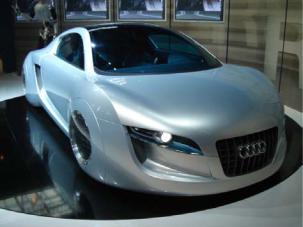 И
И
The modern era is normally defined as the 25 years preceding the current year. However, there are some technical and design aspects that differentiate modern cars from antiques. Without considering the future of the car, the modern
51
era has been one of increasing standardisation, platform sharing, and computer– aided design.
Some particularly notable advances in modern times are the widespread of front–wheel drive and all–wheel drive, the adoption of the V6 engine configuration, and the ubiquity of fuel injection. While all of these advances were first attempted in earlier eras, they so dominate the market today that it is easy to overlook their significance. Nearly all modern passenger cars are front–wheel drive
Сmonocoque/unibody designs, with transversely–mounted engines, but this design was considered radical as late as the 1960s.
Body styles have changed as well in the modern era. Three types, the hatchback, minivan, and sport utility vehicle, dominate today's market, [citation иneeded] yet are relatively recent concepts. All originally emphasised practicality, but have mutated into today's high–powered luxury crossover SUV and sports wagon. The rise of pickup trucks in the United States, and SUVs worldwide has changed the face of motoring, with these « trucks» coming to command more than half of theбworld automobile market.
The modern era has also seen rapidly rising fuel efficiency and engine output. Once the automobile emissions concern of the 1970s were conquered with computerised engine management systems, power began to rise rapidly. In the 1980s, a powerful sports car might have produced 200 horsepower (150 kW) – just 20 years later, averageАpassenger cars have engines that powerful, and some performance models offer three times as much power.
Exemplary modern cars:
1966–present Toyota Corolla – a simple small Japanese saloon/sedan that has come to be the best–selling car of all time.
1967 NSU Ro 80 – the basic wedgeДprofile of this design was much emulated in subsequent decades.
1970–present Range Rover – the first take on the combination of luxury and four– wheel drive utility, the original 'SUV'. Such was the popularity of the original Range Rover Classic that a new model was not brought out until 1996.
1973–present Mercedes–Benz S–Class – electronicИAntilock Braking System, supplemental restraint airbags, seat belt pretensioners, and electronic traction control system all made their debut on the S–Class. These features would later become standard throughout the car industry.
1975–present BMW 3 Series – the 3 Series has been on Car and Driver magazine's annual Ten Best list 17 times, making it the longest running entry in the list. 1977–present Honda Accord saloon/sedan – this Japanese sedan became the most popular car in the United States in the 1990s, pushing the Ford Taurus aside, and setting the stage for today's upscale Asian sedans.
1981–1989 Dodge Aries and Plymouth Reliant – the «K–cars» that saved Chrysler as a major manufacturer. These models were some of the first successful American front–wheel drive, fuel–efficient compact cars.
1983–present Chrysler minivans – the two–box minivan design nearly pushed the station wagon out of the market, and presaged today's crossover SUVs.
52

1986–present Ford Taurus – this mid–sized front–wheel drive sedan with modern computer–assisted design dominated the American market in the late 1980s, and created a design revolution in North America.
Speaking |
|
|
|
|
||
1. |
What questions does this text need to answer? |
|
||||
С |
|
|
|
|
||
2. |
What type of information the author required answering these questions? |
|||||
3. |
What kind of methodology was used in this text (explanation, description, |
|||||
proof, demonstration, comparison)? |
|
|
||||
4. |
Was the given information explained and illustrated enough? |
|||||
и |
|
|
|
|||
5. |
What kind of solutions/recommendations can be done from each passage? |
|||||
Discussing |
|
|
|
|
||
1. |
|
б |
|
|
||
Fill in the structure (in accordance with the text) and compare the |
||||||
achievements of each era of automotive construction. |
|
|||||
|
|
ERA |
DATE |
NAMES |
MODELS |
ACHIEVMENTS |
|
|
|
|
|
|
|
|
|
|
|
|
|
|
|
|
|
А |
|
|
|
|
|
|
|
|
|
|
|
|
|
|
Д |
|
|
2.What is common and distinguishing between them?
3.What period has played the greatest role in the history of automobile (according to your mind)?
4.Look through the classification given below. Put it into correct order.
5.Discuss advantages and disadvantages of it.
CAR SHOW CLASS DEFINITIONSИ
A different classification system is used for purposes of differentiating vehicles in most car shows. While there is little doubt about the definition of classes that are self–described such as «Mustang» or « Firebird», there is often confusion about the definition of classes that are not as readily understood. The following classes are often used in car shows across America – the definitions are determined either by state regulations, the National Street Rod Association, or have been gathered from other reliable sources:
Street Rod – а motor vehicle, or a reproduction thereof, with a model year of 1948 or older which has been materially altered or modified by the removal, addition or
53
substitution of essential parts and with a gross weight or registered gross weight of not more than 9,000 pounds.
Classic car —A motor vehicle, but not a reproduction thereof, at least 30 years old, not materially altered or modified by the removal, addition or substitution of essential parts except that such parts represent the original
Hot Rod – Any car rebuilt or modified for higher speed, faster acceleration, or a sportier look. Many automobiles may be called hot rods, including some used in Сdrag racing. They may be composed of used or newly fabricated parts. Can be a kit
car.
Custom car – a factory–built vehicle that has been modified in either to improve its performance, often by altering or replacing the engine and transmission, or it
иAntique car — A motor vehicle, but not a reproduction thereof, at least 25 years old, which has been maintained in or restored to a condition which is substantially in conformity with manufacturer specifications and appearance.
may be a personal design by the builder, making the car look unique and unlike any car that might have been factory built. Though distinct from hot rods there is debate among customizers and rodders as to where the line should be drawn. A Custom Car cannot be a kit car, as a kit car is not a factory–built vehicle that has
Special Interest – a vehicle uniquely distinguishable from the usual, or designed
for a particular purpose (i.e. fire truck, MASH jeep, tank, surf wagon, bus, race
been modifiedбfrom the original configuration.
cars etc.) which would pique the interest of the public at large because of its uniqueness or specialty function.
Kit car – any vehicle that is created primarily from kit or prefabricated parts, and
is a reproduction or replica. An original factory–built vehicle that utilizes
Brass Era car – beginning with theДfirst horseless carriages, named for the brass fittings used for such things as lights and radiators. Starting with the first commercial automobiles of the 1890s to about 1918–19. Includes most Edwardian cars
prefabricated fiberglass body units to replace worn or damaged original parts is not |
|
a kit car. |
А |
Veteran car – any motor vehicle built prior to 1905
Edwardian car – any vehicle built from 1905 – 1918. Includes all brass era cars Vintage car – commonly defined as a car built between 1919 and 1930. The Classic Car Club of America prefers 1925 since it is the pre–classic car period.
Pre–war car – beginning with the Great Depression in 1930 and ending after |
|
WWII, usually placed at 1948. |
И |
Language practice
1.Make adjectives from given nouns according to the scheme: NOUN +FUL=adjective;
NOUN +LESS=adjective:
a)use;
b)power;
c)care;
54
d) help; e) hope; f) color.
2. Translate them into English.
3. Mach the words with their definitions. |
|
С |
|
a) |
To adjust. |
b) To arise. |
|
c) |
To reduce. |
d) To detect. |
|
e) |
To respond. |
f) |
Highway. |
g) |
Vehicle. |
б |
||
a) |
something which is used to carry people or goods from one place to |
|
|
another; |
|
иb) to regulate for proper use; |
||
c) |
to start or originate; |
|
d) a public road that is wide, well paved and direct; |
||
e) |
a react, to answer; |
|
f) to make or become smaller or less; |
||
g) to discover the presence. |
||
4. Match the words with the similar meaning. |
||
1. |
Feature. |
|
2. |
Respond.А |
|
3. |
Monitor. |
И |
4. |
Detect. |
|
5. |
Improve. |
|
6. |
Feed. |
Д |
7. |
Appliance. |
|
8. |
Assist. |
|
a) provide; |
|
|
b) help; |
|
|
c) |
device; |
|
d) characteristics; |
|
|
e) |
answer; |
|
f) |
find; |
|
g) make better; h) control.
55