Материал: 2096

Министерство науки и высшего образования Российской Федерации Федеральное государственное бюджетное образовательное учреждение высшего образования
«Сибирский государственный автомобильно-дорожный университет (СибАДИ)»
Е.В. Максимюк
ТЕОРИЯ И ПРАКТИКА ДЕЛОВОГО СООБЩЕНИЯ
THEORY AND PRACTICE OF BUSINESS REPORT
Учебное пособие
2-е изд., деривативное
Омск • 2019

УДК 811.111 |
Согласно 436-ФЗ от 29.12.2010 «О защите детей |
ББК 81.432.1 |
от информации, причиняющей вред их здоровью и |
M17 |
развитию» данная продукция маркировке не подлежит. |
|
Рецензенты: |
д-р филол. наук, проф. Л.О. Бутакова (ОмГУ им. Ф.М. Достоевского); |
|
д-р филол. наук, проф. Н.В. Орлова (ОмГУ им. Ф.М. Достоевского) |
|
СибАДИобучающего демонстрационного характера, которые воспроизводятся с помощью проигрывателяWindowsMedia.
Работа утверждена редакционно-издательским советом СибАДИ в качестве
учебного пособ я.
Макс мюк, Елена Валентиновна.
М17 Теор я практ ка делового сообщения = Theory and practice of business report
[Электронный ресурс] : учебное пособие / Е.В. Максимюк. – Электрон. дан. – Омск :
ибАДИ, 2019. – URL: http://bek.sibadi.org/cgi-bin/irbis64r plus/cgiirbis 64 ft.exe. - Режим
доступа: для автор зованных пользователей.
Направлено на разв тие языковых, аналитических и коммуникативных навыков в сферах соц ально о условленного и профессионально-ориентированного общения.
Пособ е состо |
т з 9 глав, каждая из которых состоит из теоретической и практической |
|
частей. |
Практ |
ческая часть носит комплексный характер и содержит в себе задания по |
чтению |
анал зу текста (Reading), по индивидуальному и групповому обсуждению и |
|
размышлению над представленным материалом, над способами и методами его реконструкции, над возможными видами и типами языковой и визуальной презентации материала (Speaking, Discussing). Сектор (Language practice) содержит в себе задания,
направленные на о огащение лексической базы (по профилю) и формирование языкового чутья. В подразделе (Writing) суммируются все знания и навыки, накопленные по мере освоения материала, содержащегося в главе, и учащимся предлагаются несколько видов заданий для самостоятельной подготовки, в рамках которых они могут продемонстрировать уровень владения информацией и проявить собственный креативный подход к его реализации. Содержит гиперссылки на первоисточники текстовой
информации интерактивный тест, который позволяет студентам самостоятельно
оперативно оценить уровень и глубину освоения материала.
Имеет интерактивное оглавление в виде закладок. Содержит видеоматериалы
Предназначено для обучающихся (всех форм обучения) всех технических направлений подготовки магистратуры и всех специальностей.
Подготовлено на кафедре «Иностранные языки».
Мультимедийное издание (2,8 МБ)
Системные требования : Intel, 3,4 GHz ; 150 МБ ; Windows XP/Vista/7 ; DVD-ROM ; 1 ГБ свободного места на жестком диске ; программа для чтения pdf-файлов :
Adobe Acrobat Reader; Google Chrome ; Windows Media Player ; колонки
Редактор И.Г. Кузнецова
Техническая подготовка Н.В. Кенжалинова Издание второе, деривативное. Дата подписания к использованию 19.03.2019
Издательско-полиграфический комплекс СибАДИ. 644080, г. Омск, пр. Мира, 5 РИО ИПК СибАДИ. 644080, г. Омск, ул. 2-я Поселковая, 1
© ГОУ «СибАДИ», 2010 © ФГБОУ ВО «СибАДИ», 2019
Ссылки внутри текста кликабельны
Unit 1
Section A. Purpose of Business Report
Theory
A business report conveys information to assist in business decision– making. The business report is the medium in which to present this information. Some reports might present the actual solution to solve a business problem; other reports might record past business information that is used toward future business
planning. More traditional reports, such as business plans, serve to communicate |
|||
the Business Concept, business management model, commercial objectives, |
|||
operational procedures and the perceived viability of the enterprise. Many people |
|||
consider business report as dry, uninteresting documents which take a great deal of |
|||
С |
|
|
|
time and effort to prepare. The reality is that they are an essential part of doing |
|||
business and one’s ability to be proficient in this area is critical to the ability to |
|||
pursue commercial success. |
|
||
|
Although much of the research and analysis that supports the business report |
||
иis derived from a systematic process, the actual preparation of the report is more |
|||
reliant on art than on a proven business template. Although for the most business |
|||
reports templates are readily available, they are only a guide and the reports needs |
|||
to be developed to best fit their intended application. In order for the reader to have |
|||
a clear understandingбof why a report is written, a written purpose theme must exist |
|||
through the report. This theme could be represented as either a statement or a |
|||
question. In generating a business report, the following steps should be considered: |
|||
• |
determine the scope (purpose) of the report; |
||
• |
consider the target audience (readers); |
|
|
• |
|
А |
|
gather and organize the supporting information (research); |
|||
• |
analyze and weight the supporting information; |
||
• |
determine the solution, findings and recommendations; |
||
• |
determine the report format. |
|
|
Questions: |
Д |
||
|
|
||
1. |
What are the main purposes of business report? |
||
2. |
What does it mean to prepare a business report? |
||
3. |
What should be taken into consideration? |
||
4. |
How can we represent a theme of the business report? |
||
5. |
|
|
И |
Enumerate the steps of making the business report. |
|||
3
Section B. History of automobile construction
Reading
1. Read the text and define the main idea of it.
СибАДИTHE HISTORY OF THE CAR
There have been many inventions during the Twentieth Century – the telephone, air travel, television and the atomic bomb – are just four with universal impact. But one stands out from the crowd as having had more influence on more people in more places – the car.
The significance of the motor car to the recent history of civilization is beyond question. The car′s precise date of introduction, however, will be debated for decades to come. That′s because, ever since the invention of the wheel around 4000 BC, humans have tried to design a self–propelled machine to replace the horse.
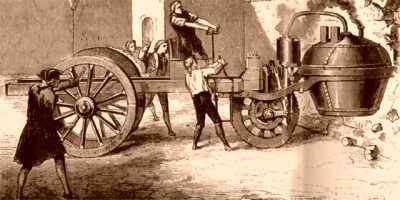
Karl Benz and Gottlieb Daimler may have been credited with producing the first vehicles powered by the internal combustion engine in 1885, but the origins of the car go back as far as the Old Testament. This foretold of machines propelling themselves on land and the air. The great 13–th–century scientist and philosopher Roger Bacon predicted the advent of machine–powered vehicles on land and water, while Leonardo de Vinci′ s diagrams of a self–propelled carriage are a matter of record. In 1472, Roberto Valturio described a machinedesigned for war purposes, which was to be moved by means of large windmills transmitting their motion through cranks and gears. Clockwork and wind–assisted vehicles all played their part in the pre–history of the car but the greatest influence came from the Steam Age. In the early 1760s Frenchman Captain Nicolas Joseph Cugnot built a powerful steam–driven tractor to tow artillery hardware. Only partly successful, it was left to a group of British, American and European inventors to pursue the
development further. Of these, Richard Trevithick′s London Carriage was both the most practical and effective.
The steam era saw, not only the advent of a succession of road coaches, but also the more recent railway locomotive. The former was handicapped by public resistance and government legislation, while those involved in the horse trade saw these new contraptions as a danger to their livelihood. This led not only to heavy
4
taxation through toll roads but also the implementation of the Red Flag Act. This ruled that all forms of ′road locomotives′ should have a man with a red flag walking ahead of them. This ridiculous law was not repealed until many years later.
2.Explain the difference between idea and the theme.
3.What is the theme of this story?
4.How were they (idea and theme) represented in the text?
5.Write down a plan of this text.
6.Analyze what was taken into consideration and how it was realized.
Speaking
1.Change the idea of this story and rebuild (or reorganize) it according to it.
2.Give information about inventors, inventions and dates in two different ways.
3.Find the introduction in this text. What is it about?
4.Write down your own variant of introduction to this text.
5.At home prepare your own story about «History of the car».
6.Try to answer these questions. If it is not possible for you – find the answer in the text given below:
a)What were the earliest means of communication used by man?
b)What had men tried to replace manpower with?
c)Which of the mechanical vehicles has had the greatest influence upon our life?
d)How was the first self–propelled car operated? When was it built?
e)What did Thomas Savery invent? Who improved his invention?
f)Did James Watt want to use steam power to run a road vehicle?
g)Did all men accept his view?СибАДИ
5