Материал: 1493
coupling components. This method of dyeing cotton is declining in importance due to the toxic nature of the chemicals used.
Sulfur dyes are two part "developed" dyes used to dye cotton with dark colors. The initial bath imparts a yellow or pale chartreuse color, This is aftertreated with a sulfur compound in place to produce the dark black we are familiar with in socks for instance. Sulfur Black 1 is the largest selling dye by volume.
Задание 10. Из данных ниже слов постройте опорные схемы, в которых представленные понятия связаны по типу «работа – рабочий – инструмент
– материал (виды материала) – результат работы» либо в той логике, которую увидите вы. Недостающие компоненты схем дополните, используя словарь.
Краска – colour, dye, paint, stain
звукоизолирующая краска – sound-deadening paint
защитная краска – protective paint жароупорная краска – heat resistant paint
грунтовочная краска – primary colour, ground coat paint, prime paint, priming paint
Краски силикатные – silicate paint Краски минеральные – mineral paint
Водоотталкивающая краска – water-repellent paint
клеевая краска – distemper, calcimine, glue colour, distemper paint Краски масляные – oil colour, oil-base paint
краска по дереву – wood paint краскодувка – air brush латексная краска – latex paint
Задание 11. Прочитайте и переведите данные ниже предложения. На основе всех сведений, полученных об обозначенном понятии, составьте учебный текст на английском языке.
They laid down the legal powers and responsibilities of both officials and private builders with regard to the town plan, even down to the painting of houses.
First the excavation is dug for the basement, then the foundation walls below ground level are constructed; after this the framework is erected and clothed with various finishing materials and protected by several coats of paint.
15
Модуль 2. СТРОИТЕЛЬНЫЕ МАТЕРИАЛЫ ПО ПРОИСХОЖДЕНИЮ
Задание 1. Изучите схему. Постройте на ее основе учебный текст на английском языке.
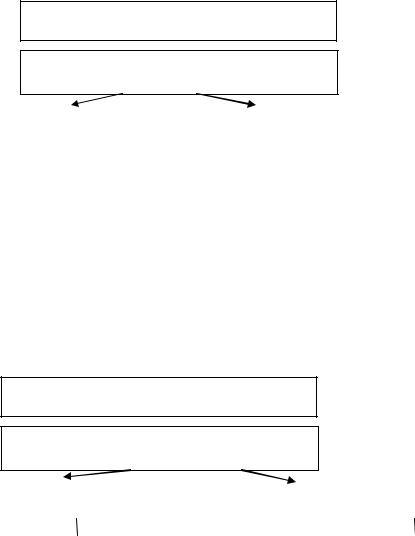
Схема 2. Строительные материалы. Классификация по происхождению
Строительные материалы
Классификация по происхождению
природные |
|
|
искусственные |
|
|||
|
|
|
|
|
|
|
|
|
|
|
|
|
|
|
|
древесина |
|
кирпич |
|||||
|
|
|
|
|
|
|
|
|
|
|
|
||||
природные камни |
|
цемент |
|
||||
|
|
|
|
|
|
|
|
|
|
|
|
|
|
|
|
торф |
|
железобетон |
|
||||
|
|
|
|
|
|
|
|
|
|
|
|
||||
природные битумы |
|
стекло |
|
||||
и асфальты |
|
|
|
|
|
||
|
|
|
|
|
|||
|
|
|
|
|
|
|
|
Building materials
Classification according to origins
native, natural |
|
forced, man-made, manufactured, artificial |
||||
|
|
|
|
|
|
|
|
|
|
|
|
|
|
timber, wood |
|
|
brick |
|
||
|
|
|
|
|
|
|
|
|
|
|
|||
rock (natural stone) |
|
|
cement |
|
|
|
|
|
|
|
|
||
|
|
|
|
|
|
|
peat, turf |
|
|
ferroconcrete |
|
||
|
|
|
|
|
||
|
|
|
||||
natural bitumen, asphaltic bitumen |
|
glass |
|
|||
|
|
|
|
|
|
|
|
|
|
|
|
|
|
Задание 2. Определите место данных ниже терминов в предложенной выше классификации, постройте дефиниции терминов указанием на принадлежность материала к природным или искусственным материалам.
16
Basalt is a common extrusive igneous (volcanic) rock formed from the rapid cooling of basaltic lava exposed at or very near the surface of a planet or moon. By definition, basalt is an aphanitic igneous rock with less than 20% quartz and less than 10% feldspathoid by volume, and where at least 65% of the feldspar is in the form of plagioclase. (In comparison, granite has more than 20% quartz by volume.) Basalt is usually grey to black in colour, but rapidly weathers to brown or rust-red due to oxidation of its mafic (iron-rich) minerals into rust. It almost always has a finegrained mineral texture due to the molten rock cooling too quickly for large mineral crystals to grow, although it can sometimes be porphyritic, containing the larger crystals formed prior to the extrusion that brought the lava to the surface, embedded in a finer-grained matrix. Basalt with a vesicular or frothy texture is called scoria, and forms when dissolved gases are forced out of solution and form vesicles as the lava decompresses as it reaches the surface.
On Earth, most basalt magmas have formed by decompression melting of the mantle. Basalt commonly erupts on Io, the third largest moon of Jupiter, and has also formed on Earth's Moon, Mars, Venus, and the asteroid Vesta.
The term basalt is at times applied to shallow intrusive rocks with a composition typical of basalt, but rocks of this composition with a phaneritic (coarse) groundmass are generally referred to as diabase (also called dolerite) or gabbro.
Asphalt is a brown to black bituminous substance. Mostnativeasphaltisaresidue from evaporated petroleum. Asphalt is used widely in building for such items as waterproofing roof coverings of many types, exterior wall coverings, and flooring tile.
Sawdust or wood dust is a by-product of cutting, grinding, drilling, sanding, or otherwise pulverizing wood with a saw or other tool; it is composed of fine particles of wood. It is also the byproduct of certain animals, birds and insects which live in wood, such as the woodpecker and carpenter ant. It can present a hazard in manufacturing industries, especially in terms of its flammability. Sawdust is the main component of particleboard. A major use of sawdust is for particleboard; coarse sawdust may be used for wood pulp. Sawdust has a variety of other practical uses, including serving as a mulch, as an alternative to clay cat litter, or as a fuel. Until the advent of refrigeration, it was often used in icehouses to keep ice frozen during the summer. It has been used in artistic displays, and as scatter. It is also sometimes used to soak up liquid spills, allowing the spill to be easily collected or swept aside. As such, it was formerly common on barroom floors. It is used to make Cutler's resin. Mixed with water and frozen, it forms pykrete, a slow-melting, much stronger form of ice.
Sawdust is used in the manufacture of charcoal briquettes. The claim for invention of the first commercial charcoal briquettes goes to Henry Ford who created them from the wood scraps and sawdust produced by his automobile factory.
Plywood is a wood product made by fastening together layers of veneer or a combination of veneer layers and a lumber core. The layers are joined with an adhesive. Adjoining plies are usually laid with grains at right angles to each other, and almost always an odd number of plies are used.
17
Задание 3. Заполните пустые графы таблицы, пользуясь словарем,
выпишите |
транскрипцию |
терминов. |
Используйте |
полученную |
|
информацию при выполнении следующего задания. |
|
||||
|
|
|
|
||
Сочетаемость |
|
Перевод |
|
||
|
|
|
Армированный бетон |
|
|
|
|
|
Быстротвердеющий бетон |
||
|
|
|
Неармированный бетон |
|
|
|
|
|
Опилочный бетон |
|
|
|
|
|
Строительный бетон |
|
|
|
|
|
Тяжелый бетон (со средней |
||
|
|
|
плотностью 2200-2400 кг/м3) |
||
|
|
|
Ячеистый бетон |
|
|
|
|
|
Бетонирование |
|
|
|
|
|
Бетонировать |
|
|
|
|
|
Бетоновоз (с перемешиванием в |
||
|
|
|
пути) |
|
|
|
|
|
Бетономешалка |
|
|
|
|
|
Бетононасос |
|
|
|
|
|
Пемзобетон |
|
|
|
|
|
Пенобетон |
|
|
|
|
|
Пластобетон, полимербетон |
||
|
|
|
Фибробетон |
|
|
|
|
|
Асфальтобетон |
|
|
|
|
|
Горячий асфальтобетон |
|
|
|
|
|
Холодный асфальтобетон |
||
|
|
|
Аэрированный легкий бетон |
||
blown-out concrete, aerocrete, aerated |
|
|
|
||
concrete, foam(ed) concrete, gas concrete |
|
|
|
||
(gas-)ash concrete |
|
|
|
|
|
gas-ash cilicate |
|
|
|
|
|
reinforced concrete, ferroconcrete |
|
|
|
|
|
light-weight reinforced concrete |
|
|
|
|
|
precast structural concrete |
|
|
|
|
|
heavy reinforced concrete |
|
|
|
|
|
wire-mesh reinforced concrete |
|
|
|
|
|
ceramsite concrete, expanded-clay |
|
|
|
||
concrete |
|
|
|
|
|
Задание 4. Дайте недостающие толкования понятиям, опираясь на представленный после таблицы текст. Дополните таблицу сведениями из текста. Используйте следующие выражения:
18
группа строительных материалов – group of building materials представлять собой – to be smth
затвердевшая смесь – induration, hardened mixture шлак – ash, slag
различные добавки – different addition agents
уплотненная смесь – compacted mixture тонкоизмельченный – порошок fine powder для устройства полов – for flooring промышленное здание – industrial building
однослойные стеновые панели – single-layer wall panel (building slab) перекрытия и покрытия – coverings and coatings
совмещённые крыши – combined roofs
Definition |
|
|
Translation |
|
|
|
|
|
||
Concrete is a building material, |
Бетон – смесь цемента, песка, гравия |
|||||||||
artificial stone material obtained as a |
или щебня. |
|
|
|
|
|
|
|||
result of hardening of rationally |
Бетоны |
– |
группа |
строительных |
||||||
selected and compacted mixture of |
материалов, |
|
представляющая |
собой |
||||||
binder, |
aggregates, |
water, |
а |
искусственный камень, состоящий из |
||||||
combination of cement and sand, |
затвердевшей |
смеси |
вяжущих |
веществ |
||||||
broken stone, or gravel. It is used for |
(цемент, битум и т. д.), воды, |
|||||||||
foundations, building |
construction, |
заполнителей (песок, гравий, щебень, |
||||||||
walks, and many other purposes |
|
шлак) и различных добавок. По |
||||||||
|
|
|
|
назначению |
бетоны |
подразделяются |
на |
|||
|
|
|
|
конструкционные и специальные |
|
|
||||
|
|
|
|
Асфальтобетон |
– |
строительный |
||||
|
|
|
|
материал, получаемый в результате |
||||||
|
|
|
|
затвердевания |
уплотненной |
смеси |
||||
|
|
|
|
минеральных заполнителей (щебня, песка, |
||||||
|
|
|
|
тонкоизмельченного |
|
минерального |
||||
|
|
|
|
порошка) |
с |
органическим |
вяжущим |
|||
|
|
|
|
(битумом или дегтем). Асфальтобетон |
||||||
|
|
|
|
применяется |
главным |
образом |
для |
|||
|
|
|
|
строительства дорог, а также для |
||||||
|
|
|
|
устройства |
полов |
в |
промышленных |
|||
|
|
|
|
зданиях |
|
|
|
|
|
|
Mix design
Modern concrete mix designs can be complex. The choice of a concrete mix depends on the need of the project both in terms of strength and appearance and in relation to local legislation and building codes.
The design begins by determining the requirements of the concrete. These requirements take into consideration the weather conditions that the concrete will be
19