Материал: 1493

морозостойкость – freeze-thaw durability, cold resisting property, freeze resistance
теплопроводность – capacity of heat transmission, thermal conductance, heat transfer
водостойкость – water-resisting property, water resistance водопоглощение – water adsorption
воздухостойкость – airproofness
фактура лицевой поверхности – face finish механическая обработка – machine work
Definition Translation
Каменные материалы – естественные и искусственные камни, удовлетворяющие определённым требованиям по прочности на сжатие, морозостойкости, теплопроводности, водостойкости, водопоглощению, воздухостойкости, форме, размерам и фактуре лицевой поверхности. К естественным каменным материалам относят строительные материалы, получаемые в результате механической обработки горных пород (гранит, базальт, вулканический туф, известняки).
К искусственным каменным материалам относят кирпич, крупные блоки и панели из бетона
Stone or rock
Rock structures have existed for as long as history can recall. It is the longest lasting building material available, and is usually readily available. There are many types of rock throughout the world, all with differing attributes that make them better or worse for particular uses. Rock is a very dense material so it gives a lot of protection too; its main drawback as a material is its weight and awkwardness. Its energy density is also considered a big drawback, as stone is hard to keep warm without using large amounts of heating resources.
Dry-stone walls have been built for as long as humans have put one stone on top of another. Eventually, different forms of mortar were used to hold the stones together, cement being the most commonplace now.
The granite-strewn uplands of Dartmoor National Park, United Kingdom, for example, provided ample resources for early settlers. Circular huts were constructed from loose granite rocks throughout the Neolithic and early Bronze Age, and the remains of an estimated 5,000 can still be seen today. Granite continued to be used throughout the Medieval period and into modern times. Slate is another stone type, commonly used as roofing material in the United Kingdom and other parts of the world where it is found.
Stone buildings can be seen in most major cities; some civilizations built entirely with stone such as the Egyptian and Aztec pyramids and the remains of the Inca civilization.
75
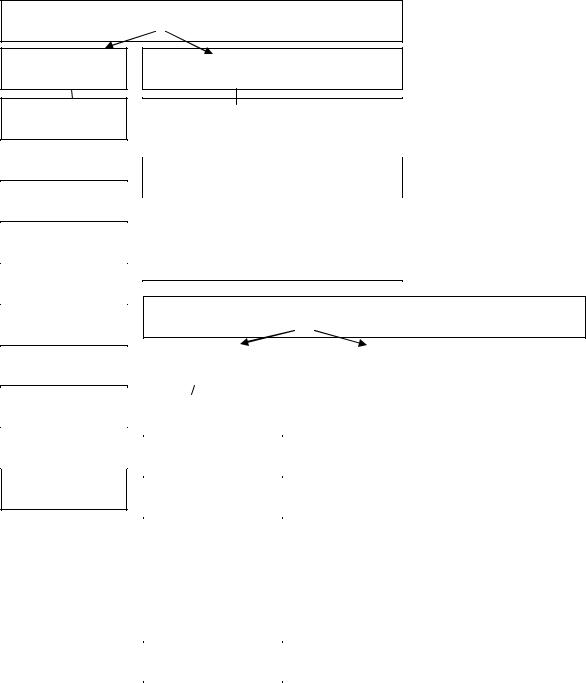
Задание 13. На основе всей полученной информации о понятии и данной ниже схемы составьте учебный текст на английском языке.
Схема 20. Природные каменные материалы
Природные каменные материалы
Сырьевые
Щебень
Гравий
Песок
Известняк
Мел
Гипс
Доломит
Магнезит
Глина
Песчаник
Готовые материалы и изделия
Камни: булыжный, колотый, брусчатый, бортовой
Щебень
Гравий
Песок
Natural stone and stone items
raw materials |
|
ready-made materials and products |
|
|
|
|
|
|
|
|
|
crushed stone |
|
stone: cobble-stone, sledged stone, |
|
|
|
block stone, edgestone (curb) |
|
gravel |
|
||
|
|
|
|
|
crushed stone |
||
|
|
||
sand |
|
|
|
|
gravel |
||
|
|
||
limestone |
|
|
|
|
sand |
||
|
|
||
chalk |
|
|
|
|
|
|
|
|
|
|
|
gypsum |
|
|
|
|
|
|
|
dolomite |
|
|
|
|
|
|
|
magnesite |
|
|
|
|
|
|
|
clay |
|
|
|
|
|
|
|
sandstone |
|
|
|
|
|
|
|
76

Задание 14. Прочитайте и переведите данные ниже предложения. На основе всех сведений, полученных об обозначенном понятии, составьте учебный текст на английском языке.
In North America, archaeological recovery has bitumen was sometimes used to adhere stone projectile points to wooden shafts.
What purpose is the natural stone used for?
Slate is a fine-grained, foliated, homogeneous metamorphic rock derived from an original shale-type sedimentary rock composed of clay or volcanic ash through lowgrade regional metamorphism.
What are the buildings made of stone and brick?
The natural stone (rubble masonry) is used for footing and foundations for external walls carrying the load. The buildings made of stone or brick are durable, fire-proof and have poor heat conductivity.
Bricklayer is a tradesman who builds and repairs brickwork, lays and joints salt glazed stoneware drains, sets, chimney pots, manhole frames and fireplaces.
Mason is a stone worker or stone setter. In Scotland and the USA a bricklayer is usually also a mason. A fixer or a fixer mason or a builder mason is a mason who sets prepared stones in walls, whether the stone be only facing or to the full wall thickness.
Sometimes natural stones such as marble, granite, basalt, limestone and sandstone are used for the construction of dams and foundations. Marble, granite and sandstone are widely used for decorative purposes as well, especially with the public buildings.
Natural stone is used for foundations and for the construction of dams.
The main varieties of building stone are basalt, granite, marble, sandstone and limestone.
When cement is mixed with water, it forms mortar, which hardens, binding various objects, such as bricks or stones, very firmly.
Задание 15. Дополните толкование понятия керамзит, используя информацию перевода и текста, представленного после таблицы. Используйте следующие выражения:
вспучивание гранул легкоплавких глинистых пород – blowouting of low-melt clay rock pearls
выпускается в виде щебня – produced in crushed aggregate диаметром 5-40 мм – 5-40 mm width
теплоизоляционная засыпка – heat insulating layer
Definition |
Translation |
|
LECA is a light |
Керамзит – искусственный заполнитель для легких |
|
porous |
building |
бетонов (керамзитобетон). Керамзит получается в |
material |
obtained |
результате вспучивания гранул легкоплавких глинистых |
by firing |
fusible |
пород при их обжиге. Керамзит выпускается в виде щебня |
clay …. |
|
или гравия диаметром 5-40 мм. Кроме того, керамзит |
|
|
используется в качестве теплоизоляционной засыпки |
|
|
77 |
LECA
Light expanded clay aggregate, is a lightweight ceramic shell with honeycomb core produced by firing natural clay to temperatures of 1100 - 1200 °C in a rotating kiln. The pellets are rounded in shape and fall from the kiln in a grade of approximately 0 - 32 mm with an average dry bulk density of approximately 350 kg/m³. The material is sieved into a number of different grades to suit the application.
With the advantage of light weight, high permeability, high durability and excellent sound and thermal insulating properties, expanded clay is a good 'all round' aggregate for use in an a variety of applications. It is also an environmentally friendly product composed mostly of naturally occurring clay, is not susceptible to chemical attack, rot or frost and has a long life span. The lightweight nature of the expanded clay pellet make it an ideal solution when constructing over weak soil deposits or reducing the load behind old and susceptible structure. The air pockets within the pellet provide excellent thermal resistance when used as underfloor insulation within solid floor construction. The expanded clay pellets are also used extensively for the manufacture of Lightweight blocks and frequently used in water filtration systems due to their high surface area.
Common uses are blocks, slabs, geotechnical fillings, lightweight concrete, water treatment, hydroponics and hydroculture.
Задание 16. Прочитайте и переведите текст. Перескажите главную информацию.
Flagstone
Flagstone is any kind of stone which splits into shallow slabs. Flagstone (flag) is a generic flat stone, usually used for paving slabs or walkways, patios, fences and roofing. It may be used for memorials, headstones, facades and other constructions. The name derives from Middle English flagge meaning turf, perhaps from Old Norse flaga meaning slab or chip.
Flagstone is a sedimentary rock that is split into layers along bedding planes. Flagstone is usually a form of a sandstone composed of feldspar and quartz and is arenaceous in grain size (0.16 mm – 2 mm in diameter). The material that binds flagstone is usually composed of silica, calcite, or iron oxide. The rock color usually comes from these cementing materials. Typical flagstone colors are red, blue, and buff, though exotic colors exist.
Flagstone is quarried in places with bedded sedimentary rocks with fissile bedding planes. Examples include Arizona flagstone and Pennsylvania Bluestone.
Around the thirteenth century, the ceilings, walls and floors in European architecture became more ornate. Anglo-Saxons in particular used flagstones as flooring materials in the interior rooms of castles and other structures. Lindisfarne Castle in England and Muchalls Castle (14th century) in Scotland are among many examples of buildings with surviving flagstone floors.
78

Модуль 10. СТРОИТЕЛЬНЫЕ МАТЕРИАЛЫ И ИЗДЕЛИЯ ИЗ МЕТАЛЛА
Задание 1. Изучите таблицу, выпишите транскрипцию терминов из словаря. Используйте полученную информацию при выполнении следующего задания.
Сочетаемость |
Перевод |
Чугун в болванках |
pig iron, sow |
Чугун ковкий |
wrought iron, annealed cast iron, malleable cast iron |
Чугуновоз |
hot-metal transfercar |
Крупнозернистый |
coarse-grain cast iron, open-grained cast iron, very- |
чугун |
open-grained pig iron |
Мелкозернистый чугун |
close-grain cast iron, fine-grained iron |
Серый чугун |
grey cast iron |
Твердый чугун |
cold pig iron |
Задание 2. Установите соответствия информации толкования и перевода. Дополните информацию там, где необходимо. Используйте следующие выражения:
сплав железа – iron alloy
с большим количеством углерода – with a large amount of carbon перерабатывается в сталь – reworks in steel
углерод находится в виде карбида железа или цементита – carbon is in the form of ferric carbide or cementite
путем отжига отливок белого чугуна – by firing of white cast iron casts пластинчатый или волокнистый графит – flake or fibrous graphite
Definition |
Translation |
Cast iron is iron or a ferrous alloy which has been heated |
Чугун – сплав |
until it liquefies, and is then poured into a mould to solidify. |
железа с большим |
It is usually made from pig iron. The alloy constituents affect |
количеством |
its colour when fractured: white cast iron has carbide |
углерода и |
impurities which allow cracks to pass straight through. Grey |
другими |
cast iron has graphitic flakes which deflect a passing crack |
элементами. |
and initiate countless new cracks as the material breaks. |
Основная масса |
Carbon (C) and silicon (Si) are the main alloying elements. |
чугуна |
Iron alloys with less carbon content are known as steel. |
перерабатывается |
Cast iron tends to be brittle, except for malleable cast irons. |
в сталь |
With its relatively low melting point, good fluidity, |
|
castability, excellent machinability, resistance to deformation |
|
and wear resistance, cast irons have become an engineering |
|
material with a wide range of applications and are used in |
|
79 |
|