Материал: part03

Внимание! Если размещение файла нарушает Ваши авторские права, то обязательно сообщите нам


DICOM PS3.3 2020a - Information Object Definitions​

Page 1511​

Attribute Name​

Tag​

Type​

Attribute Description​


>Include Table 8.8-1 “Code Sequence Macro Attributes”​


BCID 7307 “Implant Component Types”.​


Fixation Method Code​

(0068,63AC)​

1​

The method that will be used to fixate the implant in the body.​

Sequence​


Only a single Item shall be included in this Sequence.​


>Include Table 8.8-1 “Code Sequence Macro Attributes”​


BCID 7310 “Implant Fixation Method”.​


C.29.1.1.1 Generic Implant Template Description Attribute Descriptions​

C.29.1.1.1.1 Implant Size​

Implant Size (0068,6210) is the descriptor defined by the manufacturer to distinguish between different sizes of one kind of implant,​ e.g., size S/M/L/XL.​

C.29.1.1.1.2 Frame of Reference​

The Frame of Reference UID (0020,0052) Attribute is used as an identifier for spatial registration in 3D. The Frame Of Reference​ UID uniquely identifies the spatial Frame of Reference of all 3D models contained in an Implant Template UID Instance.​

IftheFrameOfReferenceUIDsintwoinstancesareidentical,thecontained3DModelsaredefinedinthesame3Dspace,i.e.,require​ no additional registration.​

C.29.1.2 Generic Implant Template 2D Drawings Module​

Table C.29.1.2-1 defines the general Attributes of the Generic Implant Template 2D Drawings Module. This Module contains all At-​ tributesrequiredfortheinclusionoftechnical2DdrawingsinanIOD,e.g.,theImplantTemplateIOD.TheModulespecificationcontains​ the definition of a subset of the HPGL plotter language that is used for the graphical definition of the drawings.​

Table C.29.1.2-1. Generic Implant Template 2D Drawings Module Attributes​

Attribute Name​

Tag​

Type​

Attribute Description​

HPGL Document Sequence​

(0068,62C0)​

1​

The 2D template representations of this implant.​


One or more Items shall be included in this Sequence.​

>HPGL Document ID​

(0068,62D0)​

1​

Identification number of the HPGL Document. Uniquely​


identifies an HPGL Document within this SOP instance.​


The value shall start at 1, and increase monotonically by​


1.​

>HPGL Document Label​

(0068,62D5)​

3​

Label describing the document.​

>View Orientation Code​

(0068,62E0)​

1​

Coded description of the direction of view represented by​

Sequence​


this 2D template.​


Only a single Item shall be included in this Sequence.​

>>Include Table 8.8-1 “Code Sequence Macro Attributes”​


BCID 7302 “Implant Templates View Orientations”.​

>View Orientation Modifier Code​

(0068,62F0)​

3​

View Orientation Modifier.​

Sequence​


>>Include Table 8.8-1 “Code Sequence Macro Attributes”​


BCID7303“ImplantTemplatesModifiedViewOrientations”.​

>HPGL Document Scaling​

(0068,62F2)​

1​

Conversion factor (real world mm/printed mm) See​


Section C.29.1.2.1.1.​

>HPGL Document​

(0068,6300)​

1​

The HPGL document as a byte stream. See​


Section C.29.1.2.1.2.​

>HPGL Contour Pen Number​

(0068,6310)​

1​

Numeric ID of the pen used in the encapsulated HPGL​


document for outlines.​

- Standard -​

Page 1512​

DICOM PS3.3 2020a - Information Object Definitions​

Attribute Name​

Tag​

Type​

Attribute Description​

>HPGL Pen Sequence​

(0068,6320)​

1​

Labels for each pen used in the encapsulated HPGL​


Document.​


One or more Items shall be included in this Sequence.​


Shall contain one Item per pen used in the HPGL​


document.​

>>HPGL Pen Number​

(0068,6330)​

1​

Numeric ID of the pen in the HPGL document​

>>HPGL Pen Label​

(0068,6340)​

1​

Label of the pen.​

>>HPGL Pen Description​

(0068,6345)​

3​

Description of the kind of information drawn with the pen.​

>Recommended Rotation Point​

(0068,6346)​

1​

Point around which the 2D template is rotated in manual​


planning, in HPGL coordinates.​

>Bounding Rectangle​

(0068,6347)​

1​

HPGL coordinates of the smallest rectangle parallel to the​


paper axes that contains the whole drawing.​

C.29.1.2.1 Generic Implant Template 2D Drawings Attribute Descriptions​

C.29.1.2.1.1 HPGL Document Scaling and Coordinate System​

HPGL Documents use integer coordinates based on a 25µm grid in the printing space - i.e., the paper to print on - rather than the​ object space. HPGL Document Scaling (0068,62F2) is used to scale the printed dimensions measured in millimeters to match the​ real dimensions of the implant measured in millimeters.​

Note​

1.​For example, if HPGL Document Scaling is 2.5, then a line in HPGL that goes from (0,0) to (0,500) that is 12.5 mm long​ when printed represents 31.25 mm in the real world.​

2.​InHPGL,theoriginoftheprintingspaceisplacedinthelowerleftcornerwiththex-axispointingtotheright.Nonegative​ coordinates are allowed.​

This Attribute does not compensate for any radiographic geometric magnification effect caused by the diverging X-Ray beam in the​ projection patient images used for planning. Such compensation is the responsibility of the application based on calibration of the​ imaging process.​

C.29.1.2.1.2 HPGL Document​

The HPGL files encapsulated in the Attribute HPGL Document (0068,6300) is restricted to a subset of HPGL commands called​ DICOM-HPGL specified in this section.​

C.29.1.2.1.2.1 Scope​

The aim of DICOM-HPGL is to facilitate the storage of 2D template graphics in DICOM implant objects. DICOM-HPGL is a subset of​ HPGL-2 that is kept as minimal as possible to comply with the needs of 2D implant templates.​

C.29.1.2.1.2.2 Syntax​

DICOM-HPGL documents consist of valid HPGL commands terminated by a semicolon. Commands consist of a two-letter mnemonic​ and zero or more numeric parameters separated by commas. To separate between commands, line breaks (x0D, x0A or x0Dx0A)​ or whitespaces (x20) may be used but are not mandatory.​

Only the following commands shall be used in a DICOM-HPGL document​

Table C.29.1.2-2. Permitted HPGL Commands​

Command​

Parameter​

Meaning​

IN​

-​

Initialize.​

- Standard -​


DICOM PS3.3 2020a - Information Object Definitions​

Page 1513​

Command​

Parameter​

Meaning​


PA​

[X,Y]​

Plot Absolute. The optional parameter assigns an initial position for the pen.​

PC​

Pen Number,​

Set Color of Pen with the given Pen Number. Colors are in RGB, intensities are​


Red,​

encoded 0…255. The colors for pen number 0 shall be white and the color for pen​


number 1 shall be black. It is recommended to use only the pen numbers up to 255​


Green,​

to ensure compatibility with older HPGL viewers.​


Blue​


SP​

Pen Number​

Select Pen​


It is recommended to use only the pen numbers up to 255 to ensure compatibility​


with older HPGL viewers.​


Only pen numbers shall be used to which a color has been specified in a precedent​


PC command.​


PU​

[X,Y,…[,X,Y]]​

Pen Up. The optional sequence of paired parameters describe subsequent pen​


motions after lifting the pen.​


PD​

[X,Y,…[,X,Y]]​

Pen Down. The optional sequence of paired parameters describe subsequent pen​


motions after lowering the pen.​


According to the parameter definition in HPGL, [] indicate optional parameters. The expression [X,Y,…[,X,Y]] indicates a sequence​ of arbitrary length of paired parameters X and Y. The commands and their parameters shall be interpreted as specified in the HP​ PCL/PJL Reference.​

Note​

ThisdocumentcanbeobtainedfromURL:http://h20000.www2.hp.com/bc/docs/support/SupportManual/bpl13211/bpl13211.pdf​

The coordinates in a DICOM-HPGL document are absolute values with respect to the lower left corner of the drawing space. The​ units of length within HPGL are 25 µm with respect to pen movements in the drawing space.​

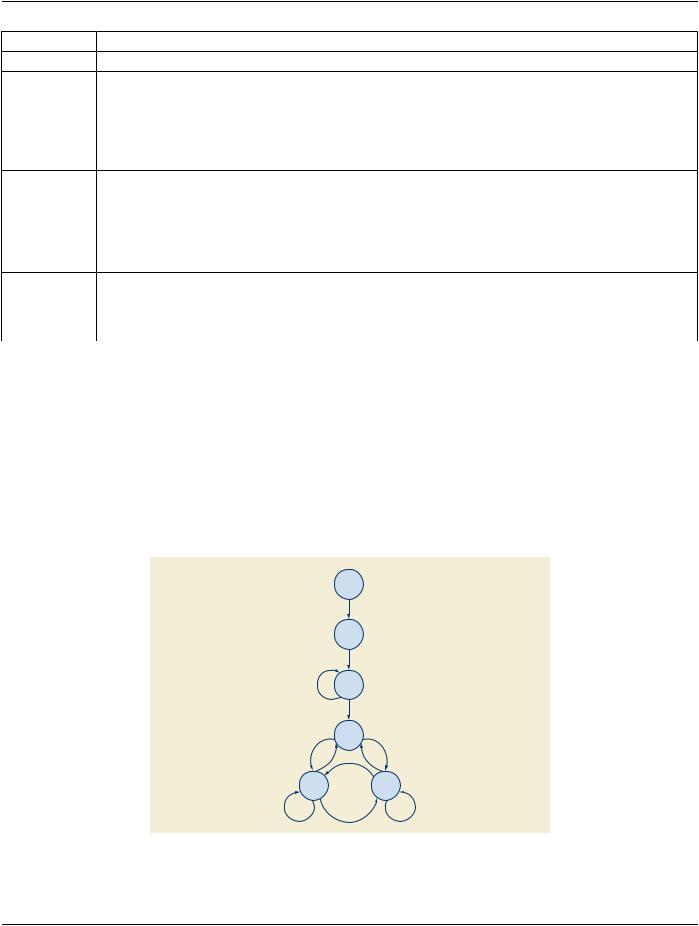
The DICOM-HPGL Document shall be structured as shown in Figure C.29.1.2-1.​

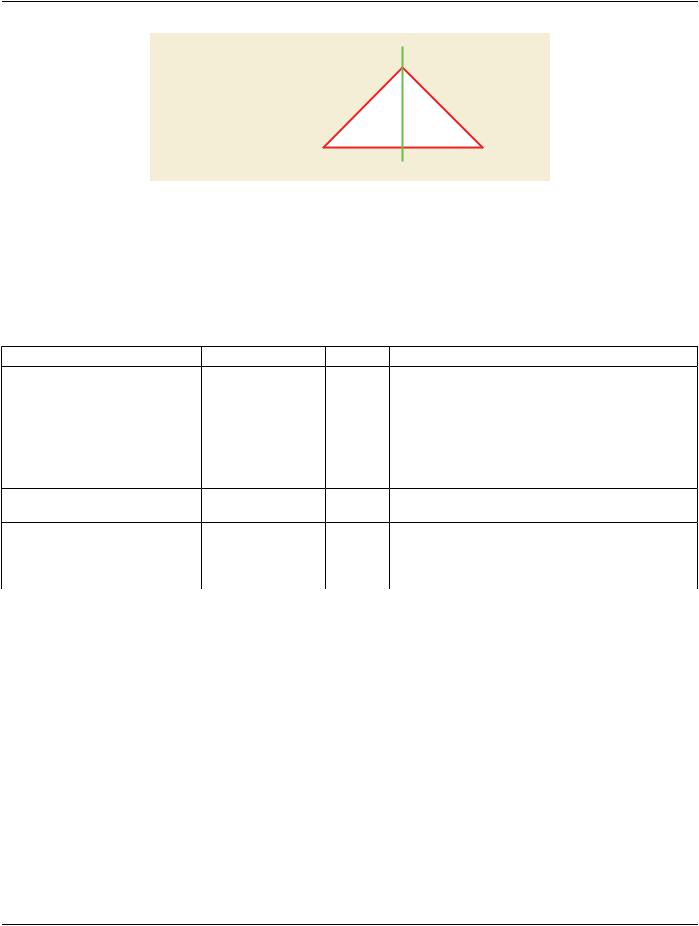
Figure C.29.1.2-2 shows an example for a DICOM-HPGL Document in plain text (as byte stream), and plotted.​

IN

PA

PC

SP

PU PD

Figure C.29.1.2-1. DICOM-HPGL Document​

- Standard -​

Page 1514​

DICOM PS3.3 2020a - Information Object Definitions​

IN;

PA;

PC2,255,0,0;

PC255,0,255,0;

SP2;

PU500,500;

PD745,255,255,255;

PD500,500;

SP255;

PU500,600;

PD500,100;

Figure C.29.1.2-2. DICOM-HPGL Document - Example​

C.29.1.3 Generic Implant Template 3D Models Module​

Table C.29.1.3-1 defines the general Attributes of the Generic Implant Template 3D Models Module. This Module contains Attributes​ that add context and scaling information to surfaces specified in the Surface Mesh Module, for 3D Models in an Implant Template​ Instance.​

Table C.29.1.3-1. Generic Implant Template 3D Models Module Attributes​

Attribute Name​

Tag​

Type​

Attribute Description​

Implant Template 3D Model Surface​

(0068,6350)​

1​ SurfaceNumber(0066,0003)ofthesurfacethatrepresents​

Number​


the shape of the entire implant.​

SurfaceModelDescriptionSequence​

(0068,6360)​

1​ The description of the Surface Model.​


One or more Items shall be included in this Sequence.​


Shall contain one Item per Item in Surface Sequence​


(0066,0002).​

>Referenced Surface Number​

(0066,002C)​

1​ Reference to a Surface Number (0066,0003) present in​


Surface Sequence (0066,0002).​

>Surface Model Label​

(0068,6380)​

1​ Label for this surface.​

Surface Model Scaling Factor​

(0068,6390)​

1​ Scaling factor (mm/Surface unit)​


See Section C.29.1.3.1.1.​

C.29.1.3.1 Generic Implant Template 3D Models Attribute Descriptions​

C.29.1.3.1.1 Surface Model Scaling Factor​

SurfaceModelScalingFactor(0068,6390)isusedtoscaledimensionsofthesurfacemeshrepresentationtomatchtherealdimensions​ of the implant measured in millimeters.​

This Attribute does not compensate for any radiographic geometric magnification effect caused by the diverging X-Ray beam in the​ projection patient images used for planning. Such compensation is the responsibility of the application based on calibration of the​ imaging process.​

C.29.1.4 Generic Implant Template Mating Features Module​

TableC.29.1.4-1definesthegeneralAttributesoftheGenericImplantTemplateMatingFeaturesModule.ThisModuleaddscoordinate​ systemsthatcanbeutilizedtogeometricallyconstrainmatingofImplantTemplateswhenplanningtheimplantationofamodularimplant.​

Note​

An Implant Template may contain 2D drawings of the described implant, 3D surface models of the described implant, or​ both. In this Module mating features that constrain the geometric matching of implants in multi-component assemblies are​

- Standard -​

DICOM PS3.3 2020a - Information Object Definitions​

Page 1515​

specified. These geometric features (points and axes) can be specified in the 2D drawings as well as the 3D models. Mating​ features are grouped into mating feature sets (see PS3.17). Based on the existence of 2D drawings and/or 3D models in​ the Instance, either or both is possible. In this Module, there are a number of conditions on Attribute use to support the fol-​ lowing cases:​

•​Specification of 2D mating features is only possible if at least one 2D drawing is present in the instance.​

•​Specification of 3D mating features is only possible if at least one 3D model is present in the instance.​

Table C.29.1.4-1. Generic Implant Template Mating Features Module Attributes​

Attribute Name​

Tag​

Type​

Attribute Description​

MatingFeatureSetsSequence​

(0068,63B0)​

3​

Mating feature sets used to combine the implant with other implants.​


One or more Items shall be included in this Sequence.​

>Mating Feature Set ID​

(0068,63C0)​

1​

Identification number of the set. Uniquely identifies a mating feature​


set within this SOP instance.​


The value shall start at 1, and increase monotonically by 1 for each​


Item.​

>Mating Feature Set Label​

(0068,63D0)​

1​

Label of the set.​

>Mating Feature Sequence​

(0068,63E0)​

1​

The mating features of the set.​


One or more Items shall be included in this Sequence.​

>>Mating Feature ID​

(0068,63F0)​

1​

Numeric ID of the mating feature. Uniquely identifies a mating feature​


within this Sequence Item.​

>>3D Mating Point​

(0068,64C0)​

1C​

Origin of the contact system.​


Required if 2D Mating Feature Coordinates Sequence (0068,6430) is​


not present and Implant Template 3D Model Surface Number​


(0068,6350) is present.​


May be present if 2D Mating Feature Coordinates Sequence​


(0068,6430) is present and Implant Template 3D Model Surface​


Number (0068,6350) is present.​


See Section C.29.1.4.1.1​

>>3D Mating Axes​

(0068,64D0)​

1C​

TheAxesofcontactdescribedasdirectioncosinesinthe3Dcoordinate​


system defined by the Frame Of Reference UID.​


Required if 3D Mating Point (0068,64C0) is present.​


See Section C.29.1.4.1.1​

>>2D Mating Feature​

(0068,6430)​

1C​

Coordinates of the mating feature in the HPGL documents.​

Coordinates Sequence​


One or more Items shall be included in this Sequence.​


Required if 3D Mating Point (0068,64C0) is not present and HPGL​


Document Sequence (0068,62C0) is present.​


May be present if 3D Mating Point (0068,64C0) is present and HPGL​


Document Sequence (0068,62C0) is present.​

>>>Referenced HPGL​

(0068,6440)​

1​

Value of the HPGL Document ID (0068,62D0) present in the HPGL​

Document ID​


Document Sequence (0068,62C0) that contains the 2D Drawing​


including the Mating Feature.​

Shall be unique within the Sequence.​

- Standard -​