Материал: part03

Внимание! Если размещение файла нарушает Ваши авторские права, то обязательно сообщите нам

DICOM PS3.3 2020a - Information Object Definitions​

Page 1501​

C.27.1.1 Surface Mesh Module Attribute Descriptions​

C.27.1.1.1 Surface Sequence​

Surface Sequence (0066,0002) describes individual surfaces. There is no requirement that a surface be contiguous. For example,​ both kidneys could be described as a single surface consisting of 2 non-contiguous areas.​

C.27.1.1.2 Surface Processing​

Surface Processing refers to methods of surface modification such as smoothing operations, which remove redundant vertices, or​ decimation, which will modify the resolution of the surface. If a surface has been subject to processing, a description of the process​ may be provided in Surface Processing Description (0066,000B).​

C.27.1.1.3 Recommended Presentation​

Recommended Presentation Opacity (0066,000C) is a fraction between 0.0 and 1.0 encoded as a float value representing the​ blendingproportionoftherenderingofthesurfacerelativetounderlyingfeatures.Avalueof0.0isinterpretedascompletetransparency,​ while a value of 1.0 is interpreted as fully opaque.​

The Recommended Presentation Type (0066,000D) Attribute provides guidance as to the default presentation of the Surface.​

Defined Terms:​

SURFACE​ Renderthesurfaceasasolid,applyingtheopacityasspecifiedintheRecommendedPresentationOpacity(0066,000C)​ Attribute.​

WIREFRAME​Represent the surface as a series of lines connecting the vertices to form the defined primitive faces.​ POINTS​ Represent the surface as a cloud of points.​

C.27.1.1.4 Finite Volume​

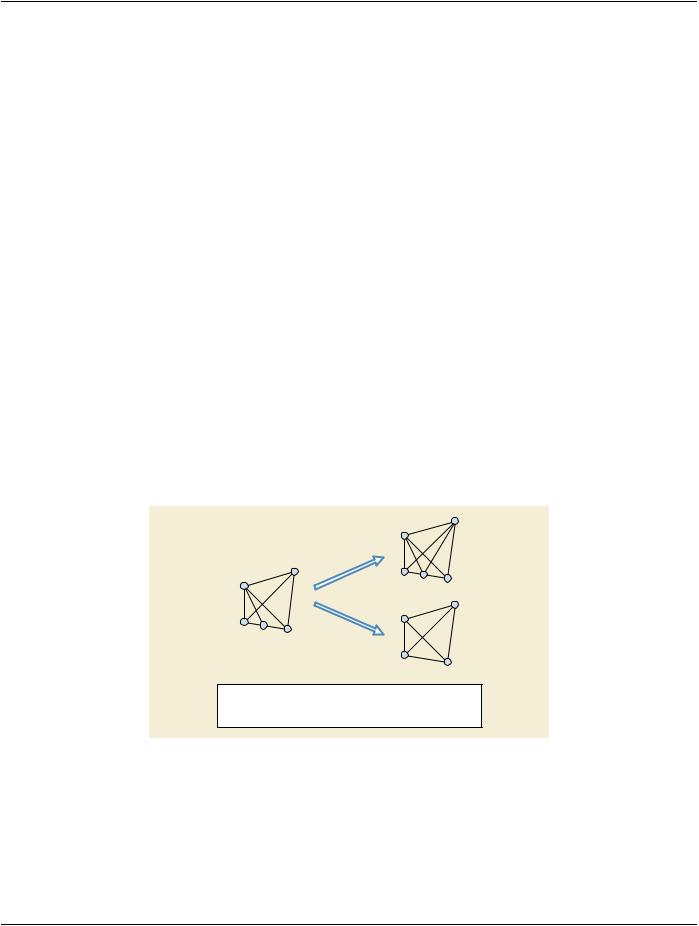
The Finite Volume (0066,000E) Attribute shall be YES when the surface mesh generated by the primitives is topologically closed and​ has an inside and an outside. A surface mesh is closed if it has no rim (every facet has a neighboring facet along each edge). Fig-​ ure C.27.1.1-1 shows a surface that is not closed on the left, and a closed and waterproof version of the same shape on the right:​

In the mesh on the left, the triangles on the front-side and the one on the bottom have no neighbors. The surface is topologically not closed.

Two possible solutions are shown on the right.

Figure C.27.1.1-1. Finite Volume Illustration​

Not all closed surfaces contain a finite volume, for example if the surface self-intersects. Such surfaces do not contain a finite volume.​ A surface is not required to be contiguous.​

A value of NO indicates that the surface is not closed.​

A value of UNKNOWN indicates that the transmitting application did not determine if the surface is closed.​

- Standard -​

Page 1502​

DICOM PS3.3 2020a - Information Object Definitions​

C.27.1.1.5 Manifold​

The Manifold (0066,0010) Attribute shall be YES when the surface mesh is a manifold.​

A surface embedded into an n-dimensional vector space is called an n-1 manifold if it resembles an n-1 dimensional Euclidean space​ in a neighborhood of every point lying on the surface. This means that every point has a neighborhood for which there exists a​ homeomorphism mapping that neighborhood to the n-1 dimensional Euclidean space.​

A sphere in 3-space is a 2-dimensional manifold: Every point has a neighborhood that looks like a plane.​

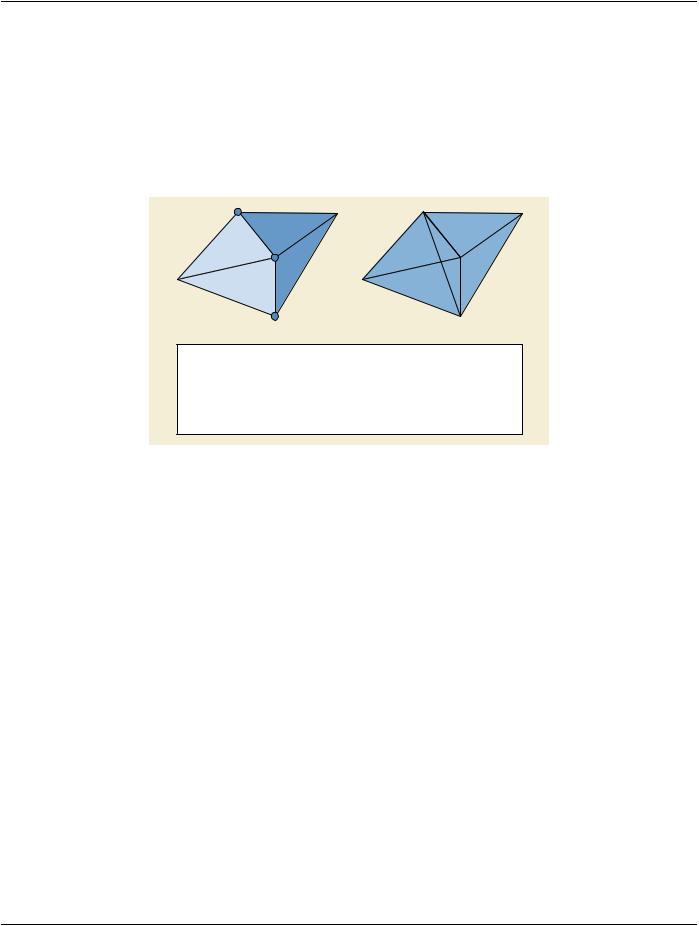
Figure C.27.1.1-2 shows examples of a surface that is not a manifold is given below:​

The two tetrahedrons in the left image share one face and three edges (marked red). The points along the shared edges are non-manifold, since the edges belong to three triangles: The neighbors of each point on these edges are lying in three different planes.

The same shape can be modeled with a manifold surface by leaving out the triangle separating the tetrahedrons.

Doubled vertices spanning two topologically unconnected tetrahedrons would also result in manifold surfaces.

Figure C.27.1.1-2. Manifold Illustration​

A value of NO indicates that the surface is not a manifold.​

A value of UNKNOWN indicates that the transmitting application did not determine if the surface is a manifold.​

C.27.1.1.6 Surface Points Normals Sequence​

SurfacePointsNormalsSequence(0066,0012)providesanexplicitnormalvectorforeachpointinSurfacePointsSequence(0066,0011)​

in Point Coordinates Data (0066,0016).​

If an Item of Surface Points Normals Sequence (0066,0012) is present the normal for a primitive may be computed by combining the​ normals for each vertex making up the primitive.​

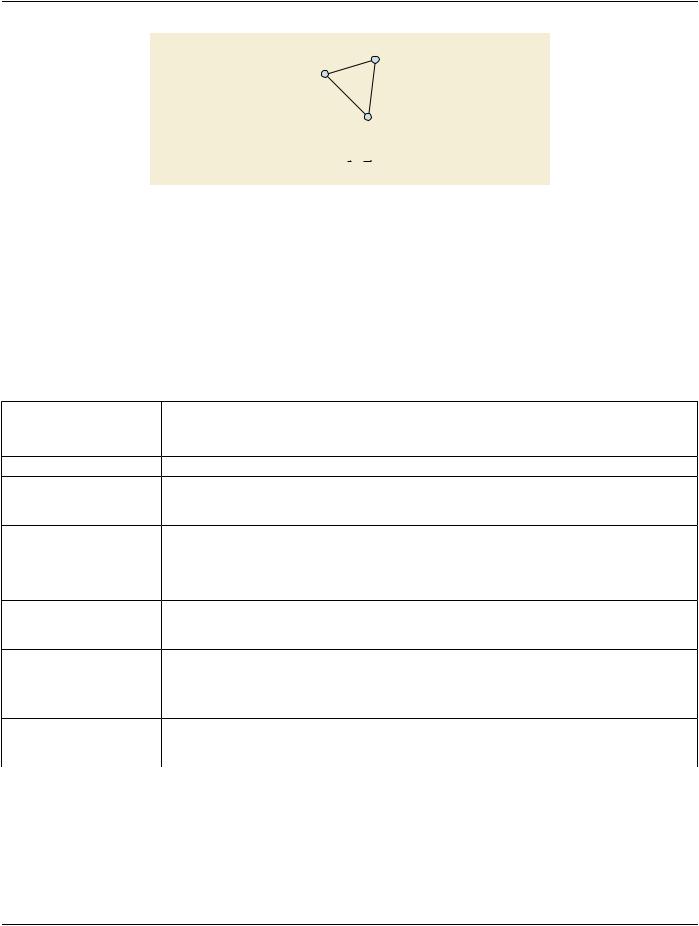
If an Item of Surface Points Normals Sequence (0066,0012) is not present the normal for a primitive shall be computed by computing​ the cross product of two segments of the primitive. The segments shall be formed using the primitive definitions as specified within​ the Surface Mesh Primitives Sequence (0066,0013). The primitive vertices are taken in the order specified within Long Primitive Point​ Index List (0066,0040). Figure C.27.1.1-3 shows the method to compute the normal:​

- Standard -​

DICOM PS3.3 2020a - Information Object Definitions​

Page 1503​

k

i

j

n = ij x jk

Figure C.27.1.1-3. Triangle Normal Computation​

The computed normal shall point in the direction of the outside of the surface.​

ForTriangleStriporTriangleFanprimitives(seeSectionC.27.4),thenormaldirectionisdeterminedbytheorderofthepointsreferenced​ by the first triangle in the strip or fan. When constructing a list of triangles from a triangle strip, the order of the points must be flipped​ for every second triangle to maintain consistency in the normal directions for the triangle.​

C.27.2 Points Macro​

Table C.27-2 specifies the Attributes of the Points Macro.​

Table C.27-2. Points Macro Attributes​

Attribute Name​

Tag​

Type​

Attribute Description​

Number Of Surface Points​

(0066,0015)​

1​

Specifies the number of points in the point set. See​


Section C.27.2.1.1.​

Point Coordinates Data​

(0066,0016)​

1​

See Section C.27.2.1.1​

Point Position Accuracy​

(0066,0017)​

3​

A single standard deviation of the error for all the points' spatial​


positions. The units shall be the same as the units of the coordinate​


system in which the point coordinates are specified.​

Mean Point Distance​

(0066,0018)​

3​

The mean point distance of the point set.​


It is given by the mean of the distances to the nearest neighbor over​


all points. The units shall be the same as the units of the coordinate​


system in which the point coordinates are specified.​

Maximum Point Distance​

(0066,0019)​

3​

Themaximumdistanceofonepointtoitsnearestneighbor.Theunits​


shall be the same as the units of the coordinate system in which the​


point coordinates are specified.​

Points Bounding Box​

(0066,001A)​

3​

Two 3D locations defining the cuboid bounding box, parallel to the​

Coordinates​


coordinate system axes, encompassing the point set.​

Axis of Rotation​

(0066,001B)​

3​

A 3D location that combined with Center of Rotation (0066,001C)​


specifies the preferred axis of rotation of this object.​

Center of Rotation​

(0066,001C)​

1C​

A 3D location defining the preferred center of rotation for this point​


set. Required if Axis of Rotation (0066,001B) is present. May be​


present otherwise.​

C.27.2.1 Points Macro Attribute Descriptions​

All Attributes within this Module containing points or vectors are in x-y-z order. If multiple elements are encoded, the ordering is​ x1,y1,z1,…,xn,yn,zn.​

ThepointsareinthecoordinatesystemidentifiedbytheFrameofReferenceUID(0020,0052).Tomapthesepointsintothecoordinate​ system of another SOP Instance a Spatial Registration Instance can be used.​

- Standard -​

Page 1504​

DICOM PS3.3 2020a - Information Object Definitions​

C.27.2.1.1 Point Coordinates Data​

When referencing individual points the index of the first point shall be 1.​

C.27.3 Vectors Macro​

Table C.27-3 specifies the Attributes of the Vectors Macro.​

Table C.27-3. Vectors Macro Attributes​

Attribute Name​

Tag​

Type​

Attribute Description​

Number of Vectors​

(0066,001E)​

1​ ThenumberofvectorsintheVectorCoordinateData(0066,0021).​


See Section C.27.3.1.​

Vector Dimensionality​

(0066,001F)​

1​ The dimensionality of the underlying vector field. See​


Section C.27.3.1.​

Vector Accuracy​

(0066,0020)​

3​ A single standard deviation for all the vectors' coordinates. The​


units shall be the same as the units of the coordinate system in​


whichthevectorcoordinatesarespecified.SeeSectionC.27.3.1.​

Vector Coordinate Data​

(0066,0021)​

1​ A data stream of coordinates encoded as floats. See​


Section C.27.3.1.​

C.27.3.1 Vectors Macro Attribute Descriptions​

AllAttributeswithinthisModulecontainingpointsorvectorsareencodedasmulti-valuedfloatsinanx-y-zordering.Ifmultipleelements​ are encoded, the ordering is x1,y1,z1,…,xn,yn,zn.​

The vectors encoded in this Macro can be anything from 1D to nD objects. The vectors are encoded as a stream of values in the​ Vector Coordinate Data (0066,0021) Attribute. Vector Dimensionality (0066,001F) defines how many subsequent entries in Vector​ Coordinate Data (0066,0021) describe one element. Vector Coordinate Data (0066,0021) shall have (Number of Vectors) x (Vector​ Dimensionality) values.​

For measured vectors, Vector Accuracy (0066,0020) describes the error per dimension in a multi-valued float Attribute.​

Note​

The vectors are located at the points specified by the table including this Macro.​

C.27.4 Surface Mesh Primitives Macro​

Table C.27-4 specifies the Attributes of the Surface Mesh Primitives Macro.​

Table C.27-4. Surface Mesh Primitives Macro Attributes​

Attribute Name​

Tag​

Type​

Attribute Description​

Long Vertex Point Index List​

(0066,0043)​

2​ A list of point indices. Contains n point indices describing​


Vertices.​


See Section C.27.4.1.​

Long Edge Point Index List​

(0066,0042)​

2​ A list of point indices. Contains 2n point indices describing​


unconnected Edges.​


See Section C.27.4.1.​

Long Triangle Point Index List​

(0066,0041)​

2​ A list of point indices. Contains 3n point indices describing​


unconnected Triangles.​

See Section C.27.4.1.​

- Standard -​


DICOM PS3.3 2020a - Information Object Definitions​

Page 1505​

Attribute Name​

Tag​

Type​

Attribute Description​


Triangle Strip Sequence​

(0066,0026)​

2​ All Triangle Strips in this Surface.​


Zero or more Items shall be included in this Sequence.​

>Long Primitive Point Index List​

(0066,0040)​

1​ A list of point indices. See Section C.27.4.1.​


Triangle Fan Sequence​

(0066,0027)​

2​ All Triangle Fans in this Surface.​


Zero or more Items shall be included in this Sequence.​

>Long Primitive Point Index List​

(0066,0040)​

1​ A list of point indices. See Section C.27.4.1.​


Line Sequence​

(0066,0028)​

2​ All Lines in this Surface.​


Zero or more Items shall be included in this Sequence.​

>Long Primitive Point Index List​

(0066,0040)​

1​ A list of point indices. See Section C.27.4.1.​


Facet Sequence​

(0066,0034)​

2​ All Facets in this Surface. Each Item describes one facet.​


Zero or more Items shall be included in this Sequence.​

>Long Primitive Point Index List​

(0066,0040)​

1​ A list of point indices. See Section C.27.4.1.​


C.27.4.1 Surface Mesh Primitives Macro Attribute Descriptions​

TheSurfaceMeshPrimitivesMacrouses32-bitlongintegerpointindicestoreferencethepointratherthanrepeatingpointcoordinates.​ All of the point coordinates used are specified within the Surface Points Sequence (0066,0011) of the same Surface Sequence​ (0066,0002) Item. Point indices are described in Section C.27.2.1.1.​

Note​

Inapreviousedition,otherAttributeswereusedthathadanOWVRandalimitationtonomorethan65535pointspersurface.​ These have been retired and replaced with new Attributes. See PS 3.3 2014a.​

A Surface Mesh shall contain one or more of the following primitive types:​

Vertex​

A single Vertex, referencing a single point​

Edge​

An Edge, referencing two points​

Line​

A series of connected points describing a path​

Triangle​

A Triangle, referencing three points:​

Triangle Strip​

ATriangleStripwithntriangles,referencingn+2points.Thefirstthreereferencedpointsdescribethefirsttriangle,​


the second, third and fourth referenced points describe the second triangle.​

Triangle Fan​

A Triangle Fan with n triangles, referencing n+2 points. The first referenced point is in the center of the fan. To-​


gether with two subsequent referenced points, it describes a complete triangle.​

Facet​

A closed planar polygon, referencing n points. The final point in the point index list shall be connected to the​


first point in the point index list to close the facet.​

If the Surface Points Normals Sequence (0066,0012) is not present, the default normals can be derived from the Surface Mesh​ Primitives.​

For the Triangle Strip, Triangle Fan and Facet the Long Primitive Point Index List (0066,0040) the ordering of the point references​ implies the direction of the primitive's normal: The normal points in the direction from which the referenced points are specified in a​ counterclockwise order. For finite volumes this shall be the outward direction.​

For the Line primitive, the ordering of the point references defines a directed path, starting with the first point and ending with the last​ point referenced in each Long Primitive Point Index List (0066,0040).​

ForPrimitivesoftypeTriangleStriporTriangleFan,theorientationofthenormalsisgivenbytheorderofthepointsinthefirsttriangle.​

- Standard -​