Материал: Management-and-Organization-Behavior
Disadvantages:
-- Functional departmentation is often found to be inadequate to meet the growing needs of the business, particularly as the organization expands or diversifies its activities;
-- Further, decision-making becomes slow as the functional managers have to get the approval of the headquarters;
-- It is also difficult to determine accountability in a functional structure. If a product fails, the question as to who is responsible cannot be easily answered; and
-- Functional managers tend to develop narrow perspective and loose sight of the bigger picture. Members of each department feel isolated from those in other departments. For example, manufacturing department may be obsessed with cost reduction and meeting the delivery dates neglecting the quality control. As a result, marketing department may be flooded with complaints.
Product/ Market Departmentation
As organizations are not static, they grow in size either by broadening its product line, or by expanding geographically. Further, as the size of the organization increases, some of the disadvantages become more apparent. The organization is rather forced to look for other models in tune with the requirements. In such situations, managements opt for various other types of departmentation, in order to have the right focus on the product or market or the process. Three patterns are adopted generally by organizations depending on the specific requirements to overcome the limitations of functional structure. They are product, territorial and customer departmentation.
i.Product Departmentation
One of the most common ways in which businesses grow is by expanding the product mix. If the organization is successful in expansion, several product lines may attain such high sales volume that each product category or line may be a separate division. Large organizations like Kirloskar, Hindustan Unilever, Godrej have managed such expansion of product lines effectively by creating separate departments or divisions for the various products. Under product departmentation, a single manager,
110
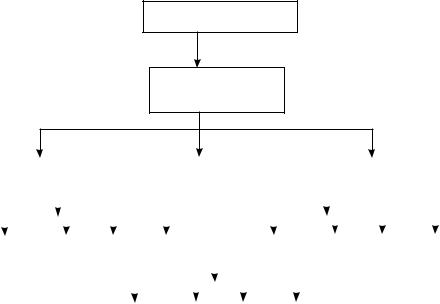
often referred to as the product manager, is delegated authority over all activities required to produce and market that product. The focus in the product departmentation, therefore, shifts on to the product and all the activities related to the production and marketing of the product. As against functions in the functional departmentation, basic products or services become the primary or major departments in the product departmentation as could be seen in the following figure.
CHAIRMAN
MANAGING
DIRECTOR
|
|
|
|
|
|
|
|
|
|
|
|
|
|
|
|
|
|
|
|
|
|
|
|
|
|
|
|
|
|
|
|
|
|
|
|
|
|
|
|
|
|
|
|
|
PRODUCT |
|
|
|
|
|
|
|
|
|
PRODUCT |
|
|
|
|
|
|
|
|
|
|
|
PRODUCT |
|
|
|
|||||||||||||||||
|
|
|
|
A |
|
|
|
|
|
|
|
|
|
|
|
B |
|
|
|
|
|
|
|
|
|
|
|
|
|
C |
|
|
|
||||||||||
|
|
|
|
|
|
|
|
|
|
|
|
|
|
|
|
|
|
|
|
|
|
|
|
|
|
|
|
|
|
|
|
|
|
|
|
|
|
|
|
|
|
|
|
|
|
|
|
|
|
|
|
|
|
|
|
|
|
|
|
|
|
|
|
|
|
|
|
|
|
|
|
|
|
|
|
|
|
|
|
|
|
||||||
|
|
|
|
|
|
|
|
|
|
|
|
|
|
|
|
|
|
|
|
|
|
|
|
|
|
|
|
|
|
|
|
|
|
|
|
|
|||||||
|
|
|
|
|
|
|
|
|
|
|
|
|
|
|
|
|
|
|
|
|
|
|
|
|
|
|
|
|
|
|
|
|
|
|
|
|
|
|
|
|
|||
|
|
|
|
|
|
|
|
|
|
|
|
|
|
|
|
|
|
|
|
|
|
|
|
|
|
|
|
|
|
|
|
|
|
|
|
|
|
|
|
|
|||
PRODU |
|
ENGIN |
|
|
SALES |
|
ACCOU |
|
|
|
|
|
|
PRODU |
|
|
|
ENGIN |
SALES |
ACCOU |
|||||||||||||||||||||||
CTION |
|
EERING |
|
|
|
|
|
|
|
|
NTING |
|
|
|
|
|
|
CTION |
|
|
EERING |
|
|
|
|
NTING |
|||||||||||||||||
|
|
|
|
|
|
|
|
|
|
|
|
|
|
|
|
|
|
|
|
|
|
|
|
|
|
|
|
|
|
|
|
|
|
||||||||||
|
|
|
|
|
|
|
|
|
|
|
|
|
|
|
|
|
|
|
|
|
|
|
|
|
|
|
|
|
|
|
|
|
|
|
|
|
|
|
|
|
|
|
|
|
|
|
|
|
|
|
|
|
|
|
|
|
|
|
|
|
|
|
|
|
|
|
|
|
|
|
|
|
|
|
|
|
|
|
|
|
|
|
|
|
|
|
|
|
|
|
|
|
|
|
|
|
|
|
|
|
|
|
|
|
|
|
|
|
|
|
|
|
|
|
|
|
|
|
|
|
|
|
|
|
|
|
|
|
|
|
|
|
|
|
|
|
|
|
|
|
|
PRODU |
|
ENGIN |
SALES |
|
|
ACCOU |
|
|
|
|
|
|
|
|
|
|
|
||||||||||||||||
|
|
|
|
|
|
|
|
|
|
CTION |
|
|
EERING |
|
|
|
|
|
NTING |
|
|
|
|
|
|
|
|
|
|
|
|||||||||||||
Figure 9.6: Structure of Product Departmentation
Advantages:
-- Product departmentation places emphasis on the basic products, the success of which is critical to the survival of the organization;
-- Since all revenues and costs are assigned to a particular product, cost centres can be established. High profit areas can be encouraged and low/unprofitable product lines can be dropped. Thus, responsibility for cost reduction and profits can be established at the division level; -- Proper coordination of all functional areas can be achieved as all the functional managers work as a team under close supervision of the product manager. Since the department or division is multifunctional, it often operates like an independent division or
company within the large company;
-- Enables quick-response to changes in environment as compared to functionally organized firm;
111
-- Provide managers a training ground in general management which is useful in overcoming narrow functional perspective; and
-- Expansion and diversification of business is made easy by creating new departments for the new products that are added to the existing business.
Disadvantages:
-- Requires adequate availability of persons with general management abilities as more and more departments are created for the various products;
-- The product departments may try to become too autonomous thereby making top management control difficult; and
-- It is also common to find product departments engaged in the duplication of efforts. Each product unit has its own functional departments. These may not be sufficiently large to make maximum use of facilities. Thus product departmentation becomes an expensive organizational form, if adopted without proper justification in terms of the products strengths and market potential.
ii. Customer Departmentation
It is common that some organizations sell a wide variety of goods or services that appeal to different groups of customers, each of which has distinguished needs. Each customer group may have to be addressed differently. In such a case, departments may be created around customer groups. For instance, commercial banks organize their activities around customer groups to cater to their specific needs. As such, we find separate departments or divisions for agricultural, industrial and merchant banking operations. Similarly, we find an air-conditioning company like Blue Star organizing its business around domestic and industrial air-conditioning units.
112
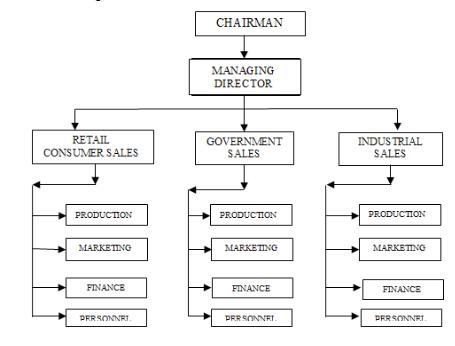
Figure 9.7: Structure of Customer Departmentation
Advantages:
-- Customer departmentation facilitates concentration on customer needs. This is in line with the customer orientation professed by many organizations these days;
-- Customers feel that they have an understanding supplier. For example, the manufacturer may sell to wholesalers and industrial buyers. Wholesaler requires a product of dependable quality with assured supplies. The industrial buyer wants products of high quality plus a service that includes installation and repair of the product and specific training of the company’s employees; and
-- Helps the organization to get the correct feel of the market dynamics in terms of preferences of the customers, degree of competition, competitors’ strategies, etc.
Disadvantages:
-- Difficult to coordinate operations between competing customer demands;
-- Requires considerable expertise on the part of managers in understanding customers’ problems and specific needs; and
113
-- There is a possibility of under utilization of facilities and employees specialized in terms of customer groups. Small organizations particularly cannot afford the expenditure involved because some amount of duplication of the facilities is inevitable.
iii. Territorial Depart mentation
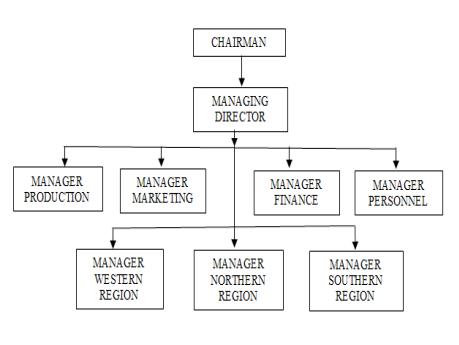
The process of creating departments along the geographical areas that the enterprise serves is termed territorial depart mentation. This method is adopted when an organization operates in different geographical areas, each with distinct needs and dynamics. Territorial Depart mentation makes it easier for the organization to cope with variations in laws, local customs and customer needs. Public utilities like transport companies, insurance companies, etc., adopt territorial depart mentation. Similarly, a large scale organization operating both in domestic and international markets may have separate departments for both the markets. Again, different departments or divisions may be created for different regions of the world. Many multinational companies organize their global activities with regional headquarters in different regions of the world.
Figure 9.8: Structure of Territorial Depart mentation
114