Материал: 2096

Many tasks, techniques and analyses are specific to particular industries and applications. Commonly these include:
• |
Built–in test (BIT); |
• Failure mode and effects analysis (FMEA); |
|
• |
Reliability simulation modeling; |
• |
Thermal analysis; |
С |
|
• |
Reliability Block Diagram analysis; |
• |
Fault tree analysis; |
• |
Root cause analysis; |
• |
Sneak circuit analysis; |
• |
Accelerated Testing; |
и |
|
• |
Reliability Growth analysis; |
• |
Weibull analysis; |
• |
Electromagnetic analysis; |
• |
Statistical interference; |
|
б |
• Avoid Single Point of Failure. |
|
Results are presented during the system design reviews and logistics reviews. Reliability is just one requirement among many system requirements. Engineering trade studies are used to determine the optimum balance between reliability and other requirements and constraints.
Language practice
1. Match English words with their Russian definitions. |
||||
|
|
|
|
|
|
|
|
|
Д |
|
1 |
Cast ironАA Пластмассовая коробка |
||
|
2 |
A plastic box |
B |
Железный болт |
|
3 |
A steel pipe |
C |
Стеклянная ваза |
|
4 |
A copper cup |
D |
Чугун |
|
5 |
A glass vase |
E |
Медная чашка |
|
6 |
An iron bolt |
F |
Стальная труба |
2. Rephrase the following sentences and translate them into Russian.
Example: This wire is made of copper. |
И |
|
This is a copper wire. |
||
1. |
This rod is made of metal. |
|
2. |
This handle is made of rubber. |
|
3. |
This tin is made of aluminum. |
|
4. |
This beaker is made of glass. |
|
Example: This is a steel blade.
This blade is made of steel.
111
1.This is a plastic cover.
2.This is a copper pipe.
3.This is a plastic ruler.
4.This is an iron bolt.
3.Give instructions to your groupmates:
С |
|
|
Example: Steel\ruler\wooden |
||
|
|
Helen, do not use the wooden ruler. |
|
|
Use the steel one. |
и |
||
1. |
Metal\tray\plastic. |
|
2. |
Rubber\pipe\copper. |
|
3. |
Glass\rod\plastic. |
|
4. |
Iron\bolts\steel. |
|
б |
||
5. |
Copper\nuts\steel. |
|
6. |
Wooden\beams\concrete. |
|
Writing
1. Using all phrases and word structures from section «Language practice» describe the role of different materials in the car reliability.
2. Using phrases and word structures from section «Language practice»
write your own report about: |
||
1) |
software reliability; |
Д |
2) |
reliabilityАorganizations; |
|
3) |
reliability engineering education; |
|
4) |
preventive maintenance. |
|
3. Find appropriate supporting information,Иillustrations and graphics for the following articles and make a presentation of it.
HUMAN RELIABILITY
Human reliability is related to the field of human factors engineering, and refers to the reliability of humans in fields such as manufacturing, transportation, the military, or medicine. Human performance can be affected by many factors such as age, state of mind, physical health, attitude, emotions, propensity for certain common mistakes, errors and cognitive biases, etc.
Human reliability is very important due to the contributions of humans to the resilience of systems and to possible adverse consequences of human errors or oversights, especially when the human is a crucial part of the large socio–technical systems as is common today. User–centered design and error–tolerant design are
112
just two of many terms used to describe efforts to make technology better suited to operation by humans.
HUMAN RELIABILITY ANALYSIS TECHNIQUES
A variety of methods exist for Human Reliability Analysis (HRA) (see Kirwan and Ainsworth, 1992; Kirwan, 1994). Two general classes of methods are those based on probabilistic risk assessment (PRA) and those based on a cognitive theory of control.
One method for analyzing human reliability is a straightforward extension of probabilistic risk assessment (PRA): in the same way that equipment can fail in a
plant, so a human operator can commit errors. In both cases, an analysis |
|
(functional decomposition for equipment and task analysis for humans) would |
|
articulate a level of detail for which failure or error probabilities can be assigned. |
|
С |
|
This basic idea is behind the Technique for Human Error Rate Prediction (THERP) |
|
(Swain & Guttman, 1983). THERP is intended to generate human error |
|
probabilities that would be incorporated into a PRA. The Accident Sequence |
|
Evaluation Program (ASEP) Human Reliability Procedure is a simplified form of |
|
иTHERP; an associated computational tool is Simplified Human Error Analysis |
|
Code (SHEAN) (Wilson, 1993). More recently, the US Nuclear Regulatory |
|
Commission has published the Standardized Plant Analysis Risk (SPAR) human |
|
reliability analysis method also because of human error (SPAR–H) (Gertman et al., |
|
2005). |
б |
|
|
Erik Hollnagel has developed this line of thought in his work on the |
|
|
А |
Contextual Control Model (COCOM) (Hollnagel, 1993) and the Cognitive Reliability and Error Analysis Method (CREAM) (Hollnagel, 1998). COCOM models human performance as a setДof control modes: strategic (based on long– term planning), tactical (based on procedures), opportunistic (based on present context), and scrambled (random) –– and proposes a model of how transitions between these control modes occur. This model of control mode transition consists of a number of factors, including the human operator's estimate of the outcome of the action (success or failure), the time remainingИto accomplish the action (adequate or inadequate), and the number of simultaneous goals of the human operator at that time. CREAM is a human reliability analysis method that is based on COCOM.
Related techniques in safety engineering and reliability engineering include Failure mode and effects analysis, Hazop, Fault tree, and SAPHIRE: Systems Analysis Programs for Hands–on Integrated Reliability Evaluations.
HUMAN ERROR
Human error has been cited as a cause or contributing factor in disasters and accidents in industries as diverse as nuclear power (e.g., Three Mile Island accident), aviation (see pilot error), space exploration (e.g., Space Shuttle Challenger Disaster), and medicine (see medical error). It is also important to stress that «human error» mechanisms are the same as «human performance»
113
mechanisms; performance later categorized as 'error' is done so in hindsight (Reason, 1991; Woods, 1990): therefore actions later termed « human error» are actually part of the ordinary spectrum of human behavior. The study of absent– mindedness in everyday life provides ample documentation and categorization of such aspects of behavior. While human error is firmly entrenched in the classical approaches to accident investigation and risk assessment, it has no role in newer
approaches such as Resilience Engineering. |
|
С |
|
|
There are many ways to categorize human error (see Jones, 1999; Wallace |
and Ross, 2006): |
|
• |
exogenous versus endogenous (i.e., originating outside versus inside the |
|
individual) (Senders and Moray, 1991); |
и |
|
• |
situation assessment versus response planning (e.g., Roth et al., 1994) and |
|
related distinctions in; |
• errors in problem detection (also see signal detection theory); |
|
• errors in problem diagnosis (also see problem solving);
• errors in action planning and execution (Sage, 1992) (for example: slips or
errors of execution versus mistakes or errors of intention; see Norman, 1988; Reason, 1991);
• By level of analysis; for example, perceptual (e.g., optical illusions) versus
cognitiveбversus communication versus organizational.
MisunderstandingsАas a topic in human communication have been studied in Conversation Analysis, such as the examination of violations of the Cooperative principle and Gricean maxims.
The cognitive study of human error is a very active research field, including work related to limits of memory and attention and also to decision making
strategies such as the availability heuristic and other cognitive biases. Such heuristics and biases are strategies that are useful and often correct, but can lead to systematic patterns of error.
Organizational studies of errorДor dysfunction have included studies of safety culture. One technique for organizational analysis is the Management Oversight Risk Tree (MORT) (Kirwan and Ainsworth, 1992; also search for
MORT on the FAA Human Factors Workbench.
|
Unit 9 |
|
|
Section A. Importance of evidentiary alignment |
|
Theory |
|
И |
When the author of a business report seeks the support of other partly or merely wishes to follow a strong commercial process with regard to their decision making, the weight of evidence derived from the market and business research is paramount. The weight that the report carries with its audience is directly related to the author’s ability to articulate the relationship between the supporting evidence and the statement of facts made in the report. An evidentiary approach in the business research arena involves the establishment of continuity of evidence between the research collection, storage, analysis and subsequent findings. An
114
evidentiary approach means a provable chain of relationship (evidence) between the research facts and subsequent business recommendations. By being able to establish the chain of relationship, a Business Feasibility Study or Business Plan will instill strong confidence in its inventors and stakeholders.
Questions:
1. |
What is important in the support or regard to the decision making? |
||
С |
|
|
|
2. |
What is the relation between the supporting evidence and the statement |
||
|
of facts made in the report? |
|
|
3. |
What should one be able to do to represent it in a proper way? |
||
4. |
What does the evidentiary approach in the business research arena |
||
|
involve? |
|
|
5. |
What does an evidentiary approach mean? |
||
6. |
What is the function of a Business Feasibility Study or Business Plan? |
||
Section B. Bulldozers, excavators, loaders, graders, rotary drilling rigs, |
|||
|
forklifts and road rollers |
||
иReading |
|
|
|
|
1. Read the text and define: |
|
|
|
А |
||
|
a) the theme of the report; |
|
|
|
b) theбidea of the report (the aim); |
|
|
|
c) the scope of the report; |
|
|
|
d) primary, secondary and immediate audience; |
||
|
e) style of the report. |
Д |
|
|
|
||
|
|
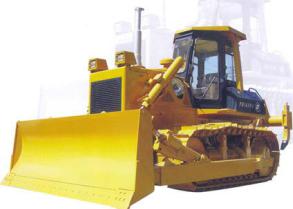
Buldozer |
И |
|
|
|
|
Bulldozers can be found on a wide range of small scale and large construction sites, mines and quarries, military bases, heavy industry factories, and large governmental and public Engineering projects.
A bulldozer is a crawler, equipped with a substantial metal plate (known as a blade), and used to push large quantities of soil, sand, rubble, etc., during construction work. The term «bulldozer» is often used to mean any heavy engineering vehicle (frequently loaders and in particular track loaders), but
115