Материал: part05

Page 76 |
DICOM PS3.5 2020a - Data Structures and Encoding |
|
|
Video Type |
Spatial resolution layer |
Frame Rate (see Note |
Frame Time (see Note 3) |
|
|
2) |
|
50 Hz HD |
Single level, Enhancement |
50 |
20.00 ms |
Note
1.Therequirementsonrowsandcolumnsaretomaximizeinteroperabilitybetweensoftwareenvironmentsandcommonly available hardware MPEG2 encoder/decoder implementations. Should the source picture have a lower value, it should be re-formatted accordingly by scaling and/or pixel padding prior to MPEG2 encoding.
2.The frame rate of the acquiring camera for '30 Hz HD' MPEG2 may be either 30 or 30/1.001 (approximately 29.97) frames/sec.Similarly,theframerateinthecaseof60Hzmaybeeither60or60/1.001(approximately59.94)frames/sec This may lead to small inconsistencies between the video timebase and real time.
3.The Frame Time (0018,1063) may be calculated from the frame rate of the acquiring camera. A frame time of 33.367 ms corresponds to 29.97 frames per second.
4.The value of chroma_format for this profile and level is defined by MPEG as 4:2:0.
5.Examples of screen resolutions supported by MPEG2 Main Profile / High Level are shown in Table 8-y. Frame rates of 50 Hz and 60 Hz (progressive) at the maximum resolution of 1080 by 1920 are not supported by Main Profile / High Level. Interlace at the maximum resolution is supported at a field rate of 50 Hz or 60 Hz, which corresponds to a frame rate of 25 Hz or 30 Hz respectively as described in Table 8-y.
6.An MPEG2 Main Profile / High Level decoder is able to decode bit streams conforming to lower levels. These include the 1080 by 1440 bit streams of MP@H-14, and the Main Level bit streams used in the existing MPEG2 Main Profile / Main Level Transfer Syntax in the Visible Light IOD.
7.MP@H-14 is not supported by this Transfer Syntax.
8.TherestrictionofDARto16:9isrequiredtoensureinteroperabilitybecauseoflimitationsincommonlyavailablehardware chip set implementations for MPEG2 Main Profile / High Level.
Table 8-3. Examples of MPEG2 Main Profile / High Level Screen Resolution
Rows |
Columns |
Frame rate |
Video Type |
Progressive or |
|
|
|
|
Interlace |
1080 |
1920 |
25 |
25 Hz HD |
P |
1080 |
1920 |
29.97, 30 |
30 Hz HD |
P |
1080 |
1920 |
25 |
25 Hz HD |
I |
1080 |
1920 |
29.97, 30 |
30 Hz HD |
I |
720 |
1280 |
25 |
25 Hz HD |
P |
720 |
1280 |
29.97, 30, |
30 Hz HD |
P |
720 |
1280 |
50 |
50 Hz HD |
P |
720 |
1280 |
59.94, 60 |
60 Hz HD |
P |
One fragment shall contain the whole MPEG2 bit stream.
Note
1.If a video stream exceeds the maximum length of one fragment (approximately 4 GB), it may be sent as multiple SOP Instances, but each SOP Instance will contain an independent and playable bit stream, and not depend on the encoded bit stream in other (previous) instances. The manner in which such separate instances are related is not specified in the Standard, but mechanisms such as grouping into the same Series, and references to earlier instances using Refer- enced Image Sequence may be used.
2.This constraint limits the length of the compressed bit stream to no longer than 232-2 bytes.
- Standard -

DICOM PS3.5 2020a - Data Structures and Encoding |
Page 77 |
The Basic Offset Table in the Pixel Data (7FE0,0010) shall be empty (present but zero length).
Note
The Basic Offset Table is not used because MPEG2 contains its own mechanism for describing navigation of frames. To enable decoding of only a part of the sequence, MPEG2 manages a header in any group of pictures (GOP) containing a time_code - a 25-bit integer containing the following: drop_frame_flag, time_code_hours, time_code_minutes, marker_bit, time_code_seconds and time_code_pictures.
The container format for the video bit stream is not constrained. For example, it may MPEG-2 Transport Stream (MPEG-TS), MPEG- 2 Program Stream (MPEG-PS), MPEG-2 Elementary Stream (MPEG-ES), MPEG-2 Packetized Elementary Stream (MPEG-PES) (see [ISO/IEC 13818-1]) or MPEG-4 (MP4) container (see [ISO/IEC 14496-12] and [ISO/IEC 14496-14]).
Any audio components present within the MPEG2 Main Profile / High Level bit stream shall comply with the restrictions as for MPEG2 Main Profile / Main Level as stated in Section 8.2.5.
8.2.7 MPEG-4 AVC/H.264 High Profile / Level 4.1 Video Compression
MPEG-4 AVC/H.264 High Profile / Level 4.1 corresponds to what is commonly known as HDTV ('High Definition Television'). DICOM provides a mechanism for supporting the use of MPEG-4 AVC/H.264 Image Compression through the Encapsulated Format (see PS3.3). Annex A defines a Transfer Syntax that references the MPEG-4 AVC/H.264 Standard.
Note
MPEG-4 AVC/H.264 compression / High Profile compression is inherently lossy. The context where the usage of lossy compressionofmedicalimagesisclinicallyacceptableisbeyondthescopeoftheDICOMStandard.Thepoliciesassociated with the selection of appropriate compression parameters (e.g., compression ratio) for MPEG-4 AVC/H.264 High Profile / Level 4.1 are also beyond the scope of this Standard.
The use of the DICOM Encapsulated Format to support MPEG-4 AVC/H.264 compressed pixel data requires that the Data Elements that are related to the Pixel Data encoding (e.g., Photometric Interpretation, Samples per Pixel, Planar Configuration, Bits Allocated, Bits Stored, High Bit, Pixel Representation, Rows, Columns, etc.) shall contain values that are consistent with the characteristics of the compressed data stream, with some specific exceptions noted here. The Pixel Data characteristics included in the MPEG-4 AVC/H.264 bit stream shall be used to decode the compressed data stream.
Note
Theserequirementsarespecifiedintermsofconsistencywithwhatisencapsulated,ratherthanintermsoftheuncompressed pixel data from which the compressed data stream may have been derived.
Whendecompressing,shouldthecharacteristicsexplicitlyspecifiedinthecompresseddatastreambeinconsistentwiththosespecified in the DICOM Data Elements, those explicitly specified in the compressed data stream should be used to control the decompression. The DICOM data elements, if inconsistent, can be regarded as suggestions as to the form in which an uncompressed Data Set might be encoded, subject to the general and IOD-specific rules for uncompressed Photometric Interpretation and Planar Configuration, which may require that decompressed data be converted to one of the permitted forms.
Note
IfMPEG-4CompressedPixelDataisdecompressedandre-encodedinNative(uncompressed)form,thentheDataElements that are related to the Pixel Data encoding are updated accordingly. If color components are converted from YBR_PAR- TIAL_420 to RGB during decompression and Native re-encoding, the Photometric Interpretation will be changed to RGB in the Data Set with the Native encoding.
The requirements are:
•Planar Configuration (0028,0006) shall be 0
•Samples per Pixel (0028,0002) shall be 3
•Photometric Interpretation (0028,0004) shall be YBR_PARTIAL_420
•Bits Allocated (0028,0100) shall be 8
- Standard -
Page 78 |
DICOM PS3.5 2020a - Data Structures and Encoding |
•Bits Stored (0028,0101) shall be 8
•High Bit (0028,0102) shall be 7
•Pixel Representation (0028,0103) shall be 0
•The value of MPEG-4 AVC/H.264 sample aspect_ratio_idc shall be 1 in the encapsulated MPEG-4 AVC/H.264 bit stream if as- pect_ratio_info_present_flag is 1.
•Pixel Aspect Ratio (0028,0034) shall be absent. This corresponds to a 'Sampling Aspect Ratio' (SAR) of 1:1.
•The possible values for Rows (0028,0010), Columns (0028,0011), Cine Rate (0018,0040), and Frame Time (0018,1063) or Frame Time Vector (0018,1065) depend on the used Transfer Syntax.
•For MPEG-4 AVC/H.264 High Profile / Level 4.1 Transfer Syntax, the values for these data elements shall be compliant with the High Profile / Level 4.1 of the MPEG-4 AVC/H.264 standard ([ISO/IEC 14496-10]) and restricted to a square pixel aspect ratio.
•For MPEG-4 AVC/H.264 BD-compatible High Profile / Level 4.1 Transfer Syntax, the values for these data elements shall be as specified in Table 8-4.
Table 8-4. Values Permitted for MPEG-4 AVC/H.264 BD-compatible High Profile / Level 4.1
Rows |
Columns |
Frame rate |
Video Type |
Progressive or |
|
|
|
|
Interlace |
1080 |
1920 |
25 |
25 Hz HD |
I |
1080 |
1920 |
29.97 |
30 Hz HD |
I |
1080 |
1920 |
24 |
24 Hz HD |
P |
1080 |
1920 |
23.976 |
24 Hz HD |
P |
720 |
1280 |
50 |
50 Hz HD |
P |
720 |
1280 |
59.94 |
60 Hz HD |
P |
720 |
1280 |
24 |
24 Hz HD |
P |
720 |
1280 |
23.976 |
24 Hz HD |
P |
Note
1.The value of Planar Configuration (0028,0006) is irrelevant since the manner of encoding components is specified in the MPEG-4 AVC/H.264 standard, hence it is set to 0.
2.The limitation on rows and columns are to maximize interoperability between software environments and commonly available hardware MPEG-4 AVC/H.264 encoder/decoder implementations. Source pictures that have a lower value should be re-formatted by scaling and/or pixel padding prior to MPEG-4 AVC/H.264 encoding.
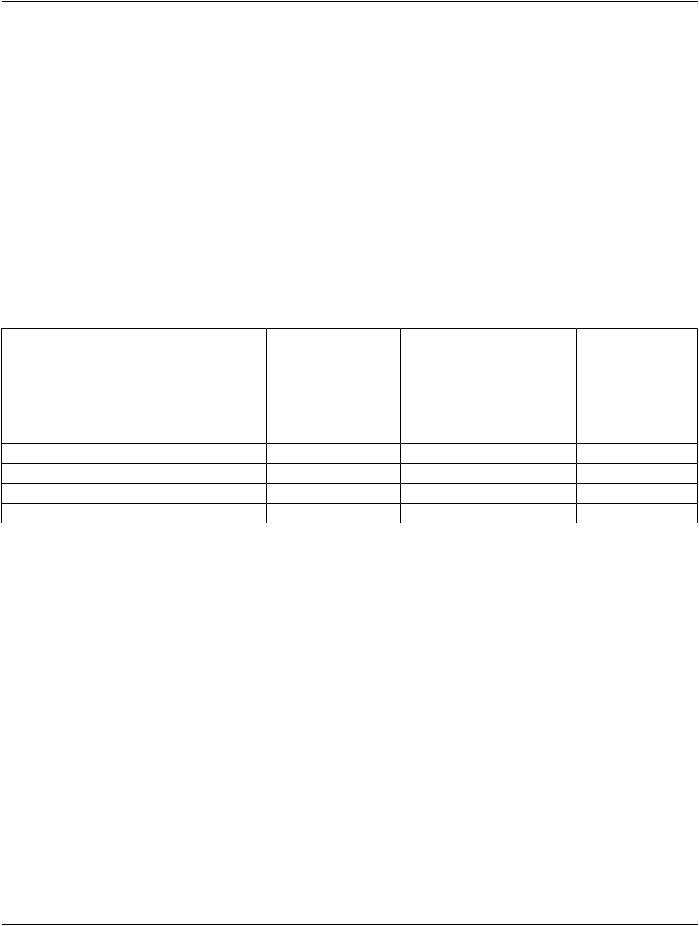
3.The frame rate of the acquiring camera for '30 Hz HD' MPEG-4 AVC/H.264 may be either 30 or 30/1.001 (approximately 29.97) frames/sec. Similarly, the frame rate in the case of 60 Hz may be either 60 or 60/1.001 (approximately 59.94) frames/sec.Thismayleadtosmallinconsistenciesbetweenthevideotimebaseandrealtime.Therelationshipbetween frame rate and frame time is shown in Table 8-5.
4.The Frame Time (0018,1063) may be calculated from the frame rate of the acquiring camera. A frame rate of 29.97 frames per second corresponds to a frame time of 33.367 ms.
5.The value of chroma_format for this profile and level is defined by MPEG as 4:2:0.
6.Example screen resolutions supported by MPEG-4 AVC/H.264 High Profile / Level 4.1 can be taken from Table 8-4. Frame rates of 50 Hz and 60 Hz (progressive) at the maximum resolution of 1080 by 1920 are not supported by MPEG- 4 AVC/H.264 High Profile / Level 4.1. Interlace at the maximum resolution is supported at a field rate of 50 Hz or 60 Hz, which corresponds to a frame rate of 25 Hz or 30 Hz respectively. Smaller resolutions may be used as long as they comply with the square pixel aspect ratio. An example is XGA resolution with an image resolution of 768 by 1024 pixels. For smaller resolutions there are higher frame rates possible. For example it may be up to 80 Hz for XGA.
- Standard -
DICOM PS3.5 2020a - Data Structures and Encoding |
Page 79 |
7.The display aspect ratio is defined implicitly by the pixel resolution of the video picture. Only square pixel aspect ratio is allowed. MPEG-4 AVC/H.264 BD-compatible High Profile / Level 4.1 will only support resolutions that result in a 16:9 display aspect ratio
8.The permitted screen resolutions for the MPEG-4 AVC/H.264 BD-compatible High Profile / Level 4.1 are listed in Table 8-4. Only HD resolutions and no progressive frame rates for 25 or 29.97 frames per seconds are supported. Frame rates of 50 Hz and 60 Hz (progressive) at the maximum resolution of 1080 by 1920 are not supported.
Table 8-5. MPEG-4 AVC/H.264 High Profile / Level 4.1 Image Transfer Syntax Frame Rate Attributes
Video Type |
Spatial resolution layer |
Frame Rate (see Note |
Frame Time (see Note 3) |
|
|
2) |
|
30 Hz HD |
Single level, Enhancement |
30 |
33.33 ms |
25 Hz HD |
Single level, Enhancement |
25 |
40.0 ms |
60 Hz HD |
Single level, Enhancement |
60 |
16.67 ms |
50 Hz HD |
Single level, Enhancement |
50 |
20.00 ms |
One fragment shall contain the whole MPEG-4 AVC/H.264 bit stream.
Note
If a video stream exceeds the maximum length of one fragment (approximately 4 GB), it may be sent as multiple SOP In- stances, but each SOP Instance will contain an independent and playable bit stream, and not depend on the encoded bit stream in other (previous) instances. The manner in which such separate instances are related is not specified in the Standard, but mechanisms such as grouping into the same Series, and references to earlier instances using Referenced Image Sequence may be used.
ThecontainerformatforthevideobitstreamshallbeMPEG-2TransportStream,a.k.a.MPEG-TS(see[ISO/IEC13818-1])orMPEG- 4, a.k.a. MP4 container (see [ISO/IEC 14496-12] and [ISO/IEC 14496-14]). The PTS/DTS of the transport stream shall be used in the MPEG coding.
Any audio components included in the data container shall follow the constraints detailed in Section 8.2.12 Constraints for Audio Data
Integration in AVC and HEVC Compressed Bit Streams.
8.2.8 MPEG-4 AVC/H.264 High Profile / Level 4.2 Video Compression
DICOM provides a mechanism for supporting the use of MPEG-4 AVC/H.264 Image Compression through the Encapsulated Format (see PS3.3). Annex A defines Transfer Syntaxes that reference the MPEG-4 AVC/H.264 Standard.
Note
MPEG-4 AVC/H.264 compression / High Profile compression is inherently lossy. The context where the usage of lossy compressionofmedicalimagesisclinicallyacceptableisbeyondthescopeoftheDICOMStandard.Thepoliciesassociated with the selection of appropriate compression parameters (e.g., compression ratio) for MPEG-4 AVC/H.264 High Profile / Level 4.2 are also beyond the scope of this Standard.
The use of the DICOM Encapsulated Format to support MPEG-4 AVC/H.264 compressed pixel data requires that the Data Elements that are related to the Pixel Data encoding (e.g., Photometric Interpretation, Samples per Pixel, Planar Configuration, Bits Allocated, Bits Stored, High Bit, Pixel Representation, Rows, Columns, etc.) shall contain values that are consistent with the characteristics of the compressed data stream, with some specific exceptions noted here. The Pixel Data characteristics included in the MPEG-4 AVC/H.264 bit stream shall be used to decode the compressed data stream.
Note
Theserequirementsarespecifiedintermsofconsistencywithwhatisencapsulated,ratherthanintermsoftheuncompressed pixel data from which the compressed data stream may have been derived.
Whendecompressing,shouldthecharacteristicsexplicitlyspecifiedinthecompresseddatastreambeinconsistentwiththosespecified in the DICOM Data Elements, those explicitly specified in the compressed data stream should be used to control the decompression. The DICOM data elements, if inconsistent, can be regarded as suggestions as to the form in which an uncompressed Data Set might
- Standard -

Page 80 |
DICOM PS3.5 2020a - Data Structures and Encoding |
be encoded, subject to the general and IOD-specific rules for uncompressed Photometric Interpretation and Planar Configuration, which may require that decompressed data be converted to one of the permitted forms.
Note
IfMPEG-4CompressedPixelDataisdecompressedandre-encodedinNative(uncompressed)form,thentheDataElements that are related to the Pixel Data encoding are updated accordingly. If color components are converted from YBR_PAR- TIAL_420 to RGB during decompression and Native re-encoding, the Photometric Interpretation will be changed to RGB in the Data Set with the Native encoding.
The requirements are:
•Planar Configuration (0028,0006) shall be 0
•Samples per Pixel (0028,0002) shall be 3
•Photometric Interpretation (0028,0004) shall be YBR_PARTIAL_420
•Bits Allocated (0028,0100) shall be 8
•Bits Stored (0028,0101) shall be 8
•High Bit (0028,0102) shall be 7
•Pixel Representation (0028,0103) shall be 0
•The value of MPEG-4 AVC/H.264 sample aspect_ratio_idc shall be 1 in the encapsulated MPEG-4 AVC/H.264 bit stream if as- pect_ratio_info_present_flag is 1.
•Pixel Aspect Ratio (0028,0034) shall be absent. This corresponds to a 'Sampling Aspect Ratio' (SAR) of 1:1.
•The values for Rows (0028,0010), Columns (0028,0011), Cine Rate (0018,0040), and Frame Time (0018,1063) or Frame Time Vector (0018,1065) shall be compliant with the High Profile / Level 4.2 of the MPEG-4 AVC/H.264 standard ([ISO/IEC 14496-10]) and restricted to a square pixel aspect ratio.
Note
1.The value of Planar Configuration (0028,0006) is irrelevant since the manner of encoding components is specified in the MPEG-4 AVC/H.264 standard, hence it is set to 0.
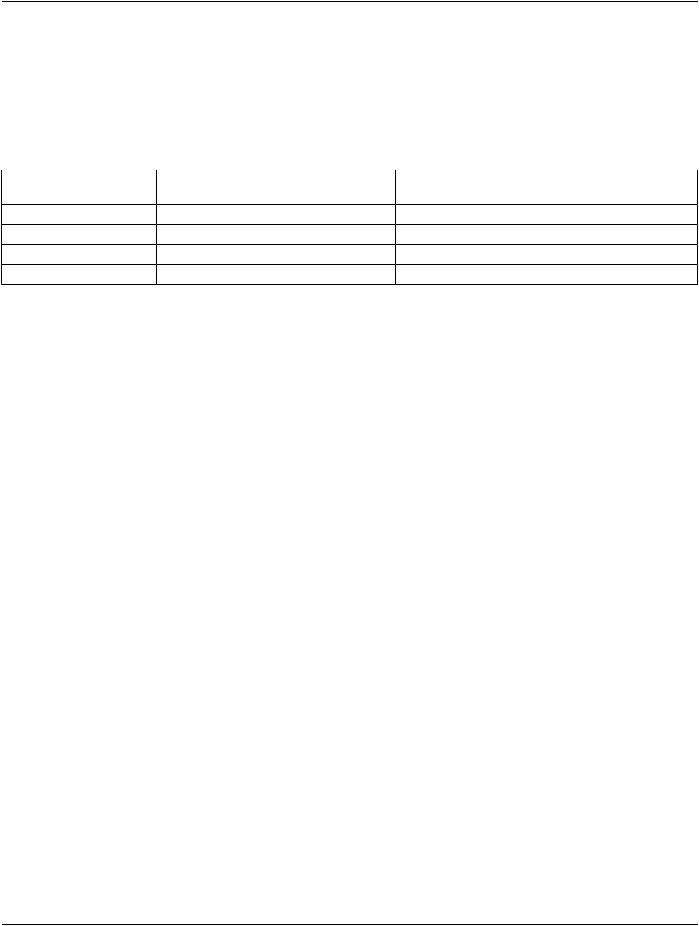
2.The frame rate of the acquiring camera for '30 Hz HD' MPEG-4 AVC/H.264 may be either 30 or 30/1.001 (approximately 29.97) frames/sec. Similarly, the frame rate in the case of 60 Hz may be either 60 or 60/1.001 (approximately 59.94) frames/sec.Thismayleadtosmallinconsistenciesbetweenthevideotimebaseandrealtime.Therelationshipbetween frame rate and frame time is shown in Table 8-7.
3.The Frame Time (0018,1063) may be calculated from the frame rate of the acquiring camera. A frame rate of 29.97 frames per second corresponds to a frame time of 33.367 ms.
4.The value of chroma_format for this profile and level is defined by MPEG as 4:2:0.
Table 8-7. MPEG-4 AVC/H.264 High Profile / Level 4.2 Image Transfer Syntax Frame Rate Attributes
Video Type |
Frame Rate (see Note 2) |
Frame Time (see Note 3) |
30 Hz HD |
30 |
33.33 ms |
25 Hz HD |
25 |
40.0 ms |
60 Hz HD |
60 |
16.67 ms |
50 Hz HD |
50 |
20.00 ms |
Stereo Pairs Present (0022,0028) shall be YES if stereoscopic pairs are present, otherwise shall be NO or absent.
- Standard -