Материал: part03

DICOM PS3.3 2020a - Information Object Definitions |
Page 131 |
intended to be delivered in an indivisible manner. An RT Radiation is typically referred to in end-user terminology as a beam (in ex- ternal beam treatment) or a catheter (in brachytherapy).
7.14.7 RT Radiation Record
The RT Radiation Record records actual treatment parameters that have been applied during the delivery of an RT Radiation in the context of a specific fraction. Typically, those parameters are the same as those described within an RT Radiation, but may differ due to therapist decisions and/or circumstances of the delivery technology and/or for various other reasons.
7.14.8 RT Treatment Phase
An RT Course may be divided into multiple RT Treatment Phases. Each RT Treatment Phase represents a period of time during which a defined number of RT Treatment Fractions are delivered by RT Radiation Sets in order to reach a specific treatment goal (see Section 7.14.9 and Section 7.14.10).
AnRTTreatmentPhasealsodefinesthechronologicalrelationshipbetweenRTRadiationSetsthatareconcurrentlyand/orsubsequently treated.
7.14.9 RT Fractionation, RT Fractionation Scheme
Fractionation describes the splitting of a course of therapeutic radiation delivery into multiple sessions. Each session may consist of the delivery of one or more RT Radiation Sets. The temporal pattern of session is called a fractionation scheme.
Further descriptions and examples of this such schemes can seen in Section 7.14.10.
7.14.10 RT Treatment Session, RT Treatment Fraction
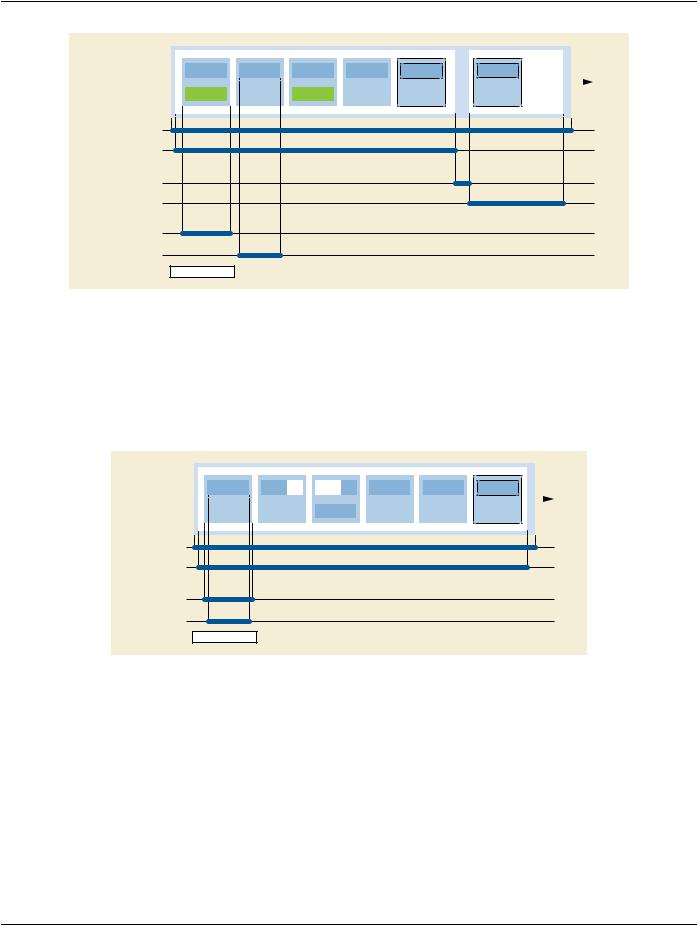
An RT Treatment Session is a collection of RT treatment events which are performed in a contiguous manner without any break in- between(otherthantimeneededforrequiredpreparations)duringasingleVisit.Itdenotesthetimeperiodbetweenthepatiententering the treatment room and leaving the treatment room. In a treatment session one or more RT Radiation Sets (RSet in Figure 7.14-2) may be treated. An RT Treatment Session may also include imaging. A group of radiation deliveries that are separated by an inten- tional delay to accommodate radiobiological recovery effects are considered separate Treatment Sessions.
Each treatment of an RT Radiation Set is labeled as an RT Treatment Fraction (often abbreviated as Fx) with a fraction number starting with 1 at the first RT Treatment Session in which the RT Radiation Set is delivered, incremented by 1 at each subsequent treatment session.
An RT Treatment Fraction is the delivery of a portion of the total dose (whose delivery is defined by an RT Radiation Set) which has been divided equally into smaller doses to be delivered over a period of time (e.g. daily for 4-6 weeks). In radiotherapy, this division of dose over a period of time is known as dose fractionation.
- Standard -
Page 132 |
DICOM PS3.3 2020a - Information Object Definitions |
|
|
|
|
|
|
|
|
|
|
|
|
|
|
|
|
|
|
|
|
|
|
|
|
|
|
|
|
|
|
|
|
|
|
|
|
|
|
|
|
|
|
... |
|
... |
|
|
|
|
|
|
|
RSet_A_Fx1 |
|
|
|
RSet_A_Fx2 |
|
|
|
RSet_A_Fx3 |
|
|
|
RSet_A_Fx4 |
|
|
|
|
|
||
|
|
|
|
|
|
|
|
|
|
|
|
|
|
|
|
|
|
|
|
|
|
|
time |
|
|
|
|
|
|
|
|
|
|
|
|
|
|
|
|
|
|
|
|
|
|
|
|
|
|
|
|
|
|
|
|
|
|
|
|
|
|
|
|
|
|
|
|
|
|
|
|
|
|
|
|
RSet_B_Fx1 |
|
|
|
|
|
|
|
RSet_B_Fx2 |
|
|
|
|
|
|
|
|
|
|
|
|
|
|
|
|
|
|
|
|
|
|
|
|
|
|
|
|
|
|
|
|
|
|
|
|
|
|
|
|
|
|
|
|
|
|
|
|
|
|
|
|
|
|
|
|
|
|
|
|
|
|
|
|
|
|
|
|
|
|
|
|
|
|
|
|
|
|
|
|
|
|
|
|
|
|
|
|
|
|
|
|
|
|
|
|
|
|
|
|
|
|
|
|
|
|
|
RT Course
Treatment Phase
Phase 1: Normal
Treatment Phase Interval
Treatment Phase
Phase 2: Boost
Treatment Session
Treatment Fraction
RSet = RT Radiation Set
Figure 7.14-2. RT Treatment Phase, RT Treatment Session, RT Treatment Fraction
Partial treatments annotate RT Treatment Fractions, that are not completely performed for any reason (e.g. patient sickness, delivery device breakdown). The remainder of the RT Treatment Session is usually delivered at a later time.This remaining portion has the same fraction number as the one of the Partial Treatment Session. Further treatments will start a new RT Treatment Fraction with an incremented fraction number.
In Figure 7.14-3, the shaded areas of each Radiation Set represent the portion where dose is actually delivered. Partially shaded Radiation Sets therefore represents a partial treatment.
|
|
|
|
|
|
|
|
|
|
|
|
|
|
|
|
|
|
|
|
|
|
|
|
|
|
|
|
|
|
|
|
|
|
|
|
|
|
|
|
|
|
|
|
|
|
|
|
|
|
|
|
|
|
|
|
RSet_A_Fx1 |
|
|
|
RSet_A_Fx2 |
|
|
|
RSet_A_Fx2 |
|
|
|
RSet_A_Fx4 |
|
|
|
RSet_A_Fx5 |
|
... |
|
|
|
|
|
|
|
|
|
|
Partial |
|
|
|
Resumption |
|
|
|
|
|
|
|
|
|
|
||||
|
|
|
|
|
|
|
|
|
|
|
|
|
|
|
|
|
|
|
|
|
|
|
|
|
time |
|
|
|
|
|
|
|
|
|
|
|
|
|
|
|
|
|
|
|
|
|
|
|
|
|
|
|
|
|
|
|
|
|
|
|
|
|
|
RSet_A_Fx3 |
|
|
|
|
|
|
|
|
|
|
|
|
|
|
|
|
|
|
|
|
|
|
|
|
|
|
|
|
|
|
|
|
|
|
|
|
|
|
|
|
|
|
|
|
|
|
|
|
|
|
|
|
|
|
|
|
|
|
|
|
|
|
|
|
|
|
|
|
|
|
|
|
|
|
|
|
|
|
|
|
|
|
|
|
|
|
|
|
|
|
|
|
|
|
|
|
|
|
|
|
|
|
|
|
|
|
|
|
|
|
|
|
|
|
|
|
|
RT Course
Treatment Phase
Phase 1: Normal
Treatment Session
Treatment Fraction
RSet = RT Radiation Set
Figure 7.14-3. Partial RT Treatment Fraction and Resumption
7.14.11 Dosimetric Objective
The Dosimetric Objective Macro specifies an intended goal to be used in the definition of the dosimetric plan for plan optimization etc. Dosimetric Objectives may define limits which affect the dose, such as dose volume constraints, minimum or maximum dose, treatment time or MU limits, and radiobiologic effects.
- Standard -

DICOM PS3.3 2020a - Information Object Definitions |
Page 133 |
8 Encoding of Coded Entry Data
The primary method of incorporating coded entry data in DICOM IODs is the Code Sequence Attribute. Code Sequence Attributes areencodedasaSequenceofItemsusingaMacrothatisdescribedinthissection.TheseAttributestypicallyincludethestring"Code Sequence" in the Attribute Name. Their purpose is to encode terms by using codes from coding schemes.
Note
In this Standard, Code Sequence Attributes are defined for a variety of concepts, for example: Primary Anatomic Structure Sequence (0008,2228) and other Attributes to describe anatomy; and Intervention Drug Code Sequence (0018,0029), to document administration of drugs that have special significance in Imaging Procedures.
Each Item of a Code Sequence Attribute contains the triplet of Coding Scheme Designator (0008,0102), the Code Value (0008,0100) (or Long Code Value (0008,0119) or URN Code Value (0008,0120)), and Code Meaning (0008,0104). Other optional and conditional Attributes may also be present.
For anyparticular Code Sequence Attributes, the range ofcodesthatmay be used for that Attribute(the Value Set) maybe suggested or constrained by specification of a Context Group. The Module or Template in which the Attribute is used will specify whether or not the context group is baseline or defined. A Baseline Context Group lists codes for terms that are suggested and may be used, but are not required to be used. A Defined Context Group lists codes for terms that shall be used if the term is used.
Context Groups are defined in a Mapping Resource, such as the DICOM Content Mapping Resource (DCMR) specified in PS3.16. Context Groups consist of lists of contextually related coded concepts, including Code Value (0008,0100) (or Long Code Value (0008,0119) or URN Code Value (0008,0120)) and Coding Scheme Designator (0008,0102). Each concept is unique within the Context Group and identified by its Code Value (0008,0100) (or Long Code Value (0008,0119) or URN Code Value (0008,0120)) and Coding Scheme Designator (0008,0102). The Context Group specification identifies whether it is extensible, i.e., whether it may be modified in an Application to use additional terms (see PS3.16). Whether a Context Group is used as a Baseline or Defined Context Group is defined not in the mapping resource, but rather in the Template or Module in which the Code Sequence Attribute is used.
Context Groups are identified by labels referred to as Context Identifiers (CID). Formally, the Context Identifier specifies the context of use, not the specific list of coded values selected for that context of use in the Context Group. The set of values specified in the Standard for a particular context may change over time, and set of values used by an Application Entity for a particular context may include a local or private extension beyond the Standard value set.
Note
1.A specific set of coded values used by an Application Entity is therefore identified by the Mapping Resource Identifier, plus the Context Identifier, plus the Context Group Version, plus the identifiers for any private extension.
2.TheusebyanApplicationEntityofcodedtermsnotintheStandardspecifiedContextGroupdoesnotrequiretheexplicit identification of a private extension. The Application Entity is then the implicit source of the extension.
3.For the purpose of harmonization with HL7 vocabulary concepts, Context Groups are equivalent to HL7 Value Sets.
8.1 Code Value
Code Value (0008,0100) is an identifier that is unambiguous within the Coding Scheme denoted by Coding Scheme Designator (0008,0102) and Coding Scheme Version (0008,0103).
The Long Code Value (0008,0119) or URN Code Value (0008,0120) is only used for codes that exceed the 16 character size limit of Code Value (0008,0100). If the code value length exceeds 16, the Code Value (0008,0100) shall not be present. If the code value length is 16 characters or less, the Code Value (0008,0100) shall contain the code and neither Long Code Value (0008,0119) nor URN Code Value (0008,0120) shall be present. The URN Code Value (0008,0120) shall be used for codes that are represented using URN or URL notation. The Long Code Value (0008,0119) shall be used for codes that are represented using other notations and that exceed 16 characters in length.
Note
The Code Value is typically not a natural language string, e.g., "76752008".
- Standard -

Page 134 |
DICOM PS3.3 2020a - Information Object Definitions |
8.2 Coding Scheme Designator and Coding Scheme Version
The Attribute Coding Scheme Designator (0008,0102) identifies the coding scheme in which the code for a term is defined. Standard coding scheme designators used in DICOM information interchange are listed in PS3.16. Other coding scheme designators, for both private and public coding schemes, may be used, in accordance with PS3.16. Further identification of the coding scheme designators used in a SOP Instance may be provided in the Coding Scheme Identification Sequence (0008,0110) (see Section C.12.1).
Note
1.Typical coding schemes used in DICOM include "DCM" for DICOM defined codes, "SCT" for SNOMED CT, and "LN" for LOINC. See Annex 8 “Coding Schemes” in PS3.16.
2.Coding scheme designators beginning with "99" and the coding scheme designator "L" are defined in HL7 V2 to be private or local coding schemes.
3.Most IODs that define the use of coded terms provide for the use of private codes and coding schemes through replace- ment of Baseline Context Groups or extension of Defined Context Groups. Systems supporting such private code use must provide a mechanism for the configuration of sets of Coding Scheme Designator (0008,0102), Code Value (0008,0100) (or Long Code Value (0008,0119) or URN Code Value (0008,0120)), and Code Meaning (0008,0104) to support interoperation of the private codes with other systems.
4.It is highly recommended that local or non-standard coding schemes be identified in the Coding Scheme Identification Sequence (0008,0110). Documents or machine readable representations of the coding scheme (e.g., CSV or OWL files) can be linked to via a Coding Scheme URL (0008,010E). For appropriate values, see Table 8-1 “Coding Schemes” in PS3.16.
5.URN and URL codes usually lack a Coding Scheme Designator (0008,0102).
The Attribute Coding Scheme Version (0008,0103) may be used to identify the version of a coding scheme if necessary to resolve ambiguity in Code Value (0008,0100), Long Code Value (0008,0119) or URN Code Value (0008,0120). Coding Scheme Version (0008,0103) is not required for backward-compatible revisions of a coding scheme, as the Coding Scheme Designator (0008,0102) identifies the coding scheme as a whole as currently published by the responsible organization.
Note
1.See PS3.16 for a discussion of SNOMED Coding Scheme Designators 99SDM, SNM3, SRT and SCT.
2.ICD-10, for example, is not a backward-compatible revision of ICD-9, and hence it has a different Coding Scheme Designator, not simply a different Coding Scheme Version.
8.3 Code Meaning
Code Meaning (0008,0104) is text that has meaning to a human and conveys the meaning of the term defined by the combination of Code Value (0008,0100) (or Long Code Value (0008,0119) or URN Code Value (0008,0120)), and Coding Scheme Designator (0008,0102). Though such a meaning can be "looked up" in the dictionary for the coding scheme, it is encoded for the convenience of applications that do not have access to such a dictionary.
It should be noted that for a particular Coding Scheme Designator (0008,0102) and Code Value (0008,0100) or Long Code Value (0008,0119), or URN Code Value (0008,0120), several alternative values for Code Meaning (0008,0104) may be defined. These may be synonyms in the same language or translations of the Coding Scheme into other languages. Hence the value of Code Meaning (0008,0104) shall never be used as a key, index or decision value, rather the combination of Coding Scheme Designator (0008,0102) andCodeValue(0008,0100),LongCodeValue(0008,0119),orURNCodeValue(0008,0120)maybeused.CodeMeaning(0008,0104) is a purely annotative, descriptive Attribute.
This does not imply that Code Meaning (0008,0104) can be filled with arbitrary free text. Available values from the Coding Scheme or translation in the chosen language shall be used.
8.4 Mapping Resource
The value of Mapping Resource (0008,0105) denotes the message/terminology Mapping Resource that specifies the Context Group that specifies the Value Set. The Defined Terms for the value of Mapping Resource (0008,0105) shall be:
- Standard -

DICOM PS3.3 2020a - Information Object Definitions |
Page 135 |
Defined Terms:
DCMRDICOM Content Mapping Resource
SDMSNOMED DICOM Microglossary (Retired)
PS3.16 specifies the DICOM Content Mapping Resource (DCMR).
Note
Unless otherwise specified, the DCMR is the source of all Context Groups and Templates specified in this Standard.
Mapping Resources may be uniquely identified by Mapping Resource UID (0008,0118).
Private Mapping Resources (those not listed amongst the Defined Terms in this section), may be identified by the prefix "99".
Mapping Resource Name (0008,0122) may contain the name of the Mapping Resource. The value may e.g., denote the Institution or organization that has specified the Value Set.
8.5 Context Group Version
Context Group Version (0008,0106) conveys the version of the Context Group identified by Context Identifier (0008,010F). This At- tribute uses VR DT, but for Context Groups defined in PS3.16 the precision of Context Group Version is limited to the day, and the time zone offset is not used.
8.6 Context Identifier and Context UID
The value of Context Identifier (0008,010F) identifies the Context Group defined by Mapping Resource (0008,0105) from which the valuesofCodeValue(0008,0100)(orLongCodeValue(0008,0119)orURNCodeValue(0008,0120))andCodeMeaning(0008,0104) were selected, or to which Code Value (0008,0100) (or Long Code Value (0008,0119) or URN Code Value (0008,0120)) and Code Meaning (0008,0104) have been added as a private Context Group extension (see Section 8.7). The Context Identifier Attribute uses VR CS, and for Context Groups defined in PS3.16 the value shall be the Context Group Identifier as a string of digits without leading zeros, and does not include the string "CID".
The value of Context UID (0008,0117) uniquely identifies the Context Group. See PS3.6.
Note
Privately defined Context Groups may be identified by Context Identifier and Mapping Resource.
8.7 Context Group Extensions
Context Group Extension Flag (0008,010B) may be used to designate a pair of Code Value (0008,0100) (or Long Code Value (0008,0119) or URN Code Value (0008,0120)) and Code Meaning (0008,0104) as a selection from a private extension of a Context Group. If the Context Group Extension Flag is present, and has a value of "Y", Context Group Extension Creator UID (0008,010D) shall be used to identify the person or organization who created the extension to the Context Group. Context Group Local Version (0008,0107) conveys an implementation-specific private version DateTime of a Context Group that contains private extensions
Note
1.These Attributes provide the means for implementations to extend code sets conveniently, while preserving referential integrity with respect to the original Context Group Version.
2.The locally-defined (private) value of Context Group Local Version (0008,0107) typically would be a more recent date than the standard value of Context Group Version (0008,0106) specified in the standard message/terminology Mapping Resource that defines the Context Group.
8.8 Standard Attribute Sets for Code Sequence Attributes
Table 8.8-1 specifies the default set of Attributes encapsulated in the Items of Code Sequence Attributes. These Attributes comprise the Code Sequence Macro.
- Standard -