Материал: part02

Page 66 |
DICOM PS3.2 2020a - Conformance |
A.3.6 Abbreviations
Abbreviationsshouldbelistedhere.Thesemaybetakenfromthefollowinglist,deletingtermsthatarenotusedwithintheConformance Statement, and adding any additional terms that are used:
AE Application Entity
AET Application Entity Title
CAD Computer Aided Detection
CDA Clinical Document Architecture
CD-R Compact Disk Recordable
CSE Customer Service Engineer
CR Computed Radiography
CT Computed Tomography
DHCP Dynamic Host Configuration Protocol
DICOM Digital Imaging and Communications in Medicine
DIT Directory Information Tree (LDAP)
DN Distinguished Name (LDAP)
DNS Domain Name System
DX Digital X-ray
FSC File-Set Creator
FSU File-Set Updater
FSR File-Set Reader
GSDF Grayscale Standard Display Function
GSPS Grayscale Softcopy Presentation State
HIS Hospital Information System
HL7 Health Level 7 Standard
IHE Integrating the Healthcare Enterprise
IOD Information Object Definition
IPv4 Internet Protocol version 4
IPv6 Internet Protocol version 6
ISO International Organization for Standards
IO Intra-oral X-ray
JPEG Joint Photographic Experts Group
LDAP Lightweight Directory Access Protocol
LDIF LDAP Data Interchange Format
- Standard -

DICOM PS3.2 2020a - Conformance |
Page 67 |
LUT |
Look-up Table |
MAR |
Medication Administration Record |
MPEG |
Moving Picture Experts Group |
MG |
Mammography (X-ray) |
MPPS |
Modality Performed Procedure Step |
MR |
Magnetic Resonance Imaging |
MSPS |
Modality Scheduled Procedure Step |
MTU |
Maximum Transmission Unit (IP) |
MWL |
Modality Worklist |
NM |
Nuclear Medicine |
NTP |
Network Time Protocol |
O |
Optional (Key Attribute) |
OP |
Ophthalmic Photography |
OSI |
Open Systems Interconnection |
PACS |
Picture Archiving and Communication System |
PET |
Positron Emission Tomography |
PDU |
Protocol Data Unit |
R |
Required (Key Attribute) |
RDN |
Relative Distinguished Name (LDAP) |
RF |
Radiofluoroscopy |
RIS |
Radiology Information System. |
RT |
Radiotherapy |
SC |
Secondary Capture |
SCP |
Service Class Provider |
SCU |
Service Class User |
SOP |
Service-Object Pair |
SPS |
Scheduled Procedure Step |
SR |
Structured Reporting |
TCP/IP Transmission Control Protocol/Internet Protocol |
|
U |
Unique (Key Attribute) |
UL |
Upper Layer |
US |
Ultrasound |
VL |
Visible Light |
- Standard -

Page 68 |
DICOM PS3.2 2020a - Conformance |
VR Value Representation
XA X-ray Angiography
A.3.7 References
Referenced documents should be listed here, including appropriate product manuals (such as service manuals that specify how to set DICOM communication parameters). References to the DICOM Standard should provide the URL for the free published version of the Standard, but should not specify a date of publication:
NEMA PS3 Digital Imaging and Communications in Medicine (DICOM) Standard, available free at http://medical.nema.org/
A.4 Networking
This section contains the networking related services (vs. the media related ones).
A.4.1 Implementation Model
The Implementation model consists of three sections: the Application Data Flow Diagram, specifying the relationship between the Application Entities and the "external world" or Real-World activities, a functional description of each Application Entity, and the se- quencing constraints among them.
A.4.1.1 Application Data Flow
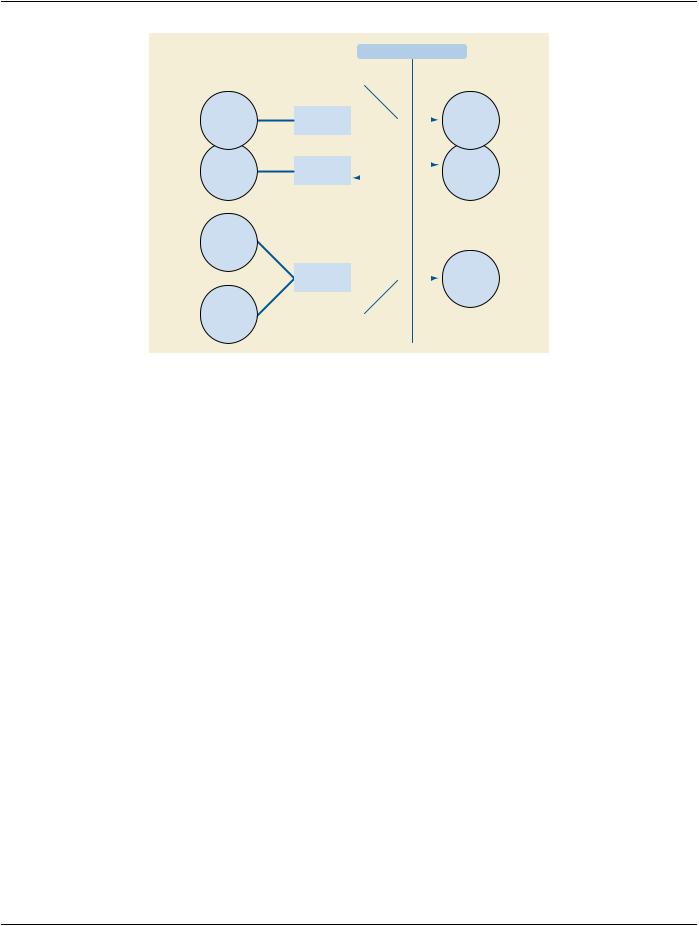
As part of the Implementation model, an Application Data Flow Diagram shall be included. This diagram represents all of the Applic- ation Entities present in an implementation, and graphically depicts the relationship of the AEs use of DICOM to Real-World Activities as well as any applicable User interaction. Figure A.4.1-1 is a template for such a Data Flow Diagram.
In this illustration, according to figure A.4.1-1, an occurrence of local Real-World Activity A will cause local Application Entity <1> to initiate an association for the purpose of causing Real-World Activity X to occur remotely. It also shows that Real-World Activities B and Y are interactively related via Application Entity <2>, with B being local and Y Remote, and that local Application Entity 3 expects to receive an association request when remote Real-World Activity Z occurs so that it can perform Real-World Activity C and/or D. WhentheperformanceofReal-Worldactivitiesreliesoninteractionswithintheimplementation,onemaydepictthecirclesasoverlapping as shown in Figure A.4.1-1. Any such overlap shall be discussed in this section of a Conformance Statement.
Typically, there is a one to one relationship between an AE and an AE Title. Devices may be capable of configuring the relationship between AE and AE Title (e.g., by merging Application Entities to use a single AE Title). This is specified in the configuration section.
- Standard -
DICOM PS3.2 2020a - Conformance |
Page 69 |
|
|
|
|
|
DICOM Standard Interface |
||
|
Association |
|
|
||||
|
Initiation |
|
|
||||
Local |
|
|
|
|
|
|
Remote |
Application |
|
|
|
|
|
||
Real-World |
|
|
Real-World |
||||
Entity <1> |
|
|
|
|
|
||
Activity A |
|
|
Activity X |
||||
|
|
|
|
|
|
||
Local |
|
|
|
|
|
|
Remote |
Application |
|
|
|
|
|
||
Real-vWorld |
|
|
|
|
|
Real-World |
|
Entity <2> |
|
|
|
|
|
||
Activity B |
|
|
|
|
Activity Y |
||
|
|
|
|
|
|
||
Local |
|
|
|
|
|
|
|
Real-World |
|
|
|
|
|
|
|
Activity C |
|
|
|
|
|
|
|
|
|
|
|
|
|
|
Remote |
|
Application |
|
|
|
|
|
|
|
|
|
Real-World |
||||
|
Entity <3> |
|
|
|
|
|
|
|
|
|
Activity Z |
||||
|
|
|
|
|
|
|
|
Local |
|
|
|
|
|
|
|
Real-World |
Association |
|
|
||||
Activity D |
|
|
|||||
Acceptance |
|
|
|||||
|
|
|
|||||
Figure A.4.1-1. Functional Overview
The Application Data Flow Diagram shall contain overview text with one bullet per AE. Each bullet should provide an overview of each one of the AEs, in relationship to their real-world activities, AE network exchanges and external real-world activities.
Note
There is no standard definition or guidelines on the number of AEs within a product and what an AE should encompass. Its functionality and scope is purely to the discretion of the vendor and typically depending on the system architecture.
A.4.1.2 Functional Definition of AEs
This Part shall contain a functional definition for each individual local Application Entity. This shall describe in general terms the functions to be performed by the AE, and the DICOM services used to accomplish these functions. In this sense, "DICOM services" refers not only to DICOM Service Classes, but also to lower level DICOM services, such as Association Services.
A.4.1.2.1 Functional Definition of "Application Entity <1>"
Functional description of "Application Entity <1>" (substitute actual AE name), i.e., what is it that the AE performs.
A.4.1.2.2 Functional Definition of "Application Entity <2>"
Same for "Application Entity <2>".
A.4.1.2.3 Functional Definition of "Application Entity <3>"
Same for "Application Entity <3>".
A.4.1.3 Sequencing of Real World Activities
If applicable, this section shall contain a description of sequencing as well as potential constraints, of Real-World Activities, including anyapplicableuserinteractions,asperformedbyalltheApplicationEntities.AUMLsequencediagram,whichdepictstheReal-World Activities as vertical bars and shows the events exchanged between them as arrows, is strongly recommended.
- Standard -

Page 70 |
DICOM PS3.2 2020a - Conformance |
A.4.2 AE Specifications:
The next section in the DICOM Conformance Statement is a set of Application Entity Specifications. There shall be one such specific- ation for each Application Entity. Each individual AE Specification has a subsection, A.4.2.x. There are as many of these subsections as there are different AEs in the implementation. That is, if there are two distinct AEs, then there will be two subsections, A.4.2.1, and A.4.2.2.
A.4.2.1 "Application Entity <1>"
Every detail of this specific Application Entity shall be completely specified under this section.
AEs that utilize the DIMSE services shall have the following sections.
Note
AEs that utilize other services are described later, and will re-use this section numbering.
A.4.2.1.1 SOP Classes
The specification for an Application Entity shall contain a statement of the form:
"This Application Entity provides Standard Conformance to the following SOP Class(es) :"
Table A.4.2-1. SOP Class(Es) for "Application Entity <1>"
SOP Class Name |
SOP Class UID |
SCU |
SCP |
SOP Class UID Name as specified in the registry table of |
UID as specified in PS3.6 |
Yes/No |
Yes/No |
DICOM Unique Identifiers (UID) in PS3.6, with phrase "and |
|
|
|
specializations" as appropriate |
|
|
|
Note |
|
|
|
Any SOP specific behavior is documented later in the conformance statement in the applicable SOP specific conformance section.
A.4.2.1.2 Association Policies
Each AE Specification shall contain a description of the General Association Establishment and Acceptance policies of the AE.
A.4.2.1.2.1 General
The DICOM standard Application context shall be specified.
|
Table A.4.2-2. DICOM Application Context |
Application Context Name |
1.2.840.10008.3.1.1.1 |
A.4.2.1.2.2 Number of Associations.
The number of simultaneous associations, which an Application Entity may support as a SCU or SCP, shall be specified. Any rules governing simultaneity of associations shall be defined here.
Note
For example an AE may have the capability to have up to 10 simultaneous associations, but may limit itself to have no more than 2 with any particular other AE. There may also be policies based upon combinations of simultaneous Real-World Activities.
- Standard -