Density Hypercubes, Higher Order Interference and Hyper-decoherence |
149 |
by objects in the form (DD(H), hypdec ). There is an R+-linear monoidal equivalence of categories between Split(DD(fHilb))Q and the probabilistic theory CPM(fHilb) of quantum systems and CP maps between them. Furthermore, trace-preserving CP maps correspond to the maps in Split(DD(fHilb))Q nor-
malised with respect to the discarding maps |
|
|
|
|
|
(DD(H),hypdec ) := |
|
|
|
|
|
DD(H) ◦ |
hypdec , which we can write explicitly as follows: |
|
|
|
|
|
|
|
|
|
|
|
|
|
|
|
|
|
|
|
|
|
|
|
|
|
|
|
|
|
|
|
|
|
|
|
|
|
|
|
|
|
H |
|
|
|
|
|
|
|
|
|
|
|
|
H |
|
|
|
|
|
|
|
|
|
|
|
|
|
|
|
(DD(H),hypdec ) := |
= |
|
|
|
|
|
|
|
|
|
(18) |
|
|
|
|
|
|
|
|
|
|
|
|
|
|
|
|
|
|
|
|
|
|
|
|
|
|
|
|
|
|
|
|
|
|
|
|
|
|
H |
|
|
|
|
|
|
|
|
|
|
|
|
H |
|
|
|
|
|
|
|
|
|
|
|
|
|
|
|
|
|
|
|
|
|
|
|
|
|
|
|
|
|
|
|
|
|
|
|
|
|
|
|
|
|
|
Taking the double-dilation construction together with the content of Propositions 2 and 3, we come to the following definition of a categorical probabilistic theory [11] of density hypercubes.
Definition 1. The categorical probabilistic theory of density hypercubes DH(fHilb) is defined the be the full sub-SMC of Split(DD(fHilb)) spanned by objects in the following form:
–the density hypercubes (DD(H), idDD(H));
–the quantum systems (DD(H), hypdec ), for all classical structures
  on H;
on H;
–the classical systems (DD(H), dec ), for all classical structures
  on H.
on H.
The environment structure for the categorical probabilistic theory is given by the
discarding maps 

 DD(H),

 (DD(H),hypdec ) and

 (DD(H),dec ) respectively. The classical sub-category for the categorical probabilistic theory is the full sub-
SMC spanned by the classical systems.
The hyper-quantum–to–classical and hyper-quantum–to–quantum decoherence maps of density hypercubes play well together with the quantum–to– classical decoherence map of quantum theory: the decoherence map dec : (DD(H), idDD(H)) → (DD(H), dec
 ) of density hypercubes factors, as one would expect, into the hyper-decoherence map hypdec
 , from (DD(H), idDD(H)) to (DD(H), hypdec
 ), followed by the decoherence map of quantum systems dec
 , from (DD(H), hypdec
 ) to (DD(H), dec
 ). From this, it is clear that the reason why hyper-quantum–to–classical transition was sub-normalised is that the hyper-quantum–to–quantum transition itself is sub-normalised (cf. Appendix B).
The sub-normalisation of hyper-decoherence maps is a sign that the theory of density hypercubes presented here is still partially incomplete, and that some suitable extension will need to be researched in the future. What we know for sure is that the current theory does not satisfy the no-restriction condition on e ects, and that an extension in which hyper-decoherence maps are normalised is possible: the additional e ect needed by normalisation exists in CPM(fHilb) and is non-negative on all states of DD(fHilb) (cf. Appendix B). In line with the recent no-go theorem of [20], preliminary considerations seem to indicated that the addition of said e ect would mean that the theory no longer satisfies purification.




 on it, associated with some orthonormal basis (
 on the density hypercube DD(
 map defined above is idempotent, so it can be used to define classical systems via the Karoubi envelope construction—in the same way as ordinary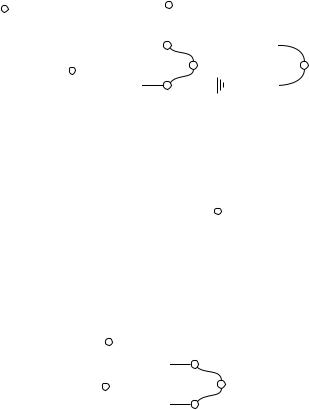

 is a classical structure on a density hypercube DD(
 ): doing so allows us to prove that the hyperdecoherence maps defined above truly provide the desired “hyper-quantum–to– quantum” decoherence, as considered by [