142 S. Gogioso and C. M. Scandolo
reversible [4, 5]. Further work has ruled out higher-order interference based on thermodynamic considerations [4, 15].
Other literature has instead focused on the analysis of specific feature that theories with higher-order interference would possess, e.g. whether they would provide any advantage in certain computational tasks [16–19]. It was also shown that theories having second-order interference and lacking interference of higher orders are relatively close to quantum theory [2, 21, 27, 28].
Unfortunately, one of the major shortcomings in the study of higher-order interference is the scarcity of concrete models displaying such post-quantum features, so that it has so far been very hard to look for specific examples of paradoxical or counter-intuitive consequences. Two models—density cubes [10] and quartic quantum theory [30]—have been proposed in the past, but are not fully defined operational theories, e.g. because they do not deal with composite systems [18]. This limitation precludes them from being used to study all possible consequences of higher order interference, including potential violation of Tsirelson’s bound.
In this article, we provide the first complete construction of a full-fledged operational theory exhibiting interference up to the fourth order. Our construction is inspired by the double-dilation construction of [29] and the higher-order CPM constructions of [12], and it is carried out in within the framework of categorical probabilistic theories [11]. The resulting theory of ‘density hypercubes’ has composite systems, exhibits higher-order interference and possesses hyperdecoherence maps [18, 20, 30]. Quantum theory, with its second-order interference, is an extension of classical theory: the latter can be recovered by decoherence, which eliminates the second-order interference e ects. Similarly, the theory of density hypercubes, with its thirdand fourth-order interference, is an extension of quantum theory: the latter can now be recovered by hyper-decoherence, which eliminates thirdand fourth-order interference e ects.
The paper is organized as follows. In Sect. 2, we define the categorical probabilistic theory of density hypercubes using the double-dilation construction. In Sect. 3, we define hyper-decoherence maps, and show that quantum theory is recovered in the Karoubi envelope. In Sect. 4, we show that density hypercubes display interference of thirdand fourth-order, but not of fifth-order and above. In Sect. 5, finally, we discuss open questions and future lines of research. Proofs of all results can be found in the Appendix.
2 The Theory of Density Hypercubes
2.1Construction of the Theory
In this section, we define the categorical probabilistic theory of density hypercubes, using a recently introduced construction known as double dilation [29].
The construction is done in two steps: first we define the category DD(fHilb), containing hyper-quantum systems and processes between them, and only in

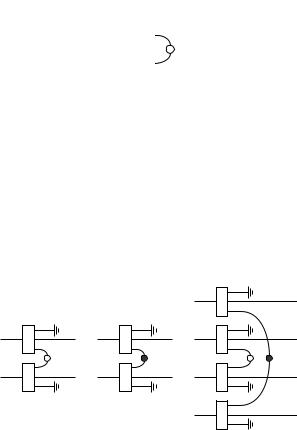
 (henceforth known as a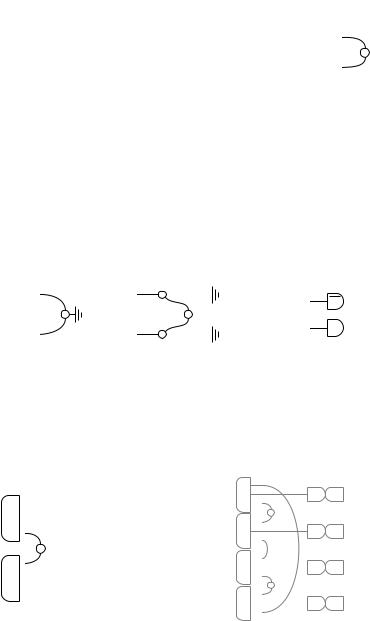


 as the “bridge”. The scalars of DD(fHilb) are exactly the scalars


 :
: