Материал: Английский язык для управления предприятием. Лавриненко И.Ю., Козлова В.В
Source: Eric H. Glendinning, Norman Glendinning. Oxford English for Electrical and Mechanical Engineering. Oxford University Press, 1995. - 190 p.p. 175-176.
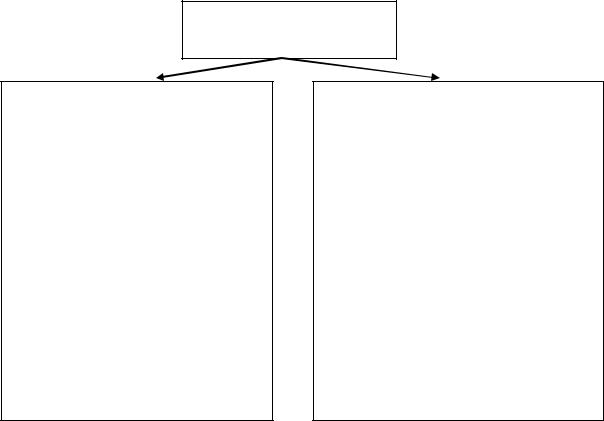
The head of the engineering company in the UK is the … or the Chief Executive Officer (CEO) CEO. If it is an American subsidiary, the head may be known as the Vice President. Unless the man at the top is the chairman of a company, he or she will be responsible to a … or the President (in the UK).
The managers of the various departments report directly to the managing Director. These managers may be referred to as the Management Team. They give Director advice on the effects and results of and decision made by the Board: on the cost, time, materials, personnel, plant, etc.
The … with the support of Mechanical, Electronic and … Sections is responsible for the introduction of new products. The … decides how the new products will be produced. The … and Industrial Engineering Manager report to this member of the Management Team.
The … insures that the products are fault-free and that the component and the materials used in their manufacture meet company standard. The … handles market research, promotion and sales. The Field Service Manager is responsible for installation and maintenance of the company`s products wherever required.
Task 15. Study the phrases in the diagram below and the examples:
Words to describe Company Structure
The most often used: consist of
is composed of contains
is made up of includes
is divided into
Examples: The company consist of five main departments
The finance department is made up of five units.
The R&D department is made up of three units.
to be in charge of
to support or to be supported by to be accountable to
to be responsible for
to assist or to be assisted by
Examples: The human resources department is in charge of hiring and firing
The finance department in responsible for counting the assets and losses.
The assistant manager is accountable to the senior manager.
15
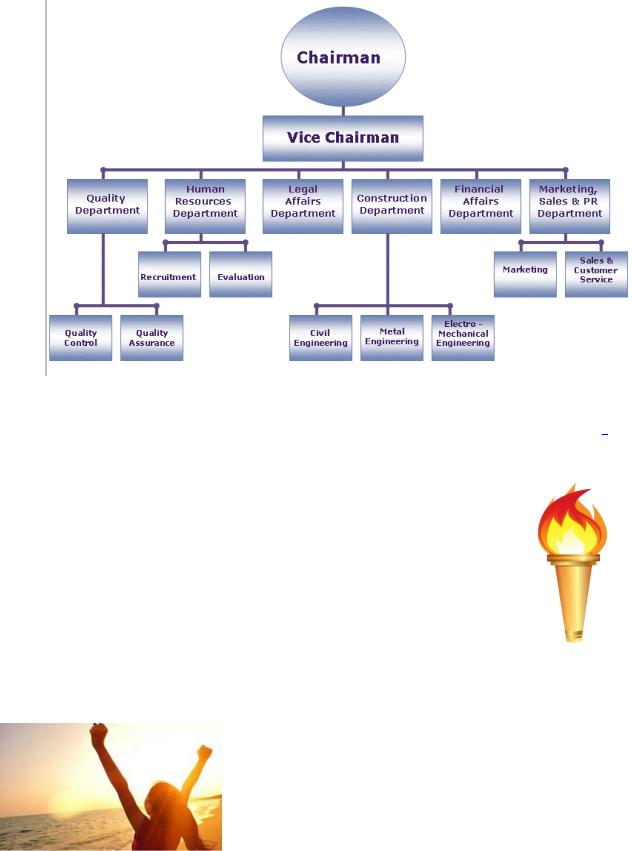
Task 16. Use the phrases given above to describe the structure of the company below:
Source: Яндекс. [Электронный ресурс]. – Режим доступа: https://yandex.ru/images/search... (время обращения: 24.07.2017).
The Structure of a Company in Action
Think about the company you know well. Describe its structure. How can the structure influence the company`s performance? Can you offer any improvement in its structure? Prepare the overview as a presentation.
UNIT 3
MOTIVATION
Task 1. Discuss the following questions:
1. What can motivate people do their job (acceptable salary, good working conditions,
nice working environment, prestige, social status, benefits (company car, accommodation, etc., promotion, etc.)) ?
2. What is a good motivator for you (to study or to work)?
3. What can be done to motivate people?
16
Task2.Readand memorizethewordsbelow thatwillhelpyouunderstandthetext.
1.labour relations [ˈleɪbə rɪˈleɪʃən] – отношения в рабочем коллективе
2.working conditions [ˈwɜːkɪŋ kənˈdɪʃən] – условия работы
3.wages [weɪdʒiz ] – заработная плата
4.benefits [ˈbɛnɪfɪts] – льготы
5.security [sɪˈkjʊərɪtɪ] – безопасность
6.argue [ɑːɡjuː] – аргументировать, приводить доводы
7.satisfier [ˈsætɪsˌfaɪə] – условие, удовлетворяющее рабочего, привлекательная черта
8.exist [ɪɡˈzɪst] – существовать
9.challenging [ˈtʃælɪndʒɪŋ ] – сложный и интересный, мобилизует
10.recognition [ˌrɛkəɡˈnɪʃən] – признание
11.promotion [prəˈməʊʃən ] – продвижение по карьерной лестнице
12.plenty [ˈplɛntɪ ] – большое количество
13.boring [ˈbɔːrɪŋ ] – скучный
14.mindless [ˈmaɪndlɪs] – не требующий интеллектуального напряжения
15.unskilled [ʌnˈskɪld] – не требующий специальных навыков
16.solution [səˈluːʃən] – решение
17.checkout till [ˈtʃekaʊt tɪl] – кассовый аппарат
18.stock [stɒk ] – выставлять на продажу
19.repetitive [rɪˈpɛtɪtɪv ] – повторяющийся
20.value [ˈvæljuː] – ценность
21.user-friendly [ˌjuːzəˈfrendlɪ] – удобный
22.target [ˈtɑːɡɪt] – цель
Task 3. Read and translate the text.
What is Motivation?
It is natural that things like good labour relations, good working conditions, good wages and benefits and job security motivate workers. But in Work and the Nature of Man Frederick Hertzberg argued that such conditions do not motivate workers. They are merely «satisfiers» or more importantly “dissatisfiers” where they do not exist. “Motivators”, on the contrary, include things such as having challenging and interesting job, recognition and responsibility, promotion and so on.
However there are and there always will be plenty of boring, mindless, repetitive and mechanical jobs in all the three sectors of economy and lots of unskilled people who have to do them.
One solution to motivate people on such jobs is to give them some responsibilities not as individuals, but as part of a team. For example, some supermarkets combine office staff, the people who fill the shelves and the people who work at the checkout tills into a team and let them decide what product lines to stock, how to display
17

them and so on. Other employees make people who make repetitive jobs change them everycoupleofhours,becausedoingthreerepetitivejobsinadayisbetterthandoingone.
Sometimes it is important to think about the company values and corporate culture with which all the staff can identify (being the best chain of cafes or the restaurant chain, airline making the best, the safest the most user-friendly and ecological products in a particular field).
Such values are more likely to motivate worker than financial targets.
Source: Ian MacKenzie, A course for Business Studies and Economics students. — 2nd edition. — Cambridge University Press, 2002. — 206 p.p. 31.
Task 4. Match the words in two columns to make collocations:
1. |
labour |
a. |
job |
2. |
working |
b. |
relations |
3. |
challenging |
c. |
tills |
4. |
office |
d. |
values |
5. |
checkout |
e. |
staff |
6. |
company |
f. |
conditions |
7. |
use-friendly |
g. |
products |
Task 5. Fill in the gaps with the correct form of the verbs below:
to motivate, to do, to combine, to identify, to stock, to give, to display.
1.During the crisis Madame Gritsatsuyev-Bender 1) … up with enough provisions and commodities for her shop to last at least four months.
2.Sometimes the enterprise employs a business-planner, as he or she finds ways and 2) … people.
3.What did you 3) … to make your business took off (стал успешным)?
4.These documents look much the same, I can`t 4) … them. Will you help me?
5.One of the ways to motivate staff is to 5) … mental and mindless activities.
6.The information in the lobby 6) … the current exchange rate.
7.Tomorrow the manager 7)… a presentation on time-keeping. Would you like to come?
Task 6. Answer the following questions:
1.What originally motivates workers?
2.What are “satisfiers”?
3.What are “motivators”?
4.Can you think of some examples of repetitive and boring jobs?
18

5.What can motivate people in mindless jobs?
6.What can be more motivating than financial targets?
7.Is “satisfier” or “motivator” more important for you?
Task 7. Are the sentences below True or False? Prove your choice.
1.Frederick Hertzberg argued that only financial and other material targets motivate workers.
2.Motivators are more stimulated by spiritual and social aspects.
3.Mindless and repetitive jobs are more typical for unskilled people.
4.Sometimes working in a team motivates people more.
5.Doing one repetitive job is better than changing a job every two hours.
Task 8. Look at the pyramid below that shows the basic people`s needs according to Maslow`s Hierarchy of Needs. Read the text below and fill in the missing levels of the pyramid with the following word combinations:
esteem needs, psychological needs, safety needs, self-actualization, social needs
An important theory of motivation in management belongs to Maslow`s Hierarchy of Needs. Maslow (1942) described five levels of needs. His theory suggests that people treat each level as a motivating factor, but once a level is achieved it is no longer motivating. Instead, the new level up becomes the new motivator. This tells us that in the workplace, esteem needs are important, but once achieved, they are no longer significant. Self-actualization of self-development is much more important. Managers therefore have to make sure that their staff continually feel that they are improving and achieving more in terms of self-actualization.
Maslow also suggests that it is not possible to move up the step without first fulfilling the lower needs.
5) _________________________
self-development
4) __________________________________
self-esteem, recognition, status
3)__________________________________________
sense of belonging, love
2) _______________________________________________
security, protection
1) ______________________________________________________
hunger, first, warmth
19