Материал: Английский язык для управления предприятием. Лавриненко И.Ю., Козлова В.В
Some people in an organization have colleagues who help them. This is known as staff position. Its holder has no line authority and is not integrated into the chain of command.
Yet the activities of the most companies are too complicated to be organized into a single hierarchy. Today most large manufacturing organizations have a functional structure, including production, finance, marketing, sales and personnel or human resources department. This means, for example, that production and marketing departments cannot take financial decisions without consulting the financial department.
Functional organization is efficient, but there are two standard criticisms. Firstly, people are usually more concerned with the success of their department than that of the company. Secondly, separating functions is unlikely encourage innovation.
An inherent problem of hierarchies is that people at lower levels are unable to make important decision but have to pass their responsibility to their boss. One solution to this is matrix management in which people report to more than one superior. This is one way of keeping authority at lower level. A further possibility is to have wholly autonomous temporary groups or teams who are responsible for entire project and split up as soon as they are successfully completed.
Source: Ian MacKenzie, A course for Business Studies and Economics students. — 2nd edition. — Cambridge University Press, 2002. — 206 p.p. 21-22.
Task 5. Match the Russian and English equivalents:
1. increasing |
a. сложный |
2. chain of command |
b. эффективный |
3. complicated |
c. вдохновлять |
4. personnel department |
d. увеличивающийся |
5. efficient |
e. решение |
6. encourage |
f. отдел кадров |
7. separating |
g. цепочка команд |
8. solution |
h. разделение |
Task 6. The letters in the words below are mixed. Guess what word is ciphered in eachpoint:
a) ONRGIZANTAIO b) ETMRPROAY c) POLPEE d) CIANH e) ATYOURTHI
Task7.Fillinthegapsbelow withthecorrectformoftheverbsTOBEorTO HAVE:
When choosing a career move, whether its your first job out of university or the next step on the ladder, the type of organization you work in 1) … very important. Different sectors 2) … all different and each 3) … their own culture, but the size of the organization 4) … a big factor as well. So far I 5) … worked for companies of 6
10
people, about 120 people, around 2000 people, and now there 6) … about 18 of us at my current workplace. I 7) …. also spoken with friends with different experiences.
The advantages: larger companies tend 8) …better at paying overtime or booking holiday because they 9) … systems to organize this. They 10) …also more set up for supporting employees because there 11) … an HR department and some policies and procedures for getting things sorted out if the need arises.
The disadvantages: large companies, certainly here in the UK, 12) … a bit of a one-size-fits-all attitude to employees. The results tend 13) … silly things such as if one person 14) … thought 15) … covering their poor timekeeping by changing their shift pattern a lot.
Source: Lornajane blog. [Электронный ресурс]. – Режим доступа: URL: https://lornajane.net/posts/2007/small-company-vs-big-company (время обращения - 23.07.17).
Task 8. Are the sentences below True or False?
1.Hierarchical or pyramidal structure is the structure when people are usually more concerned with the success of their department than that of the company.
2.Staff position is a supplementary department in a company.
3.Functional structure is more widely spread nowadays.
4.Functional structure as only positive points.
5.Peopleatlowerlevelsofhierarchyusuallypasstheresponsibilitytotheirsuperior.
6.In matrix structure the employee reports to more than one boss.
7.Sometimes a company employs temporary group to work on a project autonomously.
Task 9. Answer the following questions:
1.What is specific about pyramidal structure of a company?
2.Can you explain what staff position is? Can you give some examples?
3.What is functional structure?
4.Does functional organization structure have some disadvantages?
5.Are there any ways of keeping authority at lower level?
Task 10. Match the names of the positions with their descriptions:
managing director, executive secretary, sales and marketing manager, sales representative, production manager, personnel manager, R&D manager, finance director, accountant,receptionist.
11
a)someone who keeps the accounts in the finance department
b)someone who does secretarial work for top management
c)someone who sits in the lobby, answers the phone and greets visitors
d)someone responsible for running the company`s financial affairs
e)someone who heads the department responsible for scientific research and the development of new products
f)someone who is responsible for selling the product to the customers
g)someone who heads a company and is responsible for its running
h)someone who head the department that advertises and sells the product
i)someone who head the department responsible for manufacturing the product
j)someone who head the department responsible for staff matters such as the hiring the employees
Task 11. Read the text below about staff position and fill in the gaps with the suitable word of phrase:
responsible (2), target setting, maintenance, difference, functions, delivering, chains, personnel.
Line and Staff Management
Line and staff management has two separate hierarchies: (1) the line hierarchy in which the departments are revenue generators (manufacturing, selling), and their managers are a) … for achieving the organization's main objectives by executing the key b) … (such as policy making, c) …, decision making); (2) the staff hierarchy, in which the departments are revenue consumers, and their managers are d) … for activities that support line functions (such as accounting, e) … , personnel management).
If a company were an army, the line positions would be the soldiers on the front line fighting the daily battles and the staff positions would be the f) … off the battlefield providing support to the soldiers. Line positions directly affect the customer through manufacturing and g) … products and services. Staff positions affect customers indirectly, only to the extent that the support they provide helps line employees improve quality and customer satisfaction.
While both hierarchies have their own h) … of command, a line manager may have direct control over staff employees but a staff manager may have no such power over the line employees. In modern practice, however, the i) … in the two hierarchies is not so clear-cut and jobs often have elements of the both types of functions.
12
Task 12. Make the summary of the text in Russian. Can you explain what the difference between staff and line position is?
Sources: BusinessDictionary. [Электронный ресурс]. – Режим доступа: URL:
http://www.businessdictionary.com/definition/line-and-staff-management.html |
(время обращения – |
|||||
22/07/2017). |
|
|
|
|
|
|
Bizfluent. |
[Электронный |
ресурс]. |
– |
Режим |
доступа: |
URL: |
http://www.ehow.com/info_12075450_line-position-vs-staff-position.html (время обращения - 23.07.17).
Task 13. Answer the following questions. To sound more naturally, use the phrases below:
Well, ... As far as I know…, As far as I can say…, Actually, … In fact…, etc.
1.What kind of organization would you like to work for and why?
2.What department do you find the most prestigious to work in?
3.What structure of a company do you find the most efficient and why?
4.What position would you like to take? Why?
5.What position do you find the least attractive? Why?
6.Do you plan to change departments (positions) over time?
7.Would you like to work for on boss or several bosses? Why?
8.Do you prefer to work alone or be a part of a team? Why?
Source: Ian MacKenzie, A course for Business Studies and Economics students. — 2nd edition. — Cambridge University Press, 2002. — 206 p.p. 24.
13
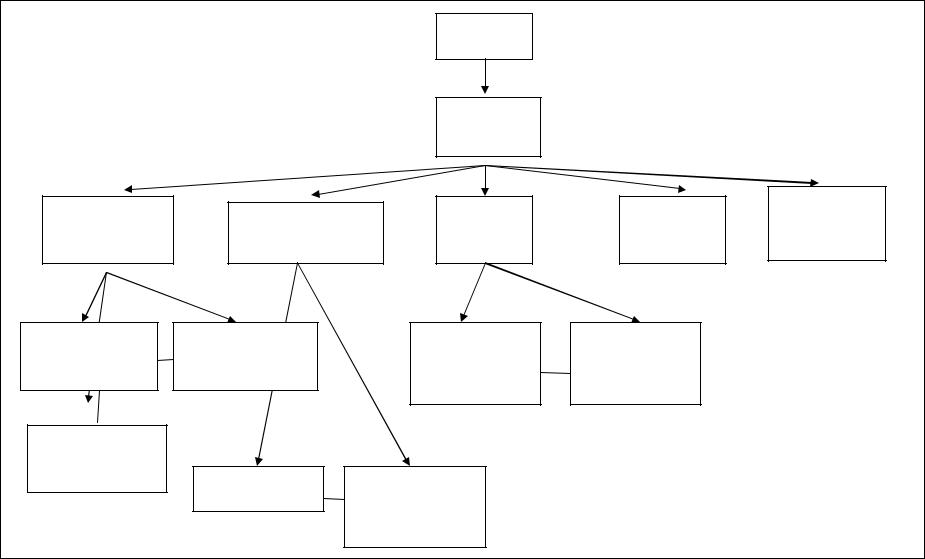
Task 14. Below is the diagram of the structure of a company. Use the information from the diagram and fill in the gaps in the text below:
|
|
|
Board |
|
|
|
|
|
Managing |
|
|
|
|
|
Director |
|
|
Development |
Manufacturing |
Quality |
Marketing |
Field Ser- |
|
vice Manag- |
|||||
Manager |
Manager |
|
Manager |
Manager |
er |
14 |
|
|
|
|
|
Mechanical |
Electrical Sec- |
|
Inspection |
Inspection In- |
|
Section Leader |
tion Leader |
|
Process and |
coming Goods |
|
|
|
|
Products |
|
|
Software Sec- |
|
|
|
|
|
tion Leader |
Plant Manager |
Industrial Engi- |
|
|
|
|
|
|
|||
|
|
|
neer Manager |
|
|
|
|
|
14 |
|
|