Материал: англ универ новая книга
LESSON 1
TAKING A PILOT ABOARD
Words and Word Combinations
pilot - лоцман
to call for - вызывать, звать
to hoist - поднимать (парус, флаг, груз), поднимать на талях master - капитан (торгового судна)
to board - подняться, взойти на судно
in the offing - вдали от берега (но в виду его); в море, далеко на рейде to con - подавать команды рулевому, вести судно
launch - катер, баркас ladder - трап
rope ladder - шторм-трап
lee side - подветренная сторона, подветренный борт судна
boat rope - бурундук, тж шлюпочный бросательный конец, фалинь watch officer - вахтенный помощник
to show to - показывать, провожать
to manoeuvre [mə'nu:və] - маневрировать, проводить (судно) berth - причал
berthing place - место швартовки, стоянки (судна) to see to smth - следить, присматривать (за чем-л.)
mooring ['muəriŋ] - швартовка, постановка на два якоря to pilot - проводить (судно)
tug (=tug-boat) - буксирное судно, буксир compulsory - принудительный, обязательный single-screw ship - одновинтовое судно twin-screwship - двухвинтовое судно
draft (=draught) - осадка (судна) fore - передний, носовой
aft - кормовой, задний (на корме)
to sheer - отклоняться от курса, рыскать searchlight - прожектор
International Standard Pilot Ladder - лоцманский трап международного стандарта
Expressions
to take aboard - принять на борт судна
the responsibility lies with - ответственность лежит на to make fast - крепиться, швартоваться
to get underway - сниматься (с якоря или швартов), отходить to put over the boat rope - завести бурундук
to steer the course - идти по курсу, править по курсу
6
Please meet Comrade В. - Познакомьтесь, пожалуйста, с тов. Б. to make a landing - подойти к пристани, к пирсу
we are now running 15 knots - мы сейчас делаем 15 узлов
to hold the launch against the sea - удерживать катер на волне abreast of the point - на траверзе, напротив мыса
TEXT
То call for a pilot, the ship either sends a radiogram beforehand or hoists the signal when she approaches the pilot station or, which is more common nowadays, the Master contacts the pilot station by radiotelephone. A pilot may board the ship either near the pilot station or in the offing.
When the pilot launch is nearing the ship the pilot is asked which side he wants the ladder to be lowered on. If the wind is fresh or strong, the
pilot is usually taken aboard from the lee side.
To hold the launch against the sea, a boat rope is put over and the fenders are shipped on the side where the launch makes fast.
Most of the pilot boats are now equipped with a continuous rubber fender which runs along the boat's sides, bow and stern and is about 50— 60 cm wide. This makes shipping the ship's fenders unnecessary. In some places where the traffic is rather dense, the Pilot Station asks the master to embark and disembark the pilot while the ship is under way (usually at a speed of not more than 16 knots).
In compliance with the International Convention for the Safety of Life at Sea, 1979, the ships shall be provided with the International Standard Pilot Ladders and Mechanical Hoists.
Usually the watch officer meets the pilot and shows him to the bridge. Then the pilot manoeuvres the ship into the harbour to her berthing place. Sometimes the pilot takes the ship only into the harbour and the port pilot boards the ship to manoeuvre her to the berth. He also sees to the mooring of the vessel.
Although the pilot is consulted as to what course should be steered and practically it is he who cons the ship to her place, yet the responsibility for the safety of the vessel lies with the captain.
DIALOGUES
WATCH OFFICER. Motor-boat, ahoy!1Come alongside from starboard! PILOT. Hullo! Put over the boat rope! Have you rigged the ladder? WATCH OFFICER. Yes, we have. The ladder is fast. You may climb up.
Shall we take your launch in tow?
PILOT. No, thanks, you needn't. Please hoist aboard the searchlight equipment.
WATCH OFFICER. All right, sir. Will you kindly come along to the bridge?
7
2
CAPTAIN. Rotterdam Pilot Station. This is m/v Pechora. We are approaching the position allocated by you. Any instructions?
PILOT STATION. M/v Pechora. Pilot boat will reach you in 5-7 minutes.
Have you Standard Pilot Ladders?
CAPTAIN. Yes, we have rigged the International Standard Pilot Ladder on our starboard side.
PILOT STATION. Because of heavy traffic you will have to take the pilot aboard while underway. Proceed on your present course reducing your speed to 15 knots.
CAPTAIN. I've got you. We are reducing speed to 15 knots.
3
PILOT. M/v Pechora. This is a port pilot boat on your starboard side. I've got instructions from the Pilot Station to pilot your vessel.
CAPTAIN. This is Master of the m/v Pechora speaking. Please approach our vessel from our lee side. We've rigged a pilot ladder on our starboard side. It's been joined with the accommodation ladder. Shall we reduce the speed?
PILOT. No, sir, you needn't. If possible, please send a deckhand to help me to get aboard. The ship is pitching a bit, you know.
CAPTAIN. Oh, don't worry. The Watch Officer will meet you at the joint and a deckhand will help you at the ladder.
(Some time later)
WATCH OFFICER. Here you are! Stretch out your hand, I'll help you a little. You are welcome. This way, please. We'll come along to the bridge.
4
WATCH OFFICER. Please meet the Captain, Comrade Petrov. CAPTAIN. How do you do, sir!
PILOT. How do you do! Pleased to meet you, sir. CAPTAIN. How far will you pilot the ship? PILOT. I shall take her only up to the port entrance. CAPTAIN. Who will take the ship further on?
PILOT. At the entrance to the port, another pilot will board the ship. He will relieve me and manoeuvre her into the port. He will take the ship to her berth.
CAPTAIN. Shall we take a tug to enter the port and to make a landing? PILOT. Yes, taking a tug is compulsory for such big ships as yours. CAPTAIN. Thank you. Are you ready to take her up?
PILOT. Yes, I am ready.
5
PILOT. How many propellers has your ship? CHIEF MATE. She is a single-screw ship.
8
PILOT. What is her maximum speed?
CHIEF MATE. Her maximum speed is 20 knots.
PILOT. How many knots are we running now?
CHIEF MATE. We are running about 17 knots.
PILOT. What is the draft of your ship?
CHIEF MATE. Her draft is 4.95 metres fore and 6 metres aft. PILOT. How is her head now?
CHIEF MATE. Her head is 158° now. PILOT. How does she answer the helm? CHIEF MATE. She answers the helm all right. PILOT. Does the ship sheer too much?
CHIEF MATE. No, she sheers a little when there is a heavy swell or a strong wind.
PILOT. I see. Now we shall have to turn to starboard. Starboard a bit! CHIEF MATE (to helmsman). Starboard a bit!
6
PILOT. What propulsion machinery have you got on your ship? WATCH OFFICER. We have a 2,000 h.p. Russian Diesel. PILOT. How many revolutions does she do?
WATCH OFFICER. She does 118 r.p.m.
PILOT. How long will it take to get the engine ready?
WATCH OFFICER. It will take one hour and a half to get the engine ready.
PILOT. That's good. We must get under way in two hours.
7
PILOT. We are approaching the entrance point. Will you kindly give me the glasses?
WATCH OFFICER. Take mine, if you like. Adjust them to your eyes. I'll take other glasses from the wheelhouse. What are you trying to make out?
PILOT. I'm just searching for the sea buoy, it must be somewhere near that point. By the way, will you be good enough to get the chart for
this channel ready?
WATCH OFFICER. I've already done that. Please step into the chart house. Here you are. Will this chart do?
PILOT. Oh, but this chart is rather of a small scale. Haven't you got another one of a larger scale?
WATCH OFFICER. Of course, we have. Wait a moment, please. Oh, here it is. Will this one suit you better?
PILOT. Yes, thank you. I wanted to show you how we can get into port. Well, look here. That's where we are now. Do you see that sunken rock here? No, not this one. I mean the one nearer to the coast. Yes, this one.
9
WATCH OFFICER. But the rock is hardly a cable from the sea buoy you were searching for?
PILOT. That's right. You see, the depths are very irregular around that rock. So we must keep at least half a cable southward of that buoy. Do you follow me?
WATCH OFFICER. Yes, I do.
PILOT. Now, do you see these two lights on the chart? Well, as soon as we are past that buoy, we must keep these lights in line till we cross the other leading line. Do you follow me?
WATCH OFFICER. Yes, certainly, I do. The first leading line will take us through this passage and the depths there are pretty irregular.
PILOT. That's what I was going to tell you. So switch on the echo sounder and keep it working continuously till we are out of this passage.
WATCH OFFICER. Very well, I'll switch it on as soon as we approach that passage. We have still about half an hour before we reach there. Can you show me our berthing place on the plan?
PILOT. Why not? Get the port plan ready. Well, now look here. We must enter the harbour through this channel, leaving this molehead to starboard. Then we must proceed to the right-hand corner of the inner harbour. Our berthing place will be exactly abreast of that point.
WATCH OFFICER. Thank you very much. Now we are just nearing that passage.
COMMANDS TO THE HELMSMAN
Starboard!
Helm a-starboard!
Starboard the helm! Port!
Helm a-port! Port the helm! Hard a-starboard! All starboard! Hard a-port!
All port! Midships! Amidships! Right the helm! Meet her! Meet the helm!
Check the helm! Hard over the helm!
Better (More) starboard! Better (More) port! Starboard easy!
Easy to starboard! Starboard a bit!
10
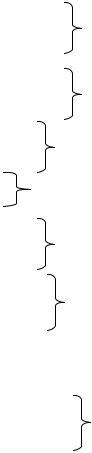
Право руль!
Лево руль!
Право на борт!
Лево на борт!
Прямо руль!
Одерживать!
Больше одерживать! Больше право! Больше лево!
Помалу право