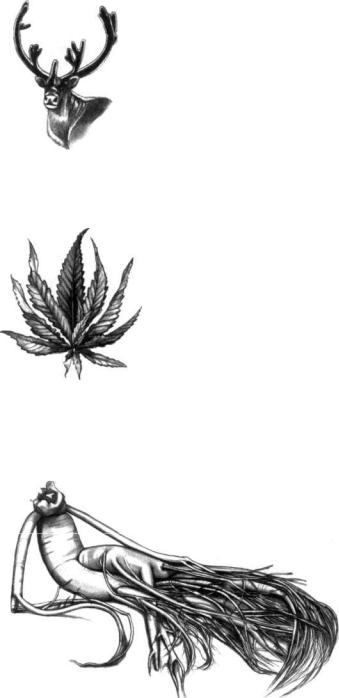
aphrodisiacs
Many aphrodisiacs are listed in Eastern sexological works. Some of them have merely a placebo effect, but others are actually effective on the physical level. Many foods can be prepared in such a way as to release vitalizing forces. Healthy food and a natural lifestyle are by far the most effective aphrodisiacs. Fresh air, water, and fire all have the power to stimulate sexuality, as does the har-
monious contact of the senses with objects of enjoyment. An often quoted Oriental say-
ing is, "The most natural aphrodisiac for a man is a beautiful woman, passionately asking to be enjoyed."
Fasting can have an aphrodisiacal effect on the body, provided it is practiced in moderation. Yoga and breathing exercises can greatly help to stimulate the natural vitality of the body; if these are combined with meditation, so that the mind is freed of anxiety, then there will rarely be any need for physical aphrodisiacs. A healthy mind and a cre-
ative imagination t o g e t h e r p r o d u c e a "climate" in which all things are possible.
Aphrodisiacs are normally included as topics in works pertaining to the Art of Love. Generally it is taught that a substance that resembles the sexual organs is likely to act as an aphrodisiac if correctly prepared. This concept is known as the Doctrine of Signatures and evolved from the observation that herbs, plants, or other substances with a particular appearance, color, shape, or smell were effective in curing ailments linked by similar characteristics. An example of this is the Indian mango, which resembles the kidneys in shape and is an effective natural cure for some cases of kidney disease.
Correct preparation is very important when using any aphrodisiac. A specialized branch of Indian medicine is devoted to this study. Aphrodisiacs may be broadly categorized under three main headings: the animal, the vegetable, and the mineral. These categories are kept separate or combined to produce the whole range of aphrodisiacs that are suited to the condition and temperament of the individual.
Animal substances include eggs (of various birds), different kinds of milk (but espe-
cially goat milk), wild fowl, sparrows, peacocks, the flesh of vigorous animals, mussels, oysters, sea horses, fish eggs (caviar), especially vigorous fish (salmon), and animal parts such as deer horn, musk pods, ambergris from whales, rhinoceros horn, and a whole range of animal sex organs. For these products to be effective, they must come from animals in the wild, hunted in the right season, and when the animals are in good health.
Vegetable aphrodisiacs are even more numerous, and their preparation requires even more care. Among those included in traditional Eastern works are: ginger root, fennel, ginseng root, mushrooms, black beans, particular kinds of onions, gourds, carrots, wild asparagus, wild rhubarb, figs, licorice, almonds, pistachio nuts, pine kernels, sesame seeds, cinnamon bark, nutmeg, saffron, black pepper, raisins, walnuts, honey (from particular flowers), glutinous millet, tree bark, orange seeds, aconite root, opium husks, damiana,
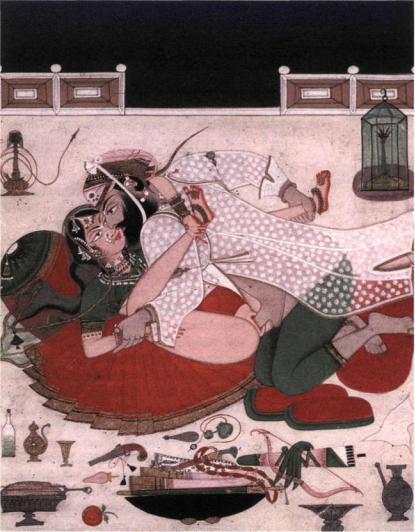
A noble couple in a version of the Indrani Position with various aphrodisiacs by their side. A Rajasthani miniature painting, circa 1800.
The use of aphrodisiacs should be learned from a study of the science of medicine, from the religious texts, from those who are learned in the art of magic, and from confidential relatives. No means should be tried that are doubtful in their effects, or that are likely to cause injury to the body, that involve causing the death of animals, and that bring a person into contact with impure things.
KAMA SUTRA