Материал: Konrad Muzyka Russian Forces in the Western Military District
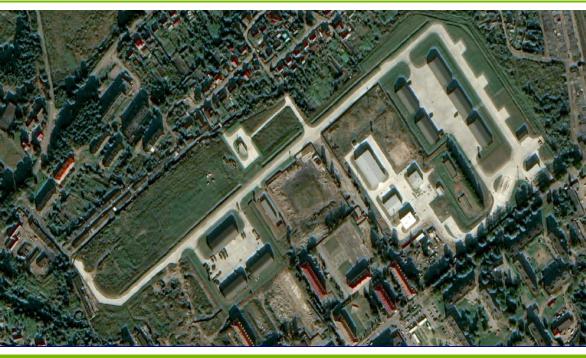
The 152nd Missile Brigade, based in Chernyakovsk (and shown in Figure 12), was the next to last brigade in the Russian ground forces to receive the Iskander complex, in 2018. In this case, delivering the complex to Kaliningrad it may have been an intentional move as the system became a part of the Russian propaganda toolkit used against NATO countries, Poland, and the Baltic States in particular. Any information about the possible deployment of the system (either permanently or for exercises) was met with an uproar, and the media in those countries gave increased attention to the militarization of the region. Unlike the missile brigade based in Luga, and because of its location (in the northeastern part of the city), the base does not seem to feature a weapon storage area where warheads for the Iskander complex can be stored; this presumably has a negative effect on the readiness of the brigade.
The army corps also has the 148th Repair and Recovery Battalion, which provides repair and recovery services to ground units in Kaliningrad.
The Baltic Sea Fleet commander also manages coastal defense forces, which are composed of the 336th Naval Infantry Brigade, the 25th Coastal Missile Regiment, the 561st Naval Reconnaissance Centre, the 69th Naval Engineering Regiment, and the 841st EW Centre.
Figure 12. The 152nd Missile Brigade based in Chernyakovsk, largely completed
Source: Includes material from © CNES 2020, Distribution Airbus DS, all rights reserved/PLEIADES satellite imagery/Acquired through ShadowBreak Intl. on Oct. 5, 2020.
CNA Occasional Paper | 45

The army corps also has the 148th Repair and Recovery Battalion, which provides repair and recovery services to ground units in Kaliningrad.
The Baltic Sea Fleet commander also manages coastal defense forces, which are composed of the 336th Naval Infantry Brigade, the 25th Coastal Missile Regiment, the 561st Naval Reconnaissance Centre, the 69th Naval Engineering Regiment, and the 841st EW Centre.
The 336th Naval Infantry Brigade is the most combat-ready ground force/naval infantry unit in the oblast. Its personnel were deployed to operations in Eastern Ukraine in 2014 and Syria in 2016. This confirms that at least some of the personnel from the brigade have gained combat experience—some, possibly in two theaters—which has undeniably increased the overall professionalism levels within the unit.
Locally, personnel from the brigade train extensively, usually at the Khmelevka training range, although these exercises are rather limited in mission scope and size (company level). Within the first two months of service, enlisted servicemembers spend an average of three weeks at the range.
The brigade is a heavily mechanized force. It fields around 60-80 BTR-82s (two battalions). One battalion, the 879th, has jump status, which is confirmed by social media posts. The battalion could, therefore, be earmarked for airborne assault operations. Its personnel train with the VDV and are likely linked to them on an operational level. Interoperability between Western VDV forces (most likely the 76th Airborne Division) and the 336th Brigade, is also presumably higher than interoperability between other units stationed in the oblast.
This means that in times of crisis or war, personnel from the brigade could be employed with VDV servicemembers, using the latter’s transport aircraft in coastal areas to clear them from opposing forces and allow for amphibious landings. The brigade possesses organic artillery capability in the form of an artillery battalion.
The 25th Coastal Missile Regiment operates out of Donskoye. It is equipped with a battalion of one 3K60 Bal and, presumably, one K-300P Bastion-P coastal defense system.80 The unit is tasked with protecting sea approaches and conducting surface-to-water strikes against opposing naval forces at stand-off distances. In Syria, the K-300P Bastion-P has also been used in a land attack mode, thus expanding the mission envelope of the regiment.
At least one company—the 69th Naval Engineering Regiment—is at full readiness status to conduct demining tasks across the Kaliningrad Oblast. However, apart from such missions, the unit is also responsible for the provision of camouflage and deception capabilities for some of
80 Интерфакс АВН, Балтийский флот будет усилен еще одним противокорабельным ракетным дивизионом с комплексом "Бал" – источник, Интерфакс АВН, 02.03.2019, https://www.militarynews.ru/story.asp?rid=1&nid=503170&lang=RU.
CNA Occasional Paper | 46

the forces stationed in the oblast. Also, it has a pontoon-bridging battalion that provides bridging capabilities for ground forces operating in and from the oblast.
Electronic warfare capability on a fleet level is provided by the 841st EW Centre, which may consist of two battalions and a company. The first battalion undertakes strategic EW tasks, and the second is responsible for the provision of EW capability on a tactical level.81
The Centre fields the “Samarkand” electronic warfare (EW) system,82 which has the stated role of monitoring and assessing the electromagnetic spectrum, instantly detecting, analyzing, and locating radio signals in conjunction with other mobile and static signals intelligence/electronic intelligence (SIGINT/ELINT) systems, as well as using software, electronics, and other decoys to divert and misdirect enemy platforms and systems away from intended targets. Krasuha EW and Murmansk-BM complexes are also understood to be deployed within the Centre.83
Naval forces
As of mid 2020, the Baltic Sea Fleet fielded 52 surface combatants and one subsurface combatant, with an average age of 24 years. These assets are grouped into two naval bases: Leningrad (Kronstadt) and Baltyisk. In Kronstadt, the fleet deploys the 3rd Submarine Brigade84 and the 105th Sea Protection Ships Brigade. In addition, two rescue detachments are subordinated to the base, one of which is earmarked for expeditionary (long-range) operations. Note that each naval base across Russia has one subunit—a detachment for counteraction underwater diversionary forces and facilities—which conducts underwater combat, mining, and demining operations, and protect fleets’ assets against the enemy’s naval special forces. In the case of the Baltic Sea Fleet, these are the 473rd and the 313th Detachments, located in Kronstadt and Baltyisk, respectively.
81Jonas Kjellèn, Russian Electronic Warfare. The role of Electronic Warfare in the Russian Armed Forces, FOI, Apr. 10, 2018, p. 37, https://www.foi.se/rapportsammanfattning?reportNo=FOI-R--4625--SE.
82Андрей Резчиков, «Самарканд» превратит армии НАТО в войско дикарей, Взгляд, Oct. 28, 2018, https://vz.ru/society/2018/10/28/674524.html.
83Лидия Мисник, Гроза Европы: в Калининграде развернули «Мурманск-БН», Газета.ру, Apr. 26, 2019, https://www.gazeta.ru/army/2019/04/26/12323509.shtml. This deployment is also confirmed by satellite imagery (54.831422, 19.957723).
84The brigade fields one Kilo-class patrol submarine – Project 877EKM (487 Dmitrov, commissioned in 1986). It was under repair between 2014 and March 2018, when it was transferred back to the Baltic Sea Fleet. In the meantime, the second submarine of the fleet, Project 877 (469 Vyborg, commissioned in 1983), is understood to have been decommissioned in November 2018.
CNA Occasional Paper | 47
In the future, the fleet may obtain modern submarines in the form of the Project 636.3 Varshavyanka class (Improved-Kilo). There are several reasons why the Baltic Sea
Fleet’s submarine presence is mediocre. The first is that the Black Sea Fleet took modernization priority post-2014, which resulted in the delivery of six 636.3 Varshavyanka class submarines between 2014 and 2016. The second modernization priority pertained to the delivery of new submarines to the Pacific and Northern Fleets as an additional support to their SSBN forces. The third reason is the low priority of the Baltic Fleet as a training and sea trials fleet. Last but not least, the Russian military leadership had little incentive to allocate funds into the development of the Baltic Sea Fleet’s capabilities, in view of the inherent weakness of other regional navies. The Polish Navy’s submarine force is on the brink of collapse, and there are real concerns that Warsaw may soon lose this capability altogether. The surface fleet is also antiquated, obsolete, and unable to effectively address challenges posed by the fleet and its seaand land-based platforms.
Most naval forces are stationed in Baltyisk: the 36th Missile Boats Brigade, the 64th Sea Protection Ships Brigade, the 72nd ELINT Ships Squadron, the 71st Landing Ships Brigade, the 106th Small Missile Ships Squadron, and the 128th Surface Ships Brigade. Each fleet also has a detachment that is responsible for rescue and emergency operations as well as for undertaking such roles in expeditionary missions. Baltyisk also houses the 342nd Emergency Rescue Detachment, and the base in Kronstadt has both the 501st Emergency Rescue Detachment and the 328th Expeditionary Emergency Rescue Detachment.
Between 2007 and 2014, the fleet received four Steregushchy-class FFCs (Project 20380) and one Neustrashimy-class FFG (FFG Project 11540). In 2016, Russia redeployed two Project 21631 Buyan-M artillery ships from the Black Sea Fleet to the Baltic Sea. These vessels epitomize the “Kalibrization” of the Russian Navy, which seeks to provide the Russian Navy with as many cruise missiles as possible. Indeed, one of the most significant surface ship developments has been the fitting of the Kalibr capability to the Project 21631 Buyan-M corvettes. The ships’ eight-cell 3S-14 VLS launcher has been used to fire missiles on a number of occasions during combat operations in Syria. What is most striking in this development is the proven ability to fit a long-range land-attack punch to even relatively small surface platforms, and for these platforms to have a demonstrable impact on shaping events ashore. With a reported range of 1,500 km (932 miles), these missiles can effectively engage targets across Western and Northern Europe. However, the Buyan-M’s weakness is a lack of air defense, given that it comprises two Komar launchers with 9M39, 9M313, or 9M342 Igla missiles, which can only engage targets up to 6 km (3.7 miles). This means that Buyan-Ms also need to operate under a more robust air defense umbrella provided either by larger-class vessels, such as Steregushchiy-class, or by land-based systems.
Initially, the inclusion of Buyan-Ms in the Baltic Sea Fleet inventory served as a power projection tool, but its psychological effect on regional countries could not be
CNA Occasional Paper | 48
underestimated—it was akin to that of the Iskander deployment threat before 2018. It remains to be seen how Russian “missile posturing” will change with the demise of the INF and whether operationally, low-displacement vessels will be augmented with land-based medium-range missiles. These Buyan-Ms were augmented by two Project 22800 Karakurt-class small missile ships delivered in 2018-19, thus further saturating the fleet with long-range strike capability.
A particular focus is being placed on mine warfare forces. Altogether, the Baltic Sea Fleet deploys 11 minesweepers of three classes (Project 12700, Project 1265, and Project 10750). The latest addition is the Alexandrit-class (Project 12700) fiber-hull minesweeping vessel.
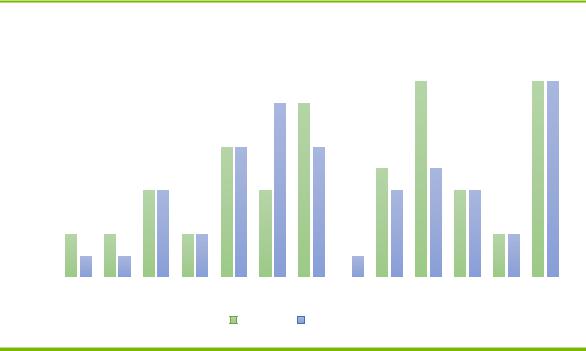
Figure 13 compares the Baltic Sea Fleet’s composition in 2015 with its composition in 2020. As shown, the fleet “lost” one submarine and one guided-missile destroyer, and its minesweeper fleet decreased from 14 to nine vessels. In 2015, the average age of its vessels was 22 years, compared to 24 years in 2020. Replacements are therefore coming too slowly to stop the ageing of the Baltic Sea Fleet. Even so, the addition of four new FSGs increased the total number of small missile ships to eight, thus significantly increasing long-range strike capability.
Figure 13. Changes in the Baltic Sea Fleet’s composition, 2015 to 2020
Changes in Baltic Sea Fleet Composition
NUMBER OF VESSELS
10 |
|
|
|
|
|
|
|
|
|
|
|
|
|
|
|
|
|
|
|
|
|
|
|
|
|
|
|
|
|
|
|
|
|
|
|
|
|
|
|
|
|
|
|
|
|
|
|
|
|
|
|
|
|
|
|
|
|
|
|
|
|
|
|
|
|
|
|
|
|
|
|
|
|
|
|
|
|
|
|
|
|
|
|
|
|
|
9 |
|
|
|
|
|
|
|
|
9 |
9 |
|
|||||
|
|
|
|
|
|
|
|
|
|
|
|
|
|
|
|
|
|
|
|
|
|
|
|
|
|
|
|
|
|
|
|
|
|
|
|
|
|
|
|
|
|
|
|
|
|||||||
9 |
|
|
|
|
|
|
|
|
|
|
|
|
|
|
|
|
|
|
|
|
|
|
|
|
|
|
|
|
|
|
|
|
|
|
|
|
|
|
|
|
|
|
|
|
|
|
|
|
|
|
|
|
|
|
|
|
|
|
|
|
|
|
|
|
|
|
|
|
|
8 |
|
8 |
|
|
|
|
|
|
|
|
|
|
|
|
|
|
|
|
|
|
|
|
|
|
|
|
|
||||||
|
|
|
|
|
|
|
|
|
|
|
|
|
|
|
|
|
|
|
|
|
|
|
|
|
|
|
|
|
|
|
|
|
|
|
|
|
|
|
|
|
|
|
|
|
|||||||
8 |
|
|
|
|
|
|
|
|
|
|
|
|
|
|
|
|
|
|
|
|
|
|
|
|
|
|
|
|
|
|
|
|
|
|
|
|
|
|
|
|
|
|
|
|
|
|
|
|
|
|
|
|
|
|
|
|
|
|
|
|
|
|
|
|
|
|
|
|
|
|
|
|
|
|
|
|
|
|
|
|
|
|
|
|
|
|
|
|
|
|
|
|
|
|
|
|
|
|
|
|
|
|
|
7 |
|
|
|
|
|
|
|
|
|
|
|
|
|
|
|
|
|
|
|
|
|
|
|
|
|
|
|
|
|
|
|
|
|
|
|
|
|
|
|
|
|
|
|
|
|
|
|
|
|
|
|
|
|
|
|
|
|
|
|
|
|
|
|
|
|
6 |
6 |
|
|
|
|
|
|
6 |
|
|
|
|
|
|
|
|
|
|
|
|
|
|
|
|
|
|
|
|
|
|
|
||||||
|
|
|
|
|
|
|
|
|
|
|
|
|
|
|
|
|
|
|
|
|
|
|
|
|
|
|
|
|
|
|
|
|
|
|
|
|
|
|
|
|
|
|
|
||||||||
6 |
|
|
|
|
|
|
|
|
|
|
|
|
|
|
|
|
|
|
|
|
|
|
|
|
|
|
|
|
|
|
|
|
|
|
|
|
|
|
|
|
|
|
|
|
|
|
|
|
|
|
|
|
|
|
|
|
|
|
|
|
|
|
|
|
|
|
|
|
|
|
|
|
|
|
|
|
|
|
|
5 |
|
|
|
|
5 |
|
|
|
|
|
|
|
|
|
|
|
|
|
|||||
|
|
|
|
|
|
|
|
|
|
|
|
|
|
|
|
|
|
|
|
|
|
|
|
|
|
|
|
|
|
|
|
|
|
|
|
|
|
|
|
|
|
|
|
|
|
||||||
5 |
|
|
|
|
|
|
|
|
|
|
|
|
|
|
|
|
|
|
|
|
|
|
|
|
|
|
|
|
|
|
|
|
|
|
|
|
|
|
|
|
|
|
|
|
|
|
|
|
|
|
|
|
|
|
|
|
4 |
4 |
|
|
|
|
|
|
|
|
4 |
|
|
|
|
|
|
|
|
|
|
4 |
|
|
|
|
|
4 |
4 |
|
|
|
|
|
|
|
|
|
|||||||||
|
|
|
|
|
|
|
|
|
|
|
|
|
|
|
|
|
|
|
|
|
|
|
|
|
|
|
|
|
|
|
|
|
|
|
|
|
|
||||||||||||||
4 |
|
|
|
|
|
|
|
|
|
|
|
|
|
|
|
|
|
|
|
|
|
|
|
|
|
|
|
|
|
|
|
|
|
|
|
|
|
|
|
|
|
|
|
|
|
|
|
|
|
|
|
|
|
|
|
|
|
|
|
|
|
|
|
|
|
|
|
|
|
|
|
|
|
|
|
|
|
|
|
|
|
|
|
|
|
|
|
|
|
|
|
|
|
|
|
|
|
|
|
|
|
|
|
3 |
|
|
|
|
|
|
|
|
|
|
|
|
|
|
|
|
|
|
|
|
|
|
|
|
|
|
|
|
|
|
|
|
|
|
|
|
|
|
|
|
|
|
|
|
|
|
|
|
|
|
|
|
|
|
|
|
2 |
|
|
|
|
|
|
|
2 |
2 |
|
|
|
|
|
|
|
|
|
|
|
|
|
|
|
|
|
|
|
|
|
|
|
|
|
|
2 |
2 |
|
|
|
|
|
||||
2 |
|
|
|
|
|
|
|
|
|
|
|
|
|
|
|
|
|
|
|
|
|
|
|
|
|
|
|
|
|
|
|
|
|
|
|
|
|
|
|
|
|
||||||||||
2 |
|
|
|
|
|
|
|
|
|
|
|
|
|
|
|
|
|
|
|
|
|
|
|
|
|
|
|
|
|
|
|
|
|
|
|
|
|
|
|
|
|
|
|
|
|
|
|
|
|
|
|
|
|
1 |
|
|
1 |
|
|
|
|
|
|
|
|
|
|
|
|
|
|
|
|
|
|
|
|
1 |
|
|
|
|
|
|
|
|
|
|
|
|
|
|
|
|
|
|
|
|
|
||||
|
|
|
|
|
|
|
|
|
|
|
|
|
|
|
|
|
|
|
|
|
|
|
|
|
|
|
|
|
|
|
|
|
|
|
|
|
|
|
|
|
|
|
|
|
|||||||
1 |
|
|
|
|
|
|
|
|
|
|
|
|
|
|
|
|
|
|
|
|
|
|
|
|
|
|
|
|
|
|
|
|
|
|
|
|
|
|
|
|
|
|
|
|
|
|
|
|
|
|
|
|
|
|
|
|
|
|
|
|
|
|
|
|
|
|
|
|
|
|
|
|
|
|
|
|
|
|
|
0 |
|
|
|
|
|
|
|
|
|
|
|
|
|
|
|
|
|
|
|
|
|
|
|
|
|
|
|
|
|
|
|
|
|
|
|
|
|
|
|
|
|
|
|
|
|
|
|
|
|
|
|
|
|
|
|
|
|
|
|
|
|
|
|
|
|
|
|
|
|
|
|
|
|
|
|
0 |
|
|
|
|
|
|
|
|
|
|
|
|
|
|
|
|
|
|
|
|
|
|
|
|
|
|
|
|
|
|
|
|
|
|
|
|
|
|
|
|
|
|
|
|
|
|
|
|
|
|
|
|
SS |
DDG FFС |
FFG FSS FSG |
PGM MSO MSC |
MSI |
LST LCAC LCM |
|||||||||||||||||||||||||||||||||||||||||||||
|
|
||||||||||||||||||||||||||||||||||||||||||||||||||
|
|
|
|
|
|
|
|
|
|
|
|
|
|
|
|
|
|
|
|
March 15 |
May 2020 |
|
|
|
|
|
|
|
|
|
|
|
|
|
|
|
|
||||||||||||||
Notes: SS = Attack submarine; DDG = Guided Missile Destroyer; FFG = Guided Missile Frigate; FSS = Small ASW Ship; FSG = Small Missile Ship; PGM = Guided Missile Boat; MSO = Seagoing Minesweeper; MSC = Coastal Minesweeper; MSI = Inshore Minesweeper; LST = Landing Ship; LCAC = Landing Craft Air Cushion; LCAM = Landing Craft.
Source: Russianships.com.
CNA Occasional Paper | 49