Материал: part10
Page 26 |
DICOM PS3.10 2020a - Media Storage and File Format for Media Interchange |
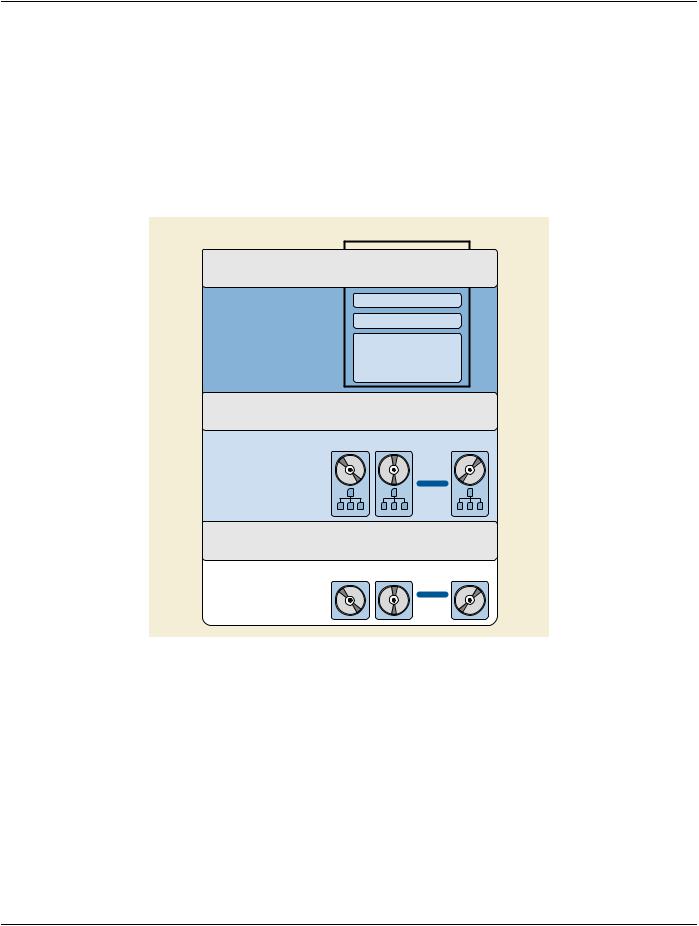
6.2 The DICOM Media Storage Model
TheDICOMMediaStorageModelispresentedbyFigure6.2-1andexpandsontheGeneralDICOMCommunicationModelintroduced earlier in Section 6.1.
The DICOM Media Storage Model focuses on the aspects directly related to data interchange through removable storage media. It pertains to the data structures and associated rules used at different layers to achieve interoperability through media interchange. The Services identified in this Model are simple boundaries between functional layers.
Note
It is not within the scope of this Standard to specify Application Programming Interfaces at these boundaries.
DICOM Application Entity
BOUNDARY: Application Services
Abstract services providing access to the data structures of the underlying layer;
Relies on DICOM info; Objects and Media Storage Service Classes
DICOM Data Format Layer |
DICOM File Format |
Basic Directory
Service / Object Pairs;
Application-specific
Information Objects
(e.g. Images, Results, etc.)
BOUNDARY: DICOM File Services
Abstract services providing access to the data structures of the underlying layer;
Ensures media format and physical media independence
Media Format Layer
Data structures of a file system, |
MEDIUM A |
MEDIUM B |
MEDIUM N |
may be physical media-specific |
|
|
|
BOUNDARY: Physical Media Access Services
Abstract services providing access to the data structures of the underlying layer;
Physical Storage Media Specific
Physical Media Format Layer
Physical Storage Media |
MEDIUM A |
MEDIUM B |
MEDIUM N |
Specifications (e.g., CDR, |
|
|
|
90mm OD, 130mm OD, etc.) |
|
|
|
Figure 6.2-1. DICOM Media Storage Model
The DICOM Media Storage Model includes three layers, which are described in the following sections.
6.2.1 Physical Media Layer
Physical media characteristics are defined at the Physical Media Layer. Such characteristics include the physical media form factor, dimension,mechanicalcharacteristicsandrecordingproperties.ThisLayeralsodefinestheorganizationandgroupingoftherecorded bits.
Note
1.An example of a Physical Media Layer in the personal computer environment is the 3 1/2 inch floppy disk, double sided, high density.
- Standard -

DICOM PS3.10 2020a - Media Storage and File Format for Media Interchange |
Page 27 |
2.The specification of one or more specific Physical Media for a given application is beyond the scope of this Part of the DICOM Standard. PS3.12 and its annexes specify several Physical Media choices. PS3.11 defines a number of Applic- ationProfilesthatselectspecificPhysicalMediadependingontherequirementsofspecificmedicalimagingapplications.
6.2.2 Media Format Layer
At the Media Format Layer, Physical Media bit streams are organized into specific structures. Data file structures and associated directory structures are defined to allow efficient access and management of the physical media space.
Note
This layer is often specific to a given operating system environment. An example of such a Media Format Layer definition associatedwiththe31/2inchfloppydiskarethedatastructuresusedbytheoperatingsystemsofvariouspersonalcomputer file systems. PS3.12 and its annexes specify several Media Format choices.
Media Formats supported by the DICOM Standard are selected to support the minimum requirements specified by the DICOM File Service as specified in Section 8 of this Part. Constraining access to the File content through such a DICOM File Service ensures that the DICOM Data Format Layer is independent from Media Format and Physical Media selection.
6.2.3 DICOM Data Format Layer
The DICOM Data Format Layer includes the following elements of specification:
a.DICOM Media Storage SOP Classes and associated Information Object Definitions;
b.The DICOM File Format;
c.The Secure DICOM File Format;
d.The DICOM Media Storage Directory SOP Class;
e.DICOM Media Storage Application Profiles;
f. DICOM Security Profiles for Media Storage.
6.2.3.1 DICOM SOP Classes
DICOM SOP Classes and associated Information Object Definitions (IODs) are used to convey specific medical imaging information at the Data Format Layer. Examples of such IODs are modality images, patient information, results, etc.
The use of DICOM IODs in conjunction with Media Storage Services forms a number of Media Storage Service Object Pair Classes or SOP Classes. Media Storage Services (e.g., read, write, delete, etc.) shall be performed through the DICOM File Service. The content of the resulting DICOM Files shall be formatted according to the DICOM File Format as specified below.
PS3.4 defines a number of SOP Classes that may be used for Media Storage in Annex I. These SOP Classes are based on DICOM Standard IODs that may be found in PS3.3.
The structure and encoding of a Data Set representing the data associated with a SOP Class shall follow PS3.5. The specification of Transfer Syntaxes that may be used to encode such a Data Set, is also defined in PS3.5.
6.2.3.2 Concept of the DICOM File Format
The encapsulation of a DICOM Data Set in a File shall follow the specifications of Section 7 of this Part. These encapsulation rules defineaDICOMFileFormatabletocontaininaFileanyDICOMDataSet.FilesareidentifiedbyFileIDs.Nosemanticsshallbeinferred from these File IDs, nor from their structure.
Note
A medical imaging application acting as a creator of a DICOM File may use semantic information to generate a File ID, but readers of DICOM files should not rely on apparent semantic content of a File ID.
Data Set encapsulation shall be based on the DICOM File Service as specified in Section 8 of this Part.
- Standard -

Page 28 |
DICOM PS3.10 2020a - Media Storage and File Format for Media Interchange |
Note
It is acceptable that a specific Media Format offers more file services than those specified in the DICOM File Service. Such services may be local or internal to an implementation. Their usage is beyond the scope of the DICOM Standard. However, in cases where such services are reflected in the file structures of the Media format Layer or in the Data Set encoding of an Information Object, the extension of such services in a manner that jeopardizes interoperability should not be done (e.g., File IDs longer than those specified in the DICOM File Service).
The encapsulation of a DICOM File in a Secure DICOM File shall follow the specifications of Section 7.4 of this Part. These encapsu- lation rules define a mechanism for creating a Secure DICOM File by encapsulating an unprotected DICOM File as payload within a secure envelope.
6.2.3.3 DICOM Medical Information Directory
InadditiontotheDICOMImageandImagerelatedSOPClasses(e.g.,results,patients)otherSOPClassestailoredformediastorage maybeusedtoprovidereferences(ordirectories)basedonmedicalinformation,thusfacilitatingaccesstotheclinicalimaginginform- ation. Such a SOP Class is the Media Storage Directory SOP Class as defined in PS3.4. Instances of this SOP Class are conveyed in the File with a File ID of DICOMDIR.
6.2.4 DICOM Media Storage Application Profiles
A Media Storage Application Profile defines a selection of choices at the various layers of the DICOM Media Storage Model that are applicabletoaspecificneedorcontextinwhichthemediainterchangeisintendedtobeperformed.Suchchoicesareformallyspecified as a Media Storage Application Profile in order to ensure interoperability between implementations conforming to the same Media StorageApplicationProfile.Itfacilitatesconformancestatementsthatallowuserstoassessinteroperabilityofdifferentimplementations.
Media Storage Application Profiles shall include:
a.The description of the need addressed by the Application Profile (e.g., cardiac, echography, angiography) and its context of ap- plication;
b.The selection, at the Data Format Layer, of a number of specific IODs and associated SOP Classes. For standard DICOM SOP Classes, this shall be done by reference to PS3.4. These SOP Classes, like any other DICOM SOP Classes are assigned a unique registered UID. For each SOP Class it shall be stated if its support is required or optional within the context of this profile;
c.TheselectionofaspecificMediaFormatdefinition.ThisisdonebyreferencetoPS3.12thatspecifytheselectedPhysicalMedium, a specific associated Media Format and the mapping of this Media Format (or file system) services onto the DICOM File Service;
d.The selection of appropriate Transfer Syntaxes;
e.The selection of a specific Security Profile. This is done by reference to PS3.15 that specifies the cryptographic algorithms to be used to encapsulate the DICOM Files of the DICOM File Set into Secure DICOM Files. If a Media Storage Application Profile selects no Security Profile, then the Application Profile is unsecure and the Secure DICOM File Format shall not be used with that Application Profile;
f. Other choices facilitating interoperability such as specific limits (e.g., maximum file sizes, if necessary, support of options, if any).
ThecompletedefinitionandstructureofaMediaStorageApplicationProfilesisspecifiedbyPS3.11.AnumberofStandardApplication Profiles corresponding to different needs are included in PS3.11.
6.2.5 Media Storage and The DICOM Standard Structure
Figure 6.2-2 provides an overview of the relationship between the functional areas identified by the DICOM Media Storage Model in- troduced in Section 6.2 and the various Parts of the DICOM Standard related to Media Storage. A number of Parts of the DICOM Standard are common between Network Communication and Media Interchange.
- Standard -

DICOM PS3.10 2020a - Media Storage and File Format for Media Interchange |
Page 29 |
Parts of DICOM Standard |
|
|
General |
|
|
Network |
|
Media Storage |
|
|
|
|
|
|
Communication |
|
Interchange |
||
|
|
|
|
|
|
|
|||
PS3.1 Introduction and Overview |
|
|
|
|
|
|
|
|
|
PS3.2 Conformance |
|
|
|
|
|
|
|
|
|
PS3.3 Information Object Definitions |
|
|
|
|
|
|
|
|
|
PS3.4 Service Class Specifications |
|
|
|
|
|
|
|
|
|
PS3.5 Data Structure and Semantics |
|
|
|
|
|
|
|
|
|
PS3.6 Data Dictionary |
|
|
|
|
|
|
|
|
|
PS3.7 Message Exchange |
|
|
|
|
|
|
|
|
|
PS3.8 Network Communication |
|
|
|
|
|
|
|
|
|
Support for Message Exchange |
|
|
|
|
|
|
|
|
|
PS3.10 Media Storage and File |
|
|
|
|
|
|
|
|
|
Format for Media Interchange |
|
|
|
|
|
|
|
|
|
PS3.11 Media Storage Application |
|
|
|
|
|
|
|
|
|
Profiles |
|
|
|
|
|
|
|
|
|
PS3.12 Storage Functions and Media |
|
|
|
|
|
|
|
|
|
Formats for Data Interchange |
|
|
|
|
|
|
|
|
|
PS3.14 Grayscale Standard Display |
|
|
|
|
|
|
|
|
|
Format |
|
|
|
|
|
|
|
|
|
PS3.15 Security and System |
|
|
|
|
|
|
|
|
|
Management Profiles |
|
|
|
|
|
|
|
|
|
PS3.16 Content Mapping Resource |
|
|
|
|
|
|
|
|
|
PS3.17 Explanatory Information |
|
|
|
|
|
|
|
|
|
PS3.18 Web Services |
|
|
|
|
|
|
|
|
|
PS3.19 Application Hosting |
|
|
|
|
|
|
|
|
|
PS3.20 Imaging Reports using HL7 |
|
|
|
|
|
|
|
|
|
Clinical Document Architecture |
|
|
|
|
|
|
|
|
|
PS3.21 Transformations between |
|
|
|
|
|
|
|
|
|
DICOM and other Representations |
|
|
|
|
|
|
|
|
|
PS3.22 Real-Time Communications |
|
|
|
|
|
|
|
|
|
(DICOM RTV) |
|
|
|
|
|
|
|
|
|
Figure 6.2-2. Media Storage and DICOM Parts
- Standard -

Page 30 |
DICOM PS3.10 2020a - Media Storage and File Format for Media Interchange |
- Standard -