Материал: part05

DICOM PS3.5 2020a - Data Structures and Encoding |
Page 101 |
•Each Data Stream Fragment encoded according to the specific encoding process shall be encapsulated as a DICOM Item with a specific Data Element Tag of Value (FFFE,E000). The Item Tag is followed by a 4 byte Item Length field encoding the explicit number of bytes of the Item.
Note
Whether more than one fragment per frame is permitted or not is defined per Transfer Syntax.
•All items containing an encoded fragment shall be made of an even number of bytes greater or equal to two. The last fragmentofaframemaybepadded,ifnecessary,tomeetthesequenceitemformatrequirementsoftheDICOMStandard.
Note
1.AnynecessarypaddingmaybeaddedintheJPEGorJPEG-LScompresseddatastreamasperISO10918- 1 and ISO 14495-1 such that the End of Image (EOI) marker ends on an even byte boundary, or may be appended after the EOI marker, depending on the implementation.
2.ISO 10918-1 and ISO 14495-1 define the ability to add any number of padding bytes FFH before any marker (all of which also begin with FFH). It is strongly recommended that FFH padding bytes not be added before the Start of Image (SOI) marker.
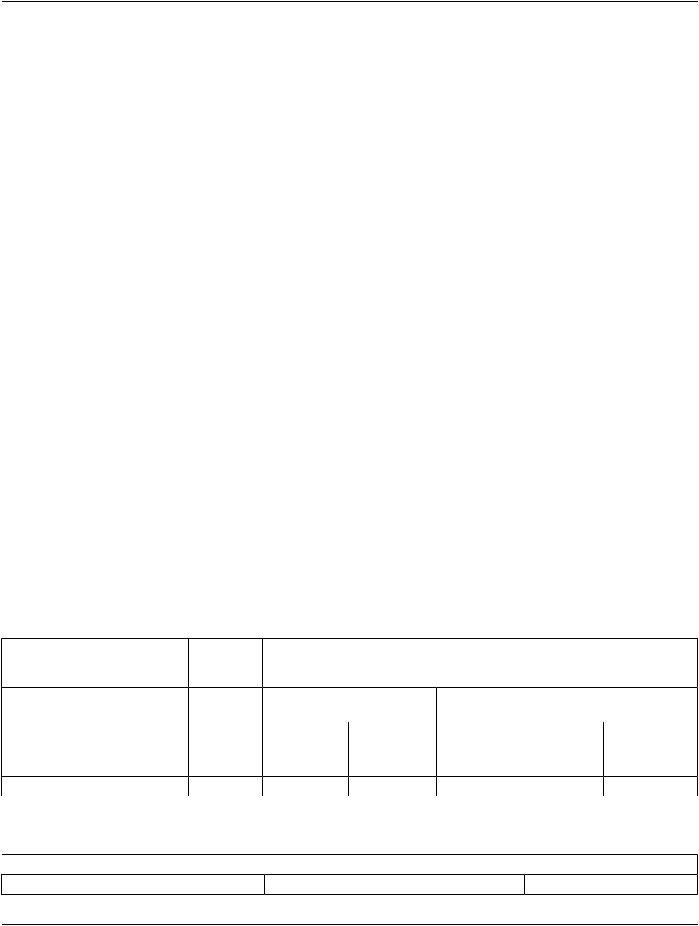
•The first Item in the Sequence of Items before the encoded Pixel Data Stream shall be a Basic Offset Table item. The Basic Offset Table Item Value, however, is not required to be present:
•When the Item Value is not present, the Item Length shall be zero (00000000H) (see Table A.4-1).
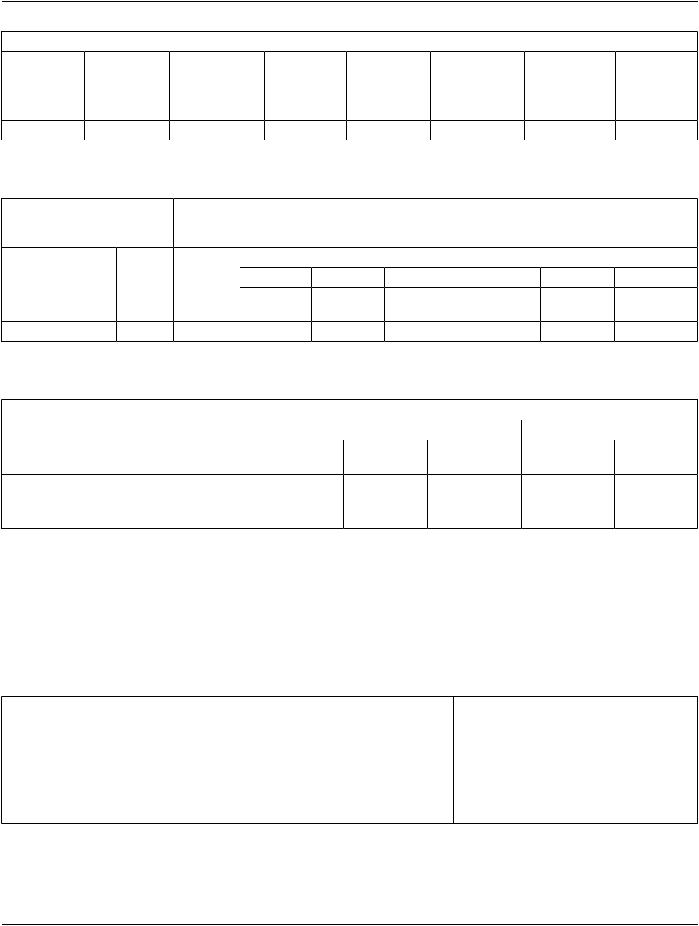
•When the Item Value is present, the Basic Offset Table Item Value shall contain concatenated 32-bit unsigned integer values that are byte offsets to the first byte of the Item Tag of the first fragment for each frame in the Sequence of Items. These offsets are measured from the first byte of the first Item Tag following the Basic Offset Table item (see Table A.4- 2).
Note
1.For a Multi-Frame Image containing only one frame or a Single Frame Image, the Basic Offset Table Item Value may be present or not. If present it will contain a single 00000000H value.
2.Decodersofencapsulatedpixeldata,whetherSingleFrameorMulti-Frame,needtoacceptbothanempty Basic Offset Table (zero length) and a Basic Offset Table filled with 32 bit offset values.
3.A Basic Offset Table Item Value is not permitted (i.e., the Item Length of the first Item will be zero) if Ex- tended Offset Table (7FE0,0001) is present.
•This Sequence of Items is terminated by a Sequence Delimiter Item with the Tag (FFFE,E0DD) and an Item Length Field of Value (00000000H) (i.e., no Value Field shall be present).
•Overlay Data (60xx,3000)
•shall have the Value Representation OB or OW and shall be encoded in Little Endian.
•Waveform Data (5400,1010) has the Value Representation specified in its Explicit VR Field. The component points shall be encoded in Little Endian.
•Red Palette Color Lookup Table Data (0028,1201), Green Palette Color Lookup Table Data (0028,1202), Blue Color Palette Lookup Table Data (0028,1203) and Alpha Palette Color Lookup Table Data (0028,1204) have the Value Representation OW and shall be encoded in Little Endian.
Note
Previous versions of the Standard either did not specify the encoding of Data Elements 0028,1201), (0028,1202), (0028,1203) in this Part, but specified a VR of US or SS in PS3.6-1993, or specified OW in this Part but a VR of US, SS or OW in PS3.6-1996. The actual encoding of the values and their byte order would be identical in each case, though the explicitly encoded VR field would be different. However, an explicit VR of US or SS cannot be used to encode a table of 216 elements, since the Value Length is restricted to 16 bits.
- Standard -
Page 102 |
DICOM PS3.5 2020a - Data Structures and Encoding |
•Red Palette Color Lookup Table Descriptor (0028,1101), Green Palette Color Lookup Table Descriptor (0028,1102) and Blue Palette Color Lookup Table Descriptor (0028,1103) have the Value Representation SS or US (depending on rules specified in the IOD in PS3.3), and shall be encoded in Little Endian. The first and third values are always interpreted as unsigned, regardless of the Value Representation.
•Segmented Red Palette Color Lookup Table Data (0028,1221), Segmented Green Palette Color Lookup Table Data (0028,1222) and Segmented Blue Palette Color Lookup Table Data (0028,1223) have the Value Representation OW and shall be encoded in Little Endian.
•LUT Data (0028,3006) has the Value Representation US or OW and shall be encoded in Little Endian.
Note
Previous versions of the Standard did not specify the encoding of these Data Elements in this Part, but specified a VR of US or SS in PS3.6-1998. However, an explicit VR of US or SS cannot be used to encode a table of 216
elements,sincetheValueLengthisrestrictedto16bits.HenceaVRofOWhasbeenadded.Moreoverthiselement is always unsigned, therefore the VR of SS has been removed. The actual encoding of the values and their byte order would be identical in each case, though the explicitly encoded VR field would be different.
•LUT Descriptor (0028,3002) has the Value Representation SS or US (depending on rules specified in the IOD in PS3.3), and shall be encoded in Little Endian. The first and third values are always interpreted as unsigned, regardless of the Value Representation.
•Blending Lookup Table Data (0028,1408) has the Value Representation OW and shall be encoded in Little Endian.
•Track Point Index List (0066,0129) has the Value Representation OL and shall be encoded in Little Endian and is always interpreted as unsigned.
Note
1.For Data encoded with the Value Representation OB, the Data encoding is unaffected by byte ordering.
2.Encoding of Curve Data (5000,3000) and Audio Sample Data (5000,200C) was previously defined but has been retired. See PS3.5-2004.
3.Vertex Point Index List (0066,0025), Edge Point Index List (0066,0024), Triangle Point Index List (0066,0023) and PrimitivePointIndexList(0066,0029)werepreviouslydefinedwithavaluerepresentationofOWandalwaysinterpreted as unsigned, but have been retired. These have been replaced by corresponding OL data elements, which allow values larger than 65535 to index the full range of points that can be encoded in Point Coordinates Data (0066,0016). See PS3.5-2015c.
Table A.4-1. Example for Elements of an Encoded Single-Frame Image Defined as a Sequence of Three Fragments Without Basic Offset Table Item Value
Pixel Data |
|
Value |
Data |
Data Element |
|
|
|
|
ElementTag Representation |
Element |
|
|
|
|
|
||
|
|
|
Length |
|
|
|
|
|
(7FE0, 0010)OB |
0000H |
FFFFFFFFHBasic Offset Table with NO |
First Fragment (Single Frame) of Pixel Data |
|||||
with VR of |
|
Reservedundefined |
Item Value |
|
|
|
|
|
OB |
|
|
length |
Item Tag |
Item Length |
Item Tag |
Item Length Item Value |
|
|
|
|
|
|||||
|
|
|
|
(FFFE, E000)0000 0000H |
(FFFE, E000)0000 04C6H Compressed |
|||
|
|
|
|
|
|
|
|
Fragment |
4 bytes |
2 bytes2 bytes |
4 bytes |
4 bytes |
4 bytes |
4 bytes |
4 bytes |
04C6H bytes |
|
Table A.4-1b. Example for Elements of an Encoded Single-Frame Image Defined as a Sequence of Three
Fragments Without Basic Offset Table Item Value (continued)
 Data Element Continued
SecondFragment(SingleFrame)ofPixelDataThird Fragment (Single Frame) of Pixel DataSequence Delimiter Item
- Standard -
|
|
DICOM PS3.5 2020a - Data Structures and Encoding |
|
Page 103 |
|||
Data Element Continued |
|
|
|
|
|
|
|
Item Tag |
Item Length Item Value |
Item Tag |
Item Length Item Value |
Sequence |
Item Length |
||
|
|
|
|
|
|
Delim. Tag |
|
(FFFE, E000)0000 024AH Compressed |
(FFFE, E000)0000 0628H Compressed |
(FFFE,E0DD) |
0000 0000H |
||||
|
|
Fragment |
|
|
Fragment |
|
|
4 bytes |
4 bytes |
024AH bytes |
4 bytes |
4 bytes |
0628H bytes |
4 bytes |
4 bytes |
Table A.4-2. Examples of Elements for an Encoded Two-Frame Image Defined as a Sequence of Three Fragments with Basic Table Item Values
Pixel Data |
Value |
Data Data Element |
Element Representation Element |
||
Tag |
|
Length |
(7FE0, OB 0010) with
VR of OB
0000H FFFF |
Basic Offset Table with Item Value |
First Fragment (Frame 1) of Pixel Data |
||
ReservedFFFFH |
Item Tag |
ItemLengthItem Value |
Item Tag |
Item LengthItem Value |
undefined |
(FFFE, |
0000 0008H0000 0000H (FFFE, |
0000 02C8HCompressed |
|
length |
||||
|
E000) |
0000 0646H E000) |
Fragment |
|
4 bytes 2 bytes2 bytes 4 bytes 4 bytes 4 bytes |
0008H bytes 4 bytes |
4 bytes |
02C8H bytes |
Table A.4-2b. Examples of Elements for an Encoded Two-Frame Image Defined as a Sequence of Three Fragments with Basic Table Item Values (continued)
Data Element Continued |
|
|
|
|
|
|
|
Second Fragment (Frame 1) of Pixel Data |
Third Fragment (Frame 2) of Pixel Data |
Sequence Delimiter Item |
|||||
Item Tag |
Item Length Item Value |
Item Tag |
Item Length Item Value |
Sequence |
Item Length |
||
|
|
|
|
|
|
Delimiter Tag |
|
(FFFE, E000)0000 036EH Compressed |
(FFFE, E000)0000 0BC8H Compressed |
(FFFE, E0DD) |
0000 0000H |
||||
|
|
Fragment |
|
|
Fragment |
|
|
4 bytes |
4 bytes |
036EH bytes |
4 bytes |
4 bytes |
0BC8H bytes |
4 bytes |
4 bytes |
A.4.1 JPEG Image Compression
The International Standards Organization ISO/IEC JTC1 has developed an International Standard, ISO 10918-1 (JPEG Part 1) and anInternationalStandard,ISO10918-2(JPEGPart2),knownastheJPEGStandard,fordigitalcompressionandcodingofcontinuous- tone still images (see Annex F for further details).
A DICOM Transfer Syntax for JPEG Image Compression shall be identified by a UID value, appropriate to its JPEG coding process, chosen from Table A.4-3.
Table A.4-3. DICOM Transfer Syntax UIDs for JPEG
DICOM Transfer Syntax UID |
JPEG coding process |
JPEG description |
1.2.840.10008.1.2.4.50 |
1 |
baseline |
1.2.840.10008.1.2.4.51 |
2(8-bit),4(12-bit) |
extended |
1.2.840.10008.1.2.4.57 |
14 |
lossless, non-hierarchical |
1.2.840.10008.1.2.4.70 |
14 |
lossless,non-hierarchical,first-orderprediction |
|
(Selection Value 1) |
|
Note
1.DICOM identifies, to increase the likelihood of successful association, three Transfer Syntaxes for Default JPEG Com- pression Image processes (see Section 8.2.1 and Section 10).
- Standard -

Page 104 |
DICOM PS3.5 2020a - Data Structures and Encoding |
2.Different JPEG processes may use different SOF marker segments. E.g., the baseline JPEG process 1 used with the 1.2.840.10008.1.2.4.50 Transfer Syntax uses the SOF0 marker, whereas the extended process 2 used with the 1.2.840.10008.1.2.4.51 Transfer Syntax uses the SOF1 marker. Accordingly, even though both bit streams encode 8 bit images using DCT and Huffman coding, the bit streams are not identical. Further, the extended process 2 may (but is not required to) use more AC and DC tables (up to 4 of each, rather than 2, per ISO 10918-1 Section F.1.3).
It is not compliant to send bit streams with the SOF0 marker using the 1.2.840.10008.1.2.4.51 Transfer Syntax, but it is recommended that receivers of the 1.2.840.10008.1.2.4.51 Transfer Syntax be able to decode bit streams with the SOF0 marker (this asymmetry is consistent with ISO 10918-2 requirements; see A.4.1).
3.It is recommended that lossy compressed 8 bit images be encoded with the 1.2.840.10008.1.2.4.50 Transfer Syntax rather than the 1.2.840.10008.1.2.4.51 Transfer Syntax, unless the additional features of the extended process are re- quired. Support of the 1.2.840.10008.1.2.4.50 Transfer Syntax is required for 8 bit images anyway (as described in 8.2.1) and to avoid confusion with the use of 12 bit images encoded with Process 4 in the 1.2.840.10008.1.2.4.51 Transfer Syntax (defined as a DICOM Default Transfer Syntax for 12 bit images in 10.3).
If the object allows multi-frame images in the pixel data field, then each frame shall be encoded separately. Each fragment shall contain encoded data from a single-frame image.
Note
Though a fragment may not contain encoded data from more than one frame, the encoded data from one frame may span multiple fragments. See note in Section 8.2.
For all images, including all frames of a multi-frame image, the JPEG Interchange Format shall be used (the table specification shall be included).
Note
This refers to the [ISO/IEC 10918-1] "interchange format", not the [ISO/IEC 10918-5] JPEG File Interchange Format (JFIF).
IfimageswithPhotometricInterpretation(0028,0004)YBR_FULL_422orYBR_PARTIAL_422,areencodedwithJPEGcodingProcess 1(nonhierarchicalwithHuffmancoding),identifiedbyDICOMTransferSyntaxUID"1.2.840.10008.1.2.4.50"theminimumcompressible unit is YYCBCR, where Y, CB, and CR are 8 by 8 blocks of pixel values. The data stream encodes two Y blocks followed by the cor- responding CB and CR blocks.
A.4.2 RLE Image Compression
AnnexGdefinesaRLEImageCompressionTransferSyntax.ThistransferSyntaxisidentifiedbytheUIDvalue"1.2.840.10008.1.2.5". Iftheobjectallowsmulti-frameimagesinthepixeldatafield,theneachframeshallbeencodedseparately.Eachframeshallbeencoded in one and only one Fragment (see Section 8.2).
A.4.3 JPEG-LS Image Compression
TheInternational Standards Organization ISO/IECJTC1 has developed anInternational Standard, [ISO/IEC 14495-1] (JPEG-LS Part 1), for digital compression and coding of continuous-tone still images (see Annex F for further details).
A DICOM Transfer Syntax for JPEG-LS Image Compression shall be identified by a UID value, appropriate to its JPEG-LS coding process.
Two Transfer Syntaxes are specified for JPEG-LS:
1.A Transfer Syntax with a UID of "1.2.840.10008.1.2.4.80 ", which specifies the use of the lossless mode of JPEG-LS. In this mode the absolute error between the source and reconstructed images will be zero.
2.A Transfer Syntax with a UID of "1.2.840.10008.1.2.4.81 ", which specifies the use of the near-lossless mode of JPEG-LS. In this mode, the absolute error between the source and reconstructed images will be constrained to a finite value that is conveyed in the compressed bit stream. Note that this process can, at the discretion of the encoder, be used to compress images with an error constrained to a value of zero, resulting in no loss of information.
If the object allows multi-frame images in the pixel data field, then each frame shall be encoded separately. Each fragment shall contain encoded data from a single-frame image.
- Standard -

DICOM PS3.5 2020a - Data Structures and Encoding |
Page 105 |
Note
Though a fragment may not contain encoded data from more than one frame, the encoded data from one frame may span multiple fragments. See note in Section 8.2.
Forallimages,includingallframesofamulti-frameimage,theJPEG-LSInterchangeFormatshallbeused(allparameterspecifications shall be included).
A.4.4 JPEG 2000 Image Compression
The International Standards Organization ISO/IEC JTC1 has developed an International Standard, [ISO/IEC 15444-1] (JPEG 2000 Part 1), for digital compression and coding of continuous-tone still images (see Annex F for further details).
A DICOM Transfer Syntax for JPEG 2000 Image Compression shall be identified by a UID value, appropriate to the choice of JPEG 2000 coding process.
Two Transfer Syntaxes are specified for JPEG 2000 Part 1:
1.A Transfer Syntax with a UID of "1.2.840.10008.1.2.4.90 ", which specifies the use of the lossless (reversible) mode of JPEG 2000 Part 1 ([ISO/IEC 15444-1]) (i.e., the use of a reversible wavelet transformation and a reversible color component transform- ation, if applicable, and no quantization).
2.A Transfer Syntax with a UID of "1.2.840.10008.1.2.4.91", which specifies the use of either:
a.the lossless (reversible) mode of JPEG 2000 Part 1 ([ISO/IEC 15444-1]) (i.e., the use of a reversible wavelet transformation and a reversible color component transformation, if applicable, and no quantization or code stream truncation), or
b.the lossy (irreversible) mode of JPEG 2000 Part 1 ([ISO/IEC 15444-1]) (i.e., the use of an irreversible wavelet transformation and an irreversible color component transformation, if applicable, and optionally quantization, or the use of a reversible wavelet transformation and a reversible color component transformation, if applicable, followed by code stream truncation).
The choice reversible versus irreversible is at the discretion of the sender (SCU or FSC/FSU).
Note
When using the irreversible wavelet transformation and an irreversible color component transformation, if applicable, even if no quantization is performed, some loss will always occur due to the finite precision of the calculation of the wavelet and multi-component transformations.
Onlythefeatures definedin JPEG2000Part 1([ISO/IEC15444-1])arepermitted for thesetwoTransfer Syntaxes.Additional features and extensions that may be defined in other parts of JPEG 2000 shall not be included in the compressed bit stream unless they can be decoded or ignored without loss of fidelity by all Part 1 compliant implementations.
If the object allows multi-frame images in the pixel data field, then for these JPEG 2000 Part 1 Transfer Syntaxes, each frame shall be encoded separately. Each fragment shall contain encoded data from a single frame.
Note
1.Thatis,theprocessesdefinedin[ISO/IEC15444-1]shallbeappliedonaper-framebasis.Theproposalforencapsulation of multiple frames in a non-DICOM manner in so-called "Motion-JPEG" or "M-JPEG" defined in 15444-3 is not used.
2.Though a fragment may not contain encoded data from more than one frame, the encoded data from one frame may span multiple fragments. See note in Section 8.2.
For all images, including all frames of a multi-frame image, the JPEG 2000 bit stream specified in [ISO/IEC 15444-1] shall be used. The optional JP2 file format header shall NOT be included.
Note
The role of the JP2 file format header is fulfilled by the non-pixel data attributes in the DICOM Data Set.
The International Standards Organization ISO/IEC JTC1 has also developed JPEG 2000 Part 2 ([ISO/IEC 15444-2]), which includes Extensions to the compression techniques described in Part 1 of the JPEG 2000 Standard. Annex J of JPEG 2000 Part 2 describes
- Standard -