Материал: part05

Page 56 |
DICOM PS3.5 2020a - Data Structures and Encoding |
thatispresentbutempty.WhetherornotItemsmaybeempty(containnoDataElements)dependsontheIODdefinition of the Data Set for each Item, rather than the Type of the enclosing Sequence Data Element.
7.4.4 Type 2C Conditional Data Elements
IODs and SOP Classes define Type 2C elements that have the same requirements as Type 2 elements under certain specified con- ditions. It is a protocol violation if the specified conditions are met and the Data Element is not included.
When the specified conditions are not met, Type 2C elements shall not be included in the Data Set.
Note
AnexampleofaType2CDataElementisInversionTime(0018,0082).ForseveralSOPClassDefinitions,thisDataElement is required only if the Scanning Sequence (0018,0020) has the Value "IR." It is not required otherwise. See PS3.3.
7.4.5 Type 3 Optional Data Elements
IODs and SOP Classes define Type 3 Data Elements that are optional Data Elements. Absence of a Type 3 element from a Data Set doesnotconveyanysignificanceandisnotaprotocolviolation.Type3elementsmayalsobeencodedwithzerolengthandnoValue. The meaning of a zero length Type 3 Data Element shall be precisely the same as that element being absent from the Data Set.
7.4.6 Data Element Types Within A Sequence
When an IOD defines a Sequence Data Element (see Section 7.5), the Type of the Sequence attribute defines whether the Sequence attribute itself must be present, and the Attribute Description of the Sequence attribute may define whether and how many Items shall be present in the Sequence. The Types of the attributes of the Data Set included in the Sequence, including any conditionality, are specified within the scope of each Data Set, i.e., for each Item present in the Sequence.
Note
1.The Type and Attribute Description of the Sequence determines whether Items are present; conditionality constraints on Data Elements of the Items cannot force an Item to be present.
2.Historically, many IODs declared Type 1 and Type 2 Data Elements of the Sequence to be Type 1C and Type 2C, re- spectively, with the condition that an Item is present. This is exactly the same as simply defining them as Type 1 and Type 2.
3.In particular, the conditionality constraint "Required if Sequence is sent" on the Type 1C or Type 2C Data Elements subsidiary to a Type 2 or 3 Sequence attribute does not imply that an Item must be present in the Sequence. These conditions are meant to be equivalent to "Required if a Sequence Item is present", and the conditionality is not strictly necessary. Any Type 2 or Type 3 Sequence attribute may be sent with zero length.
4.In particular, the conditionality constraint "Required if <name-of-parent-sequence-attribute> is sent" on the Type 1C or Type 2C Data Elements subsidiary to a Type 2 or 3 Sequence attribute does not imply that an Item must be present in the Sequence. These conditions are meant to be equivalent to "Required if a Sequence Item is present", and the condi- tionality is not strictly necessary. Any Type 2 or Type 3 Sequence attribute may be sent with zero length.
7.5 Nesting of Data Sets
The VR identified "SQ" shall be used for Data Elements with a Value consisting of a Sequence of zero or more Items, where each Item contains a set of Data Elements. SQ provides a flexible encoding scheme that may be used for simple structures of repeating sets of Data Elements, or the encoding of more complex Information Object Definitions often called folders. SQ Data Elements can also be used recursively to contain multi-level nested structures.
Items present in an SQ Data Element shall be an ordered set where each Item may be referenced by its ordinal position. Each Item shall be implicitly assigned an ordinal position starting with the value 1 for the first Item in the Sequence, and incremented by 1 with each subsequent Item. The last Item in the Sequence shall have an ordinal position equal to the number of Items in the Sequence.
Note
1.This clause implies that item ordering is preserved during transfer and storage.
- Standard -

DICOM PS3.5 2020a - Data Structures and Encoding |
Page 57 |
2.An IOD or Module Definition may choose to not use this ordering property of a Data Element with VR of SQ. This is simplydonebynotspecifyinganyspecificsemanticstotheorderingofItems,orbynotspecifyingusageofthereferencing of Items by ordering position.
The definition of the Data Elements encapsulated in each Item is provided by the specification of the Data Element (or associated Attribute) of Value Representation SQ. Items in a sequence of Items may or may not contain the same set of Data Elements. Data Elements with a VR of SQ may contain multiple Items but shall always have a Value Multiplicity of one (i.e., a single Sequence).
There are three special SQ related Data Elements that are not ruled by the VR encoding rules conveyed by the Transfer Syntax. They shall be encoded as Implicit VR. These special Data Elements are Item (FFFE,E000), Item Delimitation Item (FFFE,E00D), and Se- quence Delimitation Item (FFFE,E0DD). However, the Data Set within the Value Field of the Data Element Item (FFFE,E000) shall be encoded according to the rules conveyed by the Transfer Syntax.
7.5.1 Item Encoding Rules
Each Item of a Data Element of Value Representation SQ shall be encoded as a DICOM Standard Data Element with a specific Data Element Tag of Value (FFFE,E000). The Item Tag is followed by a 4 byte Item Length field encoded in one of the following two ways:
a.Explicit Length: The number of bytes (even) contained in the Sequence Item Value (following but not including the Item Length Field)isencodedasa32-bitunsignedintegervalue(seeSection7.1).ThislengthshallincludethetotallengthofallDataElements conveyed by this Item. This Item Length shall be equal to 00000000H if the Item contains no Data Set.
b.Undefined Length: The Item Length Field shall contain the value FFFFFFFFH to indicate an undefined Item length. It shall be used in conjunction with an Item Delimitation Data Element. This Item Delimitation Data Element has a Data Element Tag of (FFFE,E00D) and shall follow the Data Elements encapsulated in the Item. No Value shall be present in the Item Delimitation DataElementanditsLengthshallbe00000000H.AnItemcontainingnoDataSetisencodedbyanItemDelimitationDataElement only.
TheencoderofaDataSetmaychooseeitheroneofthetwowaysofencoding.Bothwaysofencodingshallbesupportedbydecoders of Data Sets. Data Element Tags (FFFF,eeee) are reserved by this Standard and shall not be used.
Each Item Value shall contain a DICOM Data Set composed of Data Elements. Within the context of each Item, these Data Elements shall be ordered by increasing Data Element Tag value and appear only once (as Data Set is defined in Section 7.1). There is no re- lationship between the ordering of the Data Elements contained within an Item and the ordering of the Data Element Tag of SQ Value Representation that contains that Item. One or more Data Elements in an Item may be of Value Representation SQ, thus allowing for recursion.
Data Elements with a group of 0000, 0002 and 0006 shall not be present within Sequence Items.
Note
The use of Transfer Syntax UID (0002,0010) in particular is forbidden, since were it to differ from the Transfer Syntax of the enclosing Data Set then a change in encoding would be implied, which is not allowed.
Section 7.8 specifies rules for incorporating Private Data Elements into Sequence Items.
7.5.2 Delimitation of The Sequence of Items
Delimitation of the last Item of a Sequence of Items, encapsulated in a Data Element of Value Representation SQ, shall be in one of the two following ways:
a.Explicit Length: The number of bytes (even) contained in the Data Element Value (following but not including the Data Element Length Field) is encoded as a 32-bit unsigned integer value (see Section 7.1). This length shall include the total length resulting fromthesequenceofzeroormoreitemsconveyedbythisDataElement.ThisDataElementLengthshallbeequalto00000000H if the sequence of Items contains zero Items.
b.Undefined Length: The Data Element Length Field shall contain a Value FFFFFFFFH to indicate an Undefined Sequence length. It shall be used in conjunction with a Sequence Delimitation Item. A Sequence Delimitation Item shall be included after the last Iteminthesequence.ItsItemTagshallbe(FFFE,E0DD)withanItemLengthof00000000H.NoValueshallbepresent.ASequence containing zero Items is encoded by a Sequence Delimitation Item only.
- Standard -
Page 58 |
DICOM PS3.5 2020a - Data Structures and Encoding |
The encoder of a Sequence of Items may choose either one of the two ways of encoding. Both ways of encoding shall be supported by decoders of the Sequence of Items.
Note
TheSequenceDelimitationItemTag(FFFE,E0DD)isdifferentfromtheItemDelimitationTag(FFFE,E00D)introducedabove in that it indicates the end of a Sequence of Items whose Length was left undefined. If an undefined length Item is the last Item of a Sequence of Items of undefined length, then an Item Delimitation Tag will be followed by a Sequence Delimitation Tag.
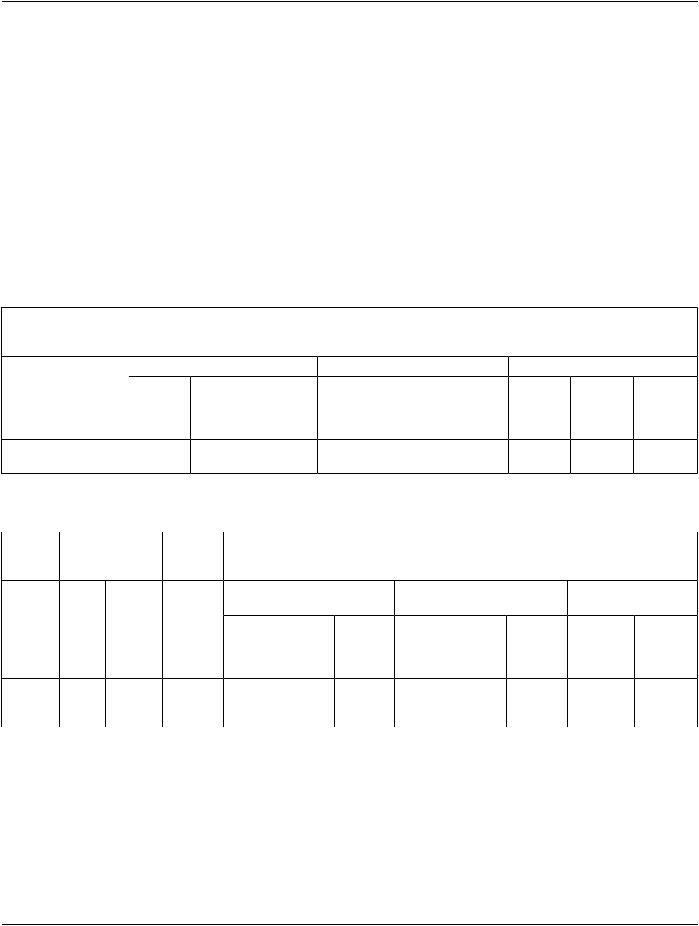
For an example of an SQ Data Element of Explicit Length encapsulating Items of Explicit Length see Table 7.5-1.
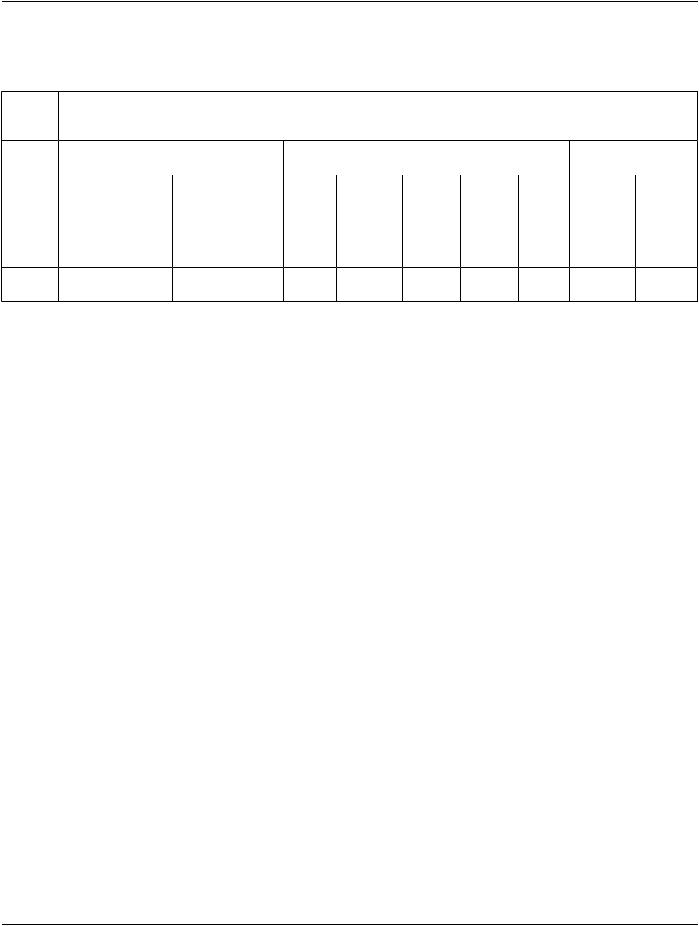
For an example of an SQ Data Element of Undefined Length encapsulating Items of Explicit Length see Table 7.5-2.
ForanexampleofanSQDataElementofUndefinedLengthencapsulatingItemsofbothExplicitandUndefinedLengthseeTable7.5- 3.
Table 7.5-1. Example of a Data Element with Implicit VR Defined as a Sequence of Items (VR = SQ) with Three Items of Explicit Length
Data |
Data |
Data Element Value |
|
|
|
|
|
|
|
|
Element Element |
|
|
|
|
|
|
|
|
||
Tag |
Length |
|
|
|
|
|
|
|
|
|
(gggg, |
0000 |
First Item |
|
Second Item |
Third Item |
|
|
|||
eeee) with 0F00H |
Item Tag |
Item |
Item ValueItem Tag |
Item |
Item ValueItem Tag |
Item |
Item Value |
|||
VR of SQ |
|
(FFFE, |
Length |
Data Set |
(FFFE, |
Length |
Data Set |
(FFFE, |
Length |
Data Set |
|
|
E000) |
0000 |
|
E000) |
0000 |
|
E000) |
0000 |
|
|
|
|
04F8H |
|
|
04F8H |
|
|
04F8H |
|
4 bytes |
4 bytes |
4 bytes |
4 bytes |
04F8H |
4 bytes |
4 bytes |
04F8H |
4 bytes |
4 bytes |
04F8H |
|
|
|
|
bytes |
|
|
bytes |
|
|
bytes |
Table 7.5-2. Example of a Data Element with Explicit VR Defined as a Sequence of Items (VR = SQ) of Undefined Length, Containing Two Items of Explicit Length
Data |
Value |
Data Data Element Value |
|
|
|
|
|
ElementRepresentation Element |
|
|
|
|
|
||
Tag |
|
Length |
|
|
|
|
|
(gggg, |
SQ 0000H |
FFFF First Item |
Second Item |
SequenceDelimitation |
|||
eeee) |
ReservedFFFFH |
|
|
|
Item |
|
|
with VR |
|
undefinedItem Tag |
Item ItemValueItem Tag |
Item |
ItemValueSeq.Delim. |
Item |
|
of SQ |
|
length (FFFE, Length Data Set (FFFE, Length Data SetTag (FFFE, Length |
|||||
|
|
E000) |
98A5 |
E000) |
B321 |
E0DD) |
0000 |
|
|
|
2C68H |
|
762CH |
|
0000H |
4 bytes2 bytes2 bytes |
4 bytes 4 bytes 4 bytes 98A5 |
4 bytes 4 bytes |
B321 4 bytes |
4 bytes |
|||
|
|
|
2C68H |
|
|
762CH |
|
|
|
|
bytes |
|
|
bytes |
|
Note
The Data Set within the Item Values in Table 7.5-2 have VRs Explicitly defined.
- Standard -
DICOM PS3.5 2020a - Data Structures and Encoding |
Page 59 |
Table 7.5-3. Example of a Data Element with Implicit VR Defined as a Sequence of Items (VR = SQ) of Undefined Length, Containing Two Items Where One Item is of Explicit Length and the Other Item is of Undefined Length
Data |
Data |
|
|
Data Element Value |
|
|
|
||
ElementElement |
|
|
|
|
|
|
|
|
|
Tag |
Length |
|
|
|
|
|
|
|
|
(gggg, |
FFFF First Item |
Second Item |
|
|
SequenceDelimitation |
||||
eeee) |
FFFFH |
|
|
|
|
|
Item |
|
|
with VRundefinedItem Tag Item |
Item Item Tag |
Item |
Item |
Item |
LengthSeq.Delim. |
Item |
|||
of SQ |
length |
(FFFE, Length |
Value (FFFE, |
Length |
Value |
Delim. |
0000 Tag(FFFE, Length |
||
|
|
E000) 0000 Data Set E000) |
FFFF |
Data Set |
Tag |
0000H |
E0DD) |
0000 |
|
|
|
17B6H |
|
FFFFH |
|
(FFFE, |
|
|
0000H |
|
|
|
undefined |
|
E00D) |
|
|
|
|
|
|
|
|
length |
|
|
|
|
|
4 bytes |
4 bytes 4 bytes 4 bytes 17B6H 4 bytes |
4 bytes undefined4 bytes 4 bytes |
4 bytes |
4 bytes |
|||||
|
|
|
bytes |
|
length |
|
|
|
|
7.5.3 Sequence Inheritance
An encapsulated Data Set shall only include the Specific Character Set (0008,0005) data element if the Attribute Specific Character Set is defined in the IOD for that sequence of items.
Note
An encapsulated Data Set does not include the Specific Character Set data element unless the Specific Character Set At- tribute is defined as part of the IOD for that sequence.
If an encapsulated Data Set includes the Specific Character Set Attribute, it shall apply only to the encapsulated Data Set. If the At- tribute Specific Character Set is not explicitly included in an encapsulated Data Set, then the Specific Character Set value of the en- capsulating Data Set applies.
7.6 Repeating Groups
Multiple Overlay Planes and Curves are often associated with a single Image (see PS3.3). Standard Data Elements with even Group Numbers(5000-501E,eeee)representCurves,whileelementswithevenGroupNumbers(6000-601E,eeee)representOverlayPlanes. Both of these ranges of Group numbers are known as Repeating Groups. This use of group numbers is a remnant of older versions of this Standard, which associated a semantic meaning with particular Groups.
In each of these ranges of Group Numbers, Standard Data Elements that have identical Element Numbers have the same meaning withineachGroup(andthesameVR,VM,andDataElementType).Thenotation(50xx,eeee)and(60xx,eeee)areusedfortheGroup Number in Data Element Tags when referring to a common Data Element across these groups (see PS3.6). Groups (50xx,eeee) and (60xx,eeee) are called Repeating Groups because of these characteristics.
RepeatingGroupsshallonlybeallowedintheevenGroups(6000-601E,eeee)andevenGroups(5000-501E,eeee)cases.Inthefuture, Data Elements with VRs of SQ shall be used to serve a similar purpose.
Note
Private Groups in the odd Groups (5001-501F,eeee) and (6001-601F,eeee) may still be used, but there is no implication of repeating semantics, nor any implied shadowing of the standard repeating groups.
7.7 Retired Data Elements
Certain Data Elements are no longer supported in the current Standard. These Data Elements are retired and are denoted as such (RET) in the VR column in PS3.6. Implementations may continue to support these Data Elements for the purpose of backward com- patibility with older versions of this Standard, but this is not a requirement of the current Standard. If a retired Data Element is used
- Standard -

Page 60 |
DICOM PS3.5 2020a - Data Structures and Encoding |
it must contain valid data as specified in older versions of this Standard. Any other use of a retired Data Element, and its associated Data Element Tag, is reserved by this Standard. Retired Data Element Tags shall not be redefined in later versions of this Standard.
7.8 Private Data Elements
ImplementationsmayrequirecommunicationofinformationthatcannotbecontainedinStandardDataElements.PrivateDataElements are intended to be used to contain such information. Such Private Data Elements shall not change the semantics of the Information Object Definition or SOP Class Definition.
Private Data Elements have the same structure as Standard Data Elements specified earlier in Section 7.1 (i.e., Data Element Tag field, optional VR field, length field, and value field). The Group Number used in the Element Tag of Private Data Elements shall be an odd number. Private Data Elements shall be contained in the Data Set in increasing numeric order of Data Element Tag. The Value Field of a Private data element shall have one of the VRs specified by this Standard in Section 6.2.
For each Information Object Definition or SOP Class Definition, certain Data Elements are required (Data Element Type 1, 1C, 2, or 2C) as specified in PS3.3 and PS3.4. Private Data Elements shall not be used in place of required Standard Data Elements.
7.8.1 Private Data Element Tags
It is possible that multiple implementers may define Private Elements with the same (odd) group number. To avoid conflicts, Private Elements shall be assigned Private Data Element Tags according to the following rules.
a.Private Creator Data Elements numbered (gggg,0010-00FF) (gggg is odd) shall be used to reserve a block of Elements with Group Number gggg for use by an individual implementer. The implementer shall insert an identification code in the first unused (unassigned) Element in this series to reserve a block of Private Elements. The VR of the private identification code shall be LO (LongString)andtheVMshallbeequalto1.APrivateCreatoridentifiermaybeusedonlyoncewithinaGroup;reservingmultiple blocks of Elements in the same Group with the same identifier is not allowed. The Private Creator Data Elements shall only contain characters from the Default Character Repertoire and not an Extended or Replacement Character Repertoire, even though the LO VR is one that is affected by the Specific Character Set (0008,0005).
Note
i. If an implementer needs multiple repetitions of a private element, a private Sequence attribute (see Section 7.5) may be used to contain these multiple items.
ii. An implementer may use the same Private Creator identifier for multiple Groups.
b.PrivateCreatorDataElement(gggg,0010),isaType1DataElementthatidentifiestheimplementerreservingelement(gggg,1000- 10FF), Private Creator Data Element (gggg,0011) identifies the implementer reserving elements (gggg,1100-11FF), and so on, until Private Creator Data Element (gggg,00FF) identifies the implementer reserving elements (gggg,FF00-FFFF).
c.Encoders of Private Data Elements shall be able to dynamically assign private data to any available (unreserved) block(s) within the Private group, and specify this assignment through the blocks corresponding Private Creator Data Element(s). Decoders of Private Data shall be able to accept reserved blocks with a given Private Creator identification code at any position within the Private group specified by the blocks corresponding Private Creator Data Element.
Note
1.Older versions of this Standard described shadow groups. These were groups with a group number one greater than the standard groups. Elimination of conflicts in Private Data Element Tags have made this distinction obsolete and this terminology has been retired.
2.Older versions of this Standard specified private group element numbers (gggg,10FF-7FFF) reserved for manufac- turers and private group element numbers (gggg, 8100-FFFF) reserved for users. Elimination of conflicts in Private Data Element Tags has made this distinction obsolete and this specification has been retired.
3.Therequirementsofthissectiondonotallowanyuseofelementsintheranges(gggg,0001-000F)and(gggg,0100- 0FFF) where gggg is odd.
d.Elements with Tags (0001,xxxx), (0003,xxxx), (0005,xxxx), (0007,xxxx) and (FFFF,xxxx) shall not be used.
- Standard -