Материал: part03
Page 186 |
DICOM PS3.3 2020a - Information Object Definitions |
||
Attribute Name |
Tag |
Type |
Attribute Description |
>Conceptual Volume Derivation |
(3010,0016) |
3 |
Algorithm used to derive this Conceptual Volume. |
Algorithm Sequence |
|
|
One or more Items are permitted in this Sequence. |
|
|
|
|
>>Include Table 10-19 “Algorithm Identification Macro Attributes” |
No Baseline CID defined |
||
10.33.1 Conceptual Volume Macro Attribute Descriptions
10.33.1.1 Equivalent Conceptual Volumes
Conceptual Volumes can be declared to be equivalent to other Conceptual Volumes. In such cases, the Equivalent Conceptual Volumes Sequence (3010,000A) is used in derived SOP instances which are aware of other SOP instances defining a semantically equivalent volume, but using different Conceptual Volume UIDs (3010,0006).
10.33.1.2 Derivation Conceptual Volume Sequence
The Derivation Conceptual Volume Sequence (3010,0014) may be used to describe how a Conceptual Volume is derived from one or more other Conceptual Volumes in cases where it may not be possible to describe the method of the derivation completely. Since the Conceptual Volume cannot be mathematically constructed from a derivation description, it will be defined explicitly by a segment- ation.
The specification of derivation is different from combining Conceptual Volumes as defined in Section 10.34 “Conceptual Volume Segmentation Reference and Combination Macro”.
10.34 Conceptual Volume Segmentation Reference and Combination Macro
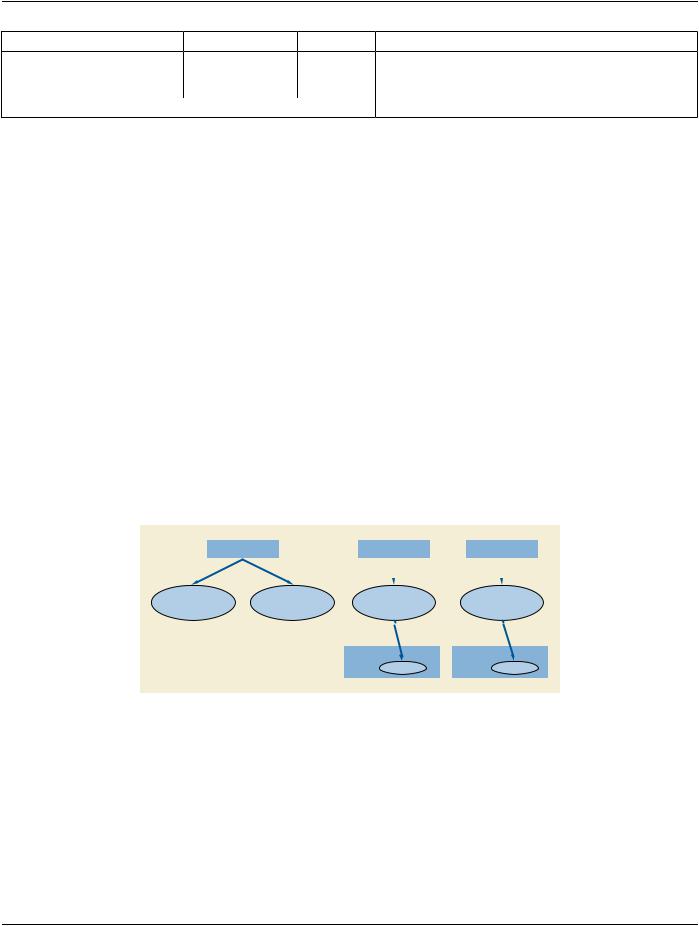
This Macro allows the combination of Conceptual Volumes as constituents of a combined volume. A representative example is to have the Left Lung and the Right Lung segmented, and then to declare the Lungs as a combined Conceptual Volume, for which prescription constraints can be defined.
The Macro also allows reference to RT Segment Annotation SOP instances, which contain a segmented representation of the Con- ceptual Volume. At the invocation of this Macro it is declared, whether this segmented representation is required or not.
|
RT Physician Intent |
|
|
RT Segmentation |
|
|
RT Segmentation |
|
||||
|
|
|
Annotation 1 |
|
|
|
Annotation 2 |
|
||||
|
|
|
|
|
|
|
|
|||||
|
|
|
|
|
|
|
|
|
|
|
||
Conceptual Volume |
Conceptual Volume |
|
Conceptual Volume |
|
Conceptual Volume |
|||||||
“Lung, left” |
“Lung, right” |
|
“Lung, left” |
|
“Lung, right” |
|||||||
|
|
|
|
|
|
|
|
|
|
|
|
|
|
|
|
|
Segmentation |
|
RT Structure Set |
||||||
|
|
|
|
|
Segment 3 |
|
|
|
ROI 5 |
|||
|
|
|
|
|
|
|
|
|
|
|
|
|
Figure 10.34-1. Conceptual Volume References
Figure 10.34-1 describes an RT Physician Intent Instance where Conceptual Volumes "Lung, left" and "Lung, right" are referenced, but not defined. In this example, the RT Segmentation Annotation Instances then define the volumetric information of the Conceptual Volumes by referencing a specific segment of a Segmentation Instance and a specific ROI in an RT Structure Set Instance.
- Standard -

DICOM PS3.3 2020a - Information Object Definitions |
Page 187 |
RT Physician Intent
Conceptual Volume
“Lung”
Conceptual Volume |
Conceptual Volume |
“Lung, left” |
“Lung, right” |
Figure 10.34-2. Conceptual Volume Combination References
Figure 10.34-1 describes an RT Physician Intent Instance defining Conceptual Volumes "Lung, left" and "Lung, right" and Conceptual Volume "Lung" as a combination of the first two without a direct reference to a volume definition.
Table 10.34-1. Conceptual Volume Segmentation Reference And Combination Macro Attributes
Attribute Name |
Tag |
Type |
Attribute Description |
Include Table 10.33-1 “Conceptual Volume Macro Attributes” |
|
||
Conceptual Volume |
(3010,000E) |
1 |
Indication that this Conceptual Volume is a combination of other |
Combination Flag |
|
|
Conceptual Volumes. |
|
|
|
Enumerated Values: |
|
|
|
YES |
|
|
|
NO |
ConceptualVolumeConstituent |
(3010,0008) |
1C |
References to Conceptual Volumes which are constituents of this |
Sequence |
|
|
Conceptual Volume. |
|
|
|
See Section 10.34.1.1. |
|
|
|
Required if Conceptual Volume Combination Flag (3010,000E) |
|
|
|
equals YES. |
|
|
|
One or more Items shall be included in this Sequence. |
|
|
|
ThecombinedConceptualVolumeUIDshallnotbeincludedinthe |
|
|
|
Sequence. |
>Conceptual Volume |
(3010,000D) |
1 |
An index referenced in the Conceptual Volume Combination |
Constituent Index |
|
|
Expression (3010,000C) identifying the Conceptual Volume |
|
|
|
Constituent. |
|
|
|
The value shall start at 1 and increase monotonically by 1. |
>Constituent Conceptual |
(3010,0013) |
1 |
UID identifying the Conceptual Volume that is a constituent of the |
Volume UID |
|
|
combined Conceptual Volume. |
>Originating SOP Instance |
(3010,0007) |
1 |
Reference to the SOP Instance that contains the original definition |
Reference Sequence |
|
|
of the Conceptual Volume constituent identified by Constituent |
|
|
|
Conceptual Volume UID (3010,0013) in this Sequence. |
If this Conceptual Volume orginated in the current SOP Instance, thenthereferencedSOPInstanceUIDisthecurrentSOPInstance UID.
Only a single Item shall be included in this Sequence.
 >>IncludeTable10-11“SOPInstanceReferenceMacroAttributes”
- Standard -

Page 188 |
DICOM PS3.3 2020a - Information Object Definitions |
||
Attribute Name |
Tag |
Type |
Attribute Description |
>Conceptual Volume |
(3010,0012) |
1C |
Contains a segmented representation of the Conceptual Volume |
Constituent Segmentation |
|
|
constituent. |
Reference Sequence |
|
|
Required if the Conceptual Volume Segmentation Defined Flag |
|
|
|
|
|
|
|
(3010,0010) equals YES and the Conceptual Volume is not a |
|
|
|
Combination of other Conceptual Volumes. |
|
|
|
Only a single Item shall be included in this Sequence. |
|
|
|
See Section 10.34.1.2. |
>>Referenced Direct Segment |
(3010,004A) |
1 |
Reference to the SOP Instance that contains the Direct Segment |
Instance Sequence |
|
|
Reference Sequence (3010,0023). |
Only a single Item shall be included in this Sequence.
See Section 10.34.1.3.
>>>Include Table 10-11 “SOP Instance Reference Macro Attributes”
>>Referenced Segment |
(3010,0020) |
1 |
Reference Index |
|
|
Conceptual Volume |
(3010,000C) |
1C |
Combination Expression |
|
|
Conceptual Volume |
(3010,000F) |
2C |
Combination Description |
|
|
The Segment Reference Index (3010,0022) in the Segment Reference Sequence (3010,0021) corresponding to the segment representing this Conceptual Volume.
ShallreferenceonlysegmentItemsthatcontaintheDirectSegment
Reference Sequence (3010,0023).
Symbolic expression specifying the combination of Conceptual Volumes as a text string consisting of Conceptual Volume ConstituentIndex(3010,000D)values,combinationoperatorsand parentheses.
Required if Conceptual Volume Combination Flag (3010,000E) equals YES.
See Section 10.34.1.1.
Human-readable description of the combination of Conceptual Volumes. This information is intended for displayand shall not be used for structured processing.
Required if Conceptual Volume Combination Flag (3010,000E) equals YES.
Conceptual Volume |
(3010,0010) |
1 |
IndicationthattherearedefinedsegmentationsforthisConceptual |
Segmentation Defined Flag |
|
|
Volume. |
|
|
|
Enumerated Values: |
|
|
|
YES |
|
|
|
NO |
Conceptual Volume |
(3010,0011) |
1C |
Contains a segmented representation of the Conceptual Volume. |
Segmentation Reference |
|
|
Required when Conceptual Volume Segmentation Defined Flag |
Sequence |
|
|
(3010,0010) equals YES and Conceptual Volume Combination Flag Indicator (3010,000E) equals NO.
Only a single Item shall be included in this Sequence.
See Section 10.34.1.4.
- Standard -

|
DICOM PS3.3 2020a - Information Object Definitions |
Page 189 |
||
Attribute Name |
Tag |
Type |
Attribute Description |
|
>Referenced Direct Segment |
(3010,004A) |
1 |
Reference to the SOP Instance that contains the Segment |
|
Instance Sequence |
|
|
ReferenceSequence(3010,0021)inwhichthesegmentisdefined. |
|
|
|
|
Only a single Item shall be included in this Sequence. |
|
|
|
|
See Section 10.34.1.3. |
|
>>IncludeTable10-11“SOPInstanceReferenceMacroAttributes” |
|
|||
>Referenced Segment |
(3010,0020) |
1 |
The Segment Reference Index (3010,0022) in the Segment |
|
Reference Index |
|
|
Reference Sequence (3010,0021) corresponding to the segment |
|
|
|
|
representing this Conceptual Volume. |
|
In the segment Item referenced, the Direct Segment Reference
Sequence (3010,0023) shall be present.
10.34.1 Conceptual Volume Segmentation Reference and Combination Macro Attribute De- scription
10.34.1.1 Conceptual Volume Combination Expression
For Conceptual Volumes specified as a combination of other Conceptual Volumes, the combination logic is specified by the text string value of the Conceptual Volume Combination Expression (3010,000C).
A nested list notation is used to apply geometric operators to a set of Conceptual Volumes.
The first element of the list shall be one of the following geometric operators:
UNION |
geometric union of two or more arguments |
INTERSECTIONgeometric intersection of two or more arguments
NEGATION geometric inverse of a single argument
SUBTRACTIONgeometric subtraction of second argument from the first
XOR |
geometric exclusive disjunction of two arguments |
Note
The result of a NEGATION operation is well-defined only if used as an operand to an INTERSECTION. NEGATION without context to an INTERSECTION results in an infinite Volume.
Subsequent elements shall specify arguments of the geometric operator. An argument is either a Conceptual Volume Constituent Index (3010,000D) value (i.e., positive integer) or a parenthesized list of operations.
The grammar for the Conceptual Volume Combination Expression (<sexpr>) is shown below in BNF (Backus Naur Form) :
<sexpr> |
:: <cv> | <list> |
|
<cv> |
:: 1 |
| 2 | 3 | … |
<list> |
:: ( |
<op1><sp><sexpr> ) | |
|
( |
<op2><sp><sexpr><sp><sexpr> ) | |
<args> |
( |
<op3><sp><args> ) |
:: <sexpr><sp><sexpr> | <args><sp><sexpr> |
||
<op1> |
:: NEGATION |
|
<op2> |
:: SUBTRACTION | XOR |
|
<op3> |
:: UNION | INTERSECTION |
|
<sp> |
:: 0x20 |
|
Examples:
- Standard -
Page 190 |
DICOM PS3.3 2020a - Information Object Definitions |
|
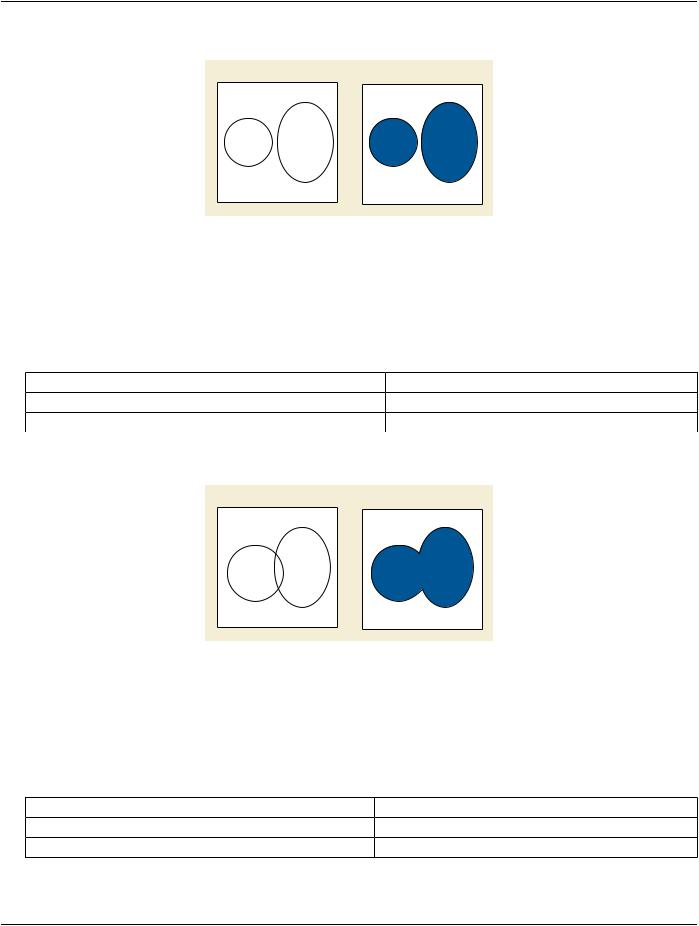
1.Union of paired organs 1 and 2 (disjoint) |
|
|
|
Input |
Result |
Right Lung |
Left Lung |
(1)(2)
Figure 10.34.1.1-1. Conceptual Volume Example of Union of Disjoint Volumes
Conceptual Volume Combination Expression (3010,000C): (UNION 1 2)
Items in Conceptual Volume Constituent Sequence (3010,0008):
Table 10.34.1.1-1. Conceptual Volume Example of Union of Disjoint Volumes
Conceptual Volume Constituent Index (3010,000D) |
Conceptual Volume |
1 |
Right Lung |
2 |
Left Lung |
2.Union of paired organs 1 and 2 (non-disjoint) |
|
Input |
Result |
|
Spinal Cord |
Left Lung |
|
PRV |
||
(2) |
||
(1) |
||
|
Figure 10.34.1.1-2. Conceptual Volume Example of Union of Non-disjoint Volumes
Conceptual Volume Combination Expression (3010,000C):
(UNION 1 2)
Items in Conceptual Volume Constituent Sequence (3010,0008) :
Table 10.34.1.1-2. Conceptual Volume Example of Union of non-disjoint Volumes
Conceptual Volume Constituent Index (3010,000D) |
Conceptual Volume |
1 |
Spinal Cord PRV |
2 |
Left Lung |
- Standard -