Материал: part03

Внимание! Если размещение файла нарушает Ваши авторские права, то обязательно сообщите нам

DICOM PS3.3 2020a - Information Object Definitions​

Page 1671​

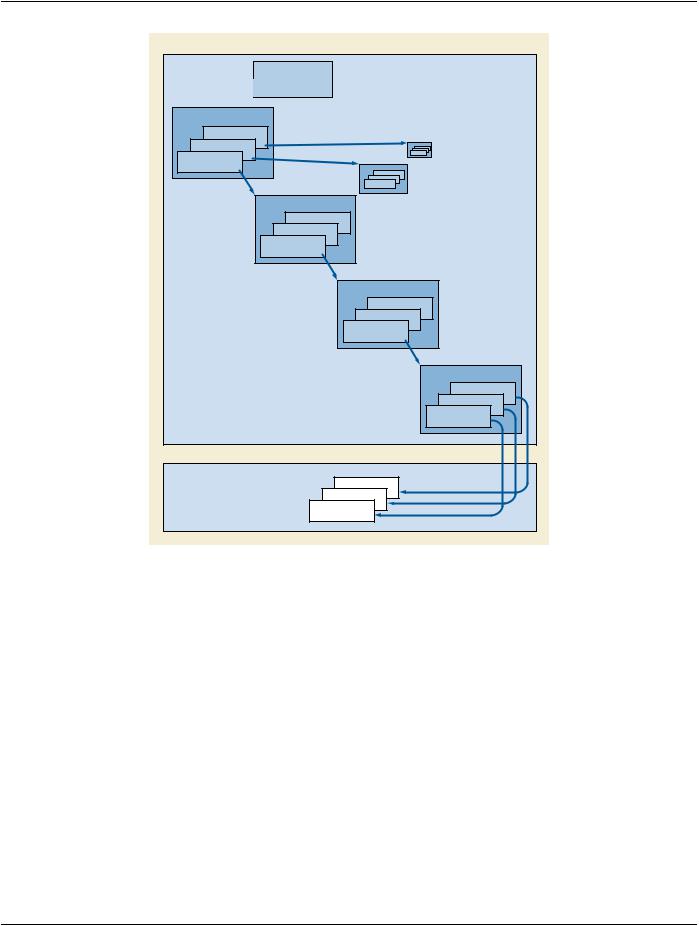
The Directory


File Set Identification


Directory Identification

Root Directory Entity


Patient C


Patient B

Patient C Directory Entity


Patient A


Directory Record

Patient B Directory Entity


Patient A Directory Entity


Study 3


Study 2


Study 1


Directory Record


Directory Entity for Study 1


Series 3


Series 2


Series 1


Directory Record


Directory Entity for Series 1


Image 3


Image 2


Image 1


Directory Record

Files containing Objects referenced by the Directory

Referenced

Referenced

Referenced

Image Object

Figure F.2-2. Example of a Directory Organization and Content​

F.2.2.2 Example of a DICOMDIR File Structure​

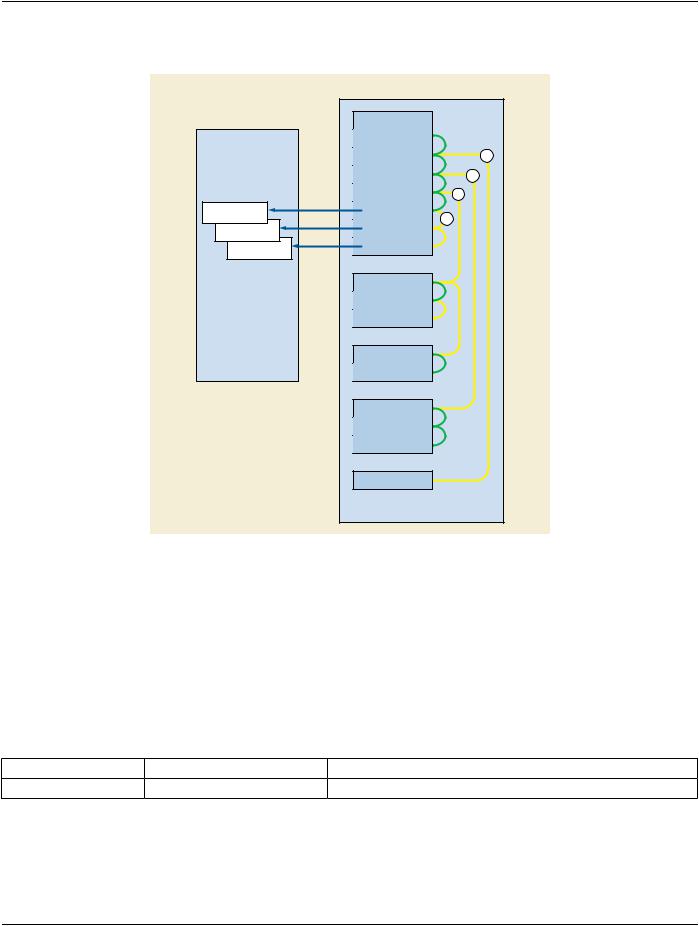
BasedontheexamplediscussedinSectionF.2.2.1,theinternaldatastructureusedbytheBasicDirectoryIODisdepictedinFigureF.2-​ 3. It shows a set of Directory Records where each Directory Record is linked by three different types of "referencing" mechanisms:​

a.​The chaining of Directory Records to form a Directory Entity. In particular, this facilitates the addition of new Directory Records​ at the level of any Directory Entity by placing them at the end of the DICOMDIR File. On Figure F.2-3, this chaining is shown by​ yellow lines:​

1.​#1 shows the chaining of the Directory Records forming the root Directory Entity​

2.​#2 shows the chaining of the Directory Records for the Directory Entity related to Patient A​

3.​#3 shows the chaining of the Directory Records for the Directory Entity related to Study 1​

4.​#4 shows the chaining of the Directory Records for the Directory Entity related to Series 1​

b.​Green lines depict the reference by a Directory Record to a lower level Directory Entity​

c.​Blue lines depict the reference by a Directory Record to a stored file containing a SOP Class​

- Standard -​

Page 1672​

DICOM PS3.3 2020a - Information Object Definitions​

This example of a DICOMDIR File structure shows one example of a specific order of the Directory Records. Other orderings of Dir-​ ectory Records could result in a functionally equivalent directory.​

Files containing Objects referenced by the Directory

Referenced

Image Object

DICOMDIR File Content

Beginning of File


File Set Identification


Directory Identification


Patient A

1

Study 1

2

Series 1

3

Image 1

4

Image 2


Image 3


...


Series 2


Image


Image


...


Series 3


Image


...


Study 2


Series


Image


...


Patient B


...


End of File

Figure F.2-3. Example of Data Structure for the DICOM Directory Information​

F.3 Basic Directory IOD​

ThisIODisbasedontheDirectoryInformationorganizationintroducedinSectionF.2.ThemodelforthisBasicDirectoryIODisdescribed​ Section F.2.1 by the Entity/Relationship model in Figure F.2-1. The rules specified in Section F.2.1 apply to this Information Object​ Definition.​

F.3.1 Module Table​

The Basic Directory IOD includes the Modules specified by Table F.3-1.​

Table F.3-1. Basic Directory IOD Modules​

Module​

Reference​

Usage​

Module Description​

File-set Identification​

F.3.2.1​

M​

File-set identification information​

- Standard -​


DICOM PS3.3 2020a - Information Object Definitions​

Page 1673​

Module​

Reference​

Usage​

Module Description​


Directory Information​

F.3.2.2​

U​

Directory Information followed by a Sequence of Directory Records.​

Note​

The Directory Information Module is optional. This Directory​ Information Module should be present in all but primitive​ environments where a directory is not needed. In this case,​ only the File-set Identification Information is present.​

F.3.2 Modules of the Basic Directory Information Object​

Attributes of the Basic Directory IOD are defined with a Type designation that indicates if a specific Attribute is required for all Media​ Storage Operations (see Chapter 5).​

F.3.2.1 File-set Identification Module​

Table F.3-2. File-Set Identification Module Attributes​

Attribute Name​

Tag​

Type​

Attribute Description​

File-set ID​

(0004,1130)​

2​

User or implementation specific Identifier (up to 16 characters). For definition,​


see PS3.10. The File-set ID is intended to be a short human readable label to​


easily (but not necessarily uniquely) identify a specific File-set to facilitate​


operator manipulation of the physical media on which the File-set is stored.​


Assignment of Value and semantics are environment specific.​

File-setDescriptorFileID​ (0004,1141)​

3​

IDofaFile(inthesameFile-set)usedforusercommentsrelatedtotheFile-set​


(e.g., a README file). The Specific Character set used may be specified in the​


Specific Character Set of the File-set Descriptor File (0004,1142).​


Note​


This File is not DICOM formatted (no Preamble, nor DICM Prefix and​


Meta Information).​

Specific Character Set of​ (0004,1142)​

1C​

Character set used in the File-set Descriptor File with a File ID as specified in​

File-set Descriptor File​


File-set Descriptor File ID (0004,1141). Required to specify the expanded or​


replacement character set. If absent, only the Basic Graphic set is used. See​


Section C.12.1.1.2 for Defined Terms.​

Note​

Every File-set is assigned a File-set UID when created. The File-set UID need not be duplicated as a Type 1 Attribute of the​ File-set Identification Module. It is conveyed as the SOP Instance UID of the Basic Directory IOD. It is included in the​ DICOMDIR File Meta Information (see PS3.10)​

F.3.2.2 Directory Information Module​

This Module contains a Sequence of Directory Records forming one or more Directory Entities. This Module defines at least one​ Directory Entity, the Root Directory Entity (which may be empty). Each Directory Record is composed of Directory Elements (marked​ by a ">"). They include:​

a.​an offset pointer to another Directory Record of the Same Directory Entity​

b.​an offset pointer to a lower level Directory Entity​

c.​a Referenced File pointed to by the Directory Record​

d.​a set of keys representative of the information contained in the Referenced File​

- Standard -​

Page 1674​ DICOM PS3.3 2020a - Information Object Definitions​

Table F.3-3. Directory Information Module Attributes​

Attribute Name​

Tag​

Type​

Attribute Description​

Offset of the First​

(0004,1200)​

1​ Offset of the first byte (of the Item Data Element) of the first Directory Record of​

Directory Record of the​


the Root Directory Entity. This Offset is a number of bytes starting with the first byte​

Root Directory Entity​


of the File Meta Information. When the Root Directory Entity contains no Directory​


Record, this offset shall be set to 00000000H.​


Note​


This offset includes the File Preamble and the DICM Prefix.​

Offset of the Last​

(0004,1202)​

1​ Offset of the first byte (of the Item Data Element) of the last Directory Record of the​

Directory Record of the​


Root Directory Entity. This Offset is a number of bytes starting with the first byte of​

Root Directory Entity​


the File Meta Information. When the Root Directory Entity contains no Directory​


Record, this offset shall be set to 00000000H.​


Note​


This offset includes the File Preamble and the DICM Prefix.​

File-setConsistencyFlag​(0004,1212)​

1​

Enumerated Values:​


0000H​no known inconsistencies​


The value FFFFH shall never be present.​


Note​


Formerly, this Attribute was intended to signal that the directory was in an​


inconsistent state with a value of FFFFH. This usage has been retired.​


See PS3.3-2008.​

Directory Record​

(0004,1220)​

2​ Sequence of zero or more Items where each Item contains a Directory Record by​

Sequence​


including the Directory Elements from (0004,1400) to (0004,1511) and Record​


selection Keys as defined below (marked with a >).​


A zero length Value indicates that no Directory Records are contained in the Root​


Directory Entity.​

>Offset of the Next​

(0004,1400)​

1​ Offset of the first byte (of the Item Data Element) of the next Directory Record of​

Directory Record​


thesameDirectoryEntity.ThisOffsetisanunsignedintegerrepresentinganumber​


of bytes starting with the first byte of the File Meta-information. A zero offset shall​


be used to mean that there is no other Directory Record in this Directory Entity.​


This Offset may be used to keep an inactive Record (0004,1410) chained with the​


next Directory Record of the same Directory Entity.​


Note​


This offset includes the File Preamble and the DICM Prefix.​

>Record In-use Flag​

(0004,1410)​

1​

Enumerated Values:​


FFFFH​record is in use.​


The value 0000H shall never be present.​


Note​

Formerly, this Attribute was intended to facilitate the deletion of files, with​ a value 0000H signally an inactive record. This usage has been retired.​ See PS3.3-2008.​

Other Values are reserved and shall not be set by File-set Creators, but if present​ shall be interpreted as FFFFH by File-set Readers or Updaters.​

- Standard -​


DICOM PS3.3 2020a - Information Object Definitions​

Page 1675​

Attribute Name​

Tag​

Type​

Attribute Description​


>Offset of Referenced​

(0004,1420)​

1​ Offset of the first byte (of the Item Data Element) of the first Directory Record of​

Lower-Level Directory​


the Referenced Lower Level Directory Entity. This Offset is a number of bytes​

Entity​


starting with the first byte of the File Meta Information.​


When no lower-level Directory Entity (containing at least one Directory Record) is​ referenced, this Attribute shall have a Value of 00000000H.​

Note​

This offset includes the File Preamble and the DICM Prefix.​

- Standard -​