Материал: part03

DICOM PS3.3 2020a - Information Object Definitions |
Page 101 |
SCU |
Service Class User |
SD |
Structured Documents (HL7) |
SID |
Source Image Receptor Distance |
SOD |
Source Object Distance |
SOP |
Service-Object Pair |
SPL |
Structured Product Labeling (HL7) |
SR |
Structured Reporting |
SSD |
Source-skin distance |
STL |
StereoLithography data format |
TLHC |
Top Left Hand Corner |
UDI |
Unique Device Identifier |
UID |
Unique Identifier |
UUID |
Universal Unique Identifier (ISO/IEC 11578) |
XDS |
Cross-Enterprise Document Sharing Profile (IHE) |
XML |
Extensible Markup Language |
- Standard -

Page 102 |
DICOM PS3.3 2020a - Information Object Definitions |
- Standard -
DICOM PS3.3 2020a - Information Object Definitions |
Page 103 |
5 Conventions
5.1 Entity-Relationship Model
5.1.1 Entity
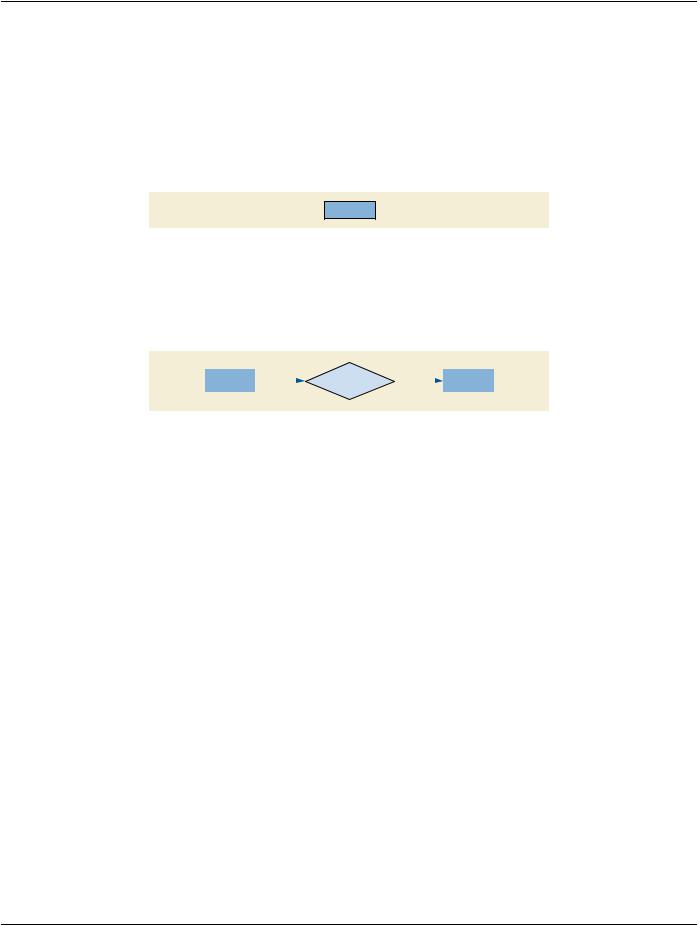
An entity is used in an Entity-Relationship (E-R) model to represent a Real-World Object, class of Real-World Objects, or DICOM data representation (such as an IOD or Module). An entity is depicted as shown in Figure 5.1-1.
Entity Name
Figure 5.1-1. Entity Convention
5.1.2 Relationship
A relationship, which defines how entities are related, is depicted as a diamond within this Part of the DICOM Standard as shown in Figure 5.1-2.
Source |
|
a |
b |
|
Destination |
|
Entity Name |
|
|
relationship |
|
|
Entity Name |
|
|
|
|
|||
|
|
|
|
|
||
|
|
|
|
|
|
|
Figure 5.1-2. Relationship Convention
The relationship is read from source to destination entity as indicated by the arrows. The a and b show the source and destination cardinality of the relationship respectively. The following cardinalities are permitted:
a.(a = 1, b = 1) - one source entity is related to one destination entity
b.(a = 1, b = 0-n) - one source entity is related to zero or more destination entities
c.(a = 1, b = 1-n) - one source entity is related to one or more destination entities
d.(a = 1-n, b = 1) - one or more source entities are related to one destination entity
e.(a = 1-n, b = 0-n) - one or more source entities are related to zero or more destination entities
f. (a = 1-n, b = 1-n) - one or more source entities are related to one or more destination entities
In a relationship where (a = 1-n, b = 1-n) the values of the source and destination cardinalities may be different. The value "n" simply denotes one or more.
Note
DICOM has added the use of arrows to the E-R diagramming conventions often used in other literature. This has been done to avoid the possibility of inferring an incorrect relationship that can result from reading a relationship in the reverse order of that intended. For example, a relationship "Cat Catches Mouse" could be read "Mouse Catches Cat" if the arrows were not present.
A relationship may be bi-directional (i.e., the relationship is true in both directions). In such a case, the convention used is arrows pointing toward both the source and the destination entities.
- Standard -
Page 104 |
DICOM PS3.3 2020a - Information Object Definitions |
5.2 Sequences
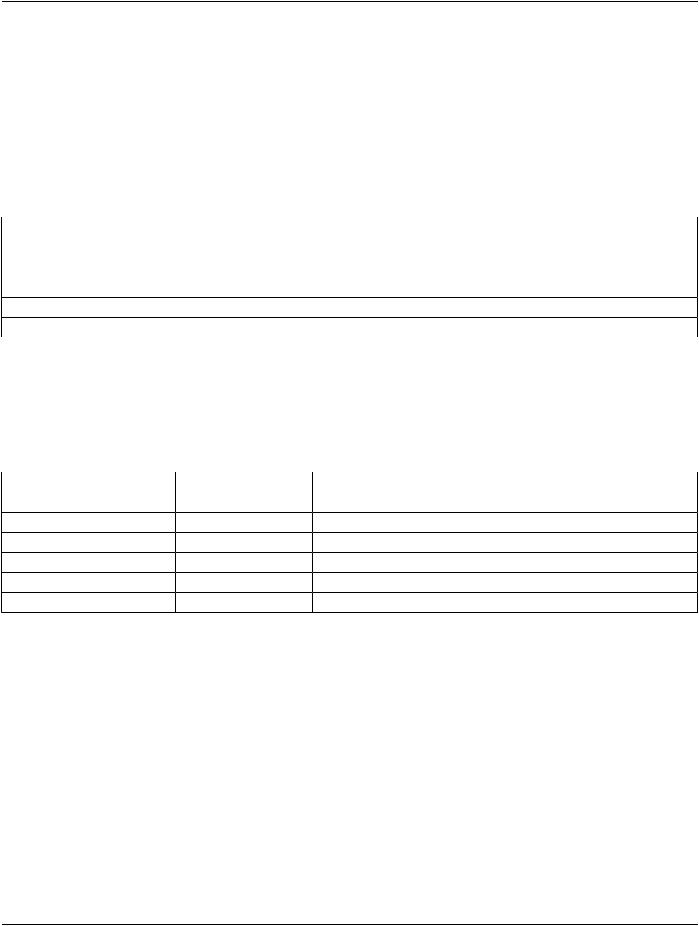
Certain Tables in this Standard describe Sequences of Items by using the symbol: '>'. The symbol '>' precedes the Attribute (or Module) Name of the members of an Item. All marked Attributes (or Modules) belong to the generic description of an Item that may be repeated to form a Sequence of Items. This Sequence of Items is nested in the Attribute (or Module) that precedes in the table the first member marked with a '>'.
Note
The following table describes the "Referenced Series Sequences" Attribute as a Sequence of one or more Items where each ItemcontainsthethreeAttributesmarkedbya'>'.TheSequenceofItemsisnestedinsidethevalueoftheReferencedSeries Sequence Attribute. The following Attribute (not marked) is not part of the Items of the Sequence.
… |
… |
Referenced Series Sequence |
… |
>Series Date |
… |
>Series Time |
… |
>Series Instance UID |
… |
Modality |
… |
This notation may be used to create nested hierarchical structures by using '>>' at the second level of nesting and so on.
The Type of the Sequence Attribute defines whether the Sequence Attribute itself must be present, and the Attribute Description of the Sequence Attribute may define whether and how many Items shall be present in the Sequence. The Types of the Attributes of the Data Set included in the Sequence, including any conditionality, are specified within the scope of each Data Set, i.e., for each Item present in the Sequence. See PS3.5.
For describing the number of Items in the Attribute description the following sentences are preferred:
Sequence Attribute Type |
Number of Items |
Sentence |
1 or 1C |
1 |
Only a single Item shall be included in this Sequence. |
1 or 1C |
1-n |
One or more Items shall be included in this Sequence. |
2 or 2C |
0-1 |
Zero or one Item shall be included in this Sequence. |
2 or 2C |
0-n |
Zero or more Items shall be included in this Sequence. |
3 |
1 |
Only a single Item is permitted in this Sequence. |
3 |
1-n |
One or more Items are permitted in this Sequence. |
Note |
|
|
The encoding of empty Sequence Attributes is described in PS3.5.
In a number of cases for Normalized IODs, the Data Element Type and Conditions are defined in the appropriate Service definition in PS3.4, in other cases in the Attribute description in PS3.3. It is not necessary to specify for any Attribute within a Sequence the conditionthatitis"requiredifaSequenceItemispresent",sincethisisalwaysimplicit,whetherornotthereareadditionalrequirements.
5.3 Triplet Encoding of Structured Data (Retired)
This section has been retired. See Section 8.
5.4 Attribute Macros
Some tables contain references to Attribute Macros. This convention is used in cases where the same Attributes are used in multiple tables or multiple placesinone Module. Thereference meansthatthe Attributes of the AttributeMacro shall beincluded inthe Module in place of the row that contains the reference to the Attribute Macro.
- Standard -
DICOM PS3.3 2020a - Information Object Definitions |
Page 105 |
In some cases, the Attribute Macro is used in a Sequence (the VR of the Data Element in which the Attribute is encoded is SQ, see PS3.5). When this is done, the reference is preceded by one or more ">" characters. The number of ">" characters indicates the level in the Sequence that all of the Attributes in the Attribute Macro occupy.
There may be specialization of the description of the Attributes in the Attribute Macro. In these cases, this specialization is described in the Description column of the Module.
Following is an example of this convention.
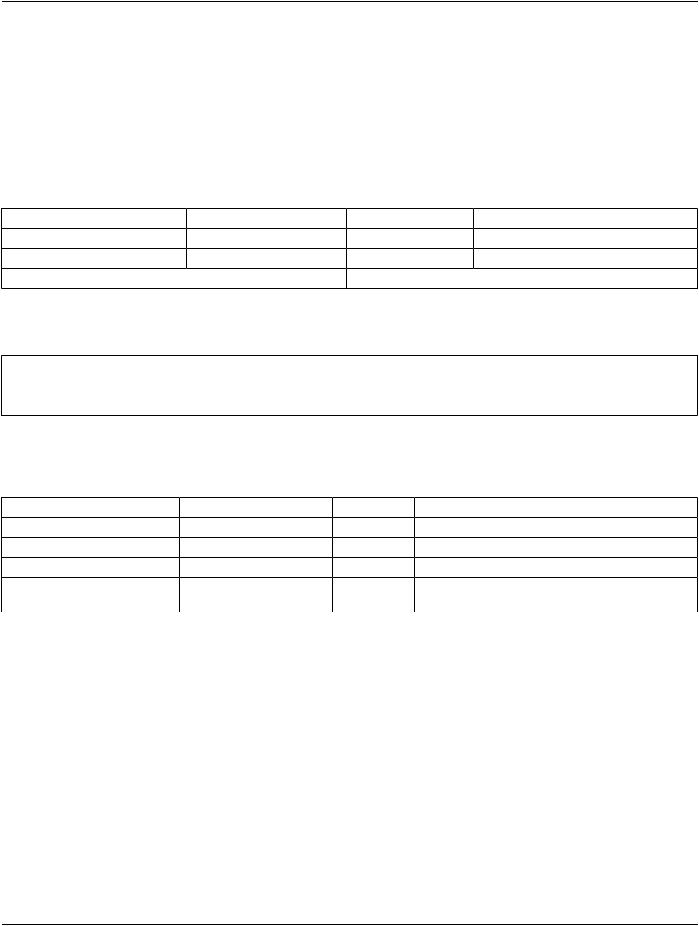
Table 5.4-1 is an example of a Module table using the Attribute Macro convention.
Table 5.4-1. Example Module Table
Attribute Name |
Tag |
Type |
Attribute Description |
Attribute A |
(aaaa,aaaa) |
1 |
This is an example. |
Attribute B Sequence |
(bbbb,bbbb) |
1 |
ThisisanexampleofaSequenceAttribute |
>Include Table 5.4-2 “Example Macro Attributes” |
In this Module, Attribute D (dddd,dddd) is Type 1 |
||
Table 5.4-2 is an example of the Attribute Macro referenced in Table 5.4-1. |
|
||
|
Table 5.4-2. Example Macro Attributes |
||
Attribute Name |
Tag |
Type |
Attribute Description |
Attribute C |
(cccc,cccc) |
1 |
This is an example. |
Attribute D |
(dddd,dddd) |
3 |
This Attribute is generally a Type 3. |
The contents of the Example Module Table, if it had not been described with the Example Macro would have been as shown in Table 5.4-3.
Table 5.4-3. Example Module Table Without The Use of An Attribute Macro
Attribute Name |
Tag |
Type |
Attribute Description |
Attribute A |
(aaaa,aaaa) |
1 |
This is an example. |
Attribute B Sequence |
(bbbb,bbbb) |
1 |
This is an example of a Sequence Attribute. |
>Attribute C |
(cccc,cccc) |
1 |
This is an example. |
>Attribute D |
(dddd,dddd) |
1 |
In this Module, this Attribute has been specialized to |
|
|
|
Type 1 as indicated in Table 5.4-1. |
5.5 Types and Conditions in Normalized IODs
When a Normalized Information Object Definition in PS3.3 invokes Modules (e.g., the SOP Common Module) or Attribute Macros thatarespecifiedwithDataElementTypes,thosespecifiedDataElementTypesandConditionsdonotapply.Rather,theDataElement Types and Conditions have to be specified for each Attribute for both SCU and SCP in the appropriate Service definition in PS3.4.
5.6 Invocation of Context Groups
The conventions used for Code Sequences are:
•no Baseline Defined
•using the Context Group as Baseline Context Group
•using the Context Group as Defined Context Group
See also “Codes and Controlled Terminology Definitions:” in PS3.16.
- Standard -