Материал: npe
Ticket 27
1. Basic principles and methods of testing new medicinal substances. The concepts of "placebo" and "blind" control. The ethical side of prescribing a placebo.
Principles of clinical research of new drugs: • Selection of a homogeneous population of patients; • Exact e-z b-no and a similar severity of the disease; • Control group b-n; • Similar dosage of drugs; • Pharmacokinetic research; • Choice of sensitivities of the effects typical for the given island;
• Quantification of effects; • Sufficient research volume for static processing; • Use of "placebo" and "double-blind method" research; • Comparison with reference drugs of this group; • Simultaneous research of new and reference drugs; • Compliance with ethical principles.
1. In the double-blind method, neither the patient nor the doctor conducting the study knows which drug the patient is receiving. This is known only to the head of the test. This method eliminates the possibility of a doctor or patient's prejudice against a new drug, their prediction of the results of treatment, etc., which may affect the assessment of the effectiveness of the drug. However, when planning the trial, measures must be taken to ensure that the drug is quickly identified by the attending physician, if the patient's interests so require.
2. In a single "blind" trial, the patient is not aware of the treatment with a new drug, but the researcher is aware of it. It is believed that such a test is almost always less satisfactory than a double-blind test, and the small gain in convenience is unlikely to compensate for the potential loss in learning precision.
3. The most often used in practice, "open test", in which both the researcher and the patient know the method of treatment. Often open testing is the only possible method. They should not be less specific than double-blind testing, provided that the principle of random sampling and stratification is applied. When researching new drugs, testing should be limited.
• Placebo - a substance with no apparent medicinal properties, used to simulate a drug in studies where the estimated effect may be distorted by the patient's belief in the efficacy of the drug, or to improve the patient's well-being in the absence of a more effective drug.
However, the use of a placebo is ethically acceptable (even in the presence of effective therapy) in cases: 1) when the use of a placebo is absolutely necessary to assess the effectiveness or safety of a medical method; 2) when patients will not be at additional risk of serious or irreversible harm because a medical method is being studied for a minor illness.
2. Non-steroidal anti-inflammatory drugs (Non-narcotic analgesics) Classification. The mechanism of their anti-inflammatory, analgesic, antipyretic action. Indications for use. Side effects. Contraindications Comparative assessment of drugs.
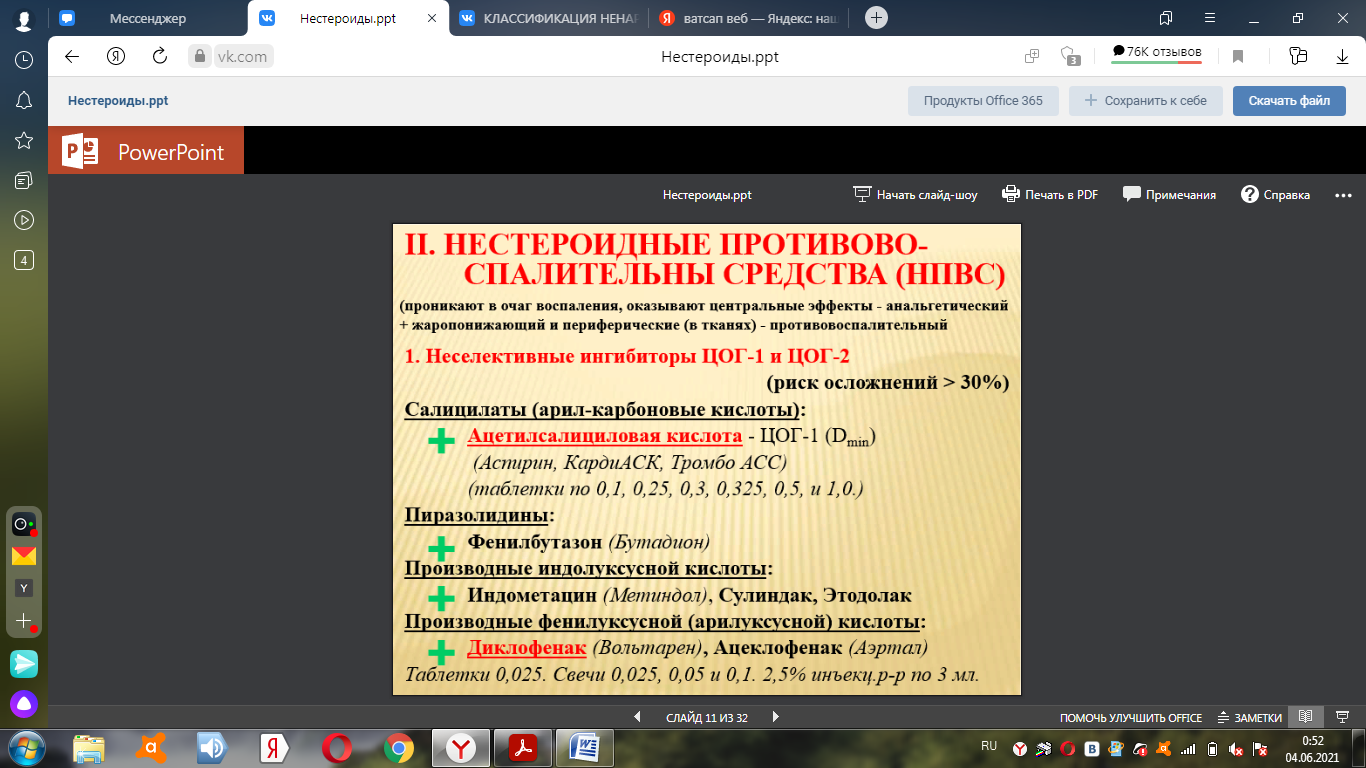
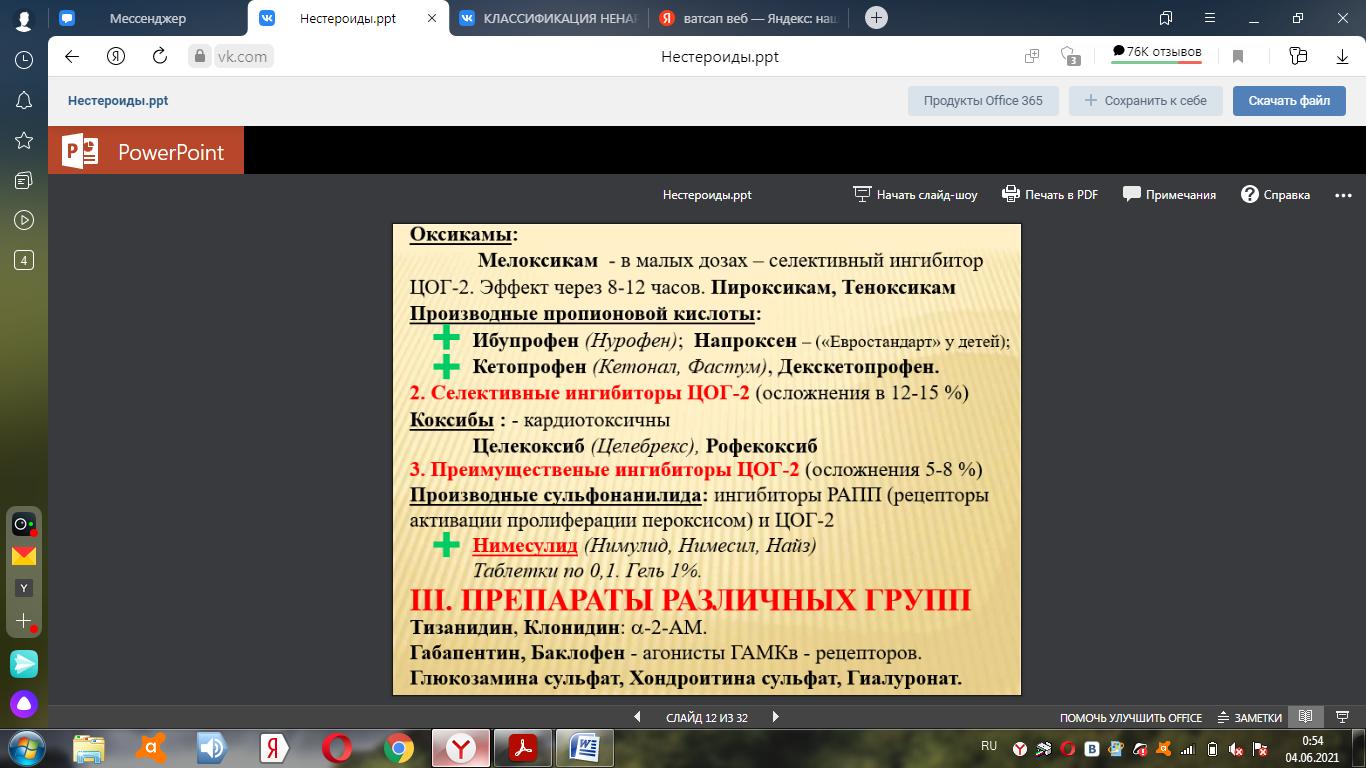
• fur acts: they inhibit type 3 cyclooxygenase. They inhibit the formation of mediators of pain, inflammation, and fever.
• indications: headache; myalgia; neuralgia; arthralgia; fever; postoperative pain
• side effects: anemia; thrombocytopenia, agranulocytosis; leukopenia; skin rashes; itching; angioedema.
• contraindications: - Hypersensitivity to paracetamol, hepatic and renal failure; - When using rectal suppositories, inflammatory diseases of the rectal mucosa are contraindications.
In terms of analgesic and antipyretic effectiveness, paracetamol roughly corresponds to aspirin. Unlike aspirin, it has no damaging effect on the gastric mucosa and does not affect platelet aggregation
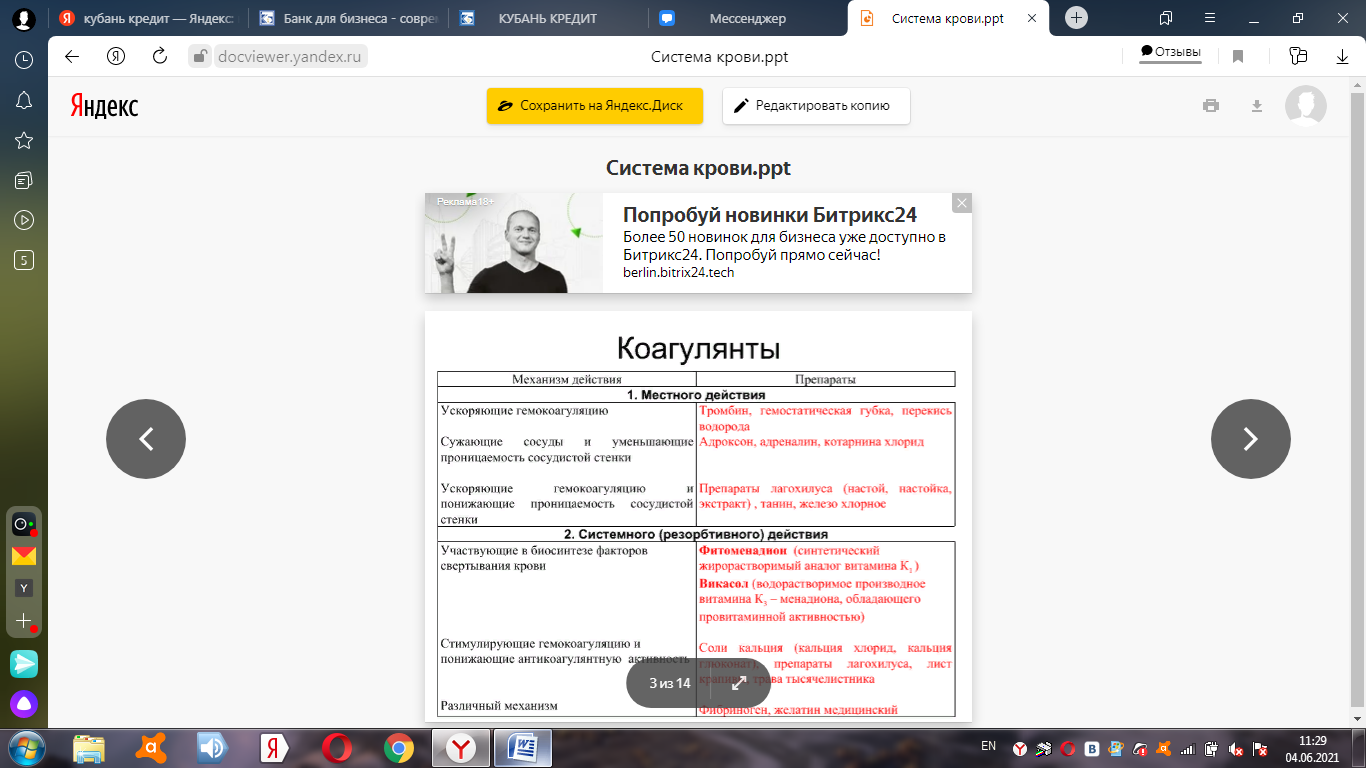
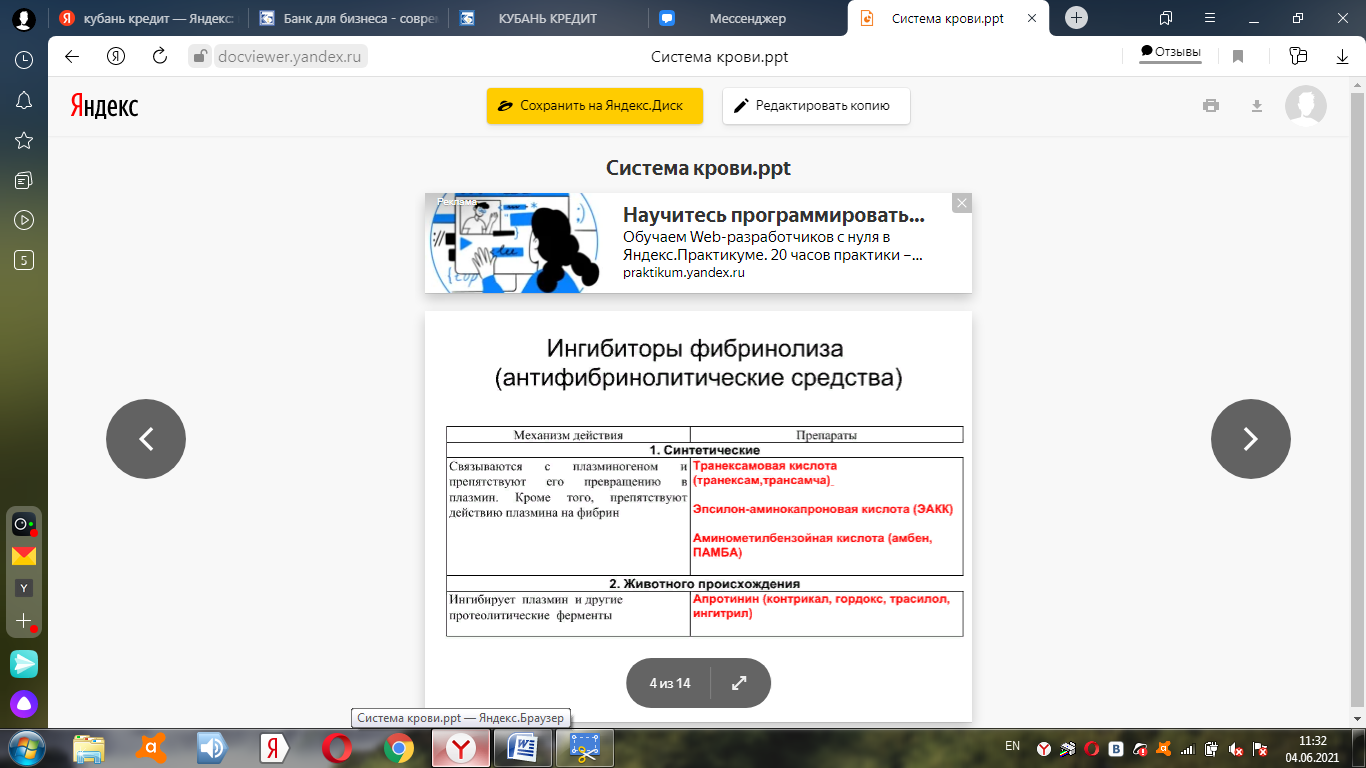
3. Means that help stop bleeding (hemostatics). Classification. Mechanism of action. Indications for use. Side effects. Contraindications. Comparative evaluation of drugs.
Classification:
1. Coagulants
2. Inhibitors of fibrinolysis (antifibrinolytic agents)
3. Aggregates
Aggregates
Etamsilat (Dicinon). The mechanism of action is associated with the activation of thromboplastin and an increase in platelet detachment from the megakaryocyte. In addition, the drug reduces capillary permeability and improves microcirculation. Increases the number and activity of platelets, their
adhesion, reduces the duration of bleeding. Indications for use: prevention and stop
capillary bleeding during surgical interventions in otolaryngology, ophthalmology, dentistry, urology, with hemorrhagic diathesis, as well as with moderate, non-life-threatening intestinal, pulmonary and uterine bleeding
• indications: hypoprothrombinomy; severe bleeding; liver surgery; craniocerebral surgery
• side effects: allergic reactions; hemolytic disease of the newborn
• contraindications: injection into a vein and muscle is not allowed = widespread thrombosis = death
• Thrombin and hemostatic sponges are used topically.
Preparations of resorptive action include vitamins K1, K3 Vikasol.
4. Sulfanilamide preparations. Classification. Mechanisms of action. The nature of the action. Spectrum of action. Indications for use. Side effects. Contraindications Comparative evaluation of drugs. Classification:
1) Preparations well absorbed from the gastrointestinal tract (resorptive sulfonamides), creating a high concentration in the blood and organs:
Short-acting (<10 h)
"SULPHANYLAMIDE"
SULFADIMIDINE
Medium duration of action (10-24 hours)
SULFADIAZINE
SULFAMETOXAZOLE
Long-acting (24-48 hours)
SULFAMONOMETOXIN
SULFADIMETOXIN
Ultra-long acting (> 48 h)
SULFALENE
SULFADOXIN
2) Drugs that are poorly absorbed in the gastrointestinal tract, creating a high concentration in the large intestine:
phthalazole
sulgin
3) Preparations for topical use:
SODIUM SULFACIL
SULFADIAZINE SILVER
4) Combined preparations of sulfonamides with trimethoprim
SULFAMETOXAZOLE / TRIMETOPRIM
SULFAMONOMETOXIN / TRIMETOPRIM
SULFAMETROL / TRIMETOPRIM
Mechanism: It is due to the competitive antagonism of sulfonamides with para-aminobenzoic acid (PABA).prevent the incorporation of PABA into dihydrofolic acid. Along with the noted sulfonamides competitively inhibit dihydropteroate synthetase.
Character: bacteriostatic action.
Effects: anti-inflammatory, neutralize toxins, hypoglycemic effect, diuretic effect, enhance antimicrobial effect.
Spectrum: (wide) 1) bacteria (cocci, Escherichia coli, Shigella, Vibrio cholerae, Clostridia, anthrax pathogens, diphtheria),
2) chlamydia,
3) actinomycetes,
4) protozoa (toxoplasmosis, malaria).
Sulfonamides are especially active against the following microorganisms:
- PNEUMOCOCCOV,
- MENINGOKOKKOV,
-GONOKOKKOV,
-HEMOLYTIC STRETOCOCCUS,
- CAUSES OF BACTERIAL DYSENTERIA
Indications: one. colitis, dysentery, enterocolitis
2. Infections of the biliary and urinary tract.
3. pneumonia, abscesses, bronchitis, pharyngitis, tracheitis, laryngitis.
4. Angina, otitis media, purulent meningitis, conjunctivitis, erysipelas
5. Dermatovenereological diseases (pyoderma, syphilis, gonorrhea, mycoses).
6. Treatment of wounds (only free from pus).
Side effects: Allergy, weakness, agranulocytosis. kidney stones, imbalance of B vitamins, nausea, vomiting, diarrhea, visual impairment
Contraindications: allergic diseases, kidney and blood diseases, pregnancy, children and newborns in the first week of life, glucose-6-phosphate dehydrogenase deficiency, nephrosis, nephritis, acute porphyria, thyrotoxicosis, hypersensitivity to sulfonamides.
Combined preparations of sulfonamides with trimethoprim:sulfatone, poteseptil, bactrim, have high antibacterial activity, are well absorbed in the gastrointestinal tract. Duration - 6-8 hours. Side effects - dyspepsia, allergies, inhibition of hematopoiesis.
Ticket number 28
1. Combined action of medicinal substances. Synergy. Antagonism. Antidote.
Medical statistics show that for the treatment of an "average" patient in a hospital, he is prescribed in parallel from 4-6 to 10 or more different drugs. The justification for combined treatment is obvious: the need to influence different links of the pathological process, which allows you to achieve better results and at the same time reduce the dose of each of the components. Despite all reasonable arguments, the world experience of medicine shows that the greatest number of complications is associated precisely with polypharmacy, that is, with the simultaneous and insufficiently substantiated (according to the choice of components and doses) the appointment of several potent substances without taking into account their interaction in the conditions of the patient's organism and the presence of diseases associated with the main, age-related and other conditions.
When several drugs are used together, it should be remembered that they can change both the pharmacinetics and pharmacodynamics of each other. There are the following types of drug interactions: 1) Pharmacokinetic (with absorption, binding to plasma proteins, distribution, biotransformation and excretion); 2) Pharmacodynamic (at the level of receptors, ion channels, enzymes, pharmacological effects, etc.); 3) Physicochemical interaction between substances in the environments of the body.
The unidirectional end effect of two or more substances is denoted by the term synergism. The action can be implemented as a simple addition of unidirectional effects (summation).
Drug interactions can be of the opposite type, i.e. lead to mutual weakening, repayment of the final pharmacological effect - drug antagonism. Antagonism is widely used in medicine to correct adverse reactions (it can only concern them), to treat poisoning with drugs and poisons in general. In the latter case, one speaks of an antidote action. Interactions (and antidote effects) can sometimes result from direct chemical binding with neutralization or loss of absorption.
2. Psychostimulants. Classification. Mechanism of action. Indications for use. Side effects. Contraindications Comparative evaluation of drugs.
Classification: 1) Phenylalkylamines-phenamine; 2) Derivativeth piperidine-pyridrol, meridil; 3) Etcderivatives of sydnoneimine-sydnocarb; 4) Methylxanthines-caffeine.
Mechanism of action: improves mood, the ability to perceive external stimuli, psychomotor activity, performance, reduces fatigue, the need for sleep. The stimulating effect is associated with the stimulation of the reticular formation.
Indications: depression, narcolepsy.
Side effects: dependence, dyspepsia, agitation, insomnia, tachycardia, arrhythmias.
Contraindications: hyperexcitability, insomnia, ↑ blood pressure, glaucoma, CVS disease.
Phenamine - all properties, reduces hunger, stimulates the respiratory center, ↑ blood pressure, cumulates (causes addiction).
Pyridrol is like phenamine, meridil is weaker, both drugs have no effect on CVS.
Sydnocarb is less toxic, the effect develops gradually, hemodynamics does not suffer.
Caffeine - increases arousal in the central nervous system, reduces internal inhibition. The effect depends on the dose and the type of central nervous system. Increases skeletal muscle tone, diuresis and basal metabolism, slows down the heart rate. It stimulates the respiratory and vasomotor centers. Dependence is possible.
3. Preparations of thyroid hormones. Antithyroid drugs. Preparations of hormones of the parathyroid glands. Classification. Mechanism of action. Indications for use. Side effects. Contraindications Comparative evaluation of drugs.
THYROID HORMONE PREPARATIONS
Classification
one) Thyroxin preparations: LEVOTYROXIN
2) Triiodothyronine preparations: TRIODTHYRONINE
3) Combined drugs: THYREOIDIN, TYREOTOM, TYREOCOMB, NOVOTIROL
INDICATIONS FOR USE - Hypothyroid conditions, myxedema, cretinism, Autoimmune thyroiditis, Thyroid carcinoma, Endemic and sporadic goiter.
SIDE EFFECTS - Tachycardia, arrhythmias, pain in the heart, Tremor, Diarrhea, vomiting.
CONTRAINDICATIONS - Thyrotoxicosis, Myocardial infarction, IHD, Acute myocarditis, Uncontrolled adrenal insufficiency, Severe arrhythmias.
ANTITHERIOID DRUGS
Classification:
one) Drugs that reduce the production of thyroid-stimulating hormone and its release from the pituitary gland: SODIUM IODIDE, POTASSIUM IODIDE, DIODTHYRONINE
2) Drugs that inhibit the synthesis of thyroid hormones in the thyroid gland: MERCAZOLIL, PROPILTHIOURACIL
3) Drugs that interfere with the absorption of iodine by the thyroid gland: POTASSIUM PERCHLORATE
four) Drugs that destroy the cells of the thyroid follicles: RADIOACTIVE IODINE
1. MECHANISM OF ACTION - When the level of iodine in the blood rises, the production of thyroliberin in the hypothalamus decreases due to negative feedback, as a result of which the synthesis of thyroid-stimulating hormone in the pituitary gland decreases and its stimulating effect on the thyroid gland decreases.
INDICATIONS FOR USE - Hyperfunction of the thyroid gland:
SIDE EFFECTS - Allergic reactions, Dyspeptic symptoms, Signs of iodism
CONTRAINDICATIONS - Hypersensitivity to iodine, Benign tumors of the thyroid gland, Hemorrhagic diathesis, Urticaria.
2. MECHANISM OF ACTION - Suppress the synthesis of thyroxine in the thyroid gland, blocking peroxidase, which provides iodination of di-, tri- and tetraiodothyronine.
INDICATIONS FOR USE - Diffuse toxic goiter of varying severity SIDE EFFECTS - Goitrogenic effect, leukopenia, agranulocytosis, Nausea, vomiting, Liver dysfunction, allergies, Pain in joints and muscles.
CONTRAINDICATIONS - Pregnancy, lactation, Severe leukopenia, granulocytopenia, Nodular goiter.
3. MECHANISM OF ACTION - Reduces the ability of the thyroid gland to accumulate iodine, which leads to inhibition of the formation of thyroxine.
INDICATIONS FOR USE - Diffuse toxic goiter of mild to moderate severity.
SIDE EFFECTS - Thrombocytopenia, leukopenia, agranulocytosis, aplastic anemia, Zobogenic effect.
CONTRAINDICATIONS - Pregnancy, Peptic ulcer of the stomach and duodenum, Diseases of the hematopoietic system.
4. MECHANISM OF ACTION - Radioactive iodine is captured by the cells of the thyroid gland - Cell destruction.
INDICATIONS FOR USE - Hyperfunction of the thyroid gland:
SIDE EFFECTS - Signs of radiation sickness, Hypothyroidism.
CONTRAINDICATIONS - Pregnancy, lactation.
PREPARATIONS FOR PARTHYGROID HORMONES
PARATYREODIN
INDICATIONS FOR USE - Chronic hypoparathyroidism, Tetania in adults, spasmophilia in children.
SIDE EFFECTS - General weakness, Nausea, vomiting, diarrhea
CONTRAINDICATIONS - hypercalcemia.
4. Antibiotics of the tetracycline and chloramphenicol group. Classification. Mechanism of action. The nature of the action. Spectrum of action. Indications for use. Side effects. Contraindications Comparative evaluation of drugs.
Classification: Tetracyclines: in the structure of 4 condensed cycles: natural (tetracycline) and semi-synthetic (doxycycline, morphocyclin, metacyclin). Levomycetin belongs to nitrobenzenes.
Mechanism: inhibit protein synthesis and ribosome function.
Mode of action: bacteriostatic. Penetrate barriers.
Spectrum: wide - gram (+) (-), amoebae, spirochetes, pathogens of AOI, rickettsia, chlamydia. I do not act on Proteus, Pseudomonas aeruginosa, viruses, fungi.
Indications: tetracycline - broad. Levomycetin - typhoid fever, salmonellosis, rickettsioses
Side effects: a decrease in hematopoiesis to agranulocytosis, irritate the gastrointestinal tract, teratogenic (tetracyclines), allergies, dysbiosis, candidiasis.