Материал: Russian Journal of Building Construction and Architecture

Issue № 3 (43), 2019 |
ISSN 2542-0526 |
ARCHITECTURE OF BUILDINGS AND STRUCTURES.
CREATIVE CONCEPTIONS OF ARCHITECTURAL ACTIVITY
DOI 10.25987/VSTU.2019.3.43.008
UDC 72.03
Javad Eiraji1
NATIONAL IDENTITY AND ITS CONTRAST WITH THE WESTERN MODERNITY IN THE CONTEMPORARY ARCHITECTURE OF TURKEY
Islamic Azad University1
Hashtgerd, Iran
1 Assistant Professor, Department of Architecture, Hashtgerd Branch,
tel.: +989120180476, e-mail: J.Eiraji@gmail.com, Javad.Eiraji@hiau.ac.ir
Statement of the problem. Because of geographical position and location in the middle of West and East and also the different historical empires that it has had, Turkey has always been affected by a variety of cultures and is thus a spring of dichotomies. In this paper, first we will review the descriptions of the tradition and modernity and then we will move on to examining their contribution into architecture. Next, we will have a quick look at Turkey and its contemporary social and political history as well as tradition and modernity in its architecture and by focusing on the classification of Turkish contemporary architecture, the sixth assortment of this classification which contains the buildings after 1980 will be investigated.
Results. As tradition and modernity can be predominantly seen on cultural and religious buildings, in this paper for case studies some cultural-religion buildings which fit the aims of the research and study the mentioned factors on these buildings have been selected. This indicates that not only in contemporary architecture but also in society and culture of this country, identity, tradition and modernity are most importantfacts thatwith adesigned andprogrammed managementhavecoexisted and interacted. Conclusions. The results of this research shows that Turkey, as a modern country which has an amibiton to keep its identity and traditions usually seeks to insert the physical symbols of two styles together and as well as to keep the semantic and conceptual meanings of both tradition and modernity in its contemporary architecture.
Keywords: Tradition, Modernity, Contemporary Architecture, Cultural-Religious Buildings, Turkey.
Introduction. The contrast of modernity with tradition in some countries such as Turkey depends on different conditions and factors. The political, social, economic and cultural revolu-
© Eiraji Javad, 2019
95

Russian Journal of Building Construction and Architecture
tions that happened and are still happening in these countries create the conditions to accept or reject the modern life or at least let some especial aspects penetrate the society. Sometimes this can conclude meanings and concepts of a new ideology and as well as contain both physical and sensation aspects. In the form of architecture, as the main factor of culture and art of a society, the traditional countries in the East usually have sought to keep their original sense of architecture and embraced some modernity factors besides their original architecture. Surely, the amount of tradition can be more than modernity but in some countries in the West, attempts have been made to keep their classic and modern architecture united but separated by some new ways of designs. Turkey, as a country which has been halfway between the West and the East, has faced the challenge of how to keep tradition and modernity besides each other both in the country and also in architecture. The way of addressing these issues during different eras has been varying with more and more changes in the contemporary period. According to the above mentioned points, it seems that before focusing on the tradition and modernity in Turkey’s latest architecture, it is better to study the main descriptions of these two words first and then to compare them against the context of the architecture of the Eastern and Western countries and finally by having a quick review on contemporary events of the Turkish history, to investigate its effects on the architecture.
Descriptions of Tradition and Modernity. Before the survey of tradition and modernity in architecture, it is better to focus on the descriptions of tradition and modernity which theorists have on the meaning of these two words.
Tradition means transition from one generation to another [1]. In fact it is the attendance of past in future [2]. Tradition can be as a manner or method, it can be equivalent with an old thought or keeping the current position [3] and totally it is a mentality which is accepted in a society and can include more than one generation [4]. Tradition is a timeless and constant factor which has s historical continuity and it is related to the religious beliefs of a nation. It is a series of creeds, beliefs, opinions and repetitive procedures which can be created over time and upheld as social and national values. Plurality, conservatism, variation, resistance, keeping the current positions, superstition, originality, destiny and religion are some of the main components and factors constituting tradition [5].
On the other hand, the descriptions that have been presented for modernity are plentiful and even in some cases conflicting. It has been believed that modernity is the victory of human thought and defeat of traditional beliefs. According to this, modernity is a collection of cultural, political, economic, social and philosophical complexes. Many theorists believe that modernity is a way of today`s life [6]. Modernity is the era when its main character is a
96
Issue № 3 (43), 2019 |
ISSN 2542-0526 |
ceaseless conversion [7]. In fact, the foundation of modernity is on the mutation of the human`s look on himself and the world around [8].
The modernity is a dipole theory and puts the modern society against the traditional society and without presenting any comprehensive description, it acknowledges the Western society as the modern one and introduces the third-world countries as the traditional ones. According to this theory, in the third-world countries there are some barriers that bar the development. Some of these barriers are old superstitions and increasing population numbers. Thus, this theory searches for the internal reasons to justify a delay in a society [9].
The Challenge of Tradition and Modernity in the Architecture of the East and the West.
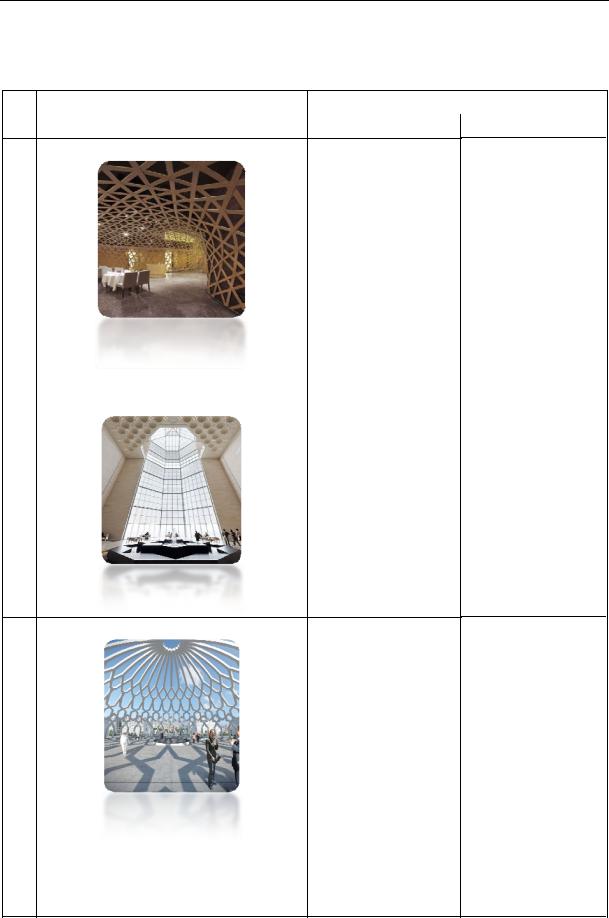
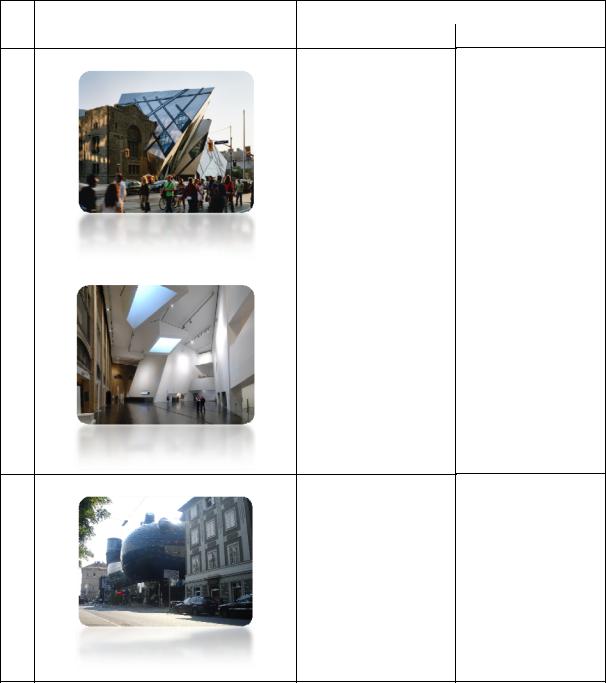
According to the descriptions of tradition and modernity, these two can be studied in architecture in two sections: the semantic, i.e. meaning, section and the physical one. The main factors of the first section can include sensation, meaning and conceptual symbols of a culture which have been presented in the form of architecture. The second section contains some other factors such as composition, materials, aesthetic aspects and main functional elements. On the other hand as our case study and the region that we are looking at is Turkey and as we are also talking about the East or the West, it can contain many different countries with various cultures where the meaning of tradition can vary as well, we chose the East traditions and civilizations which are similar to the ones in Turkey. In this case the Islamic countries which from traditional aspect can be similar to our research can be studied and also from the West architecture some countries which are similar to modern meaning of our research have been chosen. Thus, first we will focus on the tradition and modernity in the architecture of some Islamic countries in Tab.1 and then we will study the same case for some Western architecture in Table 2 and finally we will have the related conclusions for Turkey [Table 1––2].
By comparing these two tables, we come to this conclusion that in East and Islamic architecture tradition and modernity usually mixed more sensory and thus conceptual and the amount of tradition factors seems more than the western modernity but in the Western countries the mixture of tradition and modernity occurred completely separately. Hence it was easier to separate the building into two independent parts but in the first case this mixture occurred more semantically. These two cases were chosen, because the architecture of our main case study is more similar to these two cases. Now, before moving on to to the tradition and modernity in the architecture of Turkey, first we will present a brief overview of Turkey and its contemporary history and architecture and then we will come to the tradition and modernity in its cultural-religion buildings as our case study.
97
No.
1
2
Russian Journal of Building Construction and Architecture
|
|
Table 1 |
Tradition and Modernity in the Architecture of Islamic Countries |
||
Tradition and Modernity |
Conclusions |
|
in the Islamic Architecture |
|
Modernity |
Tradition |
||
|
–– Islamic Ornamentation |
–– Modern Spacing |
|
–– Traditional Instruction |
–– Modern Furniture |
|
–– Traditional Geometry |
–– Modern Atmosphere |
|
|
–– Modern Materials |
–– Traditional Ceiling |
–– Modern Material |
–– Traditional Form |
–– Modern Colour |
––Traditional Space
––Traditional Sensation
98
Issue № 3 (43), 2019 |
ISSN 2542-0526 |
No.
1
2
|
|
Table 2 |
Tradition and Modernity in the Architecture of the Western Countries |
||
Tradition and Modernity |
Conclusions |
|
in the Western Architecture |
|
Modernity |
Tradition |
||
|
–– Classic Ornamentation |
–– Modern Spacing |
|
–– Traditional Instruction |
–– Modern Form |
|
–– Traditional Material |
–– Modern Atmosphere |
|
|
–– Modern Materials |
–– Classic Elevation |
–– Modern Material |
–– Traditional Material |
–– Modern Colour |
–– Traditional Space |
–– Modern Form |
–– Traditional Sensation |
–– Modern Space |
Turkey: National Identity Crisis and its Contrast with the Western Modernity. There are three main factors that we should pay attention to while focusing on the identity of a country like Turkey with its regional and historical identity, religion as its moral and belief identity and the Western liberalism as a philosophic reference with its economic, political and its cultural functions [10]. Considering these three factors, religion can be more im-
99