Материал: Current_Neolithic_Research_in_Armenia
Other Contributions
Tsaghkahovit established on the northern flank of the Aragats in the 2nd half of the 5th millennium calBC (Arimura et al. n.d.).
The “Kmlo tools” thus appear to be one of the indicators of a culture established in the 9th millennium calBC on the high plateaus of western Armenia. It is possible that this culture developed locally and continued at least until the 6th-5th millennia calBC. At this time, a quite different culture appeared in the Ararat plain.
The Late Neolithic of the Ararat Plain
The Late Neolithic sites of Aratashen and AknashenKhatunarkh are located in the lower valley of the Kasakh River, which meanders in the Ararat plain before flowing into the Arax River. Aratashen, which has been excavated from 1999 to 2004, is a small elliptical elevation of about 60 m in diameter consisting of two Neolithic levels lying on the sandy virgin soil. At the periphery of the elevation, unstratified material has been found; this material, which consists mainly of Chalcolithic pottery and obsidian artifacts, comes probably from the upper part of the mound, destroyed by erosion over millennia and by modern levelling works (Badalyan et al. 2004a; 2007). As the stratigraphy of Aratashen revealed a gap between the Neolithic and Chalcolithic levels, it was decided to excavate another site, in order to fill this gap.
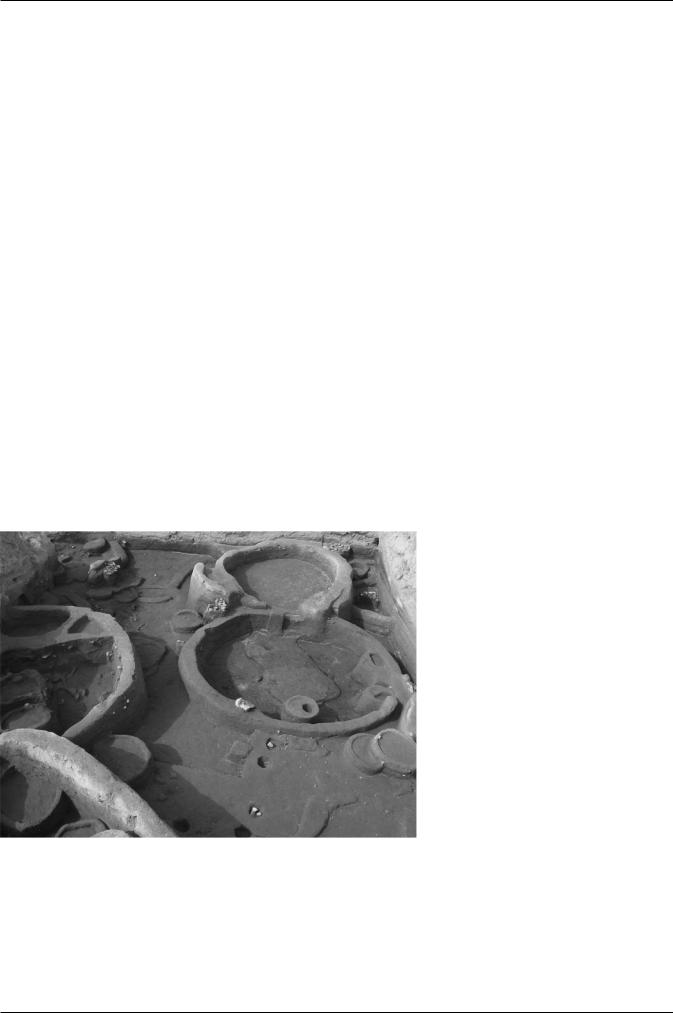
Fig. 5 Architecture of the lowest levels of Aratashen.
The site of Aknashen-Khatunarkh, located 6 km southeast of Aratashen, was partly excavated by R. Torosyan in the 1970s and 1980s; but the results of his work, carried out in the west sector of the hill, were not published. The new excavations by theArmeno-French mission began in 2004 and are still in progress (Badalyan et al. n.d.). The site of Aknashen-Khatunarkh is a
mound circular in plan (about 100 m in diameter), with a flat top rising 3.5 m above the surrounding plain. So far the most complete stratigraphic sequence has been found in trenchA. There, the cultural layer is more than 4 m thick and continues farther down, but the high level of the water table did not permit further excavation. The preliminary typological analysis of the material, mainly pottery, has enabled attribution of the lower horizons (V-II) to the Late Neolithic and the upper horizon (I) to the Early Chalcolithic. It seems that at the present stage of investigations there is no significant hiatus in this stratigraphic sequence.
The corpus of 14C dates shows overall concordance between Aknashen-Khatunarkh and Aratashen: the earliest levels (lowest strata of horizon V at AknashenKhatunarkh and horizon IId atAratashen) belong to the very beginning of the 6th millennium calBC. At Akna- shen-Khatunarkh, the upper Neolithic level (horizon II) covers the last centuries of the 6th millennium calBC; therefore the Chalcolithic level (horizon I), disturbed by medieval and modern intrusions, would belong to the first half of the 5th millennium calBC.
The inhabitants of these settlements were farmers (naked wheat, emmer, six-row barley, and lentil) and herders (sheep, goats, cattle and rare pigs). Constructions, circular in plan with diameters from 3 to 5 m, were built in pisé or, more rarely, in mud bricks. There is a high concentration of small structures within or outside the constructions; they were generally used as silos (to stock grain or sometimes tools) or as ovens (Fig. 5).
The obsidian tools are quite different from those of Kmlo-2; they are mainly on blades, produced by indirect percussion or by pressure flaking technique with crutch as well as with levers (Chabot and Pelegrin n.d.), a technique that appeared in the northern Near East at about the end of the 8th millennium cal. BC (Çayönü, late Pre-Pottery Neolithic) (Altinbelek et al. n.d.).
The lower Neolithic levels at Aratashen and Aknashen-Khatunarkh have produced an abundance of objects made of bone, horn and deer antler. The main types consist of awls, spatulas, “hoes”, arrowheads, spoons, wide palettes and tubular casings. In the upper levels, a sharp decline in the quantity and variety of the bone industry can be observed: more than 80% of the bone artifacts are awls.
Some bone arrowheads have been found close to stones which present on their rounded upper part 1 to 3 wide transverse grooves
in a U-shape section. Grooved stones are known in the Near East from the 11th millennium calBC onward, and two regional variants can be distinguished: in the Levant and western Mesopotamia, the groove follows generally the longitudinal axis of the tool, whereas in northeastern Mesopotamia and the Zagros (Zawi Che-
80
Neo-Lithics 1/10
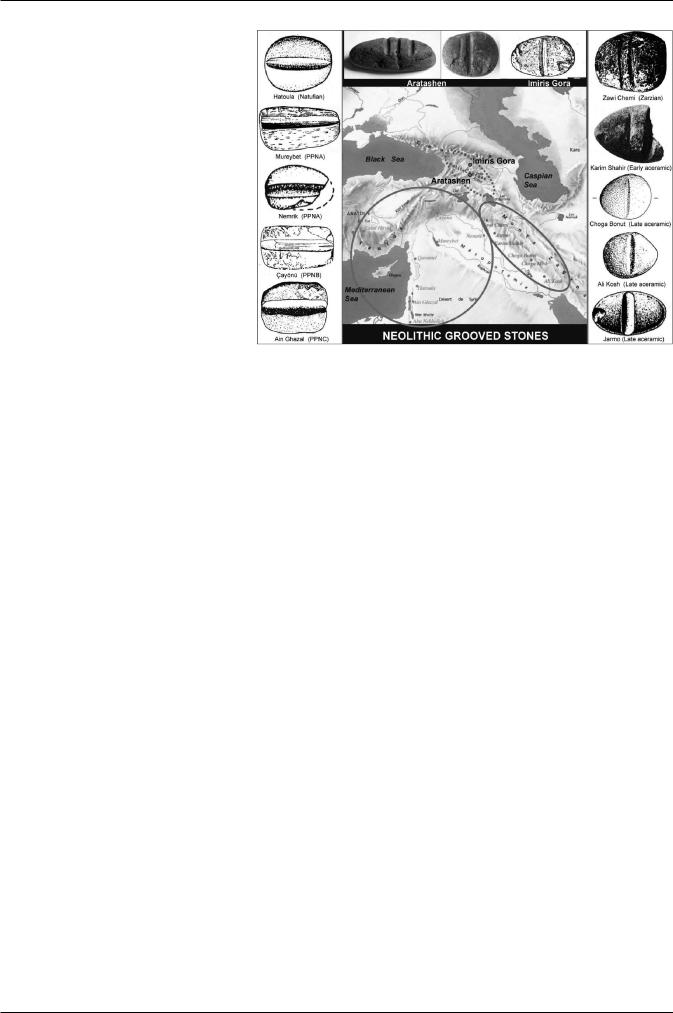
mi, Karim Shahir, Jarmo, etc.), they follow more often the transverse axis (Solecki 1981; Howe 1983; Moholy-Nagy 1983). The grooved stones of Armenia could be compared to this latter variant (Fig. 6).
Pottery is totally missing from the lowest levels of both sites; at present it is clear that the earliest sedentary communities in the Ararat plain did not use pottery. Later, coarse wares with mineral or mixed temper appear; chaff-tempered ware develops then, but remains rare in the Neolithic horizons. These potteries show reddish-brown to gray-black color; in some cases, they are decorated with applied elements such as simple knobs. There are in addition some rare sherds of fine painted ware, probably imported from northern Mesopotamia. Sherds similar to Samarran or Early Halaf wares were found at Aknashen-Khatunarkh in horizon V (Badalyan et al. n.d.), others
with motifs characteristic of Middle/Late Halaf pottery were found atAratashen in horizon IIb (Palumbi 2007).
At Aknashen-Khatunarkh, in the Chalcolithic horizon, chaff-tempered ware makes up the bulk of the pottery and is characterized by a combed treatment of the surface (a haphazardly executed series of incised lines over the body of the vessel) and by new decorations: a horizontal row of perforations below the rim, undulated rim, and notches on the rim. These features are characteristic of the pottery of the Early Sioni culture, which developed in the Kura Basin after the disappearance of the Shulaveri-Shomutepe culture (Kiguradze and Sagona 2003).
The Late Neolithic culture represented on these two sites in the plain of Ararat is closely related to the Shulaveri-Shomutepe culture that developed in the same period (6th millennium calBC) farther north in the Kura Basin. Both cultures have many points in common: in architecture, in lithic and bone industries, and in pottery.
At the site ofAknashen-Khatunarkh, which presents a stratigraphic sequence covering the phases of the Late Neolithic and the Early Chalcolithic, two factors stand out: a) change is completely progressive; b) there are important differences between the earliest and latest levels, indicating an evolution in the way of life. The first phase, with architecture in pisé and objects characteristic of the Shulaveri-Shomutepe culture, indicates a sedentary economy. The last phase is characterized by abandonment of constructed architecture, the rarity of groundstone tools, and the decline of bone and lithic industries. All these features, which are characteristic of the Sioni culture in Georgia, suggest a change in the economy towards more mobility.
Discussion
In order to better understand the Neolithisation process in Armenia, two topics are discussed here: a) the hypothesis that the search for obsidian, which is abundant in this country, led to the establishment of trade networks between this region and Mesopotamia; b) the role of the southern Caucasus in the emergence of hexaploid wheat culture in the Near East.
Obsidian Procurement
More than 20 sources of obsidian are scattered across the southern Caucasus, mainly in Armenia, but also in southern Georgia and southwestern Azerbaijan. The systematic characterization of the Caucasian sources was achieved through geochemical analyses and fis- sion-track dating and this geological data served as a base for determining the origins of an important corpus of artefacts from sites dating to between the 6th to the 1st millennia calBC (Blackman et al. 1998; Badalyan et al. 2001, 2004b). These results were compared with the database for obsidian in the Near East.
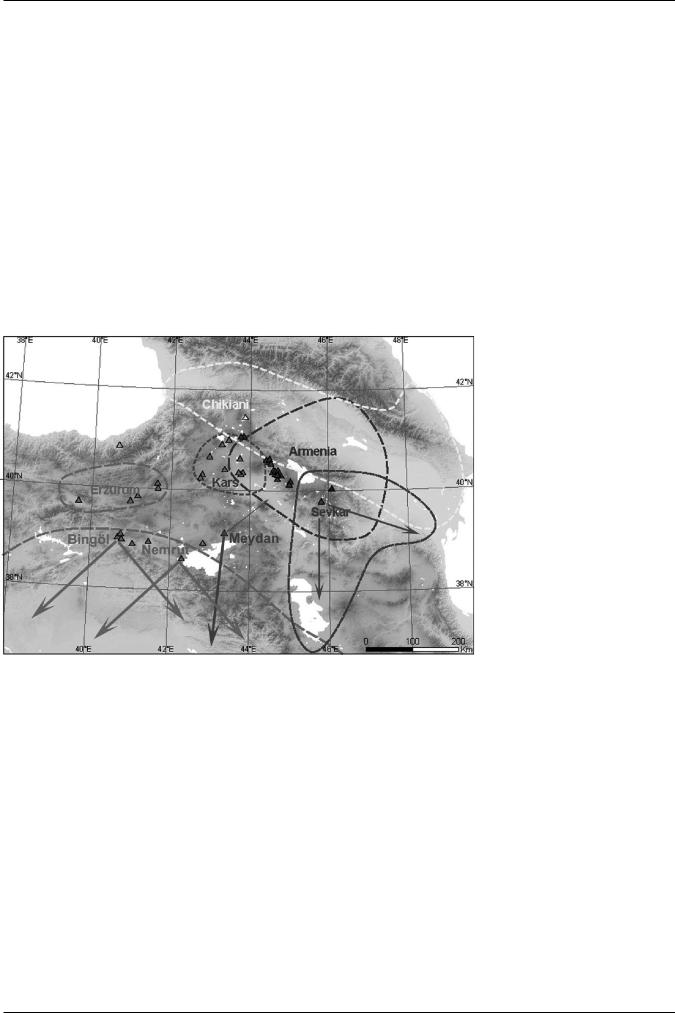
These analyses have shown (Fig. 7) that the obsidian from the southern Caucasus was widely used in the basins of the Kura and theArax Rivers, up to the shores of the Black Sea and the Caspian Sea. But it hardly circulated beyond the mountain ranges that border this region in the north (Greater Caucasus) and in the south (Anti-Taurus). Only a group of sources located in the upper basin of the Vorotan River (Satanakar, Sevkar, Bazenk) was exploited beginning in the 6th millennium calBC by populations settled in the basin of Lake Urmiah (northwestern Iran).
On the other hand, the Anti-Taurus possesses several deposits of obsidian that were largely exploited
81
Neo-Lithics 1/10
Other Contributions
during the Neolithic and Chalcolithic periods: a) the Bingöl and Nemrut Dag sources, which spread widely throughout the Fertile Crescent, but not to the north; b) the Meydan Dag deposit north of Lake Van, which had a broad diffusion in Northern Mesopotamia and is represented in the southern Caucasus only occasionally; c) the Erzurum region, whose populations exploited only the local obsidian. In fact, the obsidian sources located in the Lake Van and Erzurum regions represent less than 1% of the provenances of all the southern Caucasian archaeological samples analysed (Badalyan et al. 2004b). The near-absence of diffusion of obsidian from the northern Near East towards the southern Caucasus and from this region towards the south is noticeable and suggests that the obsidian exchange networks elaborated by the Mesopotamian populations did not play an important role in the process of Neolithisation of the southern Caucasus.
Emergence of Exaploid Wheats
The assortment of cereals found on the Armenian sites of the 6th millennium calBC (Aratashen and Akna- shen-Khatunarkh) is characterized by the abundance of naked wheat, whose species, Triticum turgidum (tetraploid) or Triticum aestivum (hexaploid), is difficult to determine (Badalyan et al. 2007; Hovsepyan and Willcox 2008; Badalyan et al. n.d.). Such a predominance of naked wheat is attested in the Kura basin in the Shulaveri-Shomutepe culture, where spelt wheat (Tr. spelta), a hulled hexaploid species, is also present (Lisitsyna and Priscepenko 1977; Janushevich 1984; Wasylikova et al. 1991; Zohary and Hopf 2004). The first hexaploid wheats were hulled products (Tr. spel-
ta), but the naked derivatives (Tr. aestivum) could have appeared shortly after the formation of spelt, because the shift between hulled and naked hexaploid wheat was apparently produced by only two mutations (Zohary and Hopf 2004).
In the regions situated northwest of the Black Sea, in the Bug-Dniestr culture, the spread of spelt is dated to the end of the 7th and the beginning of the 6th millennium calBC (Janushevich 1984 ; Kotova 2009). However, genetic analyses show that the spelt wheat of Europe (Moldavia, northern Black Sea) and those of Asia (Caucasus, Iran, Afghanistan) do not have the same origin: European spelt wheat originated from hybridization between cultivated emmer (Tr. dicoccum) and club wheat (Tr. compactum), whereas Asian spelt wheat originated from hybridisation of tetraploid wheat (Tr. turgidum) with the diploid wild grassAegilops tauschii (= squarrosa) (Dvorak et al. 1998;Yan et al. 2003;
Dedkova et al. 2004).
In particular, molecular studies have revealed that populations of Aegilops tauschii native to Armenia and the southwestern part of the Caspian Sea belt are closest to genome D found in the hexaploid wheat (Dvorak et al. 1998). Thus, a hypothesis defined in the nineties (Nesbitt and Samuel 1996; Zohary and Hopf 2004) was largely confirmed by genetic studies (Lelley et al. 2000; Giles and Brown 2006; Kilian 2009): the most likely origin of the hexaploid bread wheat is the southwestern corner of the Caspian belt and the adjacent southern Caucasus. The hybridisation is generally considered to have taken place between 6000 and 5000 BC; however, as the recent excavations
at Aknashen-Khatunarkh have shown that hexaploid naked wheat was already present as main cultivated crop at the very beginning of the 6th millennium calBC (Badalyan et al. n.d.), we must consider now that the hybridisation may have taken place earlier, in the 7th or even the 8th millennium calBC.
This domestication must be distinguished from the appearance of hexaploid naked wheat in the Middle PPNB (first half of the 8th millennium calBC) in southeastern Anatolia and northern Syria (Abu Hureyra 2B, Cafer Höyük, Halula, etc.) (Nesbitt 2002).Arecent genetic analysis suggests that, in the Near East, there were at least two Aegilops tauschii sources that contributed germplasm to the D genome of Triticum aestivum (Giles et al. 2006), one giving rise to the lineage possessing the TAE1 allele and its derivatives, and the other giving rise to the lineage with TAE2 allele. The first hybridisation probably occurred at the beginning
82
Neo-Lithics 1/10

Other Contributions
of the 8th millennium calBC in southeastern Turkey and northern Syria, where local Aegilops tauschii has a high frequency in TAE2 allele; the second, more recent, hybridisation occurred in the southern Caucasus and in the southwest corner of the Caspian belt, where TAE1 is common (Giles et al. 2006).
This second domestication could have occurred among small population groups that came from the eastern Near East at a point in time when pottery was still unknown (until the beginning of the 7th millennium calBC), which would explain the absence of pottery in the earliest phase of the Shulaveri-Shomutepe culture. Then these groups could have evolved locally or become mixed with local populations. Such a “cultural diffusion model” would explain too the spread of agriculture in Europe during the Neolithic period (Morelli et al. 2010).
Conclusion
Current Neolithic research in Armenia has brought to light two different cultures: a) a Mesolithic/Early Neolithic culture with a microlithic industry (Kmlo-2 rock shelter) on the high plateaus of western Armenia; this culture evolved locally until the 5th millennium calBC (persistence of the “Kmlo tools” in this region); b) a Late Neolithic culture (Aratashen and Aknashen-Kha- tunarkh) in the Ararat plain, which constitutes a southern variant of the Shulaveri-Shomutepe culture, widespread in the Kura basin during the 6th millennium calBC.
From several cultural elements (farming, herding, debitage by pressure flaking with lever, imported Mesopotamian pottery, etc.), we can infer links between the Shulaveri-Shomutepe culture and the Near Eastern Neolithic cultures. However, other elements of the Shulaveri-Shomutepe culture (circular architecture, absence of pottery in the lowest levels, abundance of naked wheat, etc.) indicate its originality. Therefore, the origin of this culture could be due to contacts between Near Eastern farmers and local populations in the southwestern area of the Caspian Sea at the end of the 8th or beginning of the 7th millennia calBC.
Whatever the theory on the advent of agriculture in the southern Caucasus, the sites of this region where cereal crops such as spelt and bread wheat developed, remain to be discovered. Thus research must continue in order to discover sites prior to Aratashen and Akna- shen-Khatunarkh and to better understand the populations of Armenia in the early Holocene.
Notes
1 The excavations at Kmlo (resp. M. Arimura) and at Aratashen and Aknashen-Khatunarkh (resp. R. Badalyan) were funded by the French Ministry of Foreign Affairs, the National Center for Scientific Research (C.N.R.S.) and the National Academy of Sciences of Armenia.
References
Arimura M., Astruc L. and Tomé C.
2006 L‘abri de Kmlo-2. In C. Chataigner (ed.), Rapport 2006 de la mission archéologique “Caucase”du MAE: 41-52. Lyon.
Arimura M., Chataigner C., and Gasparyan B.
2010 Kmlo 2. An Early Holocene Site in Armenia. NeoLithics 2/09: 17-19.
Atinbelek Ç., Astruc L., Binder D., and Pellegrin J.
n.d. Débitage par pression au levier. Première identification dans le Néolithique précéramique du Proche-Orient (Hautes Vallées du Tigre et de l‘Euphrate, Haute Djézireh). In: UISPP XVème congress, Lisbon, September 2006, Symposium Pressure Flintknapping: Experiment, context of emergence and development, Papers in honour of Jacques Tixier and Marie-Louise Inizan (in press).
Badalian R., Bigazzi G., Cauvin M.-C., Chataigner C., Jrbashyan R., Karapetyan S.G., M. Oddone M., and Poidevin J.-L.
2001 An international research project on Armenian archaeological sites: fission-track dating of obsidians.
Radiation Measurements 34: 373–378.
Badalyan R., Lombard P. , Chataigner C., and Avetisyan P. 2004a The Neolithic and Chalcolithic phases in the Ararat
Plain (Armenia) : The view from Aratashen. In A. Sagona (ed.), A View from the Highlands -
Archaeological Studies in Honour of Charles Burney –
Ancient Near Eastern Studies 12: 399-420. Leuwen, Peteers Press.
Badalyan R., Chataigner C., and Kohl P.
2004b Trans-Caucasian obsidian: The exploitation of the sources and their distribution. In A. Sagona (ed.), A
View from the Highlands - Archaeological Studies in Honour of Charles Burney – Ancient Near Eastern Studies 12: 437–465. Leuwen, Peteers Press.
Badalyan R., Lombard P., Avestisyan P., Chataigner C., Chabot J., Vila E., Hovsepyan R., Willcox G., and Pessin H.
2007 New Data on the Late Prehistory of the Southern Caucasus. The Excavations at Aratashen (Armenia): Preliminary Report. In B. Lyonnet (ed.), Les cultures de Caucase (VIe-IIIe millénaires avant notre ère). Leur relations avec le Proche-Orient: 37-61. Paris, CNRS Éditions.
Badalyan R., Harutyunyan A.A., Chataigner C., Le Mort F., Chabot J., Brochier J.-E., Balasescu A., Radu V., and Hovsepyan R. n.d. The Settlement of Aknashen-Khatunarkh, a Neolithic
Site in the Ararat Plain (Armenia) (Excavation Results 2004-2009). Tüba-A (in press).
83
Neo-Lithics 1/10

Other Contributions
Blackman J., Badalian R., Kikodze Z., and Kohl P.
1998 Chemical characterization of Caucasian obsidian: geological sources. In: Cauvin M.-C., Gourgaud A., Gratuze B., Arnaud N., Poupeau G., Poidevin J.-L., Chataigner C. (eds.), L’obsidienne au Proche et Moyen Orient: du volcan à l’outil. BAR International Series 738: 205–231. Oxford, ArchaeoPress.
Caneva I., Conti A.M., Lemorini C., and Zampetti D. 1994 The Lithic Production at Çayönü : a Preliminary
Overview of the Aceramic Sequence. In H.G. Gebel and S.K. Kozlowski (eds.), Neolithic Chipped Stone Industries of the Fertile Crescent: 253-266. SENEPSE 1. Berlin, Ex oriente.
Chabot J. and Pelegrin J.
n.d. Long blades from Southern Caucasus and Northern Mesopotamia, two examples of lever pressure debitage industry. In P.M. Desrosiers and N. Ramani (eds.),
The Emergence of Pressure Knapping: From Origin to Modern Experimentation. New-York, Springer (in press).
Fujii S.
1988 Typological Reassessment and Some Discussions on “Beaked Blades”. Bulletin of the Okayama Orient Museum 7: 1-16.
Giles R. and Brown T.
2006 GluDy allele variations in Aegilops tauschii and Triticum aestivum: implications for the origins of hexaploid wheats. Theoretical and Applied Genetics
112: 1563-1572.
Gogitidze S.
1978 Samkhret-Agmosavlet Shavizghvispiretis Neolituri Kultura [Neolithic Culture of the South-East Black Sea Shore]. Tbilisi, Metsniereba [in Georgian].
Grigolija G.
1977 Centraluri Kolkhetis Neoliti Paluri [Neolithic of Central
Kolkhida: Paluri]. Tbilisi, Metsniereba [in Georgian].
Hovsepyan R. and Willcox G.
2008 The earliest finds of cultivated plants in Armenia: evidence from charred remains and crop processing residues in pisé from the Neolithic settlements of Aratashen and Aknashen. Vegetation History and Archaeobotany 17/1: 63-71.
Howe B.
1983 Karim Shahir. In L.S. Braidwood, R.J. Braidwood, B. Howe, C.A. Reed and P.J. Watson (eds), Prehistoric Archaeology along the Zagros Flanks. OIP 105: 23-154. Chicago, University of Chicago.
Janushevich Z.V.
1984 The specific composition of wheat finds from ancient agricultural centres in the USSR. In W. Van Zeist and W.A. Casparie (eds), Plants and ancient man: 267-276. Rotterdam, Balkema.
Kiguradze T. and Menabde M.
2004 The Neolithic of Georgia. In A. Sagona (ed.), A View from the Highlands. Archaeological Studies in Honour of Charles Burney: 345-398. Belgium, Peeters.
Kiguradze T. and Sagona A.
2003 On the Origins of the Kura-Araxes Cultural Complex. In A. Smith and K. Rubinson (eds), Archaeology in the Borderlands – Investigations in Caucasia and Beyond: 38-94. Los Angeles, The Cotsen Institute of Archaeology, University of California.
Kilian B., Özkan H., Pozzi C., and Salamini F.
2009 Domestication of the Triticeae in the Fertile Crescent. In C. Feuillet and G.J. Muehlbauer (eds), Genetics and Genomics of the Triticeae. Plant Genetics and Genomics: Crops and Models, vol. 7: 81-119. Springer.
Kotova N.
2009 The Neolithization of Northern Black Sea area in the context of climate changes. Documenta Praehistorica XXXVI: 159-174.
Kushnareva K.Kh.
1997 The Southern Caucasus in Prehistory. Stages of cultural
and socioeconomic development from the eight to the second millennium B.C. Philadelphia, the University Museum, University of Pennsylvania.
Lelley T., Stachel M., Grausgruber H., and Vollmann J.
2000 Analysis of relationships between Aegilops tauschii and the D genome of wheat utilizing microsatellites. Genome 43: 661-668.
Lisitsyna G.N.
1984 The Caucasus—a centre of ancient farming in Eurasia. In: W. Van Zeist and W.A. Casparie (eds), Plants and ancient man: 285–292. Rotterdam, Balkema.
Lisitsyna G.N. and Prischepenko L.V.
1977 Paleo-etnobotanicheskie nakhodki Kavkaza i Blizhnego Vostoka [Palaeo-ethnobotanical finds of the Caucasus and the Near East]. Moscow, Nauka (in Russian).
Moholy-Nagy H.
1983 Jarmo Artifacts of Pecked and Ground Stone and of Shell. In L.S. Braidwood, R.J. Braidwood, B. Howe, C.A. Reed and P.J. Watson (eds),
Prehistoric Archaeology along the Zagros Flanks. OIP 105: 298-324. Chicago, University of Chicago.
Morelli L., Contu D., Santoni F., Whalen M.B., Francalacci P., and Cucca F.
2010 A comparison of Y-chromosome variation in Sardinia and Anatolia is more consistent with cultural rather than demic diffusion of agriculture. PLoS ONE 5(4): 1-10.
84
Neo-Lithics 1/10