Материал: 4102
6
UNIT 2
Task 1. Read and translate the text
Ready-to-assemble furniture
Ready-to-assemble furniture (RTA), also known as knock-down furniture (KD) or flat pack furniture, is a form of furniture that requires customer assembly. Several to many furniture components are packaged in a carton which also contains assembly instructions and necessary hardware needed for the buyer to follow in order to build the furniture item correctly.
History
Ready-to-assemble furniture was first invented by Erie J. Sauder in 1951. Gillis Lundgren, who was a Swedish draughtsman, later developed the idea when he needed to fit a table into his car. According to reports, Lundgren unscrewed the legs off his table so he could fit it in the car and then reassembled the table at home. He then discussed the idea with his employers at IKEA, which then built its entire business around the concept, launching its first piece in 1956.
7
Ready-to-assemble furniture is popular among consumers who wish to save money on their furniture purchases by assembling the product on their own and no need for delivery cost. In addition to saving the consumer money, flat pack furniture is generally simple to assemble and requires only the use of simple tools. As such, assembling it may be fun and provide the consumer with a sense of accomplishment.
Merchants benefit from selling ready-to-assemble furniture because furniture that is already assembled tends to be bulky and more expensive to store and to deliver. Since the furniture does not need to be assembled in the factory, ready-to- assemble furniture is also less expensive for the merchant to purchase. Due to these many factors, selling flat pack furniture is a more cost-effective method of conducting business.
Ready-to-assemble furniture is typically packaged in a kit form with the pieces packaged in one or multiple boxes. The kit may contain a number of flat parts, fasteners, fixings, and other parts that are needed to assemble the furniture.
A furniture assembly industry has grown up around ready-to-assemble furniture and consumers can engage a service provider to come to their home and assemble the furniture they have purchased.
Uses
Ready-to-assemble furniture can be purchased for a number of purposes:
Living room furniture
Office furniture
Bookcases
Tables
Beds
Lounge-ware
Outdoor furniture
Swingsets
Patio sets
Kitchen cabinets
8
CD/DVD storage racks
Wardrobes/Closets.
Task 2. Answer the questions
1.What is ready-to-assemble furniture?
2.What is packaged into a carton?
3.Who invented this furniture?
4.Who developed the idea of such furniture?
5.How did Lundgren develop his idea?
6.Who did he discuss his idea with?
7.Why is such furniture popular with customers?
8.Do merchants benefit from selling such furniture?
9.What is the most cost-effective method of conducting furniture business?
10.What kind of industry has grown up around ready-to-assemble furniture?
Task 3. Fill in the gaps
1.…..furniture requires customer assembly.
2.…………… are packaged in a carton.
3.The idea of flat pack furniture was … by Swedish draughtsman.
4.The first piece of such furniture was … in 1956.
5.Flat pack furniture is … to assemble.
6.… benefit from selling ready-to-assemble furniture.
7.The assembled furniture tends to be …….. to store and to deliver.
Task 4. Translate the sentences into English
1.Мебель готовая для сборки может быть собрана самим клиентом.
2.Все части мебели упакованы в картон.
3.Электронное устройство содержит инструкции по сборке.
4.Такая мебель была изобретена Э. Содером.
5.Лингрен был шведским чертежником.
9
6.Он разработал идею такой мебели.
7.Он открутил ножки стола, когда не мог его вместить в машину.
8.Готовая для сборки мебель была выпущена на рынок в 1956 г..
9.Уже собранная мебель является очень объемной.
10.Дороже хранить уже собранную мебель.
11.Продажа сборной мебели является прибыльной.
UNIT 3
Task 1. Read and translate the text.
DIFFERENT TYPES OF FURNITURE (Part 1)
There are plenty of different styles of furniture on the market, but with so many terms getting thrown around it’s hard to know what is what! Here we have broken down the most commonly used trends to give you a hand with choosing your ideal furniture style.
Antique vs. Vintage
Antique furniture includes pieces from an earlier period. It is often crafted out of wood and its age, condition, unique features and rarity determine how collectible the piece is and therefore, how high its value. Genuine antiques are, by definition, at least 100 years old and often have to be purchased from experienced dealers to guarantee authenticity.
Vintage furniture on the other hand, is used when the furniture exhibits the best of a certain quality, or qualities, associated with a particular era. Therefore, a Vintage
1940’s wishbone chair may be quite different to a Vintage 1980’s wishbone chair as the vintage for when they were made is different.
10
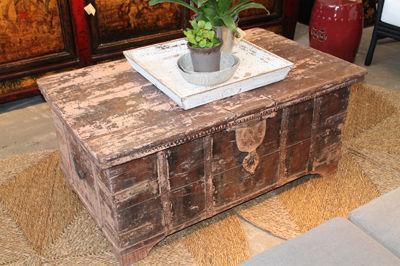
The Orient Express Original Gujarat Storage Trunk
Traditional vs. Rustic
Traditional furniture is formal furniture from the Victorian period. It combines features from the Queen Anne period – graceful and elaborately decorated, Chippendale style – artistic embellishment and straightened out lines and Sheraton style – delicate pieces with tapered legs and contrasting inlays. Together this creates a comfortable and warm environment with hand crafted, dark timber pieces, over stuffed, plush sofas and elegant fabrics.
Rustic style furniture is influenced by many different styles coming together to create warm, natural and honest interiors. If furniture is rustic it will often be made of a warm timber or a natural material like animal hide, cotton or linen. It has a worn and homely appearance and is often more relaxed then formal. Scandinavian and industrial furniture design are usually synonymous with being rustic.