Материал: 2425
Using learning strategies to remember
1.Rhymes: 'I before E except after C.' This easily remembered spelling rule avoids spelling mistakes in words like 'receive' and 'retrieve'. Get students to invent rhyming raps to memorise grammar rules.
2.Physical prompts: in Libya, I was taught to use my two fists to remember the days in the months. If the first high bone is January (31) it is followed by a dip, February (28/29). March (31) is the next bone followed by a dip, April (30). July (31) is the last bone on one hand and August (31) is the first bone on the other hand.
3.Memory workout: read, cover, write, say, check. (Repeat the workout circuit many times!)
4.Visualisation prompts: to remember a sequence of facts, think of a regular journey such as to school or to the shops. Connect each fact to a point on the journey.
5.Sound prompts: the same as above but connect each fact to a stage in a piece of music you know well.
29. Read some information about general principles to aid memory and choose the best ones. Why have you chosen them?
Create interest: find a purpose, 'This will be useful for ...' Understand it: it's impossible to learn what you don't understand.
Positive thinking and confidence: often we fail to learn because we are convinced we can't do it.
Intend to attend to it!: be determined to learn – avoid distractions. Organise information into sensible chunks and rehearse. Do not try to learn too much at one time – remember your short term memory can only hold seven items. Plan what you are going to learn.
Create associations: it's much easier to learn something new if you link it to something you already know.
Look for meaning and compare with what you already know: comparative grammar is not a waste of time – most languages have countable and uncountable nouns!
Develop a system of memory triggers for each item you wish to remember. A 'souvenir' will trigger your memory of a holiday.
Use a multisensory approach: employ a combination of audio, visual and physical strategies to use your audio, visual and motor memories.
Be relaxed: play non-lyrical music to help your brain's Alpha waves buzz.
103
Doodle, highlight, cartoon, underline: decorate your notes with colour and pictures to make them more memorable.
Involve your emotions: feel happy and reward yourself when your memory works well. Develop an emotional relationship with the information you are learning!
Use concrete materials: make a model or game to represent the information you need to remember.
You remember best the information you receive at the beginning or end of a work session: Try having a short change in the middle of a work session so you have two beginnings and two endings.
30.Give your partner a piece of advice about effective memorizing. Let him make some notes.
31.Have you been to some other countries? Would you like to study abroad? Why? What are the main difficulties for foreign students?
32.Match the words with their definitions.
exchange student |
a set of questions or exercises evaluating skill or |
|
knowledge |
seminar |
a secondary-school or college student who studies for |
|
a period, usually one year, at a foreign institution as |
|
part of a reciprocal program between two institutions |
|
or countries |
essay |
a short literary composition on a particular theme or |
|
subject, usually in prose and generally analytic, |
|
speculative, or interpretative |
research |
scholarly or scientific investigation or inquiry |
exam |
the basic framework or features of a system or or- |
|
ganization |
infrastructure |
any meeting for an exchange of ideas |
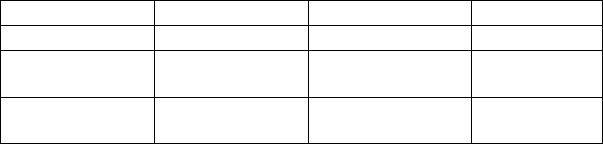
33. Scan the text and fill in the first 2 columns of the table:
Italy |
England |
Russia |
Exams
Level of teaching
Resources
104
34. Read the text once again and say why it is title “Happy to be in Leeds”.
Happy to be in Leeds
It is already February and I have been in Leeds for more than four months! WOW! Being an exchange student, so far away from home and having to care for myself, is quite a stress sometimes but it is certainly one of the best experiences of my life.
Letizia is an exchange student at Leeds University. She is from Italy and she is studying Communication in Leeds. Her main interests are journalism and politics.
I like how University is organised here in England. I think that seminars are really really useful to have the chance to tell your opinion and moreover to read and know more about the subject you are studying.
In Italy we usually have oral exams at the end of term, no essays. It has been really difficult to write an essay for the first time, and especially in a foreign language: English! But it will be really useful for the future, as I reckon that most of the academic papers are essays... and that English is the international language.
However, despite the high competence of the lecturers, the level of teaching is different in Italy. Maybe this is because we have a really strong basic general knowledge that we learn in high school. Therefore in University we tend to have more specific courses and a higher level of teaching in general.
On the other hand, University of Leeds has better lecture theatre, scientific laboratories and computer clusters. The resources that every student can use inside the university, for research, study, leisure are amazing! Students should be aware of the great infrastructure that they have and that they can actually use.
Finally, the best part of studying at University of Leeds is the Student Union. All the societies, the newspaper, the radio and the sport clubs are a great opportunity to make friends and enjoy life better!
I am really happy to be in Leeds as a student for an entire year. How sad it will be to go back home in June… and leave all the friends that I made and this great city!
105
PS. Obviously there are also the difficulties of everyday life… but I will leave those bits for the next time! :-)
35. Read the text about Letizia study abroad once again. There are 10 words hidden in the grid. Can you find and circle them? Then use any 5 of your circled answers in 5 sentences you compose.
A |
G |
D |
O |
E |
X |
C |
H |
A |
N |
G |
E |
O |
D |
D |
|
|
|
|
|
|
|
|
|
|
|
|
|
|
|
M |
A |
J |
E |
Z |
M |
S |
E |
D |
E |
Z |
E |
S |
M |
I |
|
|
|
|
|
|
|
|
|
|
|
|
|
|
|
D |
S |
E |
X |
O |
C |
L |
U |
B |
X |
P |
N |
A |
E |
F |
|
|
|
|
|
|
|
|
|
|
|
|
|
|
|
L |
C |
X |
A |
P |
Q |
D |
J |
L |
M |
T |
J |
L |
O |
F |
|
|
|
|
|
|
|
|
|
|
|
|
|
|
|
C |
O |
M |
M |
U |
N |
I |
C |
A |
T |
I |
O |
N |
P |
E |
|
|
|
|
|
|
|
|
|
|
|
|
|
|
|
O |
U |
S |
O |
A |
S |
G |
E |
S |
S |
A |
Y |
S |
T |
R |
|
|
|
|
|
|
|
|
|
|
|
|
|
|
|
M |
R |
P |
L |
M |
X |
J |
G |
Z |
Q |
O |
C |
A |
L |
E |
|
|
|
|
|
|
|
|
|
|
|
|
|
|
|
D |
S |
E |
A |
W |
F |
O |
R |
E |
I |
G |
N |
E |
P |
N |
|
|
|
|
|
|
|
|
|
|
|
|
|
|
|
Z |
E |
T |
C |
P |
D |
L |
X |
J |
T |
W |
U |
J |
O |
T |
|
|
|
|
|
|
|
|
|
|
|
|
|
|
|
G |
E |
U |
N |
I |
V |
E |
R |
S |
I |
T |
Y |
E |
M |
G |
|
|
|
|
|
|
|
|
|
|
|
|
|
|
|
36. Which adjectives go with each of these nouns? Use the phrases you have composed describing studying in Russia.
academic |
oral |
international |
high |
specific |
courses |
papers |
languages |
exams |
schools |
37.In pairs discuss advantages and disadvantages of studying abroad. Fill in the third column in Ex. 33.
38.Look at the title and say what the reading passage will be about. Then read the text and draw up its plan.
You’re Not Just Part of a Program,
You’re Part of a Family
106
Becoming an exchange student gives you more than knowledge about another country and its language and culture. A year abroad teaches you about building friendships, taking responsibility for yourself, respecting differences and tolerating the beliefs of others.
Exchange students develop leadership skills, self-confidence and a greater understanding of the complexities of the world around them. This is why the best universities, as well as corporations and professionals, look favourably on students who have spent a school year abroad. They know that former international exchange students bring a higher level of maturity and a global frame of reference to their university studies and activities.
If you become an exchange student abroad, you will experience life in another culture, and make close friends in your host country. Sit in the small cafés, play sports, shop in the same outdoor markets; these are things tourists miss, and this is where you really discover the way of life in another country, with all its subtleties.
While you live the typical daily life of another culture, you are learning every minute of every day. You might live in a French city meant for walking, with cobblestone streets so narrow you can touch the walls of buildings with outstretched arms on both sides. Or you may live in a Spanish village where the remains of an entire castle lie. Perhaps you’ll find yourself in Sweden living in a walled city dating back to medieval days, or that your homestay town in Germany includes a “living castle,” an actual private residence still being used today. These are the sorts of discoveries you will make as you learn firsthand about what you have only studied in the classroom until now.
You’ll also find that the school systems are among the best in the world, and that the teenagers are much the same as they are at home. They work hard at their studies, play sports, love parties and cinema, and pursue hobbies just like you. A few will become your friends for life.
The best way to truly become involved in the culture of a foreign country is to live among its people as a member of a family. Every exchange student does just that. Host families are carefully screened and consider it a privilege to welcome students like you into their home. Host families feel they benefit from the experience as much as you do! They want to learn about your culture and introduce you to theirs. Many families have children your age, and you may find that a family member speaks English, even if it’s only a little.
While someone in your host family may speak your language, you’ll quickly realize that it’s not of much concern. In fact, you’ll probably find
107