Материал: part08

DICOM PS3.8 2020a - Network Communication Support for Message Exchange |
Page 31 |
e.Presentation-protocol version not supported
f. no-(Presentation) Service Access Point (SAP) available
Note
Even though some of the above symbolic values correspond to parameter errors not used in this Standard, they are included to allow the notification of errors resulting from the unauthorized use of these parameters.
7.1.1.10 Calling Presentation Address
This parameter shall contain a structured destination address unambiguous within the global network address structure. This shall be a TCP/IP Address. See Annex C.
7.1.1.11 Called Presentation Address
This parameter shall contain a structured destination address unambiguous within the global network address structure. This shall be a TCP/IP Address. See Annex C.
7.1.1.12 Responding Presentation Address
In this Standard, a responding presentation address shall always contain the same value as the called Presentation Address of the A-ASSOCIATEindication.Thisparametershallcontainastructureddestinationaddressunambiguouswithintheglobalnetworkaddress structure.
7.1.1.13 Presentation Context Definition List
This parameter used in an A-ASSOCIATE request or indication shall consist of a list containing one or more presentation contexts. Each item shall contain three components, a presentation context identification, an Abstract Syntax Name, and a list of one or more Transfer Syntax Names.
The presentation context identification components of this parameter exist to distinguish presentation contexts in communication. Such an identification of presentation context(s) applies only within the context of a given association (i.e., different presentation contexts may be identified by the same presentation context identification on different associations). It is the association-requestor's responsibility to assign an arbitrary, but unused identifier for each proposed presentation context on a given association. There is no restriction on the ordering of the presentation contexts in relation to their identifiers.
Note
A separate presentation context will be associated with each Abstract Syntax Name in each of the elements of the Presentation Context Definition List parameter. If the same Abstract Syntax Name occurs more than once, a separate and distinctly identified presentation context will be generated for each occurrence (as only one Transfer Syntax per presentation context can be accepted).
Abstract Syntaxes defined by this Standard and used by DICOM Application Entites are defined in PS3.4. Transfer Syntaxes defined by this Standard and used by DICOM Application Entities are defined in PS3.5. Further discussion on Abstract Syntaxes and Transfer Syntaxes can be found in Annex B.
7.1.1.14 Presentation Context Definition Result List
This parameter used in the A-ASSOCIATE Response and Confirmation indicates the acceptance or rejection of each of the present- ation context definitions proposed in the presentation context definition list parameter (Section 7.1.1.13). The Presentation Context Definition Result List parameter shall take the form of a list of result values. There is a one to one correspondence between each one of these result values and each of the presentation contexts proposed in the Presentation Context Definition List parameter. Each result value represents either "acceptance," "user-rejection," or "provider-rejection." The values of the results are assigned by the UL user on the response service primitive. The result values may be sent in any order.
- Standard -

Page 32 |
DICOM PS3.8 2020a - Network Communication Support for Message Exchange |
Note
The order of the results may be different than the order proposed. The order need not be sorted by identifier, and the Initiator may not assume or depend upon any particular order.
In this Standard only one Transfer Syntax per presentation context shall be agreed to, even though more than one choice of Transfer Syntaxes may have been offered in a specific presentation context of the Presentation Context Definition list.
7.1.1.15 Presentation Requirements (Fixed Value)
This parameter allows the negotiation of optional presentation functional units beyond the Presentation Kernel. Only the Kernel Functional Unit is used by DICOM Application Entities. Therefore, this parameter shall always specify "Presentation Kernel."
7.1.1.16 Session Requirements (Fixed Value)
This parameter allows the negotiation of optional session Functional Units beyond the Session Kernel. Only the Kernel functional unit with the Full Duplex Functional Unit shall be used by DICOM Application Entities.
7.1.1.17 Other Parameters
AfewoptionalparametersdefinedintheOSIACSE(ISO8649)andOSIPresentationService(ISO8822)Standardsarenotidentified here. They are not necessary for the communication of DICOM Application Entities and shall not be used in this Standard.
7.1.2 A-ASSOCIATE Service Procedure
7.1.2.1A DICOM Application Entity (which includes the Upper Layer service-user) that desires to establish an association shall issue an A-ASSOCIATE request primitive. The called AE is identified by parameters of the request primitive. The requestor shall not issue any primitives except an A-ABORT request primitive until it receives an A-ASSOCIATE confirmation primitive.
7.1.2.2The Upper Layer (UL) service-provider shall issue an A-ASSOCIATE indication primitive to the called AE.
7.1.2.3The called AE shall accept or reject the association by sending an A-ASSOCIATE response primitive with an appropriate Result parameter. The Upper layer service-provider shall issue an A-ASSOCIATE confirmation primitive having the same Result parameter. The Result Source parameter shall be assigned the symbolic value of "UL service-user."
7.1.2.4If the acceptor accepts the association, the association is available for use. Both AEs may now use any service provided by the DICOM application context that is in effect (with the exception of A-ASSOCIATE).
Note
This implies that once the association has been established, DICOM Messages can be exchanged as defined in PS3.7.
7.1.2.5If the called AE rejects the association, the association shall not be established.
7.1.2.6The UL service-provider may not be capable of supporting the requested association. In this situation, it shall return an A- ASSOCIATE confirmation primitive to the requestor with an appropriate Result parameter (rejected). The Result Source parameter shall be appropriately assigned either the symbolic value of "UL service-provider (ACSE related function) " or "UL service-provider (Presentation related function)." The indication primitive shall not be issued. The association shall not be established.
7.1.2.7Eitheranassociation-requestororacceptormaydisrupttheA-ASSOCIATEserviceprocedurebyissuinganA-ABORTrequest primitive (see Section 7.3). The remote AE receives an A-ABORT indication primitive. The association shall not be established.
7.2 A-RELEASE Service
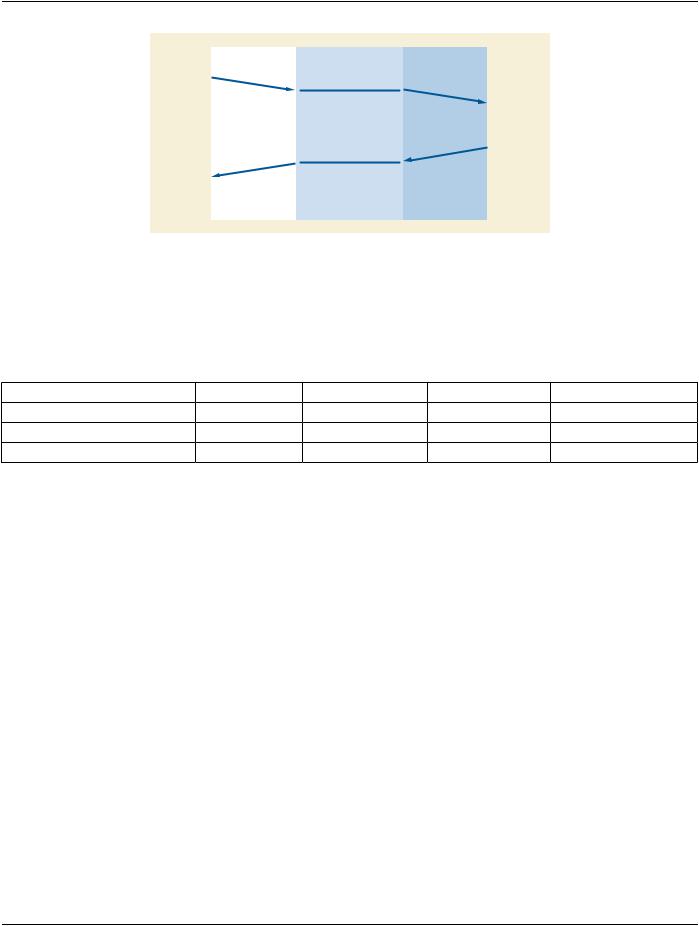
ThegracefulreleaseofanassociationbetweentwoAEsshallbeperformedthroughACSEA-RELEASErequest,indication,response, andconfirmationprimitives.Theinitiatoroftheserviceishereaftercalledarequestorandtheservice-userthatreceivestheA-RELEASE indication is hereafter called the acceptor. It shall be a confirmed service.
Figure 7-2 illustrates the graceful release of an association between two AEs.
- Standard -
DICOM PS3.8 2020a - Network Communication Support for Message Exchange |
Page 33 |
Requestor |
|
DICOM UL |
|
Acceptor |
A-RELEASE |
|
Service Provider |
|
|
request |
|
|
|
|
|
|
|
|
|
|
|
|
|
A-RELEASE |
|
|
|
|
indication |
|
|
|
|
A-RELEASE |
|
|
|
|
response |
A-RELEASE |
|
|
|
|
confirmation |
|
|
|
|
|
|
|
|
|
( SAP ) |
|
( SAP ) |
||
Figure 7-2. Association Release
7.2.1 A-RELEASE Parameters
Table 7-4 lists the parameters for the A-RELEASE service that shall contain fixed values or shall not be used by DICOM Application Entities in this Standard.
Table 7-4. A-RELEASE Service Parameters
A-RELEASE parameter name |
Request |
Indication |
Response |
Confirmation |
reason |
UF |
UF(=) |
UF |
UF(=) |
user information |
NU |
NU(=) |
NU |
NU(=) |
result |
|
|
MF |
MF(=) |
7.2.1.1 Reason (Fixed)
When used on the request primitive, this parameter identifies the general level of urgency of the request. This parameter shall always use the value "normal" in this Standard.
7.2.1.2 Result (Fixed)
This parameter shall always take the value "affirmative" in this Standard.
7.2.2 A-RELEASE Service Procedure
7.2.2.1 An UL service-user that desires to release the association shall issue an A-RELEASE request primitive. This requestor shall not issue any further primitives other than an A-ABORT request primitive until it receives an A-RELEASE confirmation primitive.
Note
EventhoughtherequestoroftheA-RELEASEserviceshallnotissueanyfurtherprimitiveotherthanA-ABORT,itmayreceive P-DATA Indication primitives.
7.2.2.2The UL service-provider shall issue an A-RELEASE indication primitive to the acceptor. The acceptor then shall not issue any UL primitives other than an A-RELEASE response primitive, an A-ABORT request primitive, or P-DATA Request primitive.
7.2.2.3TocompletetheA-RELEASEservice,theacceptorshallreplytotheA-RELEASEindicationprimitivebyissuinganA-RELEASE responseprimitive.AnacceptingDICOMApplicationEntityshallalwaysissueanA-RELEASEresponseprimitivewithan"affirmative" result parameter (i.e., accept the release).
7.2.2.4AfteranA-RELEASEresponsehasbeenissued,theacceptorshallnotissueanyfurtherprimitivesfortheassociationthereafter, including P-DATA Requests.
-Standard -
Page 34 |
DICOM PS3.8 2020a - Network Communication Support for Message Exchange |
7.2.2.5The UL service-provider shall issue an A-RELEASE confirmation primitive always with an "affirmative" value for the Result parameter.
7.2.2.6A requestor in either AE may disrupt the A-RELEASE service procedure by issuing an A-ABORT request. When the acceptor receives an A-ABORT indication, the association is released with the possible loss of information in transit.
7.2.2.7AnA-RELEASEserviceprocedurecollisionresultswhenrequestorsinbothAEssimultaneouslyissueanA-RELEASEservice primitive. In this situation, both UL service-users receive an unexpected A-RELEASE indication primitive. The following sequence shall occur to complete the normal release of the association:
a.The association-requestor shall issue an A-RELEASE response primitive.
b.The association-acceptor waits for an A-RELEASE confirmation primitive from its peer. When it receives one, it shall then issue an A-RELEASE response primitive.
c.The association-requestor receives an A-RELEASE confirmation primitive.
The association shall be released when both ACSE service-users have received an A-RELEASE confirmation primitive.
7.3 A-ABORT Service
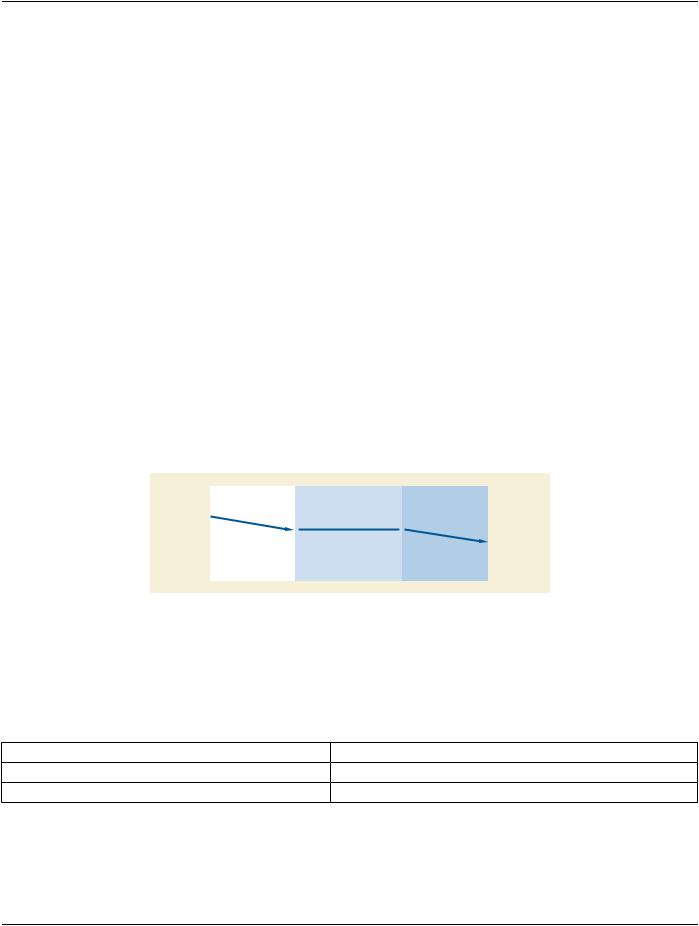
The ACSE A-ABORT service shall be used by a requestor in either of the AEs to cause the abnormal release of the association. It shall be a non-confirmed service. However, because of the possibility of an A-ABORT service procedure collision, the delivery of the indication primitive is not guaranteed. Should such a collision occur, both AEs are aware that the association has been terminated. The abort shall be performed through A-ABORT request and A-ABORT indication primitives.
Note
An A-ABORT request primitive used on an established association may result in the destruction of data in transit.
Figure 7-3 illustrates aborting an established association between two AE's.
Requestor |
|
DICOM UL |
|
Acceptor |
A-ABORT |
|
Service Provider |
|
|
request |
|
|
|
|
|
|
|
|
A-ABORT |
|
|
|
|
indication |
|
|
|
|
|
( SAP ) |
|
( SAP ) |
||
Figure 7-3. Association User Initiated Abort
7.3.1 A-ABORT Parameters
Table 7-5 lists the parameters for the A-ABORT service. Only the first parameter shall be used by DICOM Application Entities in this Standard.
Table 7-5. A-ABORT Service Parameters
A-ABORT Parameter Name |
Request |
Indication |
abort source |
|
M |
user information |
NU |
NU(=) |
7.3.1.1 Abort Source
This parameter indicates the initiating source of this abort. It shall take one of the following symbolic values:
a.UL service-user
- Standard -
DICOM PS3.8 2020a - Network Communication Support for Message Exchange |
Page 35 |
b.UL service-provider (ACSE related)
7.3.2 A-ABORT Service Procedure
7.3.2.1WhentheA-ABORTserviceisused,theassociationshallbereleasedabnormallyandsimultaneouswiththeabnormalrelease of the underlying connection.
7.3.2.2AULservice-userthatdesirestoreleasetheassociationabnormallyshallissuetheA-ABORTrequestprimitive.Thisrequestor shall not issue any further primitives for the association.
7.3.2.3The UL service-provider shall issue an A-ABORT indication primitive to the acceptor. The UL service-provider shall assign the value of "UL service-user" for the Abort Source parameter. The association and the underlying connection have been released.
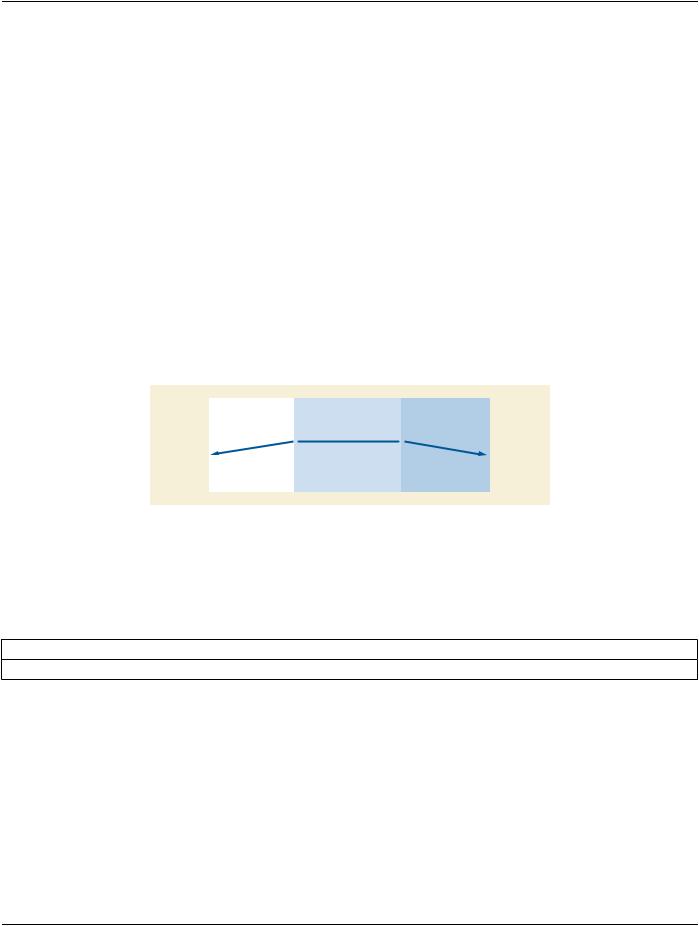
7.3.2.4TheULservice-provider(ACSErelatedfunctions)mayitselfcausetheabnormalreleaseoftheassociationbecauseofinternal errors.Inthiscase,theULservice-providershallissueA-ABORTindicationprimitivestoacceptorsinbothAEs.TheULservice-provider shall assign the value of "UL service-provider" to the Abort Source parameter. The user information parameter shall not be used.
7.4 A-P-ABORT Service
The ACSE A-P-ABORT service shall be used by the UL service-provider to signal the abnormal release of the association due to problems in services at the Presentation Layer and below. This occurrence indicates the possible loss of information in transit. A-P- ABORT is a provider-initiated service.
Figure 7-4 illustrates aborting an established association by an UL service-provider.
Requestor |
|
DICOM UL |
|
Acceptor |
|
|
Service Provider |
|
|
A-P-ABORT |
|
|
|
A-P-ABORT |
indication |
|
|
|
indication |
|
|
|
|
|
( SAP ) |
|
( SAP ) |
||
Figure 7-4. Provider Initiated Abort
7.4.1 A-P-ABORT Parameter
Table 7-6 lists the parameter that shall be required for the A-P-ABORT service.
Table 7-6. A-P-ABORT Service Parameters
A-P-ABORT Parameter Name |
Indication |
provider reason |
P |
The provider reason parameter shall be used to convey one of the following reasons: |
|
a.reason-not-specified |
|
b.unrecognized-pdu |
|
c.unexpected-pdu |
|
d.unexpected-session-service primitive |
|
e.unrecognized-pdu parameter |
|
f. unexpected-pdu parameter |
|
g.invalid-pdu-parameter value |
|
- Standard -