Page 1434 |
DICOM PS3.3 2020a - Information Object Definitions |
Note
In the absence of Observer Context, it may be presumed that the observations were generated by or with the equipment identified in the General Equipment Module.
The Procedure Context is set from the Study Instance UID (0020,000D), Study ID (0020,0010), Accession Number (0008,0050), and ProcedureCodeSequence(0008,1032)oftheGeneralStudyModule.TheReferencedRequestSequence(0040,A370)mightinclude an Item with the same Study Instance UID that further elaborates the Procedure Context, e.g., providing Placer Order Number (0040,2016)and/orFillerOrderNumber(0040,2017).IftheReferencedRequestSequenceincludesItemswithdifferentStudyInstance UIDs, those shall be treated as Procedure Context only if explicitly encoded in the Content Tree.
Medical or clinical characteristics of the patient specified in the Patient Study Module, such as in Attributes Patient's Size (0010,1020) andPatient'sWeight(0010,1030),shallnotbeinheritedbytheContentTreeaspartofthedefaultPatientContext.Suchcharacteristics must be specifically encoded in the Content Tree to be part of the Structured Report.
Note
The Patient Study Module may be included in SR SOP Instances. As part of the Study IE shared by all SOP Instances within a Study, such inclusion should be consistent across all Instances. However, its purpose is to provide a minimum set ofclinicalcontextforthe(initial)interpretationoftheimagesorwaveformsoftheStudy.AnSRSOPInstancethatdocuments the interpretation must explicitly describe the relevant clinical context in the SR Content Tree.
IfaContentItemintheSRDocumentContenttreehasObservationContextdifferentfromtheinitialcontextalreadyencodedelsewhere in the IOD, the context information applying to that Content Item shall be encoded as child nodes of the Content Item in the tree using the HAS OBS CONTEXT relationship. That is, Observation Context is a property of its parent Content Item.
The context information specified in the Observation Context child nodes (i.e., target of the HAS OBS CONTEXT relationship) sets theObservationContext of their parent nodeContent Item.ObservationContextisencodedin thesamemannerasanyotherContent Item.
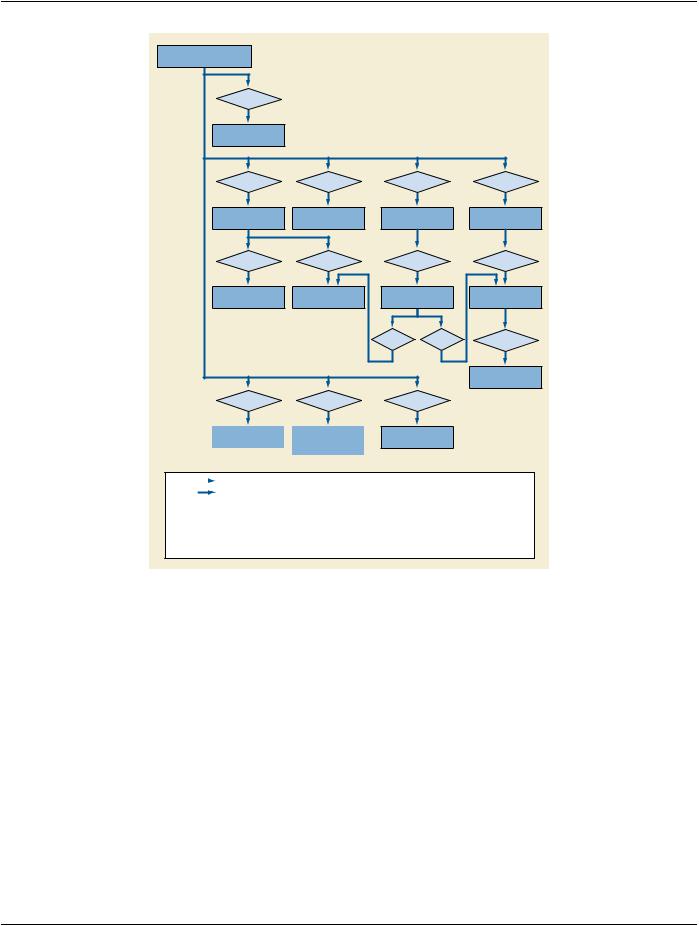
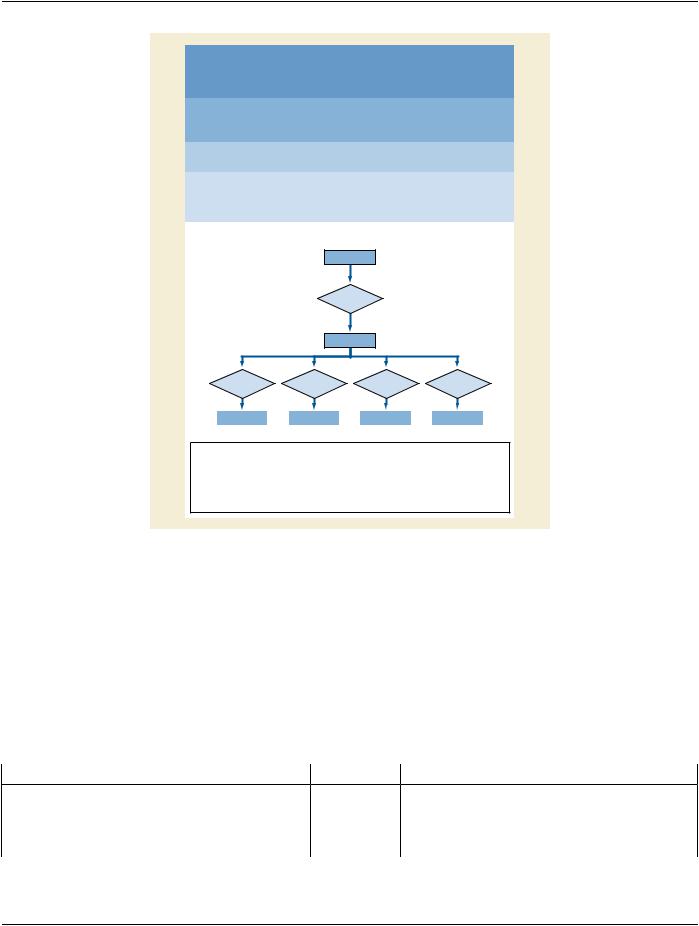
TheObservationContextappliestoalltheby-valuedescendantnodesofthatparentnoderegardlessoftherelationshiptypebetween theparentandthedescendantnodes,untilandunlessthecontextofadescendantnodeisresetbyotherObservationContextContent Items. Observation Context shall not be inherited across by-reference relationships. The four dimensions of Observation Context (observer context, quotation mode, procedure context, and subject context) may be reset independently; e.g., resetting the subject context does not reset the observer or procedure context, or the quotation mode. See the example in Figure C.17.5-1.
Note
For example, the "subject context" may be defined by attaching an appropriate Content Item to the root node with a HAS OBS CONTEXT relationship. This "subject context" then applies not only to the root node, but to all its descendants, until such time as a Content Item explicitly replaces the "subject context" attribute, the new value of which is then inherited by all of that nodes descendants.
Observation DateTime is not included as part of the HAS OBS CONTEXT relationship, and therefore is not inherited along with other Observation Context. The Observation DateTime Attribute is included in each Content Item, which allows different observation dates and times to be attached to different Content Items.
The IOD may specify restrictions on Content Items and Relationship Types that also constrain the flexibility with which Observation Context may be described.
The IOD may specify Templates that offer or restrict patterns and content in Observation Context.
Note
1.Node 2 inherits any Observation Context of Node 1, which is then extended or replaced by the additional Observation Context defined in Nodes C1 and C2 (that is C1 and C2 are properties of 2).
2.Node 3 and its descendents inherit the Observation Context of Node 2, which includes C1 and C2.
3.Node 4 inherits the Observation Context of Node 2, which includes C1 and C2.