Материал: part03

Внимание! Если размещение файла нарушает Ваши авторские права, то обязательно сообщите нам

Page 1386​

DICOM PS3.3 2020a - Information Object Definitions​

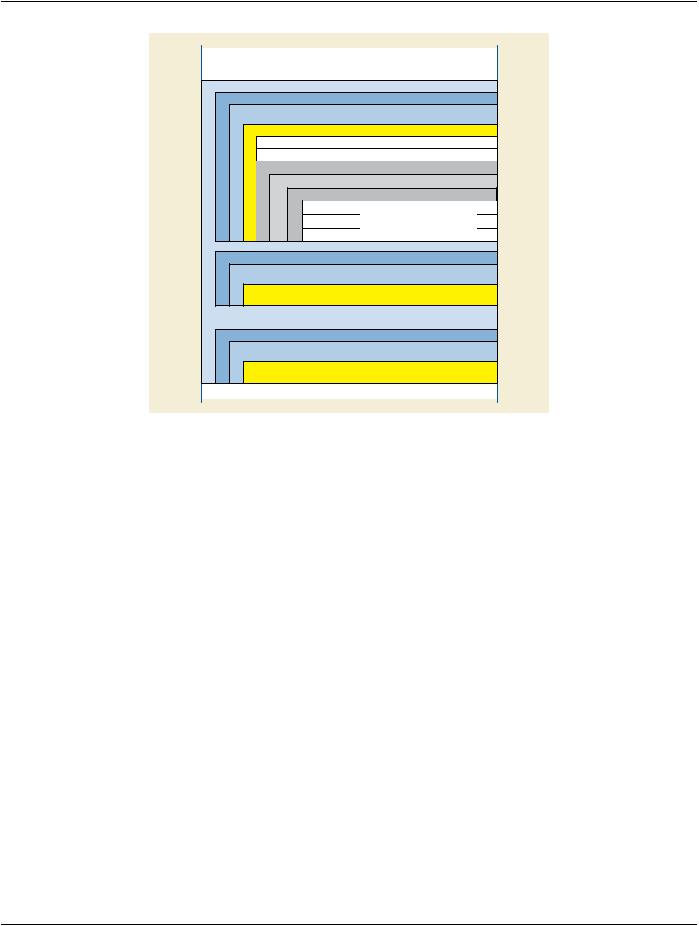
DICOM SOP Instance 1

Other Attributes (unencrypted)

Encrypted Attributes Sequence

Item 1 (of n)

Encrypted Content Transfer Syntax

Encrypted Content

Cryptographic Message Syntax (CMS) envelope

CMS Attributes

CMS Attributes

Encrypted Content

Modified Attributes Sequence

Item 1 (of only 1)

Attributes...

Attributes... Attributes to be encrypted

Attributes...

Item 2 (of n)

Encrypted Content Transfer Syntax

Encrypted Content

Cryptographic Message Syntax (CMS) envelope

...

Item n (of n)

Encrypted Content Transfer Syntax

Encrypted Content

Cryptographic Message Syntax (CMS) envelope

Other Attributes (unencrypted)

Figure C.12-2. Example of Encoding of Encrypted Attributes Data Set (Informative)​

C.12.1.1.5 Contributing Equipment Sequence​

ContributingEquipmentSequence(0018,A001)allowsequipmentthathascontributedtowardsthecreationoftheCompositeInstance​ to be described. The general class of contribution is denoted via a coded entry within the Purpose of Reference Code Sequence​ (0040,A170).​

Note​

1.​For example, a post-processing application creating DERIVED images from ORIGINAL images would place its own​ identification within the General Equipment Module and identify the original acquisition equipment as an Item within the​ Contributing Equipment Sequence (0018,A001). Here, the value of Purpose of Reference Code Sequence (0040,A170)​ withintheItemwouldbe(109101,DCM,"AcquisitionEquipment").Imagedisplayapplicationswishingtoannotateimages​ with information related to the acquisition environment would prefer to extract such details from the Contributing​ Equipment Sequence rather than the General Equipment Module.​

2.​For example, an image fusion application would place its own identification within the General Equipment Module and​ identify each of the original acquisition equipment as separate Items within the Contributing Equipment Sequence​ (0018,A001).Here,thevalueofPurposeofReferenceCodeSequence(0040,A170)withineachItemwouldbe(109101,​ DCM, "Acquisition Equipment").​

3.​For example, a post-processing application creating DERIVED images from other DERIVED images would place its​ own identification within the General Equipment Module and add the source equipment as an additional Item within the​ Contributing Equipment Sequence (0018,A001). Here, the value of Purpose of Reference Code Sequence (0040,A170)​ within the Item would be (109102, DCM, "Processing Equipment").​

4.​Forexample,agatewaydevicethatcoercesAttributesofexistingCompositeInstances(withoutcreatingnewComposite​ Instances) would retain information about the creating equipment within the General Equipment Module and provide its​ own identification as an Item within the Contributing Equipment Sequence (0018,A001). Here, the value of Purpose of​ Reference Code Sequence (0040,A170) within the Item would be (109103, DCM, "Modifying Equipment").​

- Standard -​

DICOM PS3.3 2020a - Information Object Definitions​

Page 1387​

5.​For example, equipment that has been used for de-identifying could retain information about the creating equipment​ within the General Equipment Module and provide its own identification, and that of its operator, as an Item within​ Contributing Equipment Sequence (0018,A001). Here, the value of Purpose of Reference Code Sequence (0040,A170)​ within the Item would be (109104, DCM, "De-identifying Equipment").​

C.12.1.1.6 HL7 Structured Document Reference Sequence​

The HL7 Structured Document Reference Sequence (0040,A390) identifies instances of Structured Documents defined under an​ HL7 standard. The HL7 standards that define such documents include the Clinical Document Architecture (CDA) and Structured​ Product Labeling (SPL) standards.​

References to unencapsulated HL7 Structured Documents from within DICOM SOP Instances shall be encoded with a SOP Class​ UIDandSOPInstanceUIDpair.TheAbstractSyntaxofanHL7StructuredDocumentisdefinedbyitsHierarchicalMessageDescription;​ theObjectIdentifieroftheHierarchicalMessageDescriptionshallbeusedastheSOPClassUIDfortheStructuredDocumentreference.​

Note​

1.​The Hierarchical Message Description Object Identifiers are specified in the HL7 OID Registry ( http://hl7.org/oid). The​ HL7 OIDs for these types of documents are: CDA Release 1 2.16.840.1.113883.1.7.1 CDA Release 2​ 2.16.840.1.113883.1.7.2 SPL Release 1 2.16.840.1.113883.1.7.3​

2.​The Hierarchical Message Description Object Identifiers do not imply a network or media storage service, as do SOP​ Class UIDs. However, they do identify the Abstract Syntax, similar to SOP Class UIDs.​

The HL7 Structured Document instances are natively identified by an Attribute using the Instance Identifier (II) Data Type, as defined​ in HL7 v3 Data Types - Abstract Specification. A UID as defined by the DICOM UI Value Representation is a valid identifier under​ the II Data Type; however, an II value is not always encodable as a UID. Therefore a UID shall be constructed for use within the​ DICOM Data Set that can be mapped to the native instance identifier encoded as an HL7 II Data Type. This mapping is performed​ throughthecombinationofthelocalReferencedSOPInstanceUID(0008,1155)andtheHL7InstanceIdentifier(0040,E001)Attributes​ in the HL7 Structured Document Reference Sequence (0040,A390).​

Note​

1.​An HL7 II is not encodable as a UID if it exceeds 64 characters, or if it includes an extension. See HL7 v3 DT R1.​

2.​Even though an II may contain just a UID, applications should take care to use the II specified in HL7 Instance Identifier​ (0040,E001) to access the Structured Document. If the instance identifier used natively within the referenced document​ is encodable using the UI VR, i.e., it is an ISO 8824 OID up to 64 characters without an extension, it is recommended​ to be used as the Referenced SOP Instance UID within the current Instance.​

3.​TheReferencedSOPInstanceUIDusedtoreferenceaparticularHL7StructuredDocumentisnotnecessarilythesame​ in all DICOM Instances. For example, two SR Documents may internally use different SOP Instance UIDs to reference​ the same HL7 Structured Document, but they will each contain a mapping to the same HL7 Instance Identifier as the​ external identifier.​

4.​The HL7 Instance Identifier is encoded in Attribute HL7 Instance Identifier (0040,E001) as a serialization of the UID and​ Extension(ifany)separatedbyacaretcharacter.ThisisthesameformatadoptedintheIHECross-EnterpriseDocument​ Sharing (XDS) profile (see http://www.ihe.net/).​

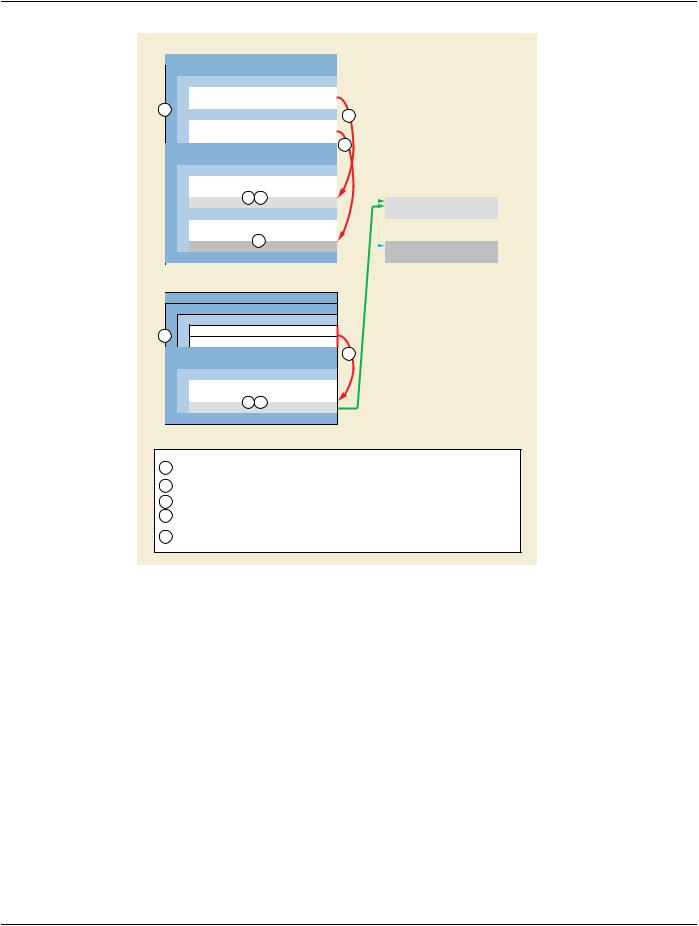
5.​See Figure C.12-3.​

- Standard -​

Page 1388​


DICOM PS3.3 2020a - Information Object Definitions​


DICOM SOP Instance 1


...


X Document Sequence


Item 1


1> Referenced SOP Class UID <CDA R2>


1


1> Referenced SOP Instance UID 1.2.3.4.1


Item 2


2


2> Referenced SOP Class UID <CDA R2>


2> Referenced SOP Instance UID 1.2.55.33.9.5

2


...


HL7 Structured Document Reference Sequence


Item 1


1> Referenced SOP Class UID <CDA R2>


1>

Referenced


UID 1.2.3.4.1


CDA Document 1


HL7 Instance 4

5


1>

.2.55.33.11.2.1^23


Instance Identifier 1.2.55.33.11.2.1^23


Item 2


...


2> Referenced SOP Class UID <CDA R2>


CDA Document 2


2> Referenced SOP

3

UID 1.2.55.33.9.5


2> HL7 Instance

1.2.55.33.9.5


Instance Identifier 1.2.55.33.9.5


...


...


DICOM SOP Instance 2

...

X Document Sequence

Item 1

1> Referenced SOP Class UID <CDA R2>

1

1> Referenced SOP Instance UID 1.2.55.88.1

...


2

HL7 Structured Document Reference Sequence


Item 1


1> Referenced SOP Class UID <CDA R2>


1> Referenced


UID 1.2.55.88.1


1> HL7 Instance

4

5 .2.55.33.11.2.1^23


...


Notes:

1DICOM SOP Instances internally reference HL7-SD by Referenced SOP Class/Instance UIDs.

The Referenced SOP Class/Instance UIDs are mapped to an HL7 Instance Identifier through the HL7 Structured

2Document Reference Sequence

3The internal Referenced SOP Instance UID may or may not be identical to the HL7 Instance Identifier

4The internal Referenced SOP Instance UID must be locally generated if the HL7 Instance Identifier includes an extension (“^23” in CDA Document 1)

5The internal Referenced SOP Instance UID may be different in different DICOM SOP Instances, even though they map to the same HL7 Instance Identifier

Figure C.12-3. HL7 Structured Document References​

C.12.1.1.7 Private Data Element Characteristics​

ThecreatorofthePrivateDataElements(identifiedbythevalueofPrivateCreatorReference(0008,0302))isresponsibleformanaging​ the Private Data Element Tags associated with them and ensuring that the Private Data Element (0008,0308) and the Private Data​ Element Keyword (0008,030D) are a unique pair, and that the other associated details in the Data Element Definition Macro are​ consistent.​

ImplementersareencouragedtodescribeallPrivateDataElementsinthePrivateDataElementCharacteristicsSequence(0008,0300).​

Note​

The Private Data Element Characteristics Sequence (0008,0300) may describe Data Elements that are referenced in the​ current SOP Instance (for example they may be identified as a Selector Attribute), but do not exist as actual Data Elements​ in the current SOP Instance.​

C.12.1.1.7.1 Private Data Element Value Multiplicity​

For Data Elements with a fixed multiplicity, this Attribute shall contain a single integer value, e.g., 3.​

- Standard -​

DICOM PS3.3 2020a - Information Object Definitions​

Page 1389​

For Data Elements with a variable multiplicity, this Attribute contains either two or three values. The first value is the minimum multi-​ plicity, the second value is the maximum multiplicity. If the maximum multiplicity is open-ended, 0 is used. The third value, if present,​ is the "stride", i.e., the increment between valid multiplicity values. A stride is used when values are added in sets, such as an x/y/z​ set of coordinate values that is recorded in triplets.If the stride is 1, the third value may be omitted. The stride is not permitted to be​ 0.​

Examples:​

•​VM of 1-3 is expressed as 1,3 or 1,3,1 meaning the multiplicity is permitted to be 1, 2 or 3​

•​VM of 1-n is expressed as 1,0 or 1,0,1​

•​VM of 0-n is expressed as 0,0 or 0,0,1​

•​VM of 3-3n is expressed as 3,0,3​

For a Private Data Element Value Representation (0008,030A) of SQ, the multiplicity shall be 1 and the allowed number of Items in​ a Sequence is recorded in Private Data Element Number of Items(0008,030B).​

C.12.1.1.7.2 Private Data Element Number of Items​

For Sequences that permit a fixed number of Items, this Attribute shall contain a single integer value, e.g., 3.​

For Sequences with a variable number of Items, this Attribute contains two values. The first value is the minimum number of Items,​ the second value is the maximum number of Items. If the maximum number of Items is open-ended, 0 is used.​

C.12.1.1.8 Timezone Offset From UTC​

Encoded as an ASCII string in the format "&ZZXX". The components of this string, from left to right, are & = "+" or "-", and ZZ = Hours​ and XX = Minutes of offset. Leading space characters shall not be present.​

The offset for UTC shall be +0000; -0000 shall not be used.​

Note​

1.​This encoding is the same as described in PS3.5 for the offset component of the DT Value Representation.​

2.​This Attribute does not apply to values with a DT Value Representation, that contains an explicitly encoded timezone​ offset.​

3.​The corrected time may cross a 24 hour boundary. For example, if Local Time = 1.00 a.m. and Offset = +0200, then​ UTC = 11.00 p.m. (23.00) the day before.​

4.​The "+" sign may not be omitted.​

Time earlier than UTC is expressed as a negative offset.​

Note​

For example:​

UTC = 5.00 a.m.​

Local Time = 3.00 a.m.​

Offset = -0200​

C.12.1.1.9 Original Attributes Sequence​

Every transfer of a SOP Instance may result in data element coercion (see Section B.4.1.3 “Coercion of Attributes” in PS3.4) by the​ receiving application. The receiving application may also detect and correct or remove errors in SOP Instances to bring them into​ conformance with the SOP Class definition without changing the SOP Instance UID or creating a derived Instance (see status​ Warning in Section 9.1.1.1.9 “Status” in PS3.4 and Section B.2.3 “Statuses” in PS3.4. When performing such actions, the application​

- Standard -​

Page 1390​

DICOM PS3.3 2020a - Information Object Definitions​

may add an Item to the Original Attributes Sequence (0400,0561) describing the change and the prior values of coerced, modified,​ or removed Attributes. Any existing Items in the Original Attributes Sequence shall be preserved.​

C.12.1.1.9.1 Modified Attributes Sequence​

Attributes that were modified or removed shall be placed in the Modified Attributes Sequence (0400,0550) with their prior values. If​ anAttributewithinaSequencewasmodifiedorremoved,theentirepriorvalueoftheSequenceshallbeplacedintheModifiedAttributes​ Sequence; this applies recursively up to the enclosing Sequence Attribute in the top level Data Set.​

Attributes that were empty or absent and for which values have been added may be present in the Modified Attributes Sequence with​ a zero length value.​

If an Attribute was modified or removed because its value was nonconforming to its Value Representation or Value Multiplicity, it shall​ be included in the Modified Attributes Sequence with a zero length value.​

Any Private Data Elements present in the Item shall be accompanied by their respective Private Data Element Creator Attribute.​

C.12.1.1.9.2 Nonconforming Modified Attributes Sequence​

If an Attribute was modified or removed because its value was nonconforming to its Value Representation or Value Multiplicity, the​ originalvalue(whichwasreplacedbyazerolengthvalueintheModifiedAttributesSequence)mayberecordedintheNonconforming​ Modified Attributes Sequence (0400,0551).​

ThenonconformingAttributeisidentifiedbytheattributesoftheSelectorAttributeMacro.BecauseasingleAttributeisbeingidentified,​ Selector Attribute (0072,0026) shall be present.​

The Data Set to which the Selector Attribute Macro applies is the single Item of the Modified Attributes Sequence (0400,0550) within​ the same Item of the Original Attributes Sequence (0400,0561). Therefore, the Modified Attributes Sequence (0400,0550) is not​ identified in the Selector Sequence Pointer (0072,0052).​

Note​

1.​This is effectively the same as a pointer to the equivalent attribute in the original top level Data Set.​

2.​Characters in text attributes non-conformant to the identified Specific Character Set (0008,0005) may be considered​ non-conformant to the VR.​

3.​For example, if Body Part Examined had a nonconforming value, the Modified Attributes Sequence Item would have​ the Attributes:​

(0072,0026)​

00180015​

Selector Attribute​

(0072,0028)​

1​

Selector Value Number​

(0400,0552)​

ABDOMEN&PELVIS​

Nonconforming Data Element Value​

4.​The Nonconforming Data Element Value (0400,0552) has Value Representation OB, which allows an arbitrary byte​ string to be encoded.​

C.12.2 Common Instance Reference Module​

Table C.12-8 defines the Attributes that describe the hierarchical relationships of any SOP Instances referenced from other Modules​ within the Instance in which this Module occurs.​

- Standard -​