Материал: part03

Внимание! Если размещение файла нарушает Ваши авторские права, то обязательно сообщите нам

Page 866​

DICOM PS3.3 2020a - Information Object Definitions​

MLMING​ milliliter/minute/gram (ml/min/g, UCUM, "Milliliter/minute/gram")​ MLG​ milliliter/gram (ml/g, UCUM, "Milliliter/gram")​

1CM​ 1/centimeter (/cm, UCUM, "/Centimeter")​

UMOLML​ micromole/milliliter (umol/ml, UCUM, "Micromole/milliliter")​ PROPCNTS​proportional to counts ({propcounts}, UCUM, "Proportional to counts")​

PROPCPS​ proportional to counts/sec ({propcounts}/s, UCUM, "Proportional to counts per second")​ MLMINML​ milliliter/minute/milliliter (ml/min/ml, UCUM, "Milliliter/minute/milliliter")​

MLML​ milliliter/milliliter (ml/ml, UCUM, "Milliliter/milliliter")​ GML​ grams/milliliter (g/ml, UCUM, "Gram/milliliter")​ STDDEV​ standard deviations​

Note​

The majority of these defined terms are equivalent to CID 84 “PET Units”. Those that are used for SUV are not qualified by​ the type of SUV, which is encoded separately as SUV Type (0054,1006).​

C.8.9.1.1.4 Series Type​

Series Type (0054,1000) Value 1 is used to identify the spatial location and temporal nature of the images within a PET Series.​

Enumerated Values for Value 1:​


STATIC​

a group of images at varying spatial locations at the same time​

DYNAMIC​

a group of images at a set of spatial locations (e.g., slices) at varying time​


slices, with all spatial locations acquired at all time slices​

GATED​

a group of images at the same spatial location, same starting and ending​


time, but acquired in different time slots of (possibly) different R-R intervals​

WHOLE BODY​

same as STATIC, except covering multiple transverse fields of view (and​


therefore acquired at a different time)​

Note​


1.​Using this definition and the comments in Section C.8.9.1.1.1, here are some examples of PET Series and the encoding​ of Series Type (0054,1000) Value 1.​

•​Static acquisition: a group of n transverse images at varying superior<->inferior locations, all acquired between the​ same starting and ending time. Series Type = STATIC.​

•​Dynamic acquisition: a group of n*m transverse images at n superior<->inferior locations, acquired with m different​ starting and ending times. Series Type = DYNAMIC.​

•​Gated acquisition: a group of n*m*p transverse images at n superior<->inferior locations, all acquired between the​ same starting and ending time, acquired in m different R-R Intervals (as determined by Low R-R Value (0018,1081)​ and High R-R Value (0018,1082)), and acquired in p time slots of a given R-R Interval (as determined by Trigger Time​ (0054,1000)). Series Type = GATED.​

•​Whole body acquisition: a group of n transverse images at varying superior<->inferior locations covering a significant​ fraction of the entire body. Series Type = WHOLE BODY.​

•​Multiple transverse fields of view: a group of n transverse images at varying superior<->inferior locations. Series Type​ = WHOLE BODY.​

•​Interleaved: group of 2*n transverse images acquired at overlapped AFOVs to increase transverse sampling. Series​ Type = WHOLE BODY.​

•​Sagittal (Coronal, Oblique): sagittal (coronal, oblique) re-sliced images derived by reformatting transverse images.​ The Series Type is STATIC, DYNAMIC, GATED, or WHOLE BODY depending on source Series Type.​

•​Arithmetic: images derived by an arithmetic operation on operand images. The Series Type is STATIC, DYNAMIC,​ GATED, or WHOLE BODY depending on source Series Type.​

•​Metabolic: images derived by a metabolic model. The Series Type is STATIC, DYNAMIC, GATED, or WHOLE BODY​ depending on source Series Type.​

- Standard -​

DICOM PS3.3 2020a - Information Object Definitions​

Page 867​

2.​Using this definition, here are some images that are not stored in the same PET Series:​

•​Two images from the same scan that were reconstructed differently.​

•​EmissionandtransmissionimagesforthesamePatientandStudy,evenifacquiredsimultaneously(becauseemission​ and transmission images have different reconstruction processing).​

•​Two images of same patient, one after NH3 injection and one after FDG injection.​

•​Two images: an original image created from reconstructed scan data and its derived image based on a metabolic​ model.​

Series Type (0054,1000) Value 2 is used to identify the volumetric meaning of the images within a PET Series.​

Enumerated Values for Value 2:​

IMAGE​ a tomographic image slice​

REPROJECTION​a projection image derived from forward projection through slices of tomographic images, using the algorithm​ defined in Reprojection Method (0054,1004)​

C.8.9.1.1.5 Decay Correction​

DecayCorrection(0054,1102)isthereal-worldeventtowhichimagesinthisSeriesweredecaycorrected.Ifdecaycorrectionisapplied,​ all images in the Series shall be decay corrected to the same time.​

Defined Terms:​

NONE​no decay correction​

START​acquisition start time, Acquisition Time (0008,0032)​

ADMIN​radiopharmaceutical administration time, Radiopharmaceutical Start Time (0018,1072)​

The time to which images have been decay corrected can be derived from Decay Factor (0054,1321), Frame Reference Time​ (0054,1300), Radionuclide Half Life (0018,1075), Series Date (0008,0021) and Series Time (0008,0031).​

C.8.9.1.1.6 Acquisition Start Condition​

Acquisition Start Condition (0018,0073) is the method of starting acquisition data collection.​

Defined Terms:​

DENS​preset count density (counts/sec) was reached​

RDD​ preset relative count density difference (change in counts/sec) was reached​

MANU​acquisition was started manually​

TIME​preset time limit was reached​

AUTO​start automatically, when ready​

TRIG​preset number of physiological triggers was reached​

C.8.9.1.1.7 Gantry/Detector Tilt​

Gantry/Detector Tilt (0018,1120) for PET Image data is the angle in degrees of the gantry relative to the patient's major (Head to​ Feet) axis (or the table supporting the patient). Positive tilt is moving the top of the gantry towards the patient's feet.​

C.8.9.1.1.8 Axial Mash​

Axial Mash (0054,1201) is multi-valued and is defined as the number of unique axial Lines of Response (LOR) that were mashed to-​ gether (center of the axial field of view only). Value 1 is the number of LORs mashed for an odd slice. Value 2 is the number of LORs​ mashed for an even slice. For discrete crystal scanners, each unique LOR corresponds to a pair of crystals. For continuous detectors​ whose bin size is variable, the number of LORs mashed is determined by the actual bin size divided by the Detector Element Size​ (0054,1203), Value 2. The value of Axial Mash (0054,1201) is the same regardless of whether the mashing was done during acquis-​ ition or reconstruction.​

- Standard -​

Page 868​

DICOM PS3.3 2020a - Information Object Definitions​

Note​

As an example on a discrete crystal scanner, if a ring difference of -2,0,+2 are binned as an odd slice and a ring difference​ of -1,+1 are binned as an even slice, then Axial Mash (0054,1201) is equal to 3\2.​

C.8.9.1.1.9 Transverse Mash​

Transverse Mash (0054,1202) is defined as the number of unique transverse Lines of Response (LOR) that were mashed together.​ For discrete crystal scanners, each unique LOR corresponds to a pair of crystals. For continuous detectors whose bin size is variable,​ the number of LORs mashed is determined by the actual bin size divided by the Detector Element Size (0054,1203), Value 1. The​ value of Transverse Mash (0054,1202) is the same regardless of whether the mashing was done during acquisition or reconstruction.​

C.8.9.1.1.10 Energy Window Range Sequence​

MultipleenergywindowsareallowedinordertoallowcoincidenceeventsbasedonadditionalEnergyWindows(e.g.,Comptonevents​ scattered in the detector). All energy windows are assumed to contribute to all images in the PET Series.​

C.8.9.1.1.11 Temporal Relationships of Images in PET Series​

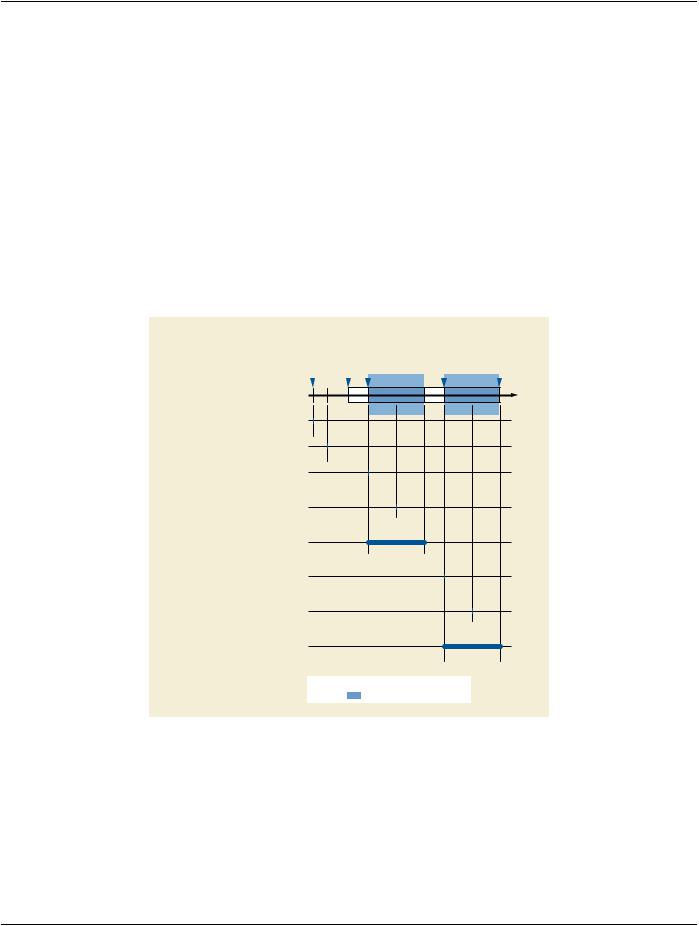
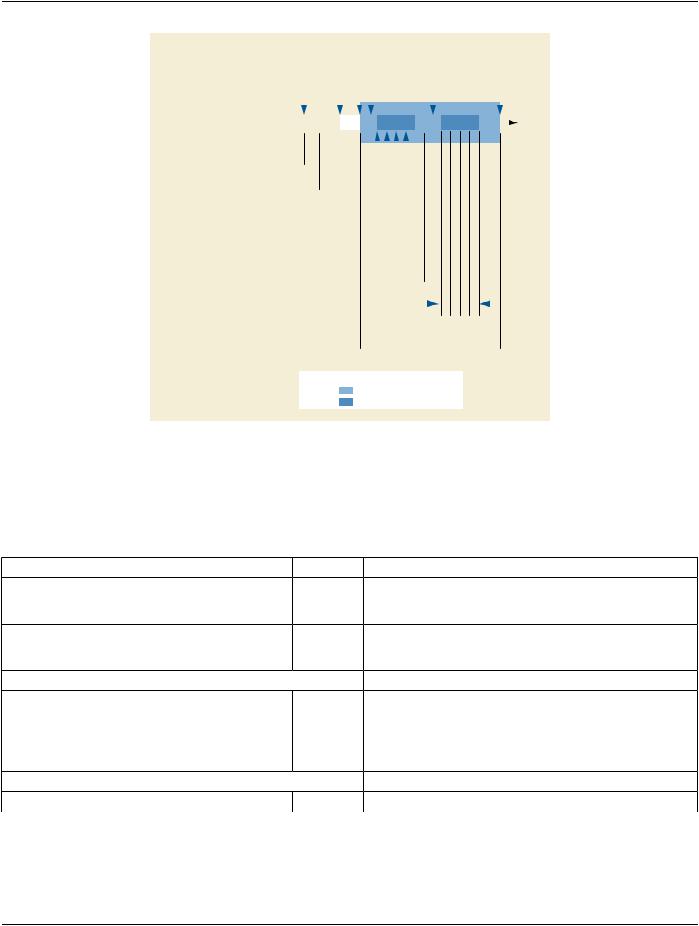
Figure C.8.9.1.1.11-1a and Figure C.8.9.1.1.11-1b show the temporal relationships of images within a PET Series.​

Radiopharmaceutical Start Time

(0018,1072)

Series Time *

(0008,0031)

Acquisition Time (0008,0032) first Time Slice

Frame Reference Time * (0054,1300) first Time Slice

Actual Frame Duration (0018,1242) first Time Slice

Acquisition Time (0008,0032) second Time Slice

Frame Reference Time * (0054,1300) second Time Slice

Actual Frame Duration (0018,1242) second Time Slice

* Time not related to a real-world event. All other times fixed to a real-world event.

Injection Manual Start


Start of Acquisition;

Start of

End of


Start of first Slice

second Slice

Acquisition


time

Legend:


Pause (no accumulation of counts)


Acquiring counts


Figure C.8.9.1.1.11-1a. Example DYNAMIC PET Series​

- Standard -​

DICOM PS3.3 2020a - Information Object Definitions​

Page 869​

Radiopharmaceutical Start Time

(0018,1072)

Series Time *

(0008,0031)

Acquisition Time (0008,0032) all Time Slots

Four Trigger Time values (0018,1060) for four Time Slots

Frame Reference Time * (0054,1300) any Time Slot

Four Frame Time values (0018,1063) for four Time Slots

Actual Frame Duration (0018,1242) all Time Slots

* Time not related to a real-world event. All other times fixed to a real-world event.

Injection Manual Start


End of


Start of Acquisition


Acquisition


First Trigger


Second Trigger


time


Legend:


Pause (no accumulation of counts)


Capable of Acquiring


Acquiring counts


Figure C.8.9.1.1.11-1b. Example GATED PET Series​

C.8.9.2 PET Isotope Module​

Table C.8-61 contains IOD Attributes that describe a PET Isotope.​

Table C.8-61. PET Isotope Module Attributes​

Attribute Name​

Tag​

Type​

Attribute Description​

RadiopharmaceuticalInformation​

(0054,0016)​

2​

Sequence of Items that describe isotope information.​

Sequence​


Zero or more Items shall be included in this Sequence.​


>Radionuclide Code Sequence​

(0054,0300)​

2​

Sequence that identifies the radionuclide.​


Zero or one Item shall be included in this Sequence.​

>>Include Table 8.8-1 “Code Sequence Macro Attributes”​

BCID 4020 “PET Radionuclide”.​

>Radiopharmaceutical Route​

(0018,1070)​

3​

Route of administration.​

>Administration Route Code​

(0054,0302)​

3​

Sequence that identifies the administration route of the​

Sequence​


radiopharmaceutical.​


Only a single Item is permitted in this Sequence.​

>>Include Table 8.8-1 “Code Sequence Macro Attributes”​

BCID 11 “Route of Administration”.​

>Radiopharmaceutical Volume​

(0018,1071)​

3​

Volume of administered radiopharmaceutical in cubic cm.​

- Standard -​

Page 870​

DICOM PS3.3 2020a - Information Object Definitions​

Attribute Name​

Tag​

Type​

Attribute Description​

>Radiopharmaceutical Start​

(0018,1072)​

3​

Time of start of administration. The actual time of​

Time​


radiopharmaceutical administration to the patient for imaging​


purposes, using the same time base as Series Time​


(0008,0031).​


The use of this Attribute is deprecated in favor of​


Radiopharmaceutical Start DateTime (0018,1078).​


Note​


The use of a time alone can cause confusion when​


the procedure spans midnight.​

>Radiopharmaceutical Start​

(0018,1078)​

3​

Date and time of start of administration. The actual date and​

DateTime​


time of radiopharmaceutical administration to the patient for​


imaging purposes, using the same time base as Series Time​


(0008,0031).​

>Radiopharmaceutical Stop​

(0018,1073)​

3​

Time of end of administration. The actual ending time of​

Time​


radiopharmaceutical administration to the patient for imaging​


purposes, using the same time base as Series Time​


(0008,0031).​


The use of this Attribute is deprecated in favor of​


Radiopharmaceutical Stop DateTime (0018,1079).​


Note​


The use of a time alone can cause confusion when​


the procedure spans midnight.​

>Radiopharmaceutical Stop​

(0018,1079)​

3​

Date and time of end of administration. The actual ending date​

DateTime​


and time of radiopharmaceutical administration to the patient​


forimagingpurposes,usingthesametimebaseasSeriesTime​


(0008,0031).​

>Radionuclide Total Dose​

(0018,1074)​

3​

The radiopharmaceutical dose administered to the patient​


measured in Becquerels (Bq) at the Radiopharmaceutical Start​


Time (0018,1072).​


Note​


InotherIODs,suchastheNMIOD,thissameAttribute​


is specified in MegaBecquerels (MBq).​

>Radiopharmaceutical​

(0008,3012)​

3​

Unique identification of the administration of the​

Administration Event UID​


radiopharmaceutical to the patient.​


Note​


The UID is the same Radiopharmaceutical​


Administration Event UID that is in the​


Radiopharmaceutical Radiation Dose Report.​

>Radionuclide Half Life​

(0018,1075)​

3​

The radionuclide half life, in seconds, that was used in the​


correction of this image.​

>RadionuclidePositronFraction​

(0018,1076)​

3​

The radionuclide positron fraction (fraction of decays that are​


by positron emission) that was used in the correction of this​


image.​

>Radiopharmaceutical Specific​

(0018,1077)​

3​

The activity per unit mass of the radiopharmaceutical, in​

Activity​


Bq/micromole, at the Radiopharmaceutical Start Time​


(0018,1072).​

- Standard -​