Материал: part02

|
DICOM PS3.2 2020a - Conformance |
Page 41 |
|
Note |
|
|
IODs from a Standard Extended SOP Class may be freely exchanged between DICOM |
|
|
implementations since implementations that do not recognize the additional Type 3 |
|
|
Attributes would simply ignore them. |
|
Specialized SOP Class |
ASOPClassderivedfromaStandardSOPClassthathasbeenspecializedinanimplementation |
|
|
by additional Type 1, 1C, 2, 2C, or 3 Attributes, by enumeration of specific permitted values for |
|
|
Attributes,orbyenumerationofspecificpermittedTemplates.TheadditionalAttributesmayeither |
|
|
be drawn from the Data Dictionary in PS3.6, or may be Private Attributes. The enumeration of |
|
|
permittedAttributevaluesorTemplatesshallbeasubsetofthosepermittedintherelatedStandard |
|
|
SOP Class. Since the semantics of the related Standard SOP Class may be modified by the |
|
|
additional Attributes, a Specialized SOP Class utilizes a Privately Defined UID that differs from |
|
|
the UID for the related Standard SOP Class. |
|
|
Note |
|
|
1.Since a Specialized SOP Class has a different UID than a Standard or Standard |
|
|
Extended SOP Class, other DICOM implementations may not recognize the |
|
|
SpecializedSOPClass.Becauseofthislimitation,aSpecializedSOPClassshould |
|
|
only be used when a Standard or Standard Extended SOP Class would not be |
|
|
appropriate. Before different implementations can exchange Instances in a |
|
|
Specialized SOP Class, the implementations must agree on the UID, content (in |
|
|
particular the additional Type 1, 1C, 2, and 2C Attributes), and semantics of the |
|
|
Specialized SOP Class. A Specialized SOP Class may be used to create a new or |
|
|
experimental SOP Class that is closely related to a Standard SOP Class. |
|
|
2.TheAssociationNegotiationforaSpecializedSOPClassmayincludeaSOPClass |
|
|
Common Extended Negotiation Sub-Item (as defined in PS3.7) for identification of |
|
|
the Service Class and of the Related General SOP Class from which it was |
|
|
specialized. This may allow a receiving application, without prior agreement on the |
|
|
Specialized SOP Class IOD, to process Instances of that class as if they were |
|
|
instances of a Related General SOP Class. |
|
Private SOP Class |
A SOP Class that is not defined in the DICOM Standard, but is published in an implementation's |
|
|
Conformance Statement. |
|
|
Note |
|
|
Since a Private SOP Class is not defined in the DICOM Standard, other DICOM |
|
|
implementations may not recognize the Private SOP Class. Because of this limitation, |
|
|
a Private SOP Class should only be used when a Standard or Standard Extended SOP |
|
|
Class would not be appropriate. In order for different implementations to exchange |
|
|
Instances in a Private SOP Class, the implementations must agree on the UID, content |
|
|
(in particular the Type 1, 1C, 2, and 2C Attributes), and semantics of the Private SOP |
|
|
Class. A Private SOP class may be used to create a totally new or experimental SOP |
|
|
Class. |
|
Standard Attribute |
An Attribute defined in the Data Dictionary in PS3.6. |
|
Private Attribute |
An Attribute that is not defined in the DICOM Standard. |
|
Standard Application Profile |
An Application Profile defined in the DICOM Standard that is used in an implementation with no |
|
|
modifications. |
|
Augmented Application Profile |
An Application Profile derived from a Standard Application Profile by incorporating support for |
|
|
additional Standard or Standard Extended SOP Classes. |
|
Private Application Profile |
An Application Profile that is not defined in the DICOM Standard, but is published in an |
|
|
implementation's Conformance Statement. |
|
- Standard -

Page 42 |
DICOM PS3.2 2020a - Conformance |
Security Profile |
A mechanism for selecting an appropriate set of choices from the Parts of the DICOM Standard |
|
along with corresponding security mechanisms (e.g., encryption algorithms) for the support of |
|
security facilities. |
Transformation of DICOM SR to |
A mechanism for mapping and transforming DICOM SR objects to HL7 CDA documents. |
CDA |
|
- Standard -

DICOM PS3.2 2020a - Conformance Page 43
4 Symbols and Abbreviations
The following symbols and abbreviations are used in this Part.
ACR |
American College of Radiology |
ACSE |
Association Control Service Element |
AE |
Application Entity |
ANSI |
American National Standards Institute |
AP |
Application Profile |
API |
Application Programming Interface |
ASCII |
American Standard Code for Information Interchange |
CEN TC251Comite Europeen de Normalisation-Technical Committee 251-Medical Informatics |
|
DICOM |
Digital Imaging and Communications in Medicine |
DIMSE |
DICOM Message Service Element |
DIMSE-C |
DICOM Message Service Element-Composite |
DIMSE-N |
DICOM Message Service Element-Normalized |
FSC |
File-set Creator |
FSR |
File-set Reader |
FSU |
File-set Updater |
HISPP |
Healthcare Informatics Standards Planning Panel |
HL7 |
Health Level 7 |
IE |
Information Entity |
IEEE |
Institute of Electrical and Electronics Engineers |
IOD |
Information Object Definition |
ISO |
International Standards Organization |
ISP |
International Standardized Profile |
JIRA |
Japan Medical Imaging and Radiological Systems Industries Association |
MSDS |
Healthcare Message Standard Developers Sub-Committee |
NEMA |
National Electrical Manufacturers Association |
OSI |
Open Systems Interconnection |
PDU |
Protocol Data Unit |
REST |
Representational State Transfer |
RESTful |
A RESTful Web service is a Web service implemented using REST architecture and HTTP (see http://www.ics.uci.edu/ |
|
~fielding/pubs/dissertation/fielding_dissertation.pdf) |
- Standard -

Page 44 |
DICOM PS3.2 2020a - Conformance |
RWA Real-World Activity
SCP Service Class Provider
SCU Service Class User
SOP Service-Object Pair
STOW-RS STore Over the Web by RESTful Services
TCP/IP Transmission Control Protocol/Internet Protocol
UID Unique Identifier
UML Unified Modeling Language
WADO-RS Web Access to DICOM Objects by RESTful Services
WADO-URI Web Access to DICOM Objects by URI
- Standard -
DICOM PS3.2 2020a - Conformance |
Page 45 |
5 Conventions
5.1 Application Data Flow Diagram
InaConformanceStatement,therelationshipsbetweenReal-WorldActivitiesandApplicationEntitiesareillustratedbyanApplication
Data Flow Diagram.
5.1.1 Application Entity
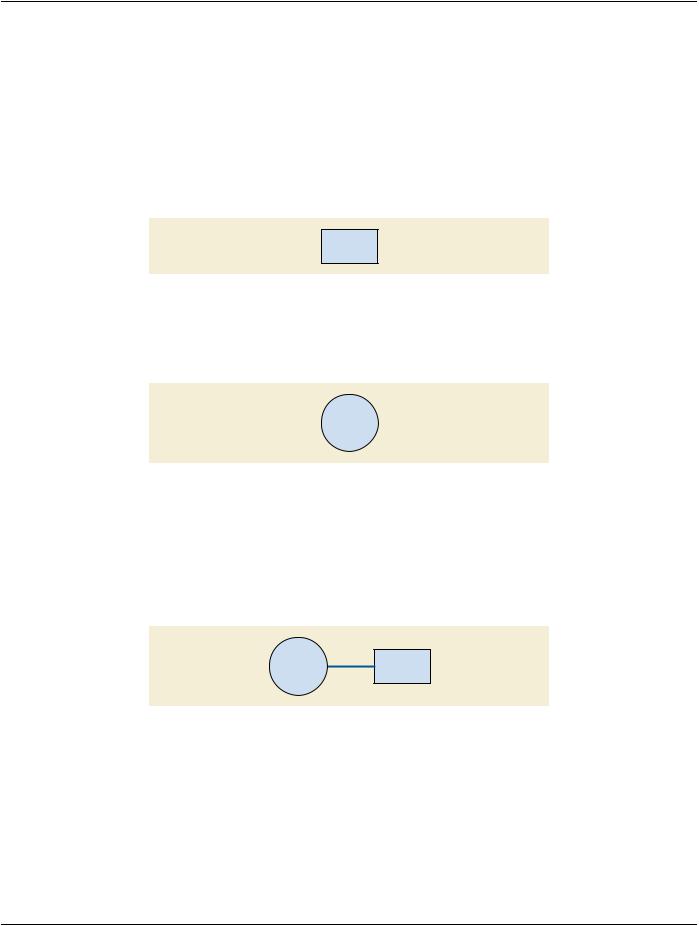
An Application Entity is depicted as a box in an Application Data Flow Diagram, shown in Figure 5.1-1
Application
Entity
Figure 5.1-1. Application Entity Convention
5.1.2 Real-World Activity
A Real-World Activity is depicted as a circle in an Application Data Flow Diagram, shown in Figure 5.1-2.
Real-World
Activity
Figure 5.1-2. Real-World Activity Convention
Circles representing multiple Real-World Activities may overlap, indicating a degree of overlap in the Real-World Activities.
5.1.3 Local Relationships
A relationship between a local Real-World Activity and an Application Entity is depicted within an Application Data Flow Diagram by placingthelocalReal-WorldActivitytotheleftoftherelatedApplicationEntitywithadashedlinebetweenthemasshowninFigure5.1- 3.
Local
Real-World
Application
Activity
Entity
Figure 5.1-3. Local Relationship Convention
An Application Entity may be associated with multiple Real-World Activities.
A Real-World Activity may be associated with multiple Application Entities.
5.1.4 Network-Associations
An association between a local Application Entity and a remote Application Entity over a network supporting a remote Real-World Activity is depicted within an Application Data Flow Diagram by placing the remote Real-World Activity to the right of the related local Application Entity with one or two arrows drawn between them as shown in Figure 5.1-4. The dashed line represents the DICOM
- Standard -