Материал: искусственный интеллект
suai.ru/our-contacts |
quantum machine learning |
124 I. Schmitt et al.
product spaces are combined to a larger one by applying the tensor product. For a tuple data type construction
T-dt := tuple name1 : dt1 , . . . , nameN : dtN ,
the ket vectors and their inner product spaces are combined by use of the tensor product:
QDom( T-dt ) = QDom( dt1 ) . . . QDom( dtN )
Dom( T-dt ) → QDom( T-dt )
V11i , . . . , VNNi → |V11i . . . |VNNi .
The ket vector |V11i . . . |VNNi can be shortly notated as |V11i . . . VNNi . If dl is the number of basis ket vectors of component l, that is, the number of dimensions, then
the tensor product needs d1 · . . . · dN many basis ket vectors. That is, with respect to the tensor product the number of dimensions is multiplied and not added as in the case of the Cartesian product.
|
Take |
a three-component |
tuple |
|
value |
| |
V1 |
|
2 |
|
3 |
1 |
|
as |
a |
result |
of |
a |
tuple |
type |
|||||||||||||
3 |
|
3 |
3 |
|
|
|
1 |
= |
i |
|
V 1V |
|
|
| |
|
2 |
= |
i |
|
| |
|
2 |
|
|
2 |
| |
|
|
|||||
|
|
|
let P |
|
|
1 |
| |
i |
|
i |
, P |
|
2 |
i |
|
i |
|
, |
and |
||||||||||||||
construction. |
Furthermore, |
|
|
|
|
|
|
|
|
|
|
|
|
|
|
|
|
||||||||||||||||
P = |
i3 |i |
i | be projectors of the respective components. For measuring the |
|||||||||||||||||||||||||||||||
tuple value also the projectors need to be combined: |
|
|
|
|
|
|
|
|
|
|
|
|
|
|
|
|
|||||||||||||||||
|
|
P 123 = P 1 P 2 P 3 |
|
|
|
|
|
|
|
|
|
|
|
|
|
|
|
|
|
|
|
|
|
|
|
|
|
|
|
||||
|
|
|
= |
|i1 i1| |
|
|i2 i2| |
|
|
|i3 i3| |
|
|
|
|
|
|
|
|
|
|||||||||||||||
|
|
|
|
i1 |
|
|
|
i2 |
|
|
|
|
|
|
|
|
|
|
|
|
|
i3 |
|
|
|
|
|
|
|
|
|
|
|
|
|
|
= |
|
|i1i2i3 i1i2i3|. |
|
|
|
|
|
|
|
|
|
|
|
|
|
|
|
|
|
|
|
|
|
|||||||
|
|
|
|
i1 |
i2 |
i3 |
|
|
|
|
|
|
|
|
|
|
|
|
|
|
|
|
|
|
|
|
|
|
|
|
|
|
|
The measurement is performed as |
|
|
|
|
|
|
|
|
|
|
|
|
|
|
|
|
|
|
|
|
|
|
|
|
|
|
|
||||||
|
V1V2V3|P 123|V1V2V3 = |
|
|
|
V1V2V3|i1i2i3 i1i2i3|V1V2V3 . |
|
|||||||||||||||||||||||||||
|
|
|
|
|
|
i1 |
|
i2 i3 |
|
|
|
|
|
|
|
|
|
|
|
|
|
|
|
|
|
|
|
|
|
|
|
|
|
Due to
V1V2V3|i1i2i3 = V1|i1 V2|i2 V3|i3
we obtain
V1V2V3|P 123|V1V2V3 = V1|P 1|V1 V2|P 2|V2 V3|P 3|V3 .
suai.ru/our-contacts |
quantum machine learning |
Quantum-Based Modelling of Database States |
125 |
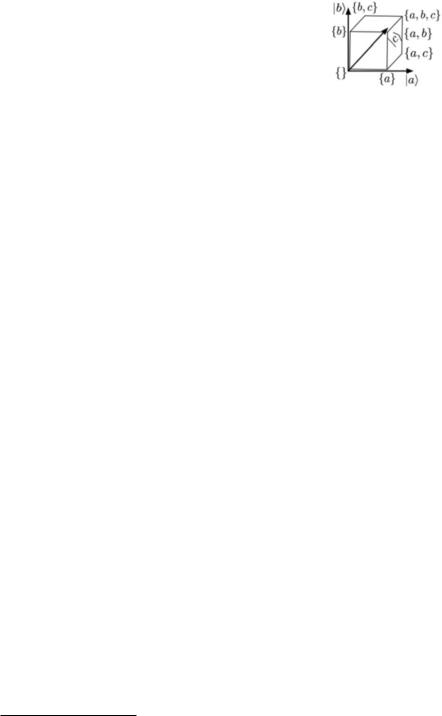
Fig. 4 Sets as one of 23 corners over the
{a, b, c}-cube (for illustration purpose, the distances between origin and the corners are not all one)
Thus, measuring a tuple value equals the product of the component measurements. Sometimes we want to measure only one component. In that case we use the identity 1 = |i ON B |i i| as projector for the no-care-components where ON B
stands for orthonormal basis:
V1V2V3| P 1 1 1 |V1V2V3 = V1|P 1|V1 .
5.2 Set Data Type Constructor
The set data type constructor is used on top of an orthonormal data type dt with QDom( dt ) = {|V1 , . . . , |Vk } being an orthonormal basis:
S-dt := set( dt ).
Every element of Dom( S-dt ) is a subset of Dom( dt ). The idea of our quantum modelling approach is the usage of the superposition principle, see Fig. 4. To construct the vector space QDom ( S-dt ), we have to collect all superpositions of ket vectors from QDom ( dt ). Mathematically, this leads to the vector space of all linear combinations of ket vectors from QDom ( dt ), which is called the span of QDom ( dt ). The ket vectors of the set elements are superimposed:
QDom ( S-dt ) = span (QDom ( dt )) |
(1) |
|||
Dom ( S-dt ) → QDom ( S-dt ) |
(2) |
|||
Dom ( S-dt ) S → |
1 |
Vi S |Vi = |S QDom ( S-dt ) . |
|
|
√ |
|
(3) |
||
|S| |
||||
The mapping does not change the number of basis ket vectors, that is, the number of dimensions.4 Please note that the set data type constructor yields a non-orthogonal data type.
Let us be given a superposition ket vector |S . We want to test by quantum measurement if the value Vj mapped to |Vj QDom( dt ) is a member of the set S. For measurement we use the projector P = |Vj Vj |:
4The special case of an empty set is discussed later on.
suai.ru/our-contacts |
quantum machine learning |
126
Table 5 Measurement of set S = {V1, V2, V3} with the set
V = {V2, V3, V4, V5}
S|Vj Vj |S =
|
|
I. Schmitt et al. |
||
|
|
|
|
|
|
V2 |
V3 |
V4 |
V5 |
V3 |
0 |
1/3 |
0 |
0 |
V2 |
1/3 |
0 |
0 |
0 |
V1 |
0 |
0 |
0 |
0 |
1 |
|
|
|
|
|
|
|
|
|
1 |
if Vj S |
|
|
|
Vi |
Vj |
|
Vj |
Vi |
= |
|
|S| |
|||
|S| Vi S |
||||||||||||
| |
|
| |
|
0 otherwise. |
||||||||
A measurement with a set-valued projector P = |
|
Vj V |Vj Vj | for the set V |
||||||||||||||||
Dom( S-dt ) yields: |
|
|
|
|
|
|
|
|
|
|
|
|
|
|
||||
|
S |
P |
S |
= |
|
1 |
|
|
V |
i | |
V |
j |
V |
j | |
V |
i = |
|V ∩ S| |
. |
|S| Vi S Vj V |
|
|||||||||||||||||
| |
| |
|
|
|
|
|
|S| |
|||||||||||
Table 5 illustrates an example for the set measurement. As a result we obtain 2/3 = 1/3 + 1/3.
The empty set needs special consideration. The problem is that there is a superposition of nothing, that is, the empty set cannot be represented by any vector of the given data type. Therefore, we insert an additional basis vector |N U LL into QDom ( dt ). The ket vector |N U LL is only used if an empty set needs to be encoded.
Assume a non-orthogonal data type no-dt with
QDom( no-dt ) = {|V1 , . . . , |Vk }
is given. However, the set data type constructor is not deÞned for non-orthogonal data types. One solution is to orthogonalize the non-orthogonal data type. This can be easily realized by applying a tuple construction together with an auxiliary orthogonal data type aux-dt of dimension k. So, you obtain the orthogonalized data type o-dt by constructing:
o-dt := tuple (id : aux-dt , value : no-dt )
and assigning bijectively a unique number from dom( aux-dt ) to every value from dom( no-dt ):
QDom ( o-dt ) {|1 , . . . , |k} QDom ( no-dt )
QDom( no-dt ) → QDom( o-dt )
|Vi → |i |Vi .
suai.ru/our-contacts |
quantum machine learning |
Quantum-Based Modelling of Database States |
127 |
6 Conclusion
A relational database is based on the concept of a relation [7]. A relation is deÞned as a set (set) of tuples (tuple) containing property values. A relational database itself can be seen as a set (set) of tuples (tuple) containing the name of a relation and the relation itself. Thus, the data structure of a relational database can be expressed by our recursively deÞned data type. Since a relational database is a universal data structure for modelling arbitrary real-world scenarios, our recursively deÞned concept of a data type is also universal.
In this work we focused on the two most important data type structures: the tuple and the set data type constructor. Please note that further data type constructors like list, bag, dictionary, and array can be easily simulated using the tuple and the set data type constructors, see relational database design [7].
An interesting question for further work is how to express integrity constraints in quantum mechanics. For example, how can we incorporate the concepts of uniqueness and functional dependencies into the world of quantum mechanics?
References
1.Nielsen, M. A., & Chuang, I. L. (2011). Quantum computation and quantum information: 10th anniversary edition (10th ed.). New York, NY: Cambridge University Press.
2.Schmitt, I., Ršmer, R., Wirsching, G., & Wolff, M. (2017). Denormalized quantum density operators for encoding semantic uncertainty in cognitive agents. In 2017 8th IEEE International Conference on Cognitive Infocommunications (CogInfoCom) (pp. 000165Ð000170). Piscataway: IEEE.
3.Schmitt, I. (2008). QQL: A DB&IR query language. The VLDB Journal, 17, 39Ð56.
4.Birkhoff, G., & Von Neumann, J. (1936). The logic of quantum mechanics. Annals of Mathematics, 37, 823Ð843.
5.Higham, N. J. (2009). Cholesky factorization. Wiley Interdisciplinary Reviews: Computational Statistics, 1, 251Ð254.
6.Bancilhon, F. (1997). Object-oriented databases. In A. B. Tucker (Ed.), The computer science and engineering handbook (pp. 1158Ð1170). Boca Raton, FL: CRC Press.
7.Elmasri, R., & Navathe, S. (2010). Fundamentals of database systems. Boston, MA: AddisonWesley Publishing Company.

suai.ru/our-contacts |
quantum machine learning |
Incorporating Weights into a Quantum-Logic-Based Query Language
Ingo Schmitt
Abstract Traditional database query languages are based on set theory and crisp Þrst order logic. However, many applications require imprecise conditions which return result objects associated with a degree of fulÞllment. For example, a research paper should be reviewed by giving a degree of fulÞllment for originality and relevance. Very often, imprecise conditions of a query are of different importance. Thus, a query language should allow the user to give conditions different weights. This paper proposes a weighting approach which is realized by means of conjunction, disjunction, and negation. Thus, our weighting is completely embedded within a logic. As a result, logical rules are preserved and can be used for query reformulation and optimization. As underlying logic-based query language, we use the CQQL query language. Furthermore we demonstrate that our weighting approach is applicable to further logic-based query languages.
Keywords Weights á Database query language á Information retrieval á DB&IR
1 Introduction
Evaluating a traditional database query against an object returns true on match and false on mismatch. Unfortunately, there are many application scenarios where such an evaluation is impossible or does not adequately meet userÕs needs. For example, a user may search for a very comfortable but inexpensive camcorder by means of a query containing these unrealistic requirements. Obviously, he wants to see how close certain product offers are to his vision. Another example is a text retrieval search where in general an exact match is impossible. Thus, there is a need for incorporating impreciseness and proximity into a logic-based database query
I. Schmitt ( )
Brandenburg University of Technology Cottbus-Senftenberg, Cottbus, Germany e-mail: schmitt@b-tu.de
© Springer Nature Switzerland AG 2019 |
129 |
D. Aerts et al. (eds.), Quantum-Like Models for Information Retrieval and Decision-Making, STEAM-H: Science, Technology, Engineering, Agriculture, Mathematics & Health, https://doi.org/10.1007/978-3-030-25913-6_7