Материал: Warming up as a stimulating indicator in developing oral skills
2.3 The analysis of experiments
Pilot work was carried out sequentially and included three stages: ascertaining, forming, control. At each stage, certain goals were solved in accordance with the hypothesis of the study. At a ascertaining stage, primary diagnostics was carried out in order to identify the initial level of development of auditory and pronunciation skills of students in grade 9 in foreign language lessons.
At the formative stage, an audio complex of phonetic exercises was developed and introduced into the educational process to form the auditory and pronunciation skills of students in grade 9. At the control stage, repeated diagnostics of the level of development of auditory and pronunciation skills of schoolchildren was carried out, a comparative analysis and generalization of the results was performed. Pilot work was carried out in two groups of 9 classes of secondary school No. 33 of the Sverdlovsk region. 28 schoolchildren took part in the work. The following events were held with the teachers of the school:
1. Consultation "Development of phonetic skills in foreign language lessons"
2. Round table "Phonetic exercises in foreign language lessons."
3. Attendance at open lessons and their analysis. These events showed that English teachers need advanced training in developing auditory and pronunciation skills in foreign language lessons. In order to identify the initial level of development of phonetic skills, various techniques were studied, but we stopped on our own pedagogical observation, the purpose of which is to check the level of development of phonetic skills of students in grades 9.
This 9th grade is divided into 2 groups, the first 14 people conduct phonetic exercises, the second group does not.
To do this, we used methods such as pedagogical observation during the lessons, students were evaluated according to the following criteria:
-
sound composition;
-
syllabic structure of the language;
-
verbal stress;
-
intonation.
Description of the methodology: students in the lesson are invited to listen to a small text 2 times, after which they are given 15 minutes to play this text. After conducting pedagogical observation in the foreign language lessons, the students showed the following results, which are presented in table 1.
Table 1
The results of pedagogical observation
|
№ |
sound composition |
syllable structure |
word stress |
Number of points |
|
1st group |
||||
|
1 |
3 |
4 |
3 |
3,3 |
|
2 |
4 |
4 |
5 |
4,3 |
|
3 |
5 |
4 |
4 |
4,3 |
|
4 |
5 |
4 |
4 |
4,3 |
|
5 |
4 |
5 |
5 |
4,6 |
|
6 |
4 |
4 |
4 |
4 |
|
7 |
4 |
4 |
3 |
3,6 |
|
8 |
5 |
5 |
4 |
4,6 |
|
9 |
5 |
5 |
5 |
5 |
|
10 |
3 |
3 |
3 |
3 |
|
11 |
4 |
4 |
4 |
4 |
|
12 |
5 |
5 |
3 |
4,3 |
|
13 |
4 |
4 |
4 |
4 |
|
14 |
3 |
4 |
4 |
3,6 |
|
2nd group |
||||
|
1 |
5 |
5 |
5 |
5 |
|
2 |
3 |
3 |
3 |
3 |
|
3 |
4 |
4 |
4 |
4 |
|
4 |
5 |
5 |
3 |
4,3 |
|
5 |
4 |
4 |
4 |
4 |
|
6 |
5 |
5 |
5 |
5 |
|
7 |
4 |
4 |
4 |
4 |
|
8 |
4 |
4 |
3 |
3,6 |
|
9 |
5 |
5 |
4 |
4,6 |
|
10 |
3 |
4 |
3 |
3,3 |
|
11 |
4 |
4 |
5 |
4,3 |
|
12 |
5 |
4 |
4 |
4,3 |
|
13 |
5 |
4 |
4 |
4,3 |
|
14 |
4 |
4 |
4 |
4 |
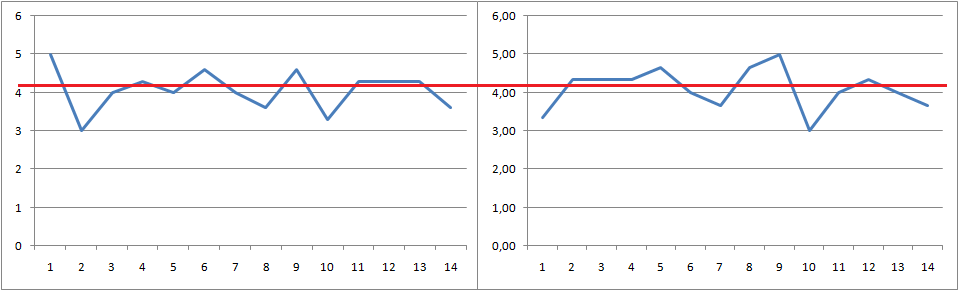
Figure 1 - The initial level of phonetic skills
Thus, the results of pedagogical observation show that the level of development of auditory and pronunciation skills of students in grade 9 is at a good level. As a result of this exercise, for the next test, they were composed of the most difficult words spoken in the lesson a minimum number of times.
Table 2
Results of experiment
|
№ |
sound composition |
syllable structure |
word stress |
Number of points |
|
1st group |
||||
|
1 |
3 |
5 |
4 |
4 |
|
2 |
5 |
5 |
5 |
5 |
|
3 |
5 |
5 |
5 |
5 |
|
4 |
5 |
4 |
4 |
4,3 |
|
5 |
5 |
5 |
5 |
5 |
|
6 |
4 |
4 |
4 |
4 |
|
7 |
4 |
5 |
3 |
4 |
|
8 |
5 |
5 |
5 |
5 |
|
9 |
5 |
5 |
5 |
5 |
|
10 |
3 |
3 |
3 |
3 |
|
11 |
4 |
4 |
4 |
4 |
|
12 |
5 |
5 |
3 |
4,3 |
|
13 |
4 |
4 |
4 |
4 |
|
14 |
4 |
4 |
5 |
4,6 |
|
2nd group |
||||
|
1 |
5 |
5 |
5 |
5 |
|
2 |
3 |
3 |
3 |
3 |
|
3 |
4 |
4 |
4 |
4 |
|
4 |
5 |
5 |
3 |
4,3 |
|
5 |
4 |
4 |
4 |
4 |
|
6 |
5 |
5 |
5 |
5 |
|
7 |
4 |
4 |
4 |
4 |
|
8 |
4 |
4 |
3 |
3,6 |
|
9 |
5 |
5 |
4 |
4,6 |
|
10 |
3 |
4 |
3 |
3,3 |
|
11 |
4 |
4 |
5 |
4,3 |
|
12 |
5 |
4 |
4 |
4,3 |
|
13 |
5 |
4 |
4 |
4,3 |
|
14 |
4 |
4 |
4 |
4 |
From table 2 it can be seen that the level of development of phonetic skills of students in grade 9 of the first group has increased significantly. So the percentage of students with a high level of development of phonetic skills increased by four students with an average level of development of phonetic skills increased and amounted to 9 people, students with a low level of development of phonetic skills amounted to 1.
So, the percentage of students in the second group with a high level of development of phonetic skills increased, but not significantly, and amounted to 2 students, the percentage of students with an average level of development of phonetic skills did not increase, the percentage of students with a low level of phonetic skills decreased by 1 person.
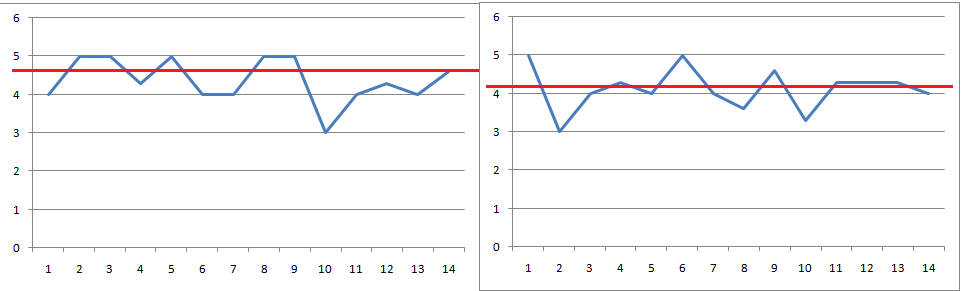
Figure 2 - The result level of phonetic skills
When comparing the results of the second test with the first, we saw that in the first group the level of development of phonetic skills increased, and in the second group, where no special work was done, it increased, but not significantly. After analyzing the results obtained at the beginning and end of the experimental work, we can conclude that after the implementation of the audio complex, phonetic exercises that contribute to the development of the phonetic skills of high school students, significant changes occurred in the first group, and the level of development of phonetic skills increased compared to the level of development of phonetic skills of students of the second group.
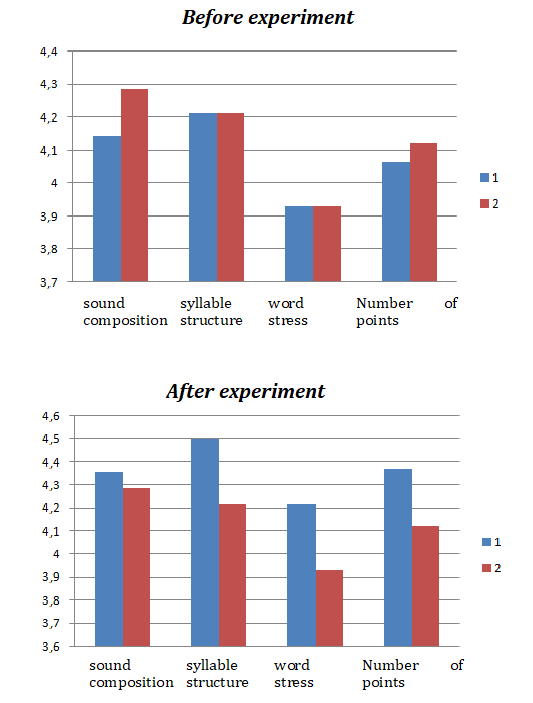
Figure 3 - Comparison of results before and after the experiment
It follows that the development of phonetic skills of students in grades 9 will be ensured if the teacher systematically works on the development of phonetic skills in English lessons.
Thus, based on the results of experimental work, we can judge the effectiveness of the audio complex of phonetic exercises in the English language during the formative experiment, which gave positive results in the development of the phonetic skills of secondary school students.
Conclusion
The modern primary school poses great challenges for foreign language teachers, one of which is the development of phonetic skills in English classes. So, having given the psychological and pedagogical characteristics of high school students from the point of view of teaching a foreign language, describing the methodology for improving phonetic skills in high school in a foreign language class, revealing the theory of the development of the audio complex of phonetic exercises, describing the audio complex of phonetic exercises and presenting an analysis of the results of testing in a secondary school No. 33 ", we can draw the following conclusions.
The development of phonetic skills is built in four stages: primary, secondary, senior and advanced. To develop phonetic skills, the following exercises are recommended:
-
exercises for the perception of sound by ear;
-
exercises to reproduce the phonetic phenomenon;
-
exercises for the automation of pronunciation of speech skills in conditionally phonetically directed exercises;
-
phonetic charging.
The use of the audio complex in the lessons of a foreign language provides a cognitive interest in learning a foreign language, the development of a clear and correct pronunciation, the motivation for learning.
In the structure of the audio lesson for the development of phonetic skills, four stages can be distinguished:
-
preparatory
-
the stage of preliminary removal of linguistic and linguistic and regional difficulties;
-
perception of audio recording
-
development of information perception skills;
-
control the understanding of the main content;
-
the development of language and spoken language skills.
Pilot work was carried out sequentially and included three stages: ascertaining, forming, control. At each stage, certain goals were solved in accordance with the hypothesis of the study. At a ascertaining stage, primary diagnostics was carried out in order to identify the initial level of development of auditory and pronunciation skills of students in grade 9 in foreign language lessons. After analyzing the results obtained at the beginning and end of the experimental work, we can conclude that after the implementation of the audio complex of phonetic exercises that contribute to the development of the phonetic skills of high school students, significant changes occurred in the first group, and the level of development of phonetic skills increased compared to the level development of phonetic skills of students of the second group.
It follows that the development of the phonetic skills of students in grades 9 will be ensured if the teacher systematically works on the development of phonetic skills in English lessons. Thus, based on the results of experimental work, we can judge the effectiveness of the audio complex of phonetic exercises in the English language during the formative experiment, which gave positive results in the development of phonetic skills of secondary school students.
Bibliography
-
Smirnitsky A.I. Morphology of the English language. - M., 1959.-430 p.
-
Smirnitsky A.I. The syntax of the English language. // under. V.V. Passeca. - Ed. 2nd, rev. - M., 2007 .-- 286 p.
-
Akhmetova S.G. Syntactics and pragmatics of English article. - Diss. Doct. filol. Sciences: 10.02.04. - M., 1989 .-- 389 p.
-
Tymchuk E.V. Common and separate in article English language system. - Diss. Dr. filol. sciences. M., 2006.- 411s.
-
Bagirokova I.G. Category of certainty uncertainties in comparative aspect: on the material Adyghe and English. - Abstract. dis. .. Cand. filol. Sciences: 10.02.20. - M., 2000 .-- 191 p.
-
Langacker R. W. Foundation of Cognitive Grammar. - Vol. 1 Theoretical Prerequisites. - Stanford, Calif., 1987 .-- 539 p.
-
Leech G. Semantics. - Harmondsworth: Penguin Books, 1974. - 386 p.
-
Vasilieva T.A. The functional potential of the articles in English // Intercultural Communication. - Chelyabinsk, 2002 .-- S. 162-167.
-
Doroshenko M.V. What should be understood by metasemiotic (stylistic) functions of morphological contrasts? // Vestnik MGU. - M., 1976.-№3. -C.31-35.
-
Zadornova. V.Ya. Verbal and artistic work on different languages as a subject of linguo-poetic research. Abstract. diss. ... doc. filol. sciences. - M., 1992. - 48 p.
-
Kunin, A. V. Issues of English phraseology: communicative and phraseological aspects // Sat. scientific tr M .: Mosk. state ped Institute of Foreign Affairs lang them. Maurice Thorez, 1987 .-- 148 p.
-
N. M. Shansky, V.I. Zimin, A.V. Filippov. The meaning and origin of phrases. “Bustard”, 2007. - 398 p.
-
Kunin, A.V. The phraseology course of modern English: a textbook. for in-to and fact. foreign lang / A.V. Kunin. - M.; Dubna, 1996 .-- 381 p.
-
Usenkov D. Yu. How to spend a million // Informatics and education. - 2006. - No. 7 - S. 74–81.
-
Usenkov D. Yu. The blackboard is gaining “intelligence” // Computer Science and Education. - 2005. - No. 12 - S. 33–66.
-
Lerner I.Ya. Didactic foundations of teaching methods. M .: Pedagogy, 1981. 172.
-
Semenova N.G., Vakulyuk V.M. The use of multimedia in the educational process: textbook. Orenburg, OSU, 2004.98 s.
-
Kutumbekova S. I., Development and use of computer presentations, Kostanay, Bulletin of Science, Kostanay Sociotechnical University named after Academician Zulkharnay Aldamzhar, 2012
-
Quirk R., Greenbaum S., Leech G., Svartvic J. A Grammar of Contemporary English. - London, 1972. – 198с.
-
Mironets Yu.A. The history of the teachings on the article in the grammar of the English language: author. dis. ... cand. filol. sciences. L., 1969 .-- 239 p.
-
Curme G.O. A grammar of the English Language. Vol. II. Parts of speech and accidence. L., 1931.- 342 p.
-
Ilish B.A. Modern English. - M., 1948 .-- 347 p.
-
Bloch M.Ya. Theoretical foundations of grammar. - M .: Higher School, 1986. - 160 p.
-
Nikitin M.V. Category of the article in English. - Frunze: Higher school, 1961 .-- 340 p.
-
Vinogradov V.V. The main types of lexical meanings // Lexicology and Lexicography: Selected Works. - M .: Science, 1977.- 312 p.
-
Sobolev I.P. Some aspects of theory and norms articleless nouns in modern English language. - Abstract. diss. ... cand. filol. sciences. M., 1973. - 29 p.
-
Dolgina, E. A. Systemic status of English articles in cognitive illumination / E. A. Dolgina // Filol. Sciences. - 2008. - No. 3. - S. 91–102.
-
Dolgina E.A. The multifunctionality of the English articles in language and speech. - M .: URSS, 2009 .-- 174 p.
-
Kachalova K.N., Izrailevich E.E. - Practical English grammar. - St. Petersburg: BASIS, KARO, 2010 .-- 608 p.
-
Bloch M.Ya., Theoretical Grammar of the English Language, M.: Higher School, 2000. Third edition, revised. - 178 c.
-
Murphy R. English Grammar in Use. 4ed. Cambridge University Press - 2012 - 146 p.
-
Kvarcheliya L.V. Semantic frequency structure English nouns. - Abstract. diss. ... cand. filol. Sciences: 10.02.04. - M., 1985.- 23 p.
-
Vardul I.F. To the question of the phenomenon of ellipsis // Invariant syntactic meaning and structure of a sentence. - M., 1969. - 374 p.
-
Akhmanova O.S. Linguostylistics: Theory and Method – M., 1972. – 126 c.
-
Yu.V.Astafyeva, E.F.Gerfanova Dialogic and cooperative learning in teaching English, Karaganda, 2016
-
B.Zh. Satbergenova, S.Z. Ashimkhanova, G. Nurzhigitova The effectiveness of realia-based lessons in teaching English, Karaganda 2017
-
B.Zh. Satbergenova, S.Z. Ashimkhanova, G. Nurzhigitova Methods of using game techniques at the English language lessons in secondary school, Karaganda, 2017
-
Suleimenova E.D., Shaimerdenova N.Zh., Akanova D.Kh. Languages of the peoples of Kazakhstan. Sociolinguistic reference. - Astana: Arman-PV, 2007.
-
Karipbaeva G.A. Teaching and learning foreign languages in Kazakhstan, Almaty, Vestnik KazNU, 2015employees. Edited by O.A. Kornilova. - 2016 .-- S. 278-282.
-
Pozdneev B.M. Development and harmonization of international and national standards for information technology in education / B.M. Pozdneev // IT - Standard 2013 Collection of the IV International Conference. - 2013 .-- S. 35-47.
-
Razumova E.V. Methods of teaching foreign languages in higher educational institutions - M .: Education, 2006. - 287 p.
-
Reshetnikova N.V. The use of information and communication technologies in modern education / N.V. Reshetnikova // Science and education in the XXI century, a collection of scientific papers based on the materials of the International Correspondence Scientific and Practical Conference: in 5 parts. - 2012 .-- S. 121-122.
-
Savin A.B. The use of information technology in education / A.B. Savin, A.S. Solovyova // Actual problems of science and education: past, present, future collection of scientific papers based on materials of the International Correspondence Scientific and Practical Conference: in 7 parts. - 2012 .-- S. 129-131.
-
Sakhibov A. Theory of the application of information and communication technologies in education / A. Sakhibov / Science and the World. - 2014. - T. 3. - No. 4 (8). - S. 81-83.