Материал: 2425
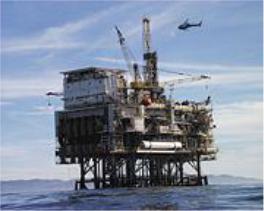
Pic. 49. North Sea oil and gas supply most of the UK's energy needs.
The UK has a small coal reserve along with significant, yet continuously declining natural gas and oil reserves. An alternative to coalfired electricity generation is underground coal gasification (UCG). UGC involves injecting steam and oxygen down a borehole, which extracts gas from the coal and draws the mixture to the surface - a potentially very low carbon method of exploiting coal. Identified onshore areas that have the potential for UGC amount to between 7 billion tonnes and 16 billion tonnes. Based on current UK coal consumption, these volumes represent reserves that could last the UK between 200 and 400 years.
As of 2006, the United Kingdom operates 24 nuclear reactors generating one-fifth of its electricity (19.26% in 2004). The UK also has major nuclear reprocessing plants, including Sellafield. Great Britain is expected to launch the building of new nuclear reactors to replace existing generators and to boost UK's energy reserves.
Agriculture is intensive, highly mechanized, and efficient by European standards, producing about 60% of food needs with less than 2% of the labor force. Around two-thirds of the production is devoted to livestock, one-third to arable crops. The main crops that are grown are wheat, barley, oats, oilseed rape, maize for animal feeds, potatoes and sugar beet. New crops are also emerging, such as linseed for oil and hemp for fibre production. The main livestock which are raised are cattle, chickens (the UK is the second largest poultry producer in Europe after France) and sheep. Agriculture is subsidised by the European Union's Common Agricultural Policy.
Transport in the United Kingdom is facilitated by well-developed road, air, rail, and water networks. Urban rail networks are also well
183
developed in London and several other cities, including the Manchester Metrolink and the London Underground. The London Underground is the oldest and most extensive underground railway in the world, and as of 2007 consists of 407 km (253 mi) of line and serves 275 stations. London Heathrow Airport is England's largest airport, the largest airport by passenger volume in Europe and one of the world's busiest airports. London Gatwick Airport is England's second largest airport, followed by Manchester Airport.
There are around 7,100 km (4,400 mi) of navigable waterways in England. An estimated 165 million journeys are made by people on Britain's waterways annually. The Thames is the major waterway in England, with imports and exports focused at the Port of Tilbury, one of the three major ports in the UK. The UK retains a significant, although vastly reduced, fishing industry. Its fleets bring home fish ranging from sole to herring. Kingston upon Hull, Grimsby, Fleetwood, Great Yarmouth, Peterhead, Fraserburgh, and Lowestoft are among the coastal towns that have fishing industries.
The UK service sector, however, has grown substantially, and now makes up about 73% of GDP. The service sector is dominated by financial services, especially in banking and insurance. Tourism is very important to the British economy. With over 27 million tourists arriving in 2004, the United Kingdom is ranked as the sixth major tourist destination in the world. London, by a considerable margin, is the most visited city in the world with 15.6 million visitors in 2006, ahead of 2nd placed Bangkok (10.4 million visitors) and 3rd placed Paris (9.7 million).
15.Find English equivalents and use them in the sentences, of your own:
поголовье скота; пахотная земля; зерновые культуры; пшеница; овес; ячмень; масличные культуры; кукуруза; сахарная свекла; льняное семя; конопля; волокно; крупный рогатый скот; камбала; сельдь.
16.Find synonyms to the words from the text.
however; dominate; important; rank; considerable; significant; reduce; volume; product; sector; journey; major; efficient; amount; expect.
184
17.Are these statements true or false? Correct wrong statements.
1.The United Kingdom is the first largest economy in the world.
2.The Industrial Revolution started in the United Kingdom with an initial concentration on the agriculture sector.
3.The branches of the heavy industry are banking and insurance.
4.The British motor industry is an important part of the manufacturing sector.
5.Rolls-Royce holds a major share of the automobile production.
6.The chemical and pharmaceutical industry is underdeveloped in the UK.
7.BAE Systems, this is the world's second and sixth largest pharmaceutical firms based in the UK.
8.The underground coal gasification is an alternative to coal-fired electricity generation.
9.The volume of current UK coal consumption represents reserves that could last the UK about 300 years.
10.Sellafield is the major nuclear reprocessing plants in the UK.
18.In pairs. Ask and answer your own questions using information from the text.
19.Work with a partner. Discuss economic situation in the UK. Is it on the rise or not?
20.Read and translate the text about production in the UK.
Production
One of the important component of Engineering and allied industries is electronics, audio and optical equipment, with the UK having a broad base of domestic firms, alongside a number of foreign firms manufacturing
Pic. 50. UK exports of goods in 2005
a wide range of TV, radio and communications products, scientific and optical instruments, electrical machinery and office machinery and computers.
Other important sectors of the manufacturing industry include food, drink, tobacco, paper, printing, publishing and textiles.
185
Manufacturing is an important sector of the modern British economy. That’s why there is a considerable amount of published research on the subject of the factors affecting its growth and performance. Of late, such things as increases in taxation and regulation have tended to diminish the favourableness of the political-legal environment for UK industry. Within manufacturing, British firms and industries have often lagged behind their overseas competitors in terms of productivity and various other key performance measures. However, Britain – the birthplace of the Industrial Revolution – continues to be one of the most attractive countries in the world for direct foreign industrial investment.
21.Make up a vocabulary of special industrial terms.
22.Make the correct word boundaries and you will know the main industries of the United Kingdom.
MACHINETOOLSINDUSTRIALEQUIPMENTSCIENTIFICEQUIPMEN THIPBUILDINGAIRCRAFTMOTORVEHICLESANDPARTSELECTRO NICMACHINERYCOMPUTERSPROCESSEDMETALSCHEMICALPR ODUCTSCOALMININGOILPRODUCTIONPAPERFOODPROCESSIN GTEXTILESCLOTHINGANDOTHERCONSUMERGOODS.
23.Find antonyms to the words from the text.
important; component; broad; include; modern.
24. Answer some questions:
1.What equipment is the most important component of Engineering?
2.What important sectors of the manufacturing industry can you name?
3.On what subjects is there a considerable amount of published research?
4.What things have tended to diminish the favorableness of the politicallegal environment for UK industry?
5.What competitors do British firms and industries have?
6.Can you name the birthplace of the Industrial Revolution?
25. Give the summary of this text using the words from your own vocabulary and your answers.
186

26. Look through the following information. Name the banks of England, the main export and import partners.
London is the world's largest financial centre, with financial services based around two districts: 'The City' and the Docklands. The City houses the London Stock Exchange (shares and bonds), London Metal Exchange (Base Metal and Plastic futures), Lloyds of London (insurance), and the Bank of England. There are now over 500 banks with offices in the City and Docklands, with the majority of business in London being conducted on an international basis, with established leads in areas such as Eurobonds, Foreign exchange markets, energy futures and global insurance.
Pic. 51. The City of London, one of the world's major financial centres.
Several of the major English cities have large financial sectors & related services, notably the Leeds city region which is home to several large banks & building societies. Manchester also has a large financial sector, including the Co-Operative Financial Services.
Pic. 52. The Bank of England; the central bank of
the United Kingdom.
Do you know …
Main export |
|
USA 15%, Germany 11%, France 10%, |
|
partners |
|
Ireland 7%, Netherlands 6%, Belgium 6%, |
|
|
|
Spain 5%, Italy 4% (2007) |
|
|
|
|
|
Main import Germany 14%, USA 9%,Russia 100%, partners France 8%, Netherlands 7%, Belgium 6%, Italy 5%, The People's Republic of China
4%, Ireland 4%
187