Материал: part03

Внимание! Если размещение файла нарушает Ваши авторские права, то обязательно сообщите нам

Page 1586​

DICOM PS3.3 2020a - Information Object Definitions​

C.34.15 Protocol Approval​

The Protocol Approval Module records approvals of the content of one or more SOP Instances containing protocols by a person or​ device.​

AnapprovalismodeledasaformofAssertion.ThenatureoftheapprovalisdefinedbytheAssertionCodeintheembeddedAssertion​

Macro.​

Neither the Protocol Approval Module nor the underlying Assertion Macro address securing the approved instance against tampering​ (e.g., via a digital hash) or authenticating the identity of the source of the Assertion.​

Table C.34.15-1. Protocol Approval Module Attributes​

Attribute Name​

Tag​

Type​

Attribute Description​

Approval Subject​

(0044,0109)​

1​

Instances that are the subject of the Approval Sequence.​

Sequence​


All Assertions in the Approval Sequence (0044,0100) apply to all​


instances in this Sequence.​


One or more Items shall be included in this Sequence.​

>Include Table 10-11 “SOP Instance Reference Macro​


Attributes”​


Approval Sequence​

(0044,0100)​

1​

Recorded approvals of the subject instances.​


One or more Items shall be included in this Sequence.​

>Include Table 10.30-1 “Assertion Macro Attributes”​

BCID800“ProtocolAssertionCodes”fortheAssertionCodeSequence.​


The Approver is recorded in the Asserter Identification Sequence inside​


the Assertion Macro.​

>Institution Code​

(0008,0082)​

1C​

Institution or organization for which use of the protocol is​

Sequence​


approved/disapproved or eligible/ineligible for reimbursement.​


Note​


The institution identified by the code can represent a hospital​


network, a hospital, a clinic or a department. An institition can​


assign codes for it's subsidiary organizations.​


Required if Assertion Code Sequence (0044,0101) is (128603, DCM,​


"Approved for use at the institution") or (128623, DCM, "Disapproved​


foruseattheinstitution")or(128613,DCM,"Eligibleforreimbursement")​


or (128614, DCM, "Eligible for reimbursement on per patient basis") or​


(128615, DCM, "Ineligible for reimbursement").​

>>Include Table 8.8-1 “Code Sequence Macro Attributes”​No Baseline CID defined​

>Clinical Trial Protocol​(0012,0020)​

1C​

Identifier of the clinical trial protocol for which use of the protocol is​

ID​


approved or disapproved.​

Note​

For experimental use this Attribute is used to identify the​ experiment.​

Required if Assertion Code Sequence (0044,0101) is (128604, DCM,​ "Approved for use in the clinical trial") or (128624, DCM, "Disapproved​ foruseintheclinicaltrial")or(128611,DCM,"Approvedforexperimental​ use") or (128612, DCM, "Disapproved for experimental use").​

- Standard -​

DICOM PS3.3 2020a - Information Object Definitions​

Page 1587​

Note​

The institution for which use of the protocol is approved (recorded in the Approval Sequence (0044,0100) Item) may or may​ not differ from the institution that is currently responsible for managing the protocol instance (recorded in the Custodial Or-​ ganization Sequence (0040,A07C) of the Defined Protocol instance). Similarly, the clinical trial for which use of the protocol​ is approved (recorded in the Approval Sequence (0044,0100) Item) may or may not differ from the clinical trial, if any, for​ which the protocol instance was originally designed (recorded in the Clinical Trial Context of the Defined Protocol instance).​

A number of the Assertion codes in CID 800 “Protocol Assertion Codes” affirm details related to Attributes in a Protocol object. The​ ProtocolAttributesassociatedwitheachAssertioncodeareshowninTableC.34.15-2.Areceivingsystemmightdisplaytheassociated​ Attribute contents together with the Assertion code to convey the full meaning of the Assertion.​

Table C.34.15-2. Associated Attributes for Protocol Assertion Codes​

Coding Scheme​

Code Value​

Code Meaning​

Associated Attribute​

Designator​


DCM​

128601​

Appropriate for the indications​

PotentialReasonsforProcedureCodeSequence​


(0018,9909)​

DCM​

128621​

Inappropriate for the indications​

PotentialReasonsforProcedureCodeSequence​


(0018,9909)​

DCM​

128602​

Consistent with labeling of the device​Model Specification Sequence (0018,9912)​

DCM​

128622​

Inconsistent with labeling of the device​Model Specification Sequence (0018,9912)​

DCM​

128606​

Appropriate for the device​

Model Specification Sequence (0018,9912)​

DCM​

128618​

Inappropriate for the device​

Model Specification Sequence (0018,9912)​

DCM​

128607​

Inside operational limits of the device​Model Specification Sequence (0018,9912)​

DCM​

128619​

Outside operational limits of the device​Model Specification Sequence (0018,9912)​

DCM​

128608​

Optimized for the device instance​

Model Specification Sequence (0018,9912)​


Device Serial Number (0018,1000)​

DCM​

128620​

Not optimized for the device instance​Model Specification Sequence (0018,9912)​


Device Serial Number (0018,1000)​

Note​


An instance may contain multiple approvals. Receiving systems will determine which approvals apply and what may be​ useful to display to the system operator.​

C.35 Manufacturing 3D Model Modules​

C.35.1 Manufacturing 3D Model Module​

Table C.35.1-1 defines Attributes specific to models used in medical 3D manufacturing.​

Table C.35.1-1. Manufacturing 3D Model Module Attributes​

Attribute Name​

Tag​

Type​

Attribute Description​

Measurement Units Code​

(0040,08EA)​

1​

Units of distance for the coordinate system for the encapsulated 3D​

Sequence​


Manufacturing Model file.​


Only a single Item shall be included in this Sequence.​

>Include Table 8.8-1 “Code Sequence Macro Attributes”​

DCID 7063 “Model Scale Units”.​

- Standard -​

Page 1588​

DICOM PS3.3 2020a - Information Object Definitions​

Attribute Name​

Tag​

Type​

Attribute Description​

Model Modification​

(0068,7001)​

3​

Specifies whether a modification of the observed anatomy (other​


than mirroring) was used to create the model (e.g. simulating an​


expected surgical result). In the negative, the model follows the​


observed patient anatomy in the source data.​


Enumerated Values:​


YES​


NO​

Model Mirroring​

(0068,7002)​

3​

Specifies whether mirroring of anatomy from the other side of the​


patient was used to create the model.​


Enumerated Values:​


YES​


NO​

Model Usage Code​

(0068,7003)​

3​

Specifies the use for which the manufactured object is intended.​

Sequence​


Only a single Item is permitted in this Sequence.​


>Include Table 8.8-1 “Code Sequence Macro Attributes”​

BCID 7064 “Model Usage”.​

Content Description​

(0070,0081)​

3​

A description of the model.​

Icon Image Sequence​

(0088,0200)​

3​

A preview image representing the rendered model.​


Only a single Item is permitted in this Sequence.​

>Include Table C.7-11b “Image Pixel Macro Attributes”​

See Section C.7.6.1.1.6 for further explanation.​

Derivation Algorithm​

(0022,1612)​

3​

Software algorithm that created the 3D model.​

Sequence​


Only a single Item shall be included in this Sequence.​


>Include Table 10-19 “Algorithm Identification Macro Attributes”​

Model Group UID​

(0068,7004)​

3​

Uniquely identifies a group to which the model belongs.​


Manufacturing models that share the same Model Group UID are​


considered distinct parts within the same assembly.​

Recommended Display​

(0062,000D)​

3​

Specifies the color recommended to be used for the model. This​

CIELab Value​


color applies both when digitally displaying the model and when​


selecting material for manufacturing.​

This would typically be used to visually distinguish between models​ that are part of the same assembly and/or provide best analog to​ real world appearance.​

The units are specified in PCS-Values, and the value is encoded as​

CIELab.​

This value may be superseded by individual colors that have been​ specified inside the encapsulated model (when the encapsulated​ format allows this).​

See Section C.10.7.1.1.​

- Standard -​


DICOM PS3.3 2020a - Information Object Definitions​

Page 1589​

Attribute Name​

Tag​

Type​

Attribute Description​


Recommended​

(0066,000C)​

3​

Specifies the opacity recommended to be used for the model. This​

Presentation Opacity​


opacity applies both when digitally displaying the model and when​


selecting material for manufacturing.​


A non-opaque value would typically be specified when either (a)​ another model grouped in the same assembly needs to be visible​ behind or inside this model, or (b) the model represents anatomy​ that is not fully opaque.​

If not present, then it is assumed the model should be presented​ and manufactured as opaque.​

See Section C.27.1.1.3.​

C.36 RT Second Generation Modules​

The following Attribute Macros and Modules are used by the RT Second Generation IODs.​

C.36.1 RT Second Generation Concepts​

This section dicusses general concepts used in RT Second Generation Modules.​

Note​

See also explanations in Section 7.14 “Extension of The DICOM Model of The Real-world for Radiotherapy Second Gener-​ ation Information Objects” and in the IOD definitions in Section A.86.1.​

C.36.1.1 RT Second Generation Radiation Concepts​

C.36.1.1.1 Control Points​

A Control Point represents the state of a delivery device in a sequence of states defined at a given Cumulative Meterset (300A,063C)​ value.​

AControlPointcontainsgeometricandradiologicalparameters.ControlPointsareusedbythedeliverydevicetoimplementaplanned​ delivery and to record the actual delivery.​

C.36.1.1.2 Nominal Energy​

Nominal energy characterizes the penetration of the beam into a material. The values are defined by the manufacturer to label a​ specific beam spectrum. For photon beam delivery, the maximum energy of the delivered photon spectrum is typically used. For​ electron beam delivery, the most probable energy of the spectrum is typically used.​

C.36.1.1.3 Meterset​

A Meterset is a single parameter from which the absorbed dose delivered can be calculated through a calibration procedure with ad-​ ditional information. The Meterset is used to measure the progress of radiation delivery during treatment, or report on progress after​ treatment.​

See [IEC 60601-2-64] for more information on using monitor units as the unit for the Meterset.​

C.36.1.1.4 Radiation Dose Point​

A point chosen in space, or in the patient treatment volume, to measure or plan for a specific amount of radiation. The point usually​ is placed at a significant location, such as within a tumor (where radiation will be delivered), or within healthy tissue (where radiation​ will be minimized) or where a measurement device can be positioned.​

- Standard -​

Page 1590​

DICOM PS3.3 2020a - Information Object Definitions​

C.36.1.1.5 Continuous Rotation Angle​

A Continuous Rotation Angle is an angle in the range (-∞,+∞).​

ContinuousRotationAnglerepresentarotationdirectionandmagnitude.Themagnitudeisnotlimitedtobebetween0and360degrees.​

Allrotationsaredefinedinaright-handedcoordinatesystem,thusthedirectionofapositiverotationisseenasclockwisewhenviewed​ in the positive direction of the axis of rotation.​

C.36.1.1.6 External Contour​

The External Contour is the spatial extent that is taken into account for dose calculation. The External Contour includes the Patient​ Anatomy Model, Bolus, Patient Positioning Devices, Patient Immobilization Devices or other devices in the path of the radiation.​

C.36.1.1.7 C-Arm LINAC​

A C-Arm LINAC is a linear accelerator that follows the coordinate definitions of [IEC 61217]. Any hardware belonging to this category​ may or may not represent an actual C-Arm gantry.​

C.36.1.1.8 Virtual Simulation​

Virtual Simulation is a form of Radiotherapy treatment simulation that uses volumetric imaging studies in a computer to model the​ geometry of a radiation beam with respect to a patients anatomy. The spatial relationship between beam and anatomy is verified in​ Digitally Reconstructed Radiograph (DRR) images that conceptually represent actual beam portal images.​

C.36.1.1.9 Beam Modifier Coordinate System​

Beam modifiers, e.g., beam limiting devices, compensators and blocks, are specified by geometric coordinates.​

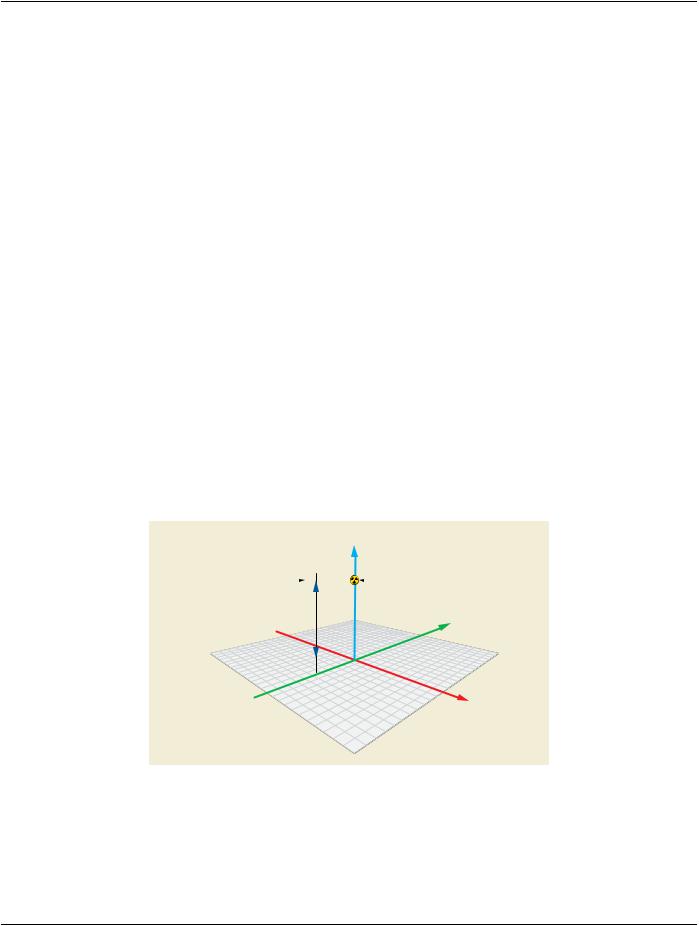
A Base Beam Modifier Coordinate System is defined with respect to the Equipment Coordinate System (see Section 10.39.1.1). The​ x/y plane of the Base Beam Modifier Coordinate System is referred to as the Base Beam Modifier Definition Plane. The orientation​ of the Base Beam Modifier Coordinate System is such that the Base Beam Modifier Definition Plane is parallel to the x/y plane of the​ Equipment Coordinate System. The origin of the Base Beam Modifier Coordinate System is offset from the RT Device Distance Ref-​ erence Location by the RT Beam Modifier Definition Distance (300A,0688) as shown in Figure C.36.1-1.​


+Z

RT Beam Modifier Definition Distance


RT Device Distance Reference Location


(300A,0688)


(e.g., Radiation source)


Plane

Figure C.36.1-1. Base Beam Modifier Coordinate System​

Each beam modifier is defined in its own Beam Modifier Coordinate System with the following characteristics:​

•​Defined with respect to the Base Beam Modifier Coordinate System.​

•​Right-handed Cartesian coordinate system, with the positive z-axis pointing towards the nominal Radiation Source location.​

- Standard -​